Home · Eating & Drinking
The city's own01
What to order
On the board
- The half-smokeThe city's own sausage: bigger, spicier and coarser than a hot dog, often half pork and half beef, smoked, and served with onion and chili sauce.
- Mumbo sauceA sweet, tangy red sauce of the city's carryout shops, poured over fried chicken wings, fries and fried rice; everyone argues about the recipe.
- Injera and watEthiopian stews served on a large, spongy sourdough flatbread of teff, torn and eaten with the right hand, with many vegetarian dishes.
- The crab cakeBlue crab from the Chesapeake Bay, bound as lightly as possible and fried or broiled, the pride of the region's seafood.
- Fish from the wharfCrabs, oysters and fish sold from floating barges at the Maine Avenue Fish Market, the oldest continuously operating fish market in the country.
- The jumbo sliceAn enormous, floppy slice of cheese or pepperoni pizza, folded to eat, the late-night food of Adams Morgan.
In full02
Eating & Drinking
Where the food is
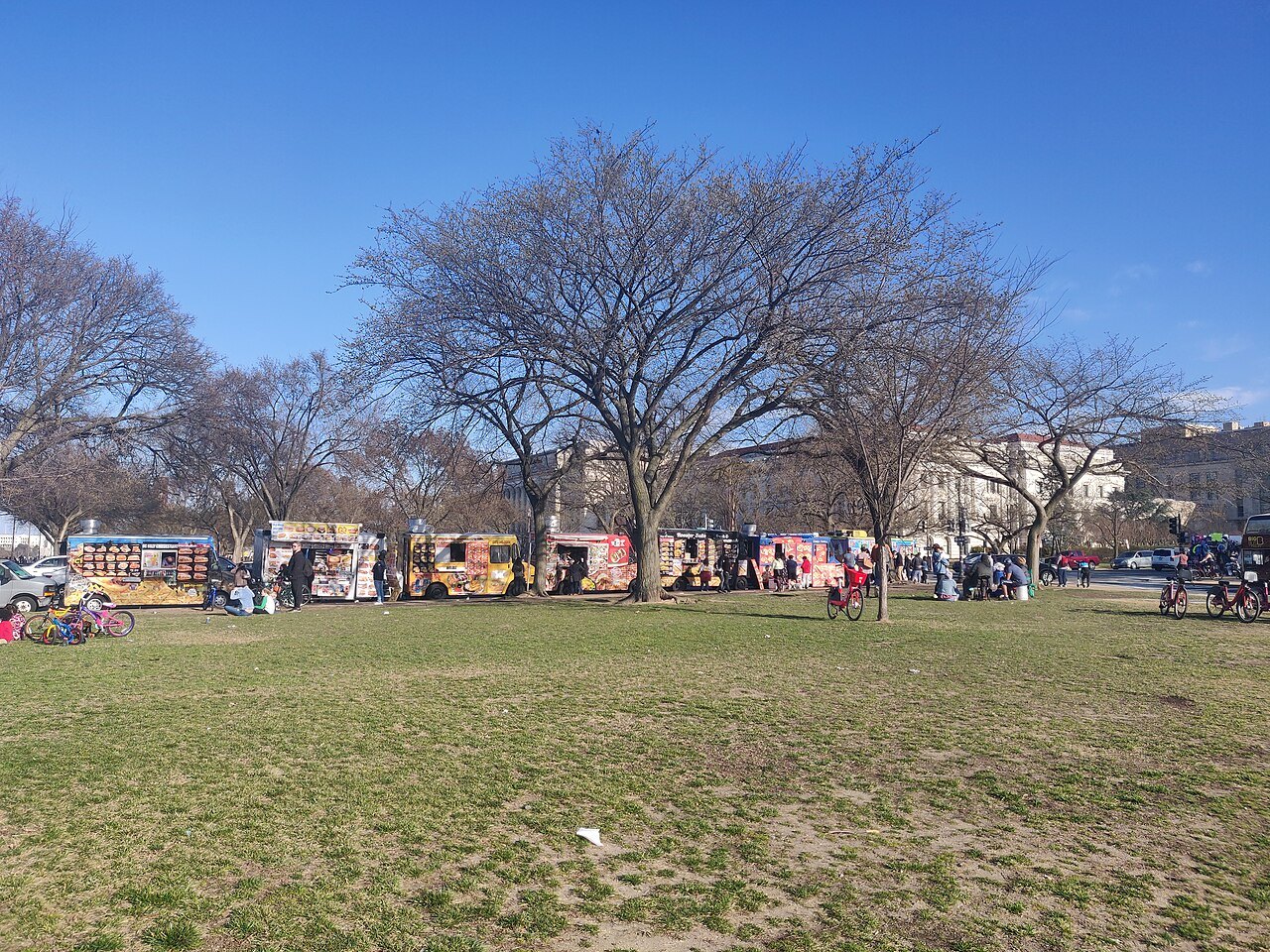
The National Mall is a hard place to eat well. The museums have cafes, food trucks line the avenues on weekdays, and that is almost all. Washington's real food is in its neighborhoods, a short ride or walk from the monuments: U Street and Shaw for the half-smoke and Ethiopian food, Capitol Hill for Eastern Market, the Southwest waterfront for the fish market and the Wharf, and Adams Morgan for late nights.
The city is also a large, international restaurant town, fed by embassies, immigrants and a professional workforce, so you can eat food from almost any country here. The sections below are about the things that are particular to Washington and its region, and where to find them (see neighborhoods).
The half-smoke and Ben's
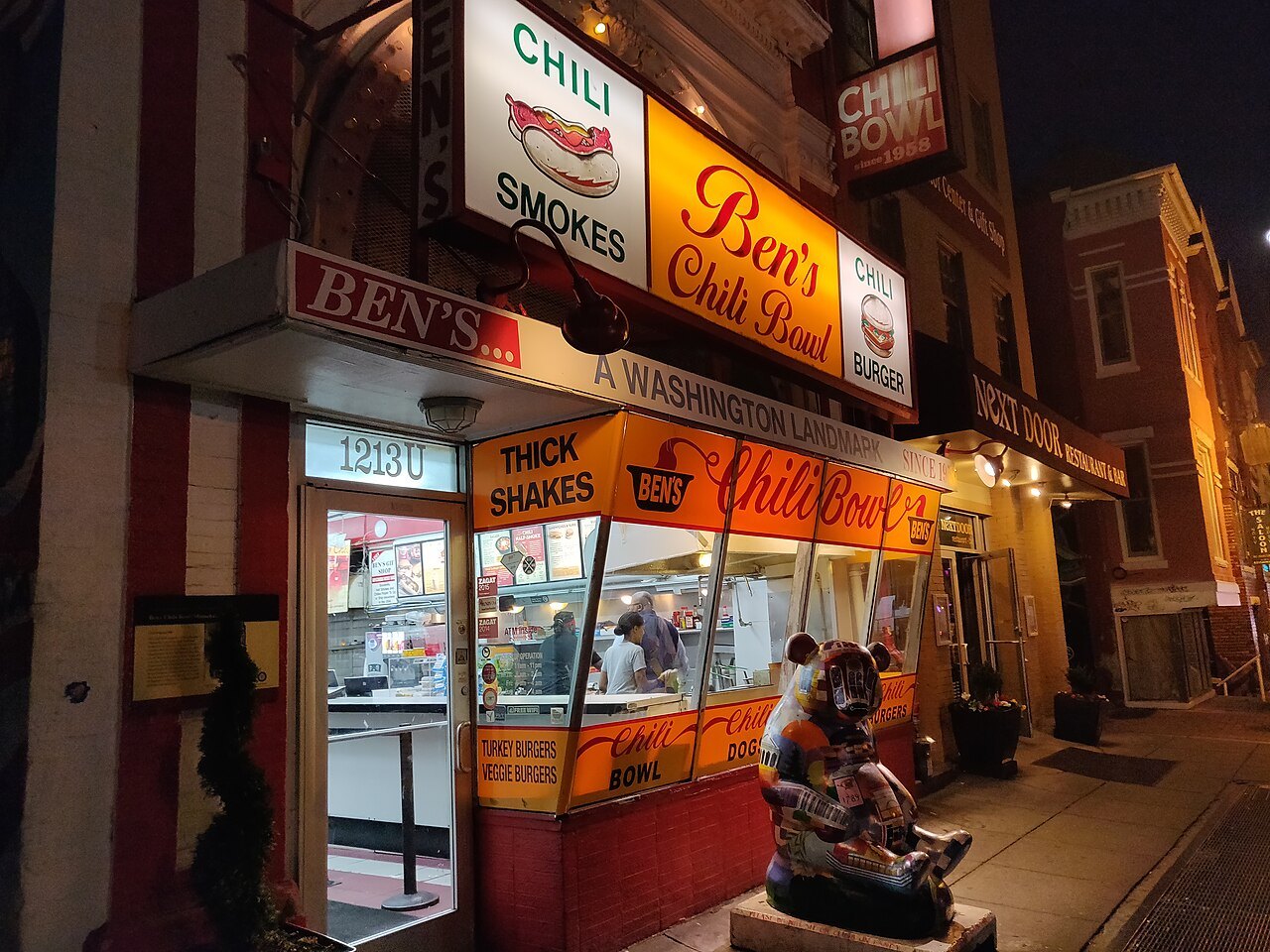
The half-smoke is Washington's own: a sausage larger, spicier and more coarsely ground than a hot dog, often half pork and half beef and smoked, served in a bun with onions, mustard and chili sauce. The origin of the name is disputed; it may refer to the half-and-half meat, to a flavor halfway between smoked sausage and a hot dog, or to cooks splitting it on the grill.
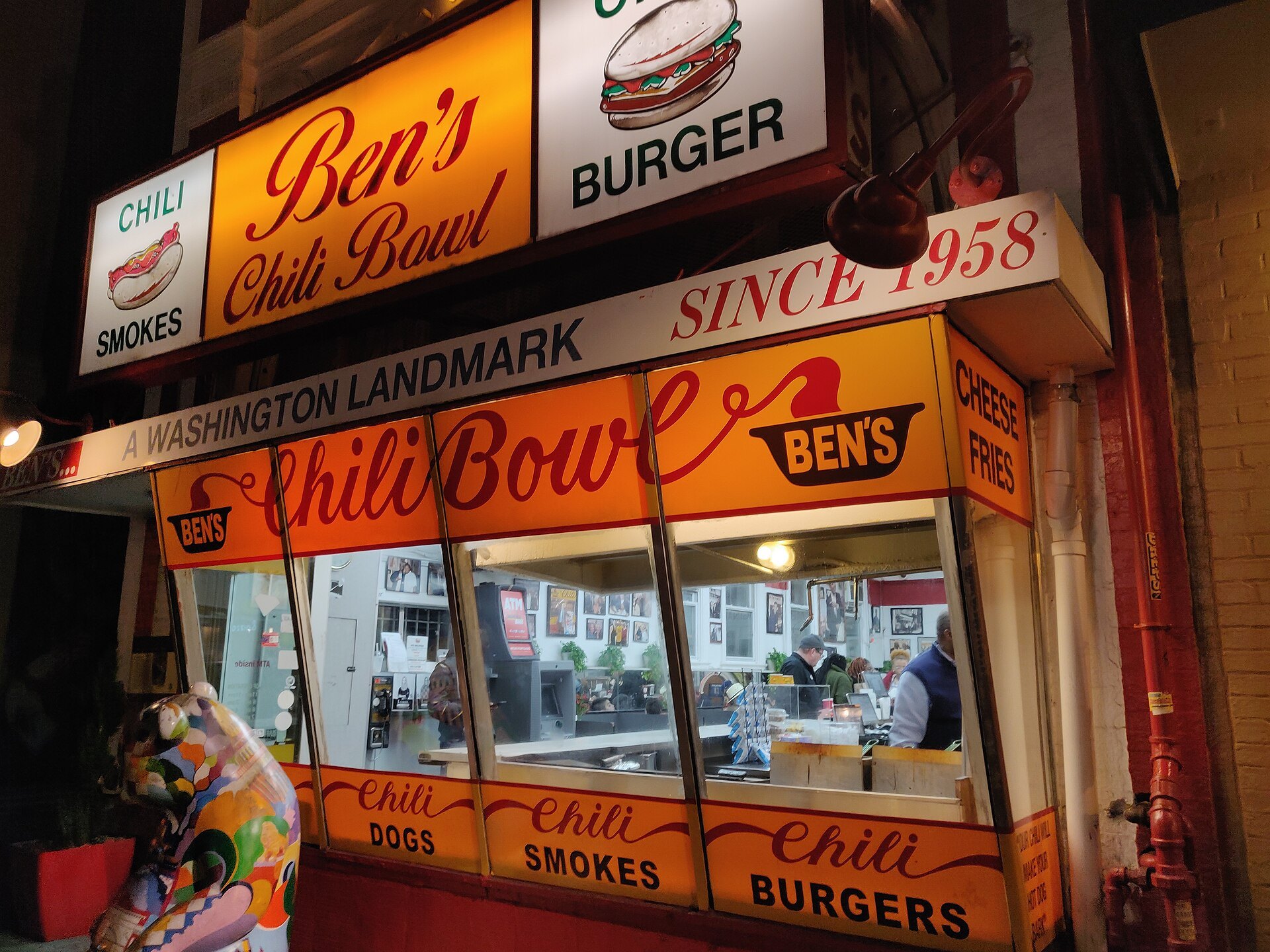
The most famous place to eat one is Ben's Chili Bowl on U Street, founded in 1958 by Ben Ali, a Trinidadian-born immigrant who had studied at nearby Howard University, and his wife, Virginia. It occupies the building of Washington's first silent movie house, kept much of its original furniture, and during the riots of 1968 served police and protesters alike. It is a landmark of Black Washington as well as a lunch counter, and the chili half-smoke is the order.
Mumbo sauce and the carryout
Mumbo sauce, or mambo sauce, is the condiment of the city's carryout shops: a red sauce like a sweeter, tangier barbecue sauce, poured over fried chicken wings, french fries, fried shrimp and fried rice. Its origins and recipe are argued over endlessly, and there is a Chicago cousin, but in Washington it belongs to the corner carryouts of the city's Black neighborhoods, and ordering wings with mumbo sauce is as local as eating gets.
Ethiopian Washington
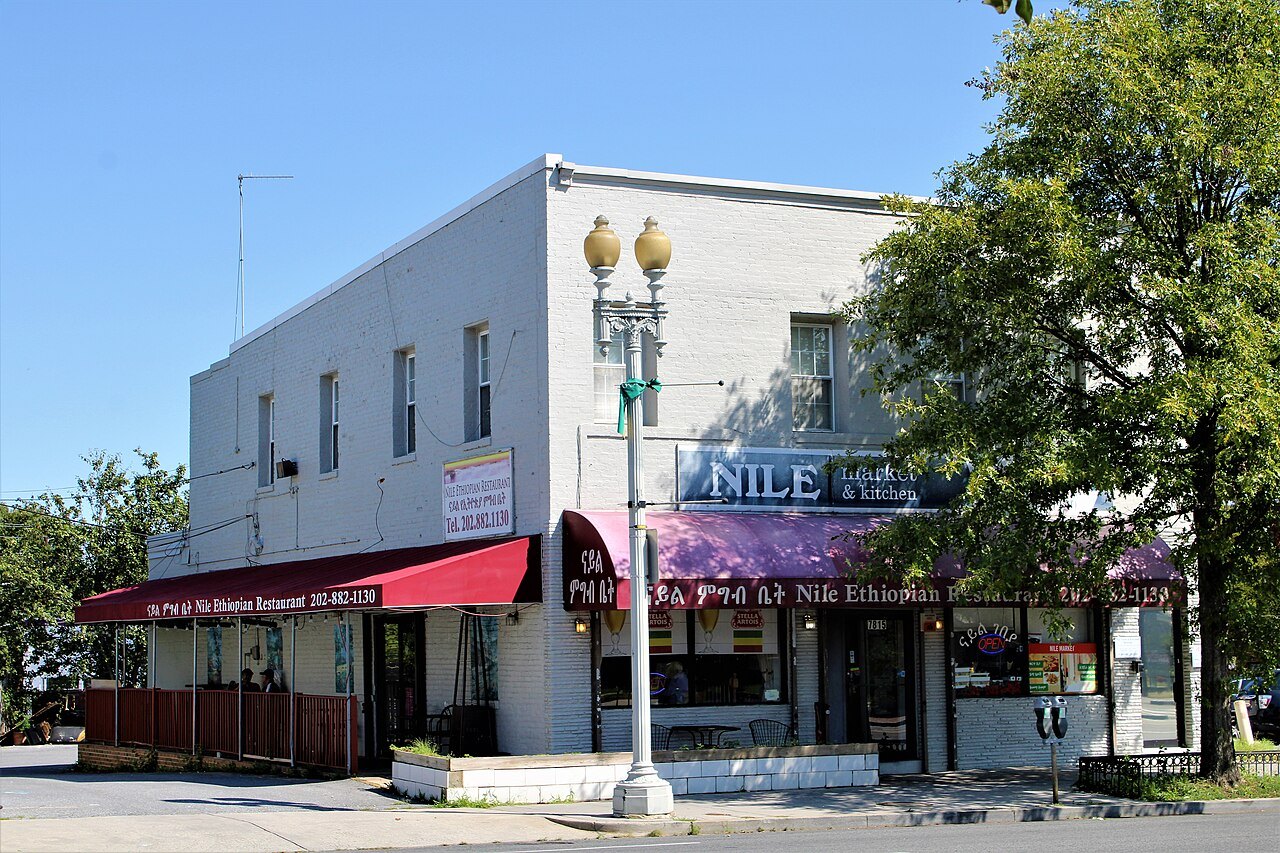
The Washington area has the largest Ethiopian community in the United States, and since the 1980s Ethiopian owners have opened businesses and restaurants in Shaw, around 9th Street and U Street. Ethiopian food has become one of the city's signatures, eaten by locals and visitors alike.
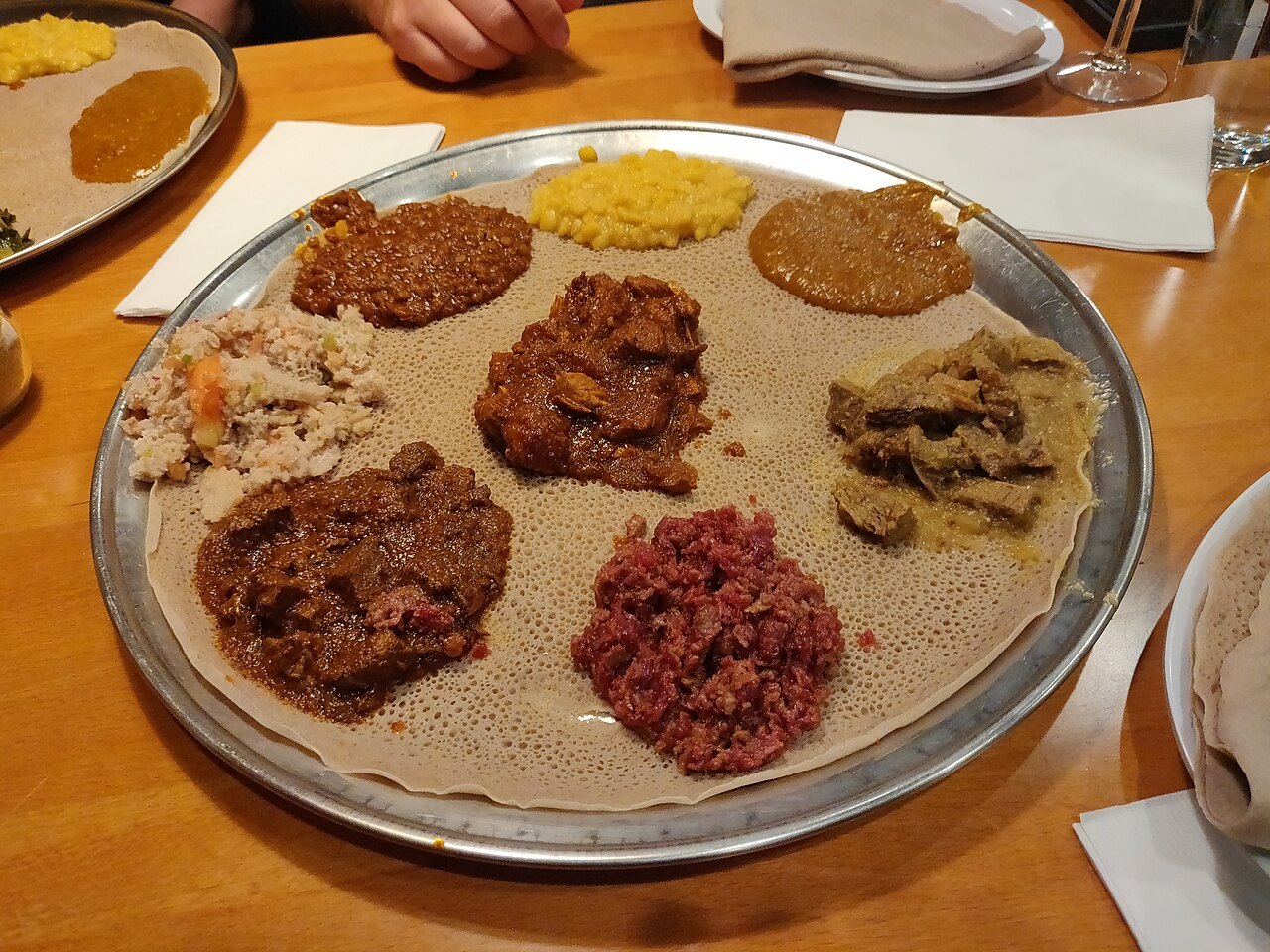
A meal is usually shared from one large platter: wat, thick stews spiced with berbere, and vegetable dishes spooned onto injera, a large, spongy sourdough flatbread made from teff flour. You tear off pieces of injera with your right hand and use them to pick up the food. Because the Ethiopian Orthodox Church prescribes many fasting days without animal products, the menus are full of vegan dishes of lentils, split peas and greens, which makes it one of the best cuisines in the city for vegetarians.
Crabs and the fish wharf
Washington sits near the Chesapeake Bay, and its seafood is the bay's: blue crabs, oysters and rockfish. The crab cake, bound as lightly as possible so the crab holds together, is the region's signature, served fried or broiled; in summer, whole steamed crabs are eaten with mallets and plenty of seasoning at newspaper-covered tables.
The Maine Avenue Fish Market on the Southwest waterfront, founded in 1805, is the oldest continuously operating fish market in the United States. Its stalls stand on floating barges that rise and fall with the tide, selling fish, crabs and oysters, raw and cooked, with the biggest choice from Friday evening through Sunday. Next to it is the Wharf, a waterfront district opened in stages from 2017, with restaurants, bars, music venues and piers, and the dock for the water taxi (see getting around).
Markets and late nights
Eastern Market on Capitol Hill, a brick market hall of the nineteenth century on 7th Street SE, a few blocks east of the Capitol, has vendors' stalls inside, a farmers' market, and on weekends artisans, antiques dealers and a flea market of up to a hundred exhibitors outside. It is the best breakfast or lunch near the Hill, and the streets around it have plenty of restaurants and bars.
For late nights, Adams Morgan's 18th Street is known for its bars and for the jumbo slice, an oversized slice of cheese or pepperoni pizza, more than a foot long and folded to eat, sold by rival shops to the crowds after the bars. U Street has jazz and live music clubs, and the Navy Yard, around the baseball park, has become a busy district of bars and restaurants along the Anacostia River.
Eating near the sights
Between museums, the nearest good food is north of the Mall. Penn Quarter and Chinatown, around the Portrait Gallery and the arena on 7th Street, are the old downtown, now full of restaurants, bars and theaters, a few minutes' walk from the Archives and the museums on the north side. Chinatown itself has shrunk to a few blocks and a handful of Chinese restaurants around the Friendship Archway, but the neighborhood as a whole is one of the easiest places to eat in the center.
On Capitol Hill, the streets around Eastern Market and Pennsylvania Avenue SE have cafes and restaurants within walking distance of the Capitol and the Library of Congress. At the western end of the Mall, the choice is thinner: Foggy Bottom and Georgetown are the nearest neighborhoods with restaurants, and the waterfront at the Wharf is a walk or short ride south of the Tidal Basin. Union Station has a food court under its great hall, handy for arrivals and the Hill, though many of its shops and restaurants emptied after the pandemic.
Practical notes
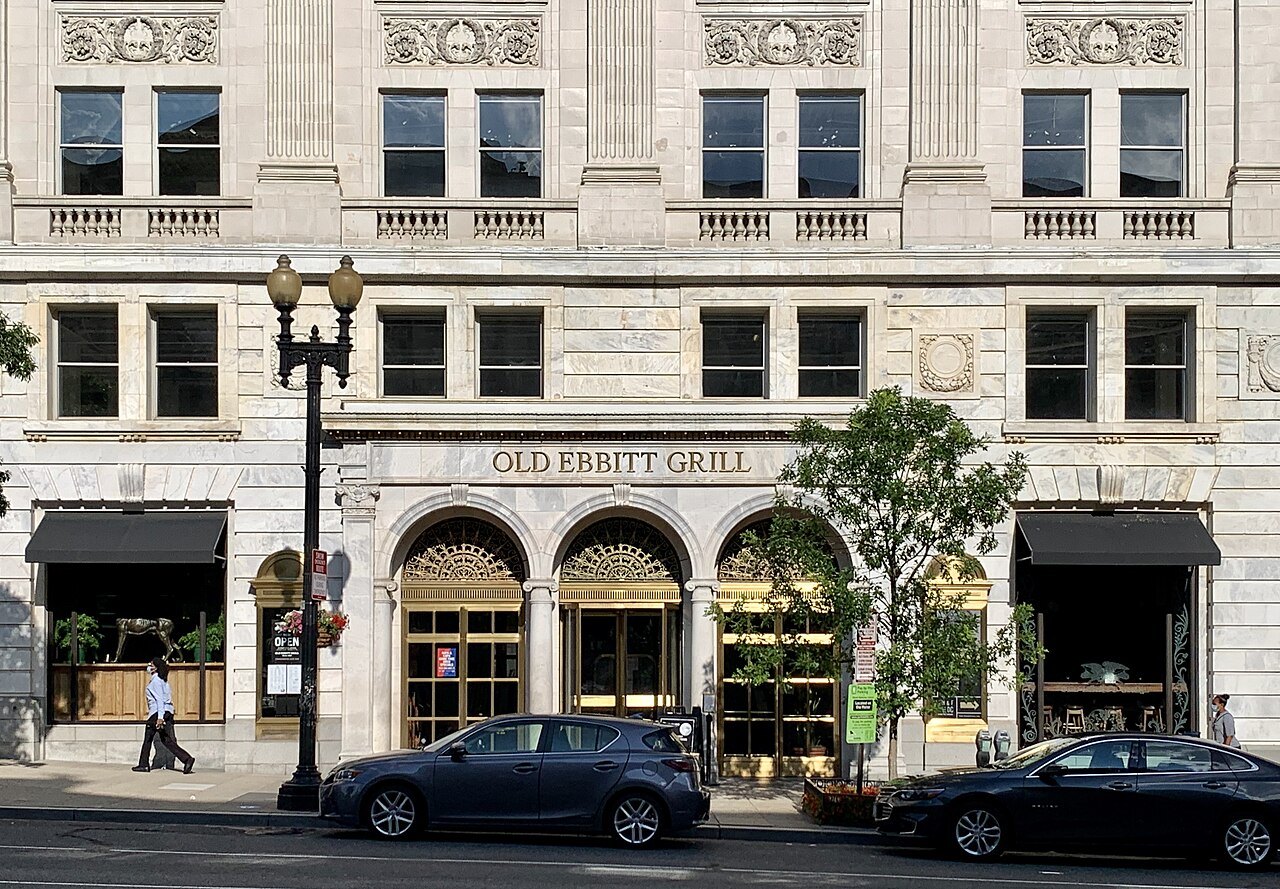
Reservations are wise for dinner at popular restaurants, especially on Thursday to Saturday nights and during the cherry blossom season. Many restaurants in the business districts close on weekends, when the government city empties, while neighborhood places are busiest then. Tipping is customary in American restaurants. Near the Mall, the museum cafes are the most reliable lunch, and a picnic on the lawn beats a long walk to find food. Take water everywhere in summer.
Seen on the way03
More photographs
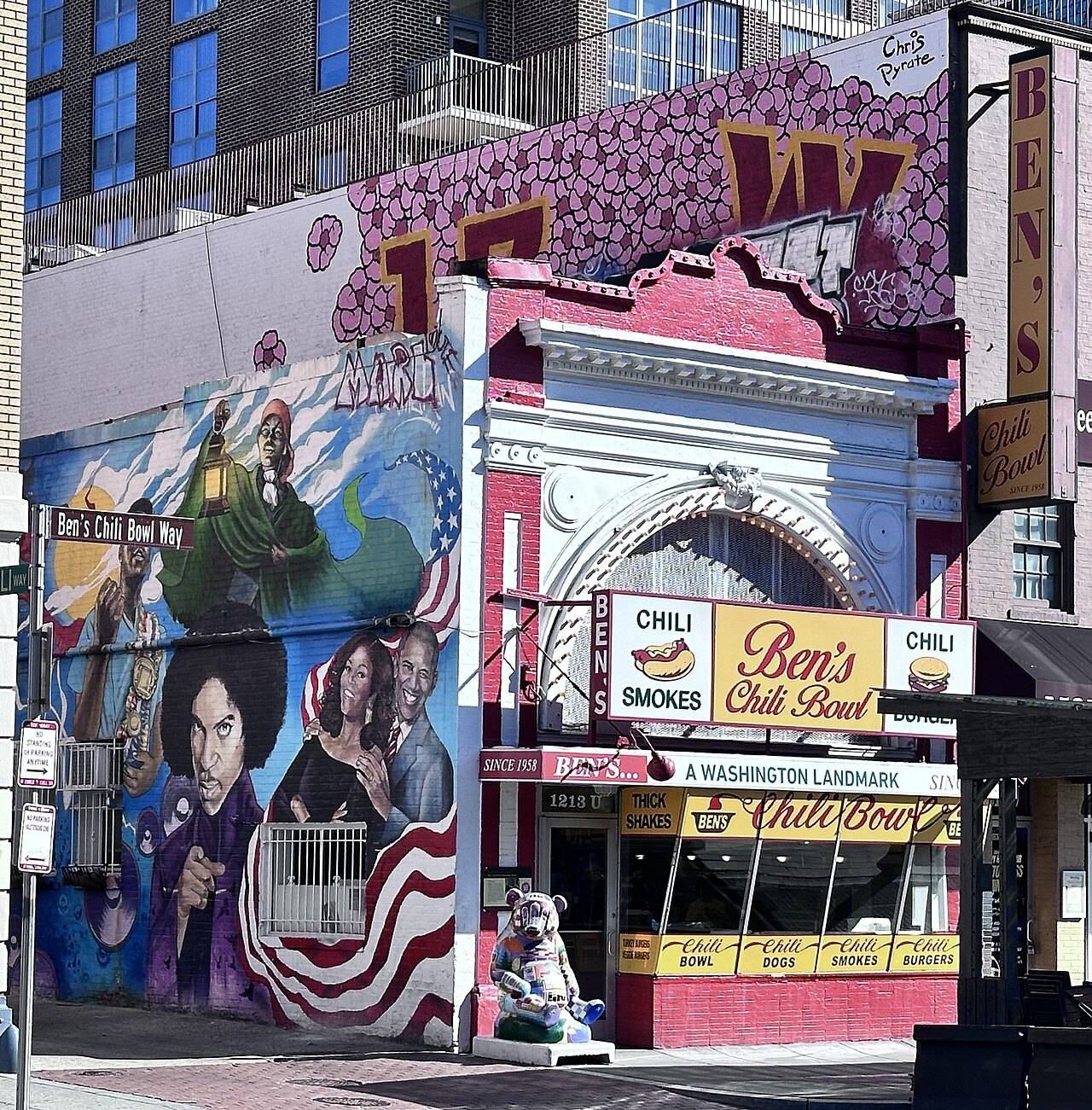
Ben's Chili Bowl beside its mural on U StreetAPK, Wikimedia Commons, CC BY 4.0 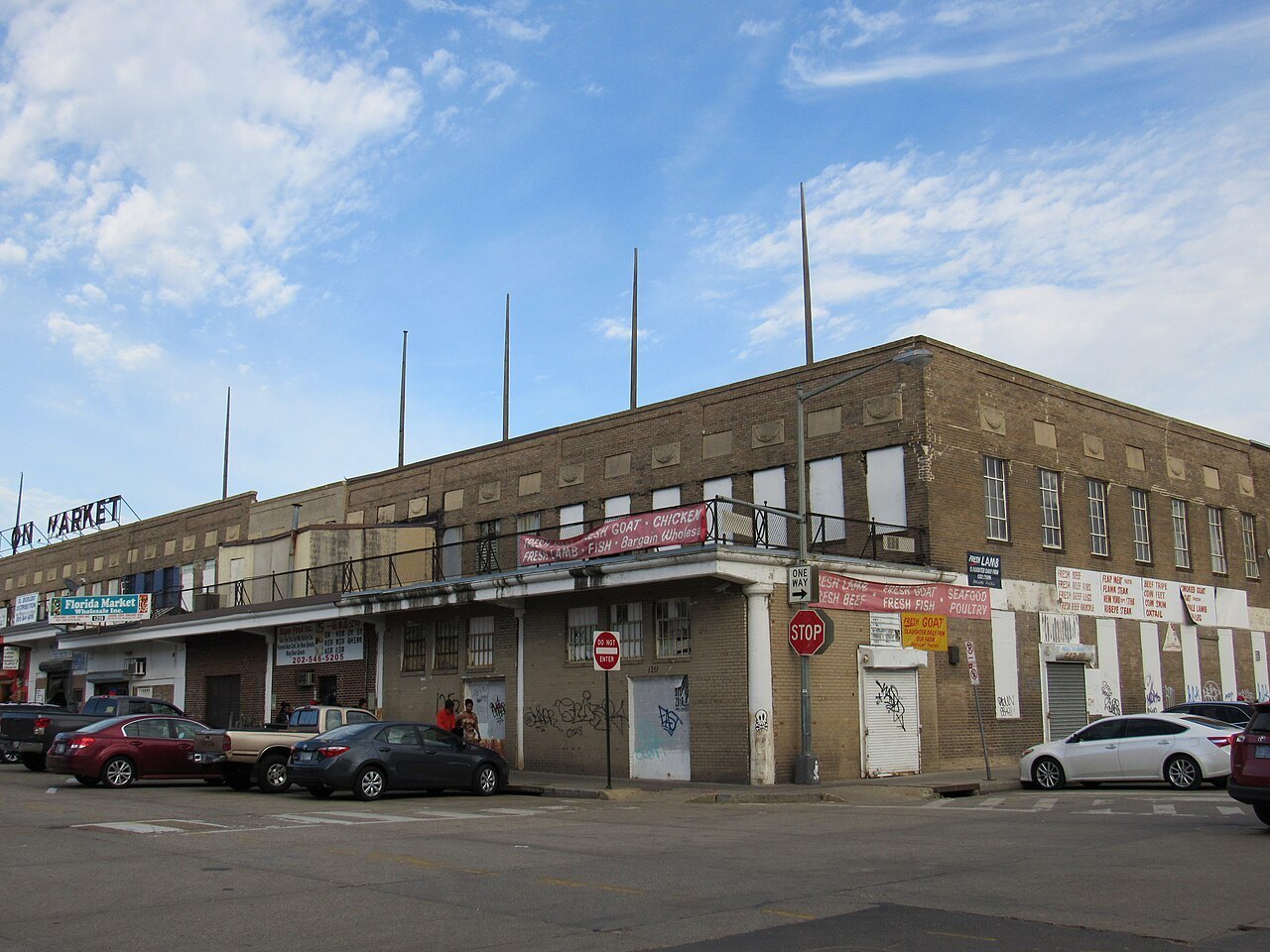
The old market hall of Union Market in NortheastFarragutful, Wikimedia Commons, CC BY-SA 4.0 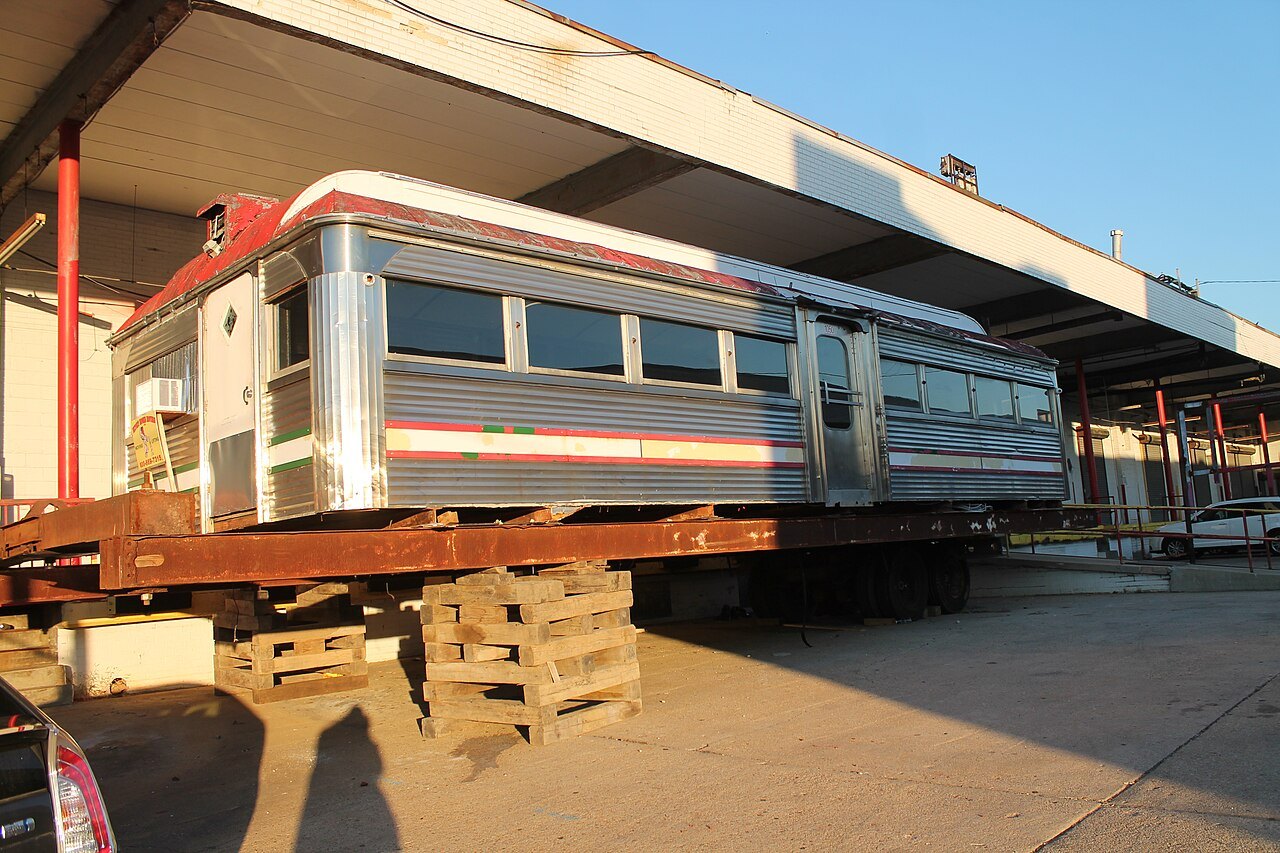
An old railroad dining car parked by the market halls at Union MarketElvert Barnes, Wikimedia Commons, CC BY-SA 2.0