Home · The Sights
All eighteen01
The sights, from the Hill outward
The Hill
Where the four quadrants meet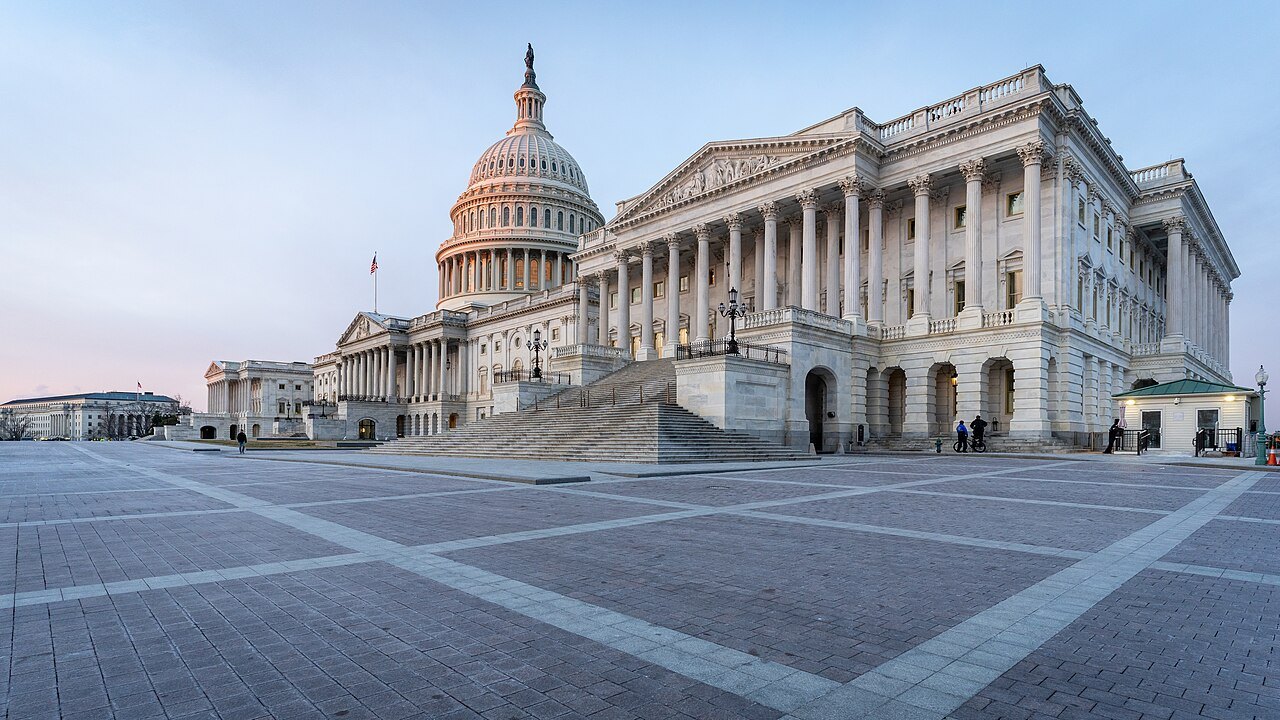 East end of the Mall · the zero point1The United States CapitolThe seat of Congress since 1800 under a cast-iron dome finished around 1866, and the point where the four quadrants meet.
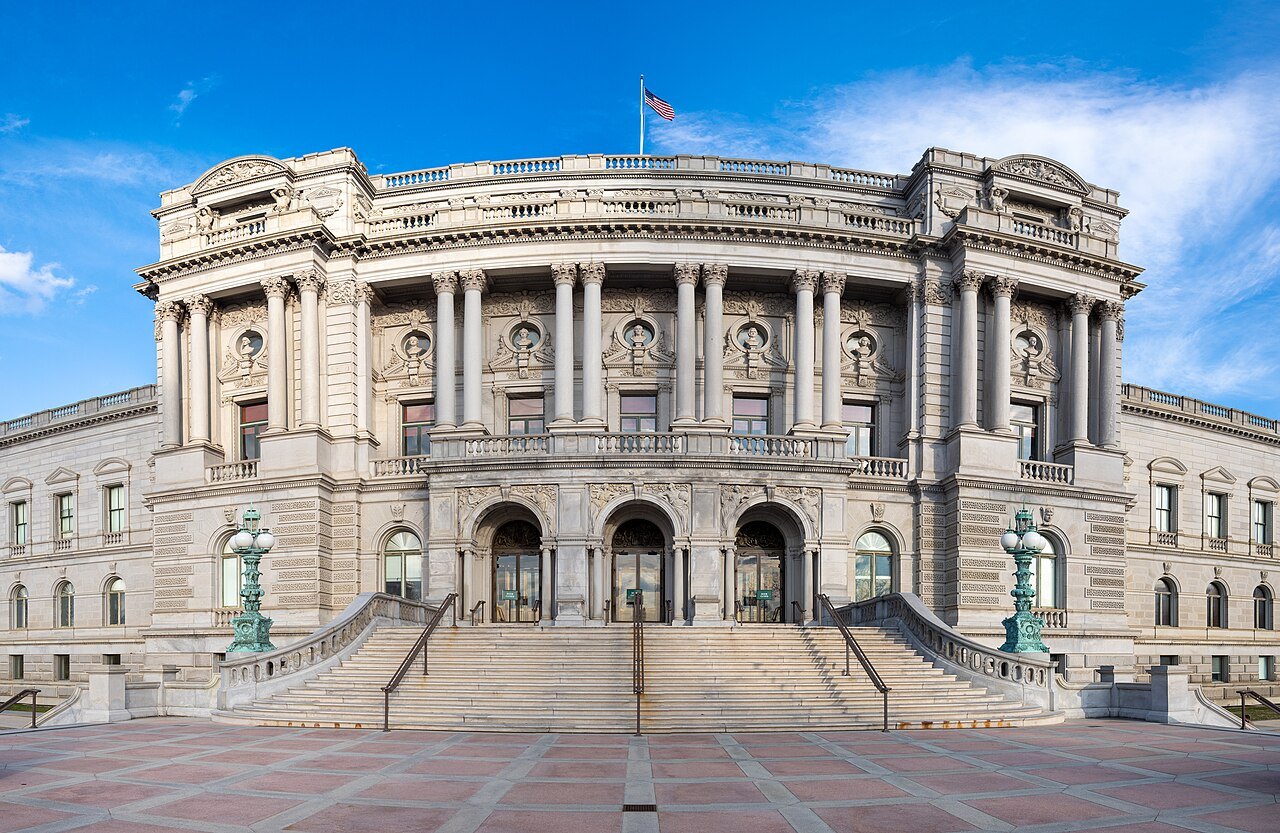 First St SE · East Capitol St2The Library of Congress and the Supreme CourtThe Jefferson Building, finished in 1897 and the oldest of the Library's three, across from the Supreme Court's marble building of 1935.
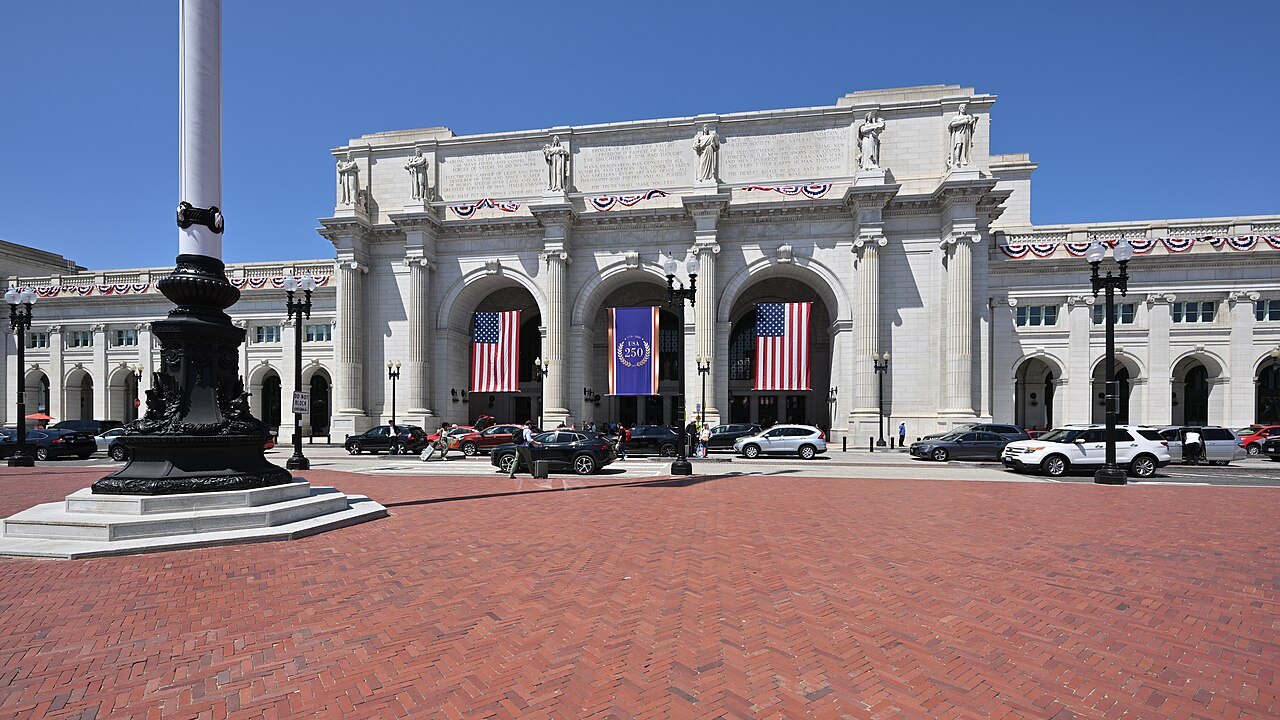 Massachusetts Ave · First St NE3Union StationDaniel Burnham's station of 1907, Amtrak's second-busiest and the southern end of the Northeast Corridor.
Along the Mall
The museums on Constitution and Independence Avenues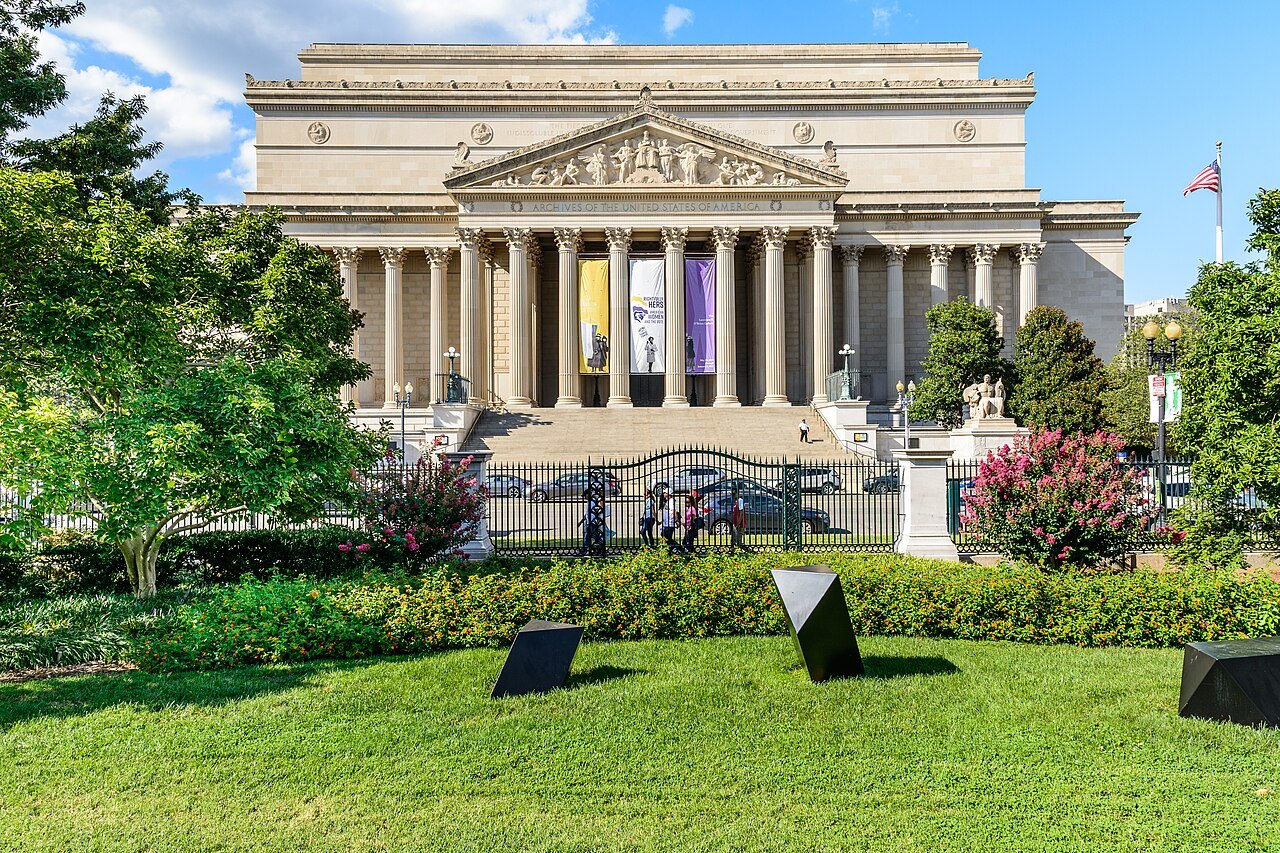 700 Pennsylvania Ave NW4The National ArchivesA temple for the nation's records built in the 1930s, its rotunda entered from Constitution Avenue.
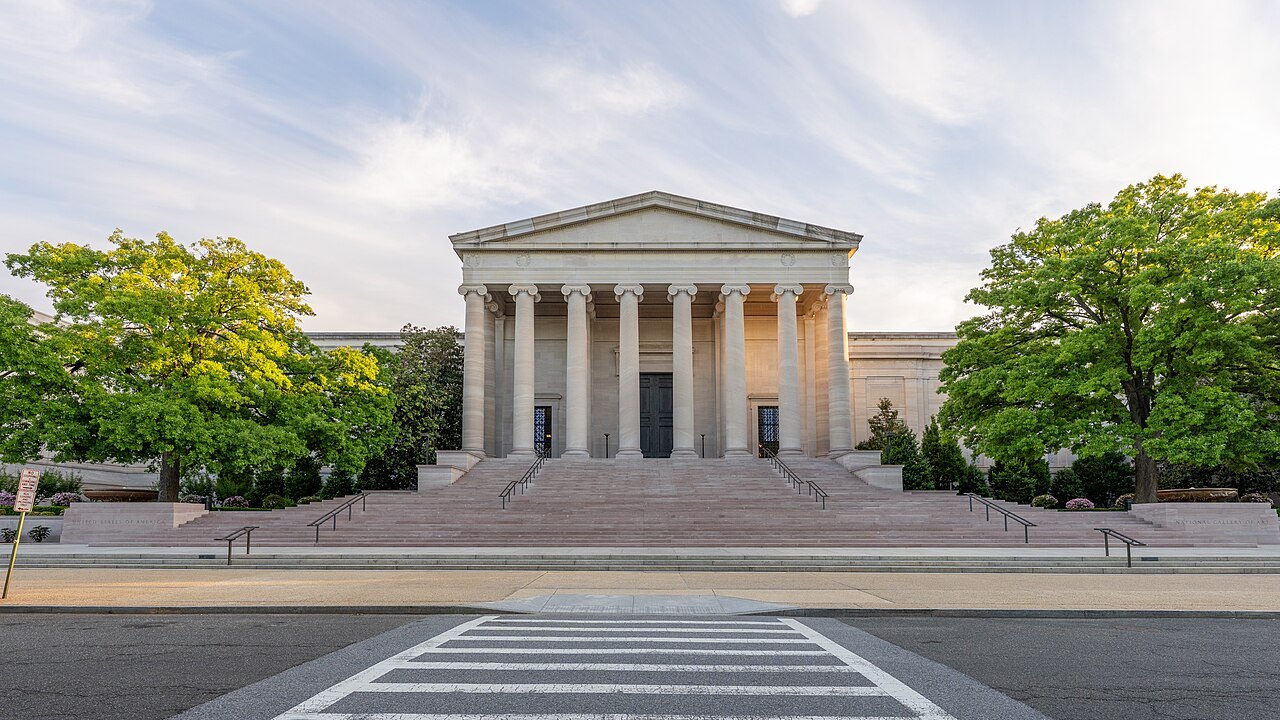 Constitution Ave · 4th St NW5The National Gallery of ArtFree since it opened in 1941: John Russell Pope's West Building and I. M. Pei's East Building of 1978, joined underground.
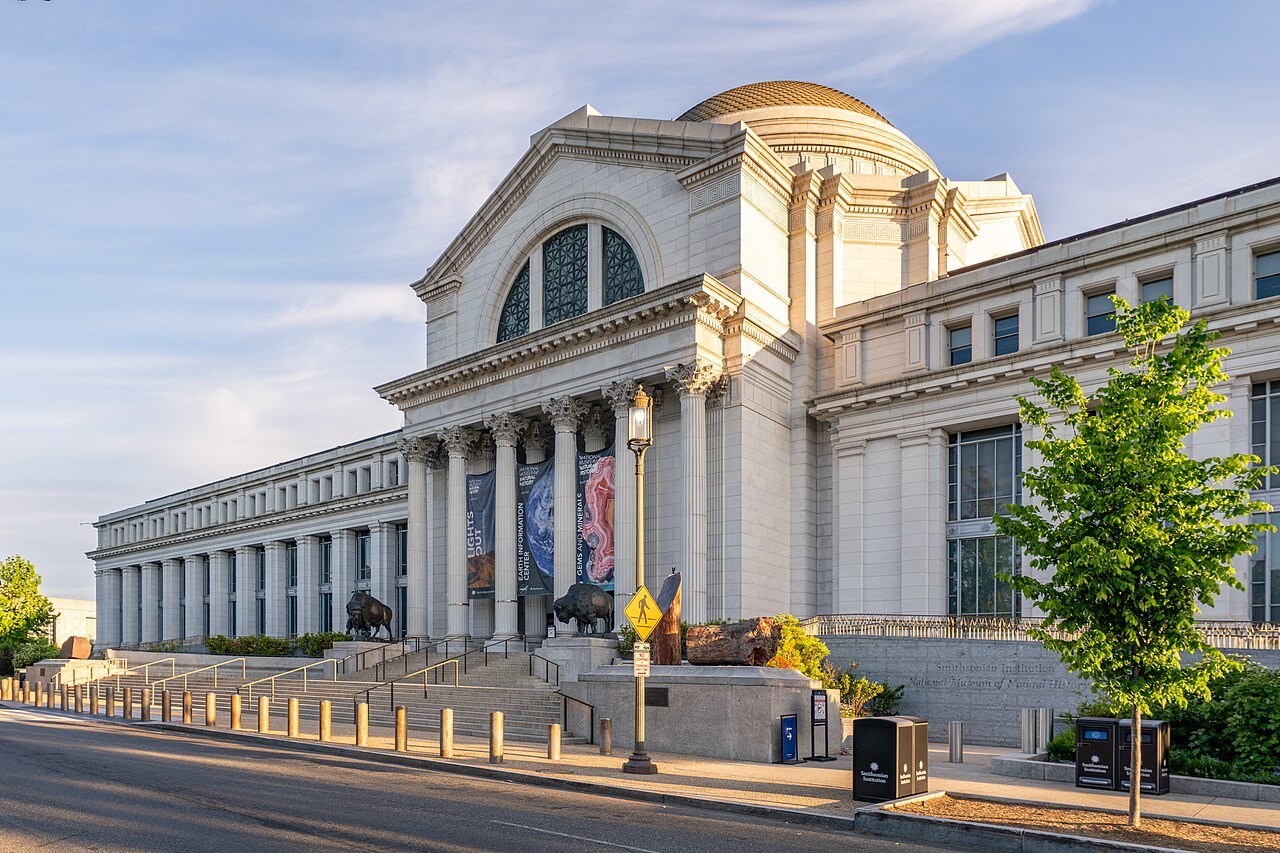 Constitution Ave · 10th St NW6The National Museum of Natural HistoryOpened in 1910 under a green dome, holding more than 148 million specimens, from the Hope Diamond to the dinosaurs.
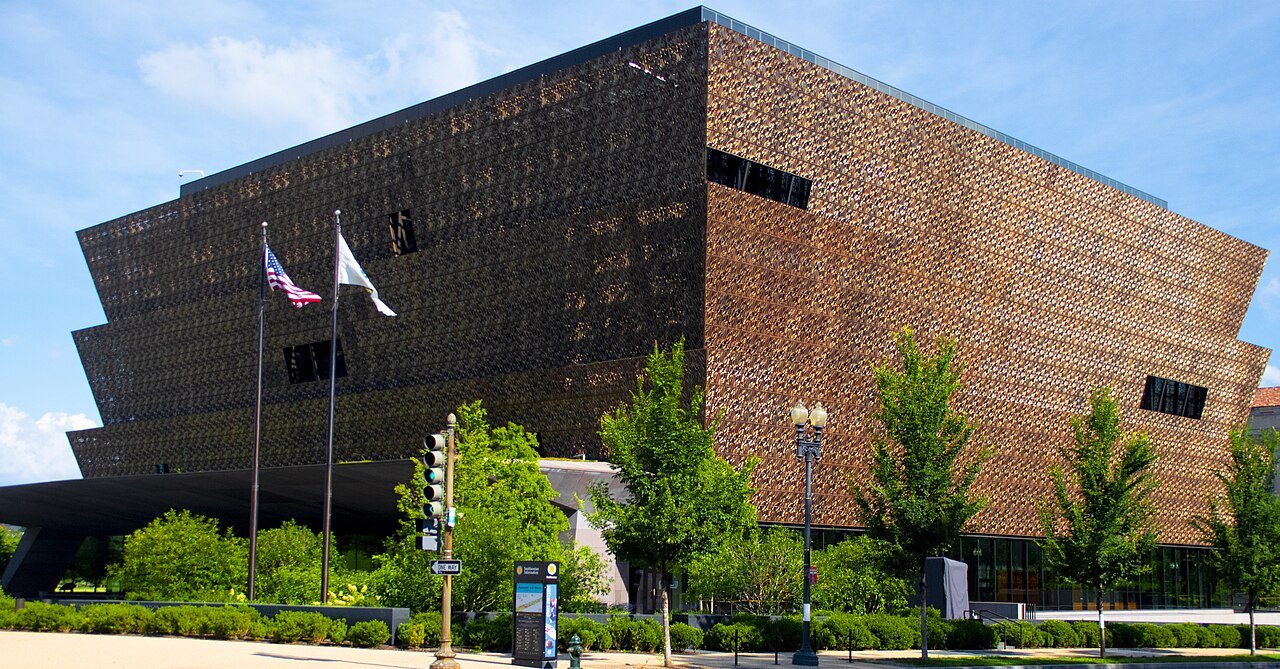 Constitution Ave · 14th St NW7The National Museum of African American History and CultureA bronze three-tiered corona finished in 2016, its shape drawn from a Yoruba crown.
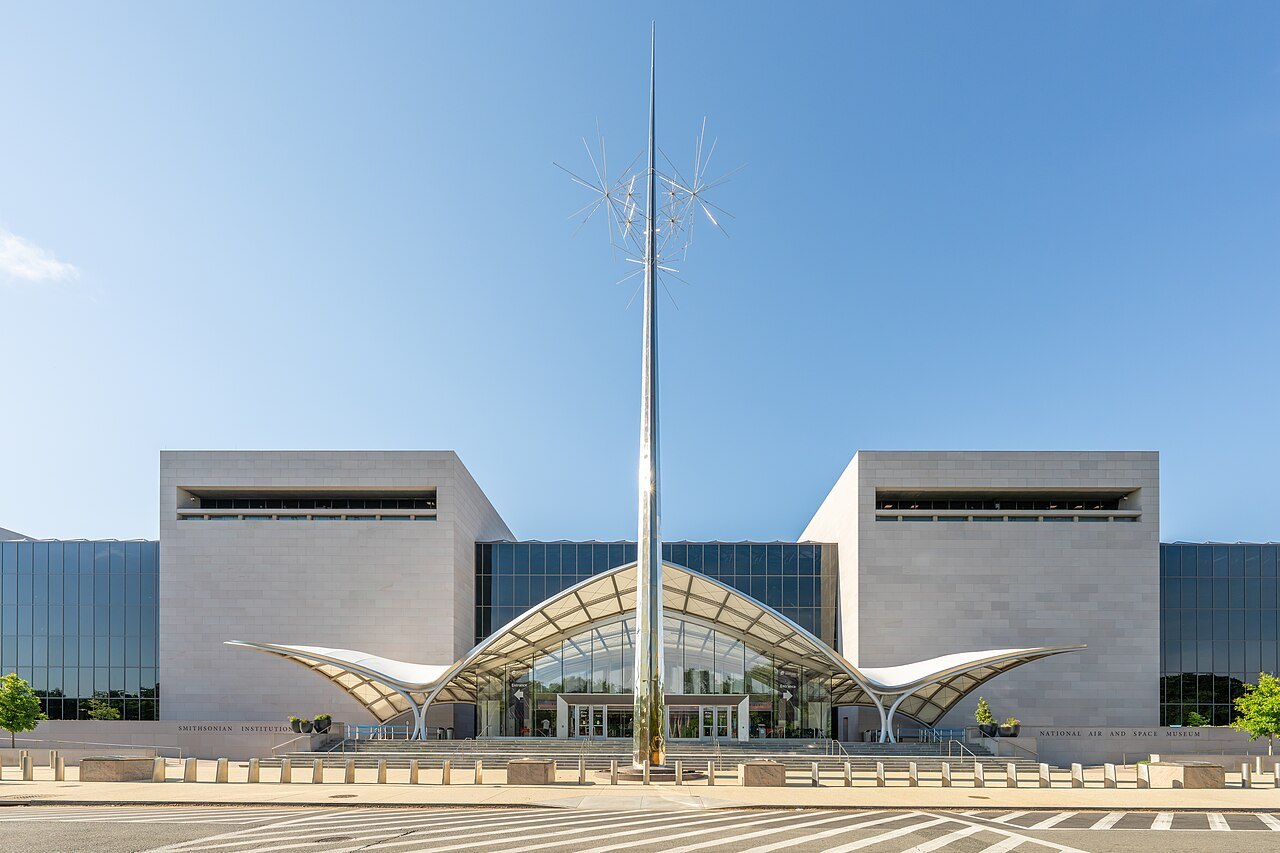 Independence Ave · 6th St SW8The National Air and Space MuseumThe Wright Flyer and the Apollo 11 command module, in a building on the Mall since 1976 and reopening gallery by gallery after a renovation begun in 2018.
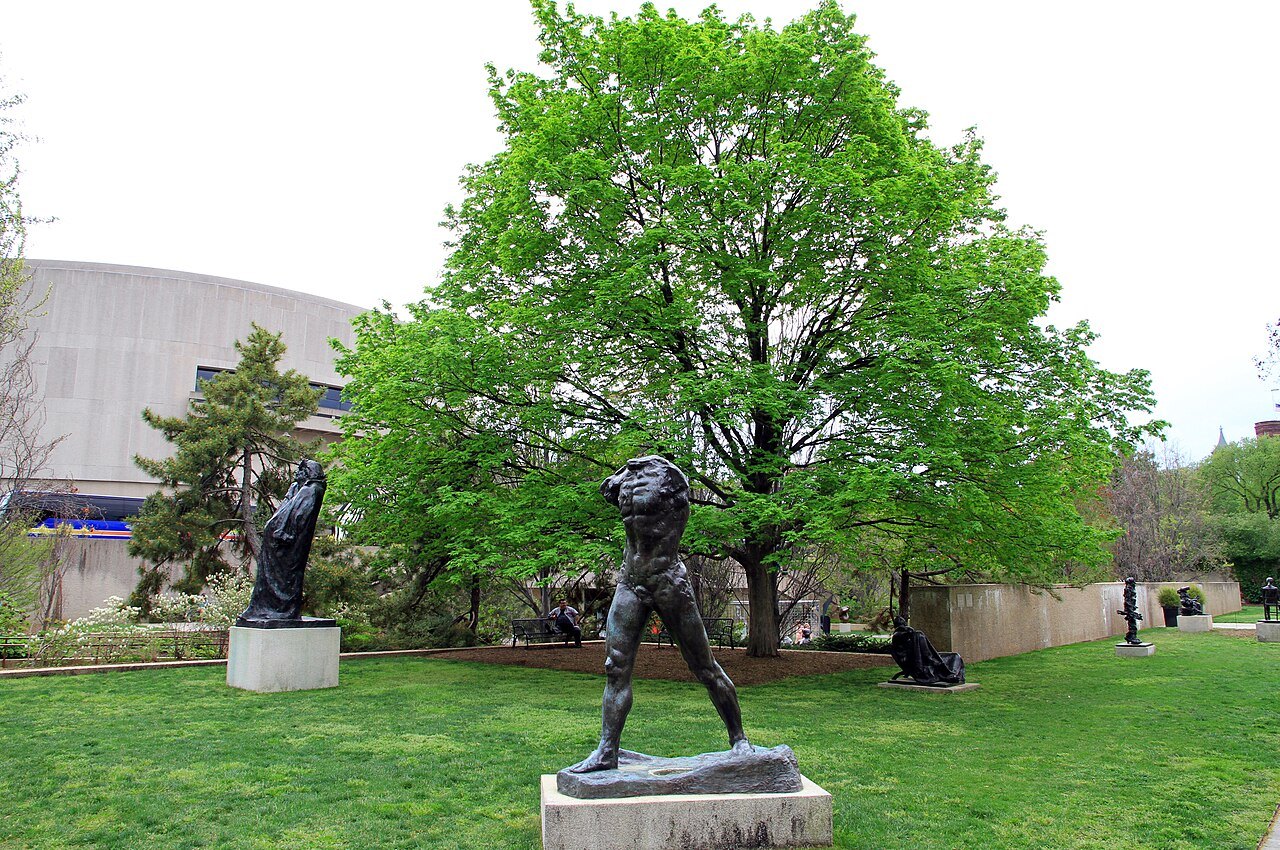 Independence Ave · 7th St SW9The Hirshhorn Museum and Sculpture GardenGordon Bunshaft's open concrete cylinder raised on four legs, with a fountain in its court and sculpture in a sunken garden.
West of 15th Street
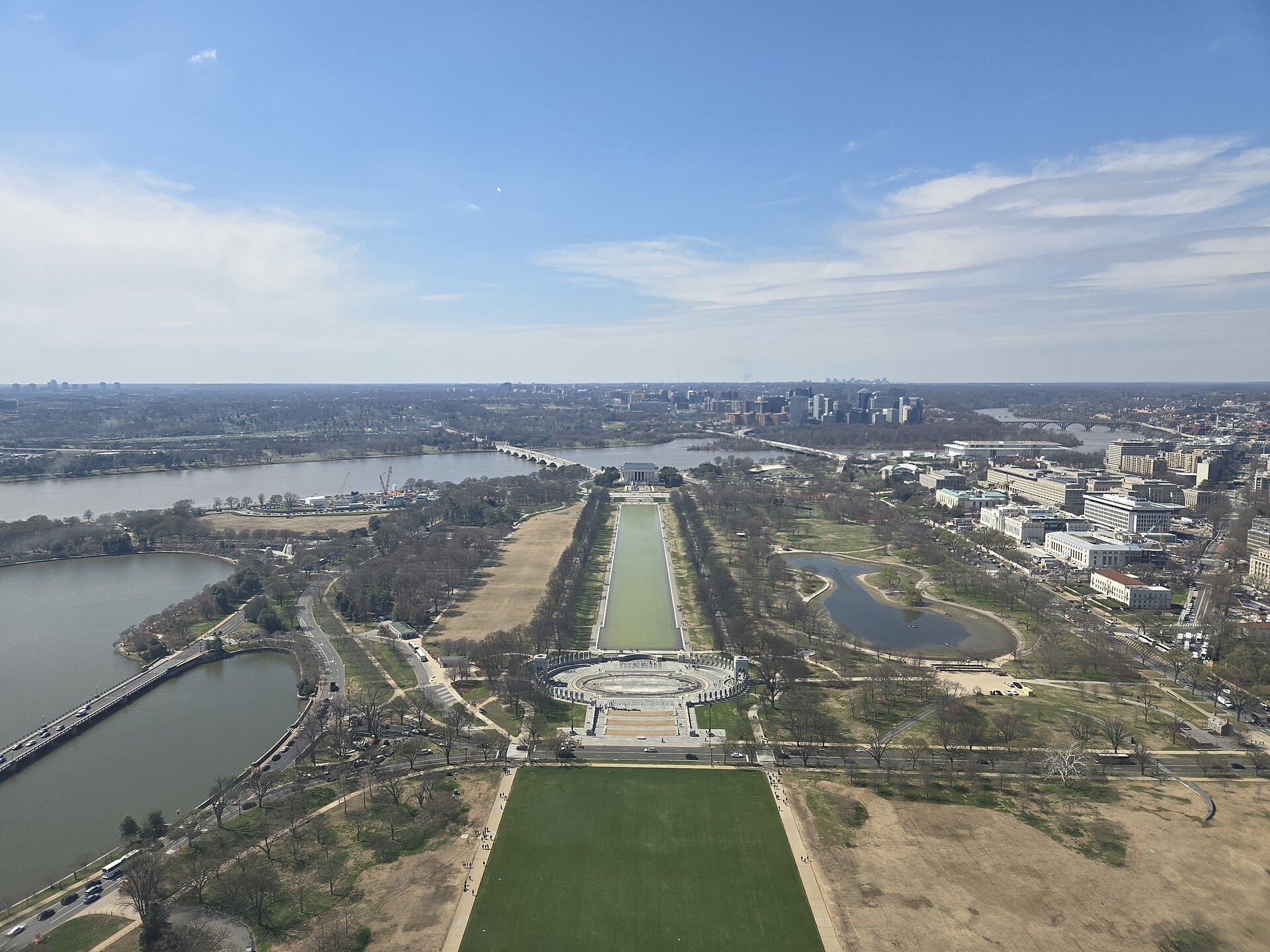
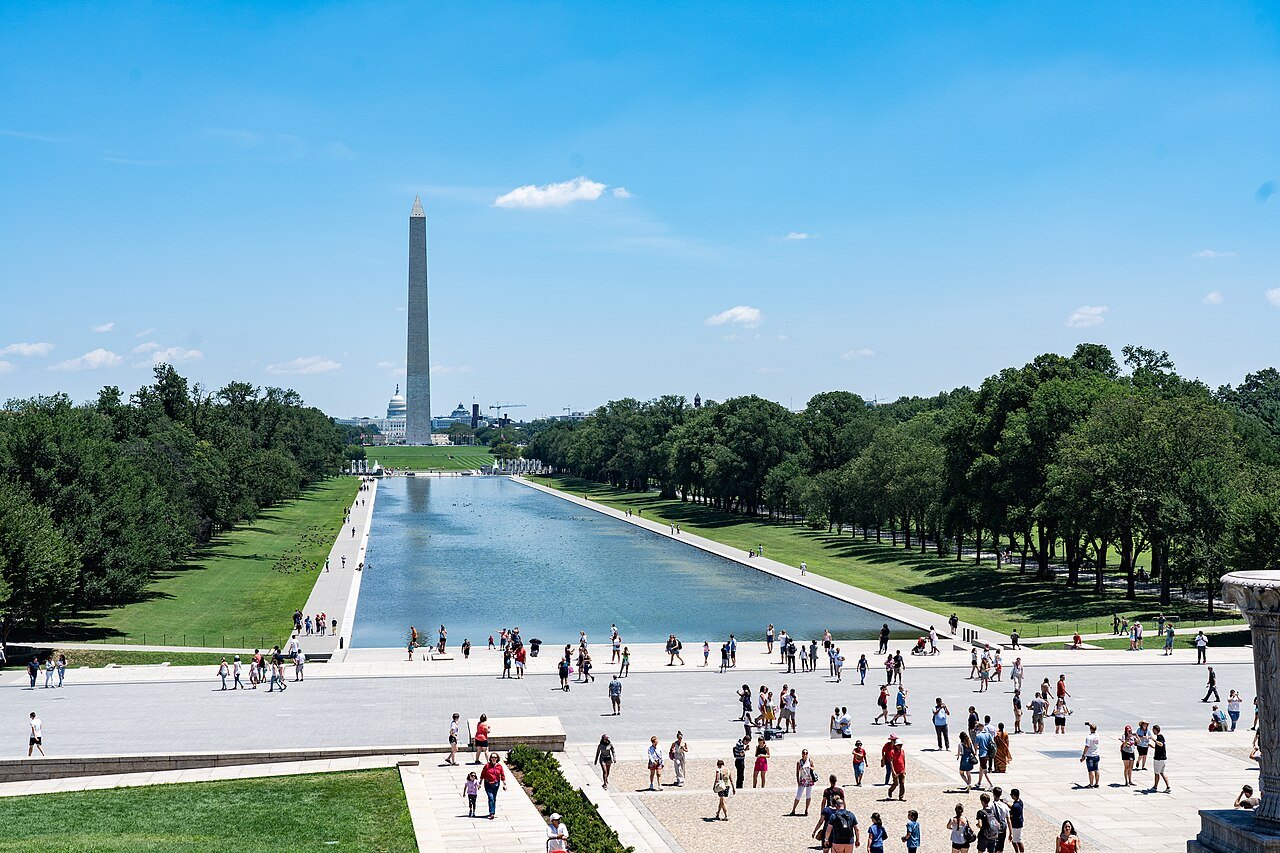
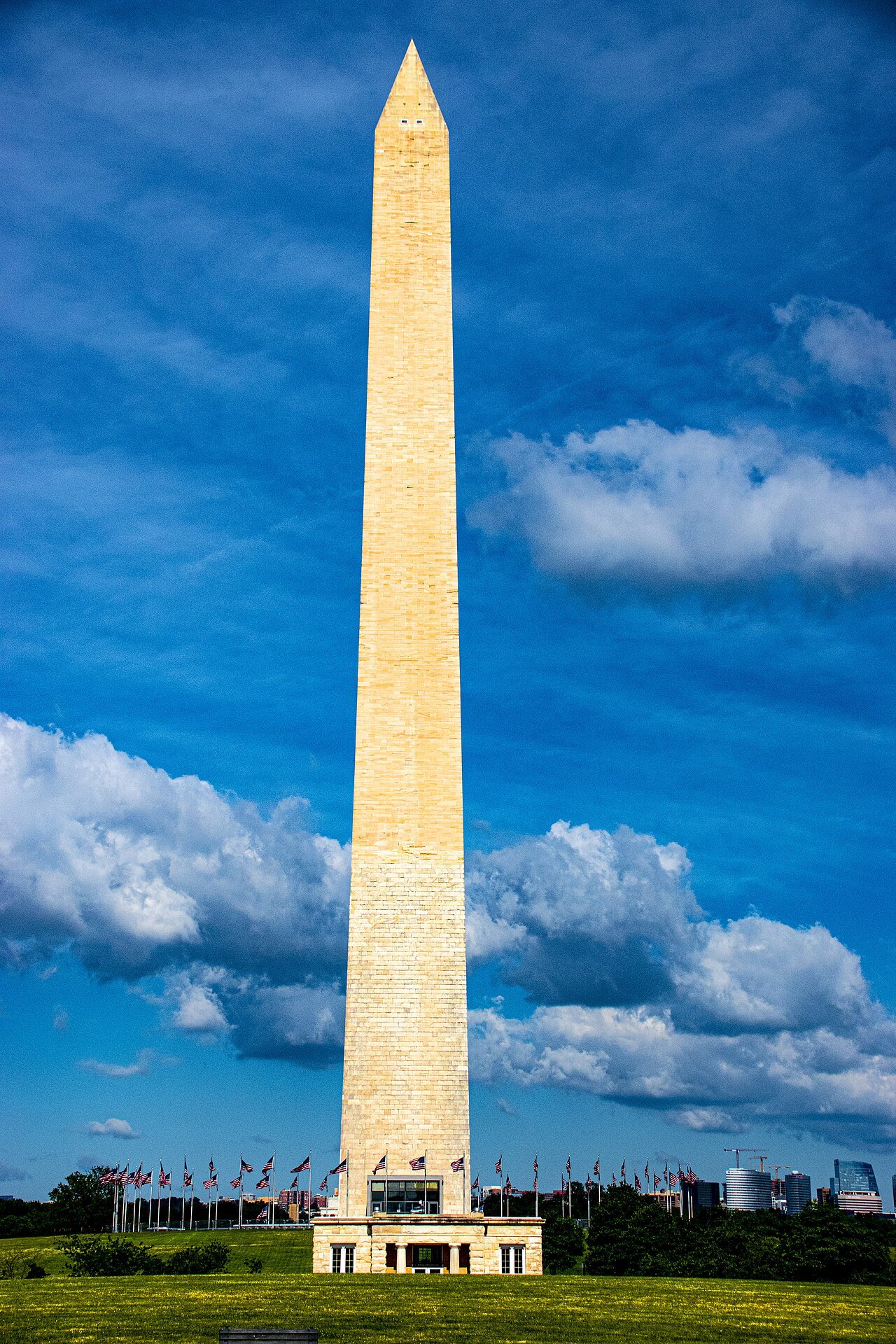
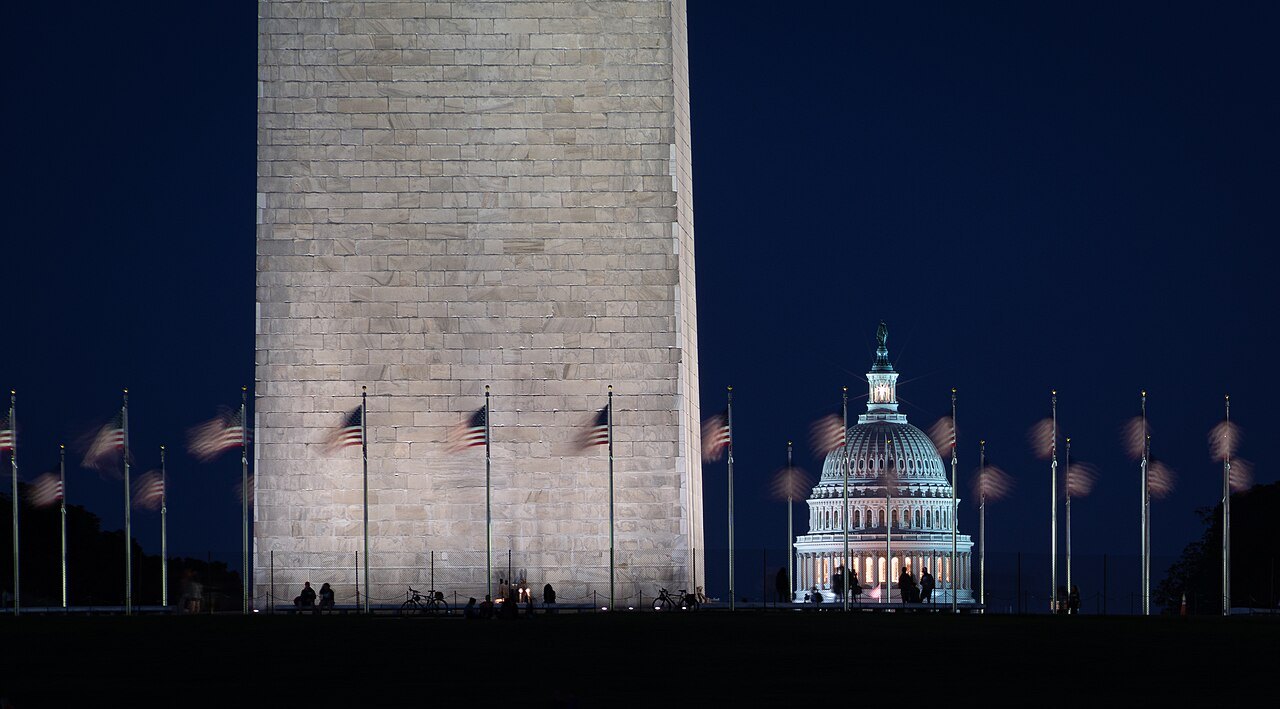
The monuments and the water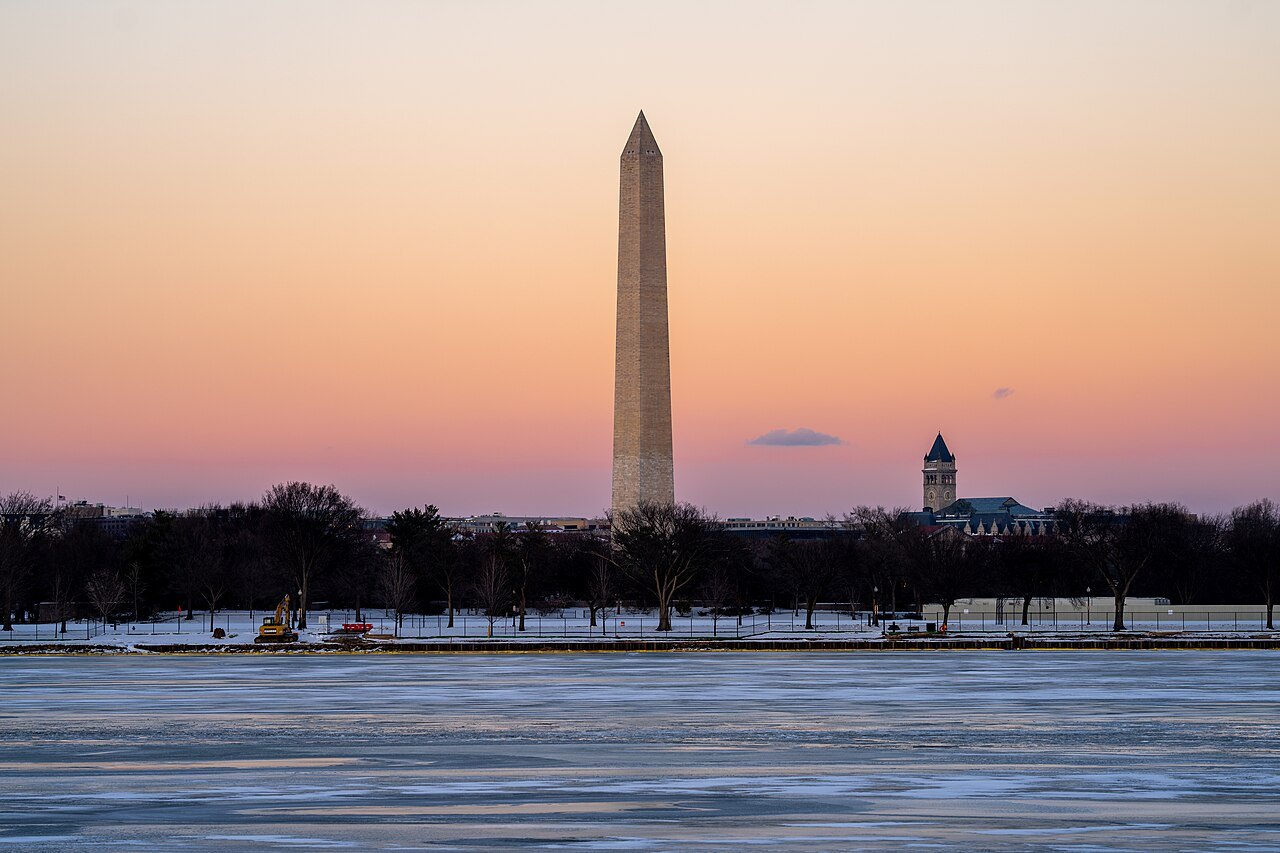 The Mall · 15th St10The Washington MonumentA 555-foot obelisk faced in three kinds of white marble, because the building kept stopping.
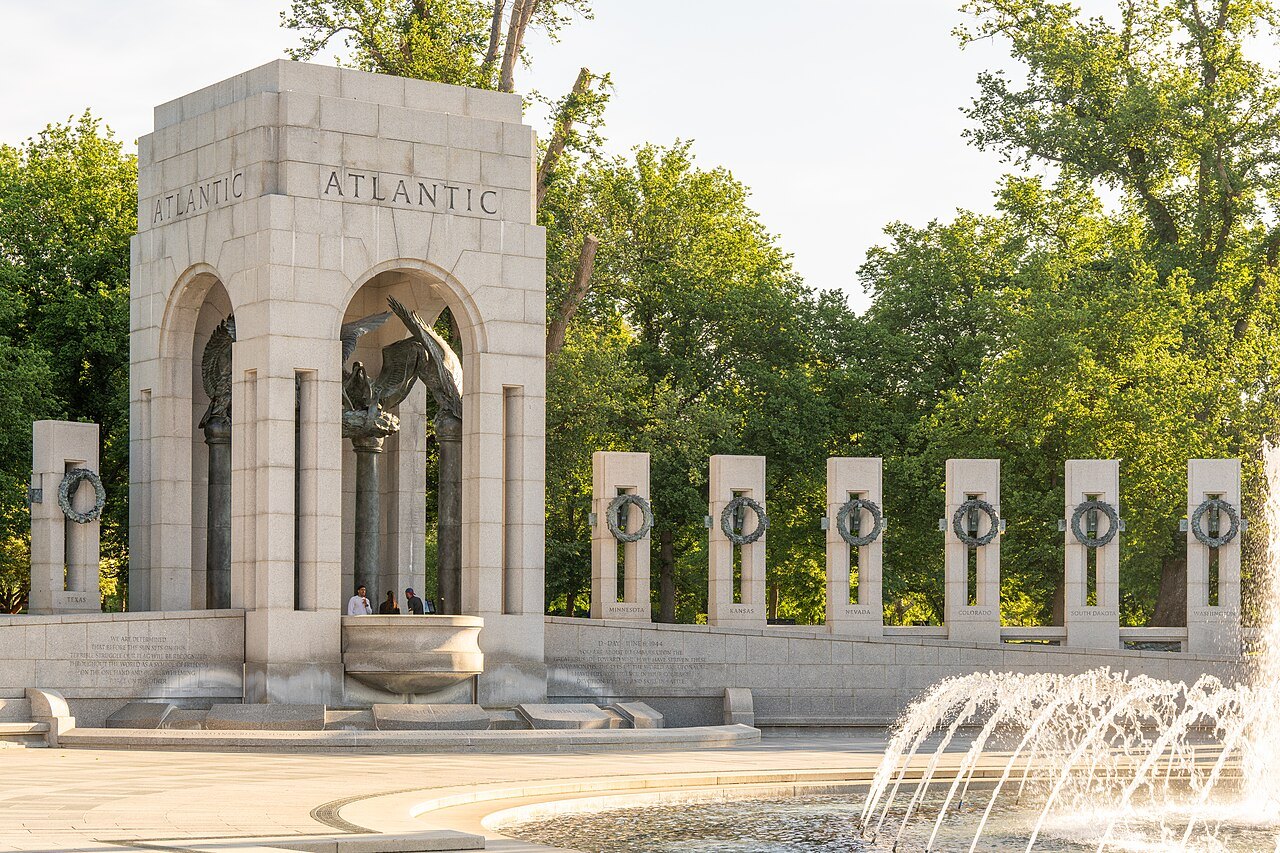 17th St · Constitution Gardens11The World War II, Korean War and Vietnam MemorialsFifty-six granite pillars round an oval fountain, the Korean War's nineteen statues, and Maya Lin's black granite walls of 1982.
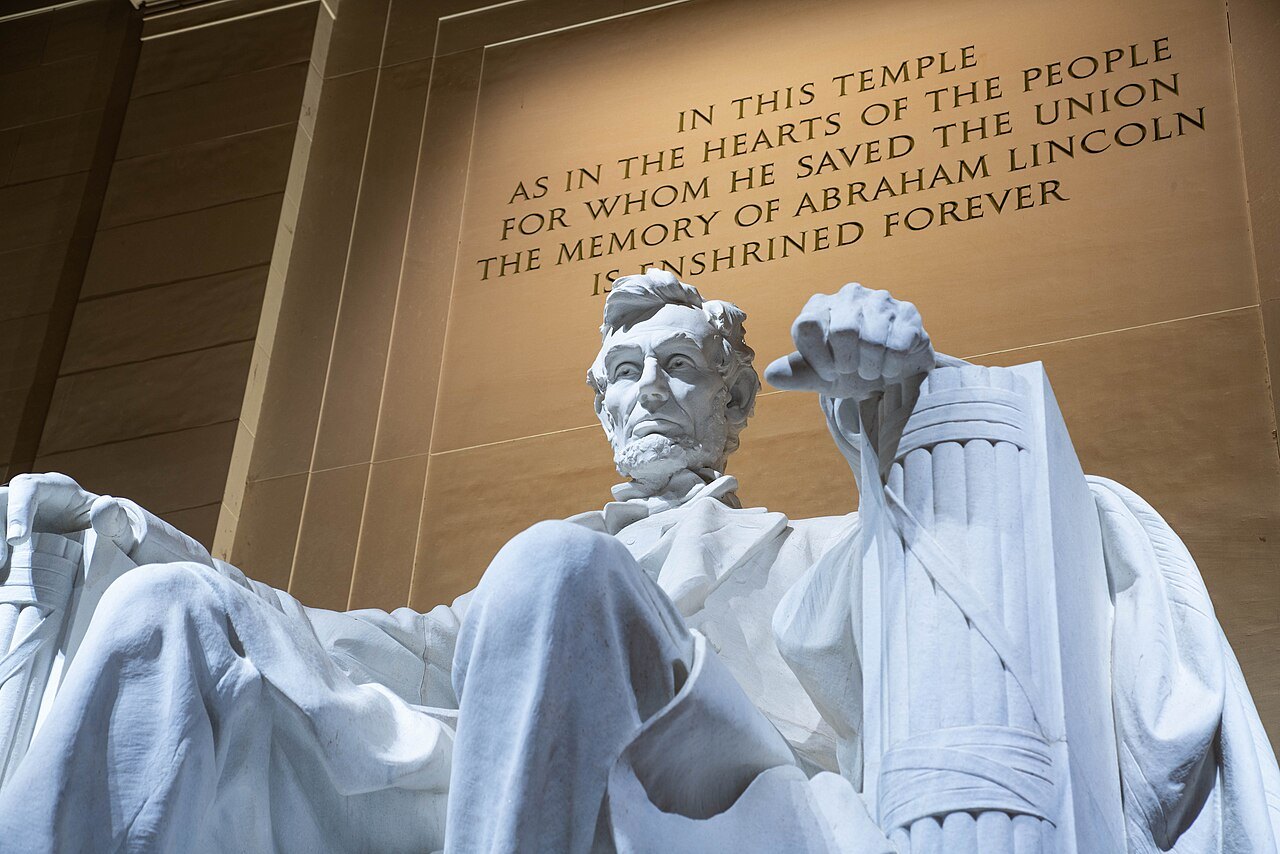 West end of the Mall · 23rd St12The Lincoln Memorial and the Reflecting PoolHenry Bacon's temple of 1922 at the west end of the Mall, round a statue enlarged to nineteen feet.
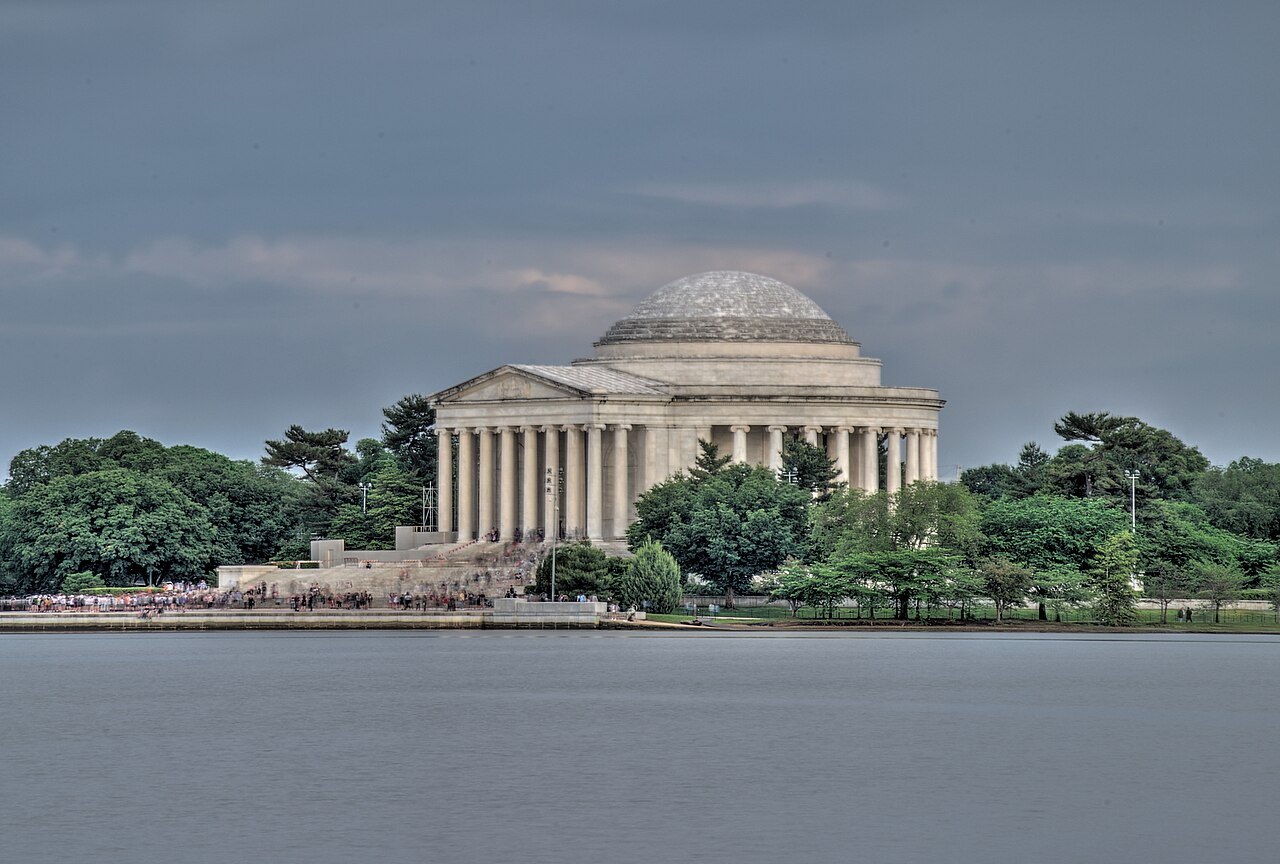 West Potomac Park · SW13The Tidal Basin and the Jefferson MemorialA man-made basin ringed by the cherry trees Tokyo gave in 1912, with the Jefferson Memorial of 1943 on its shore.
Northwest
The President's Park, Penn Quarter, Georgetown and the heights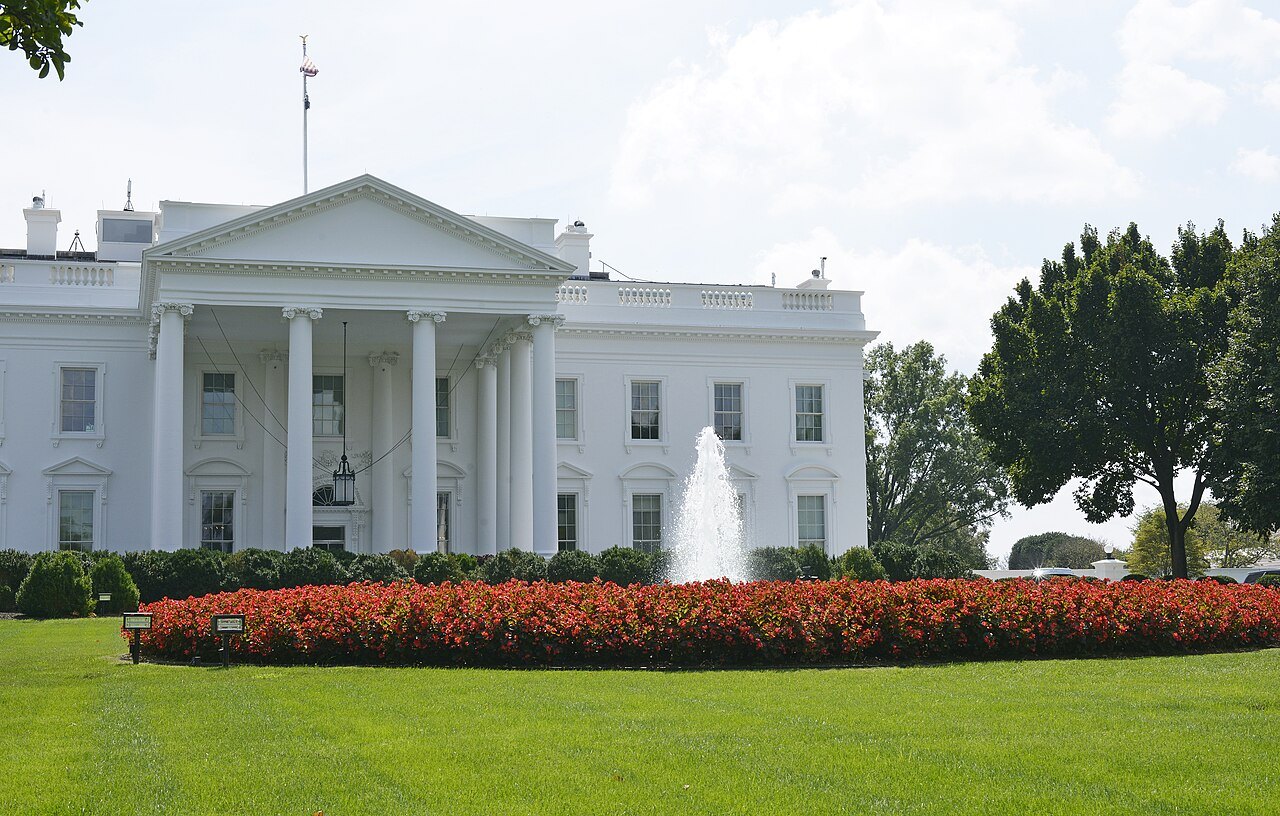 1600 Pennsylvania Ave NW14The White House and Lafayette SquareHome of every president since John Adams in 1800, designed by James Hoban and seen across Lafayette Square.
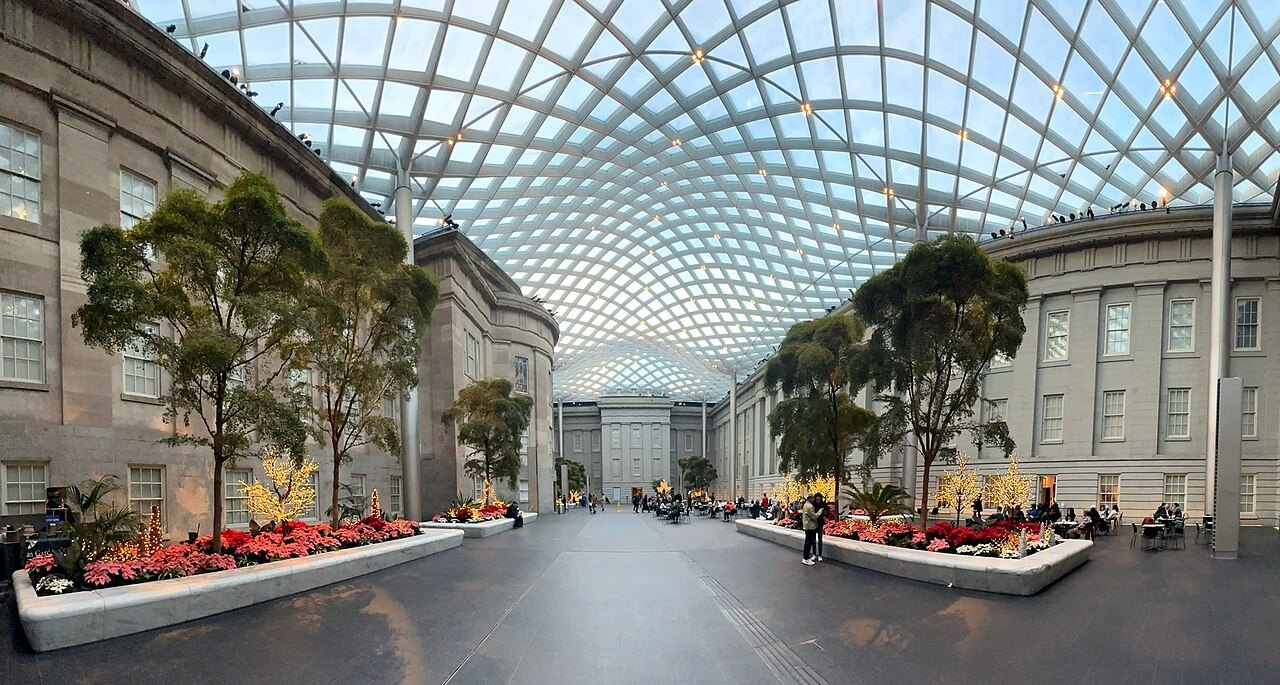 F St · 8th St NW15The National Portrait Gallery and the Old Patent OfficeA Greek Revival block built from 1836 to 1867 for the Patent Office, now two Smithsonian art museums.
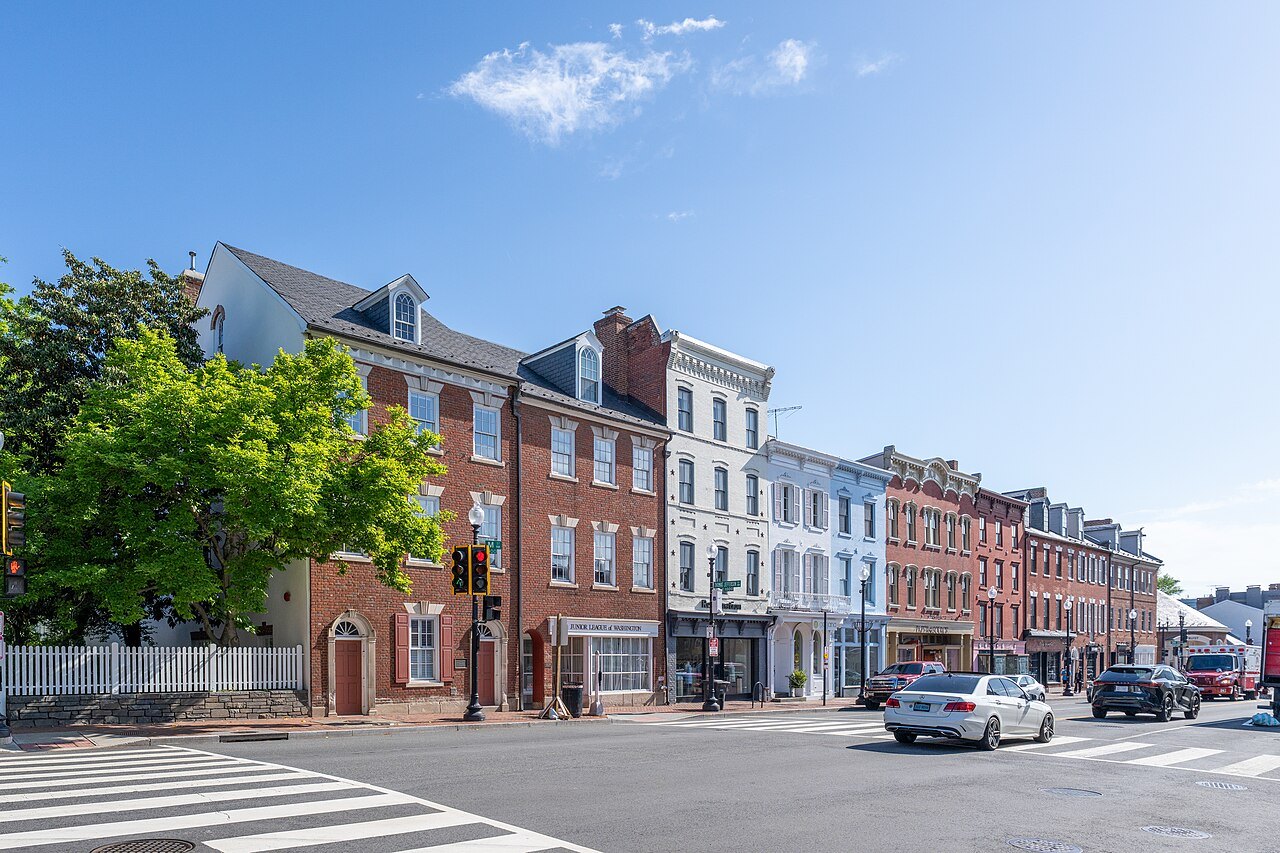 M St · Wisconsin Ave NW16Georgetown and the C&O CanalA Potomac port founded in 1751, forty years older than the capital, where the Chesapeake and Ohio Canal begins.
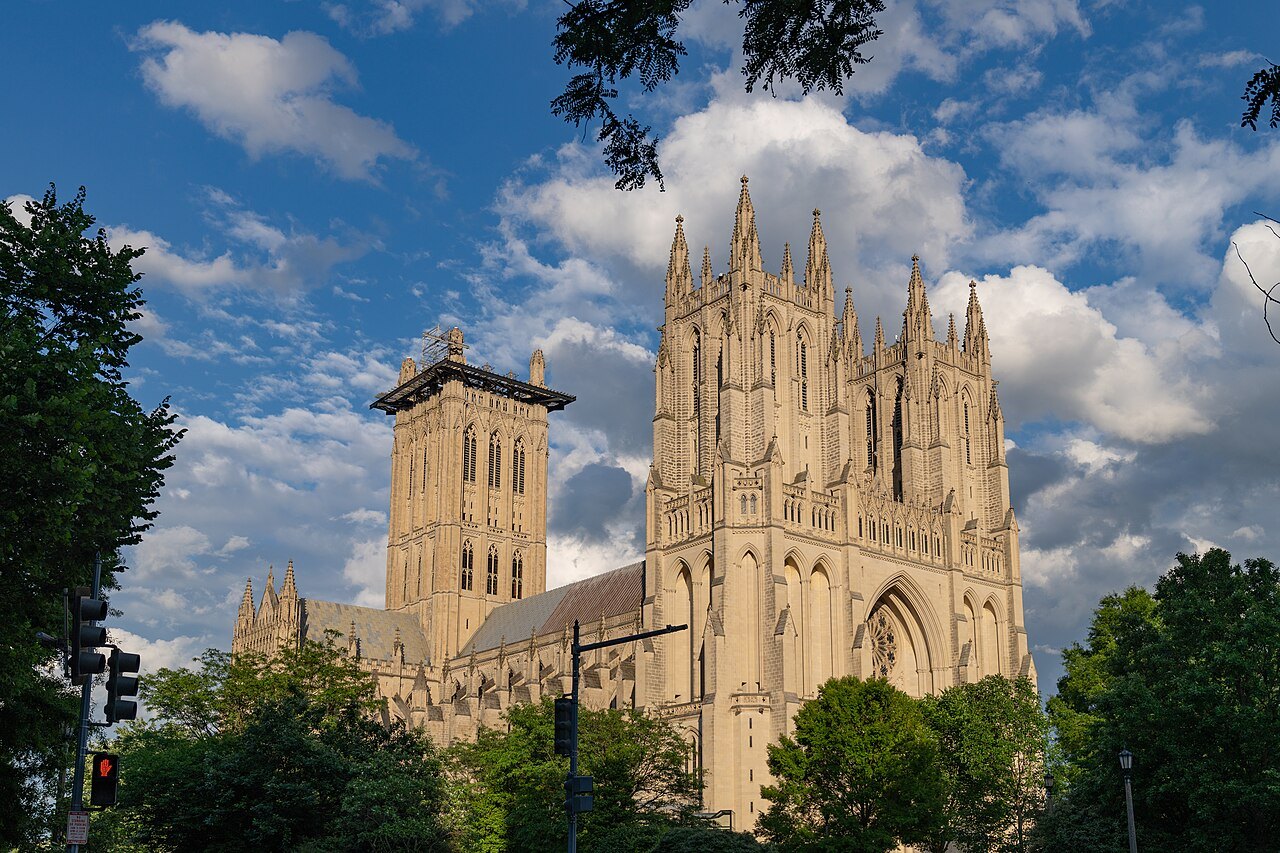 Wisconsin Ave · Massachusetts Ave NW17Washington National CathedralBegun in 1907 and finished in 1990, the second-largest church building in the United States.
Southeast
Across the Anacostia River
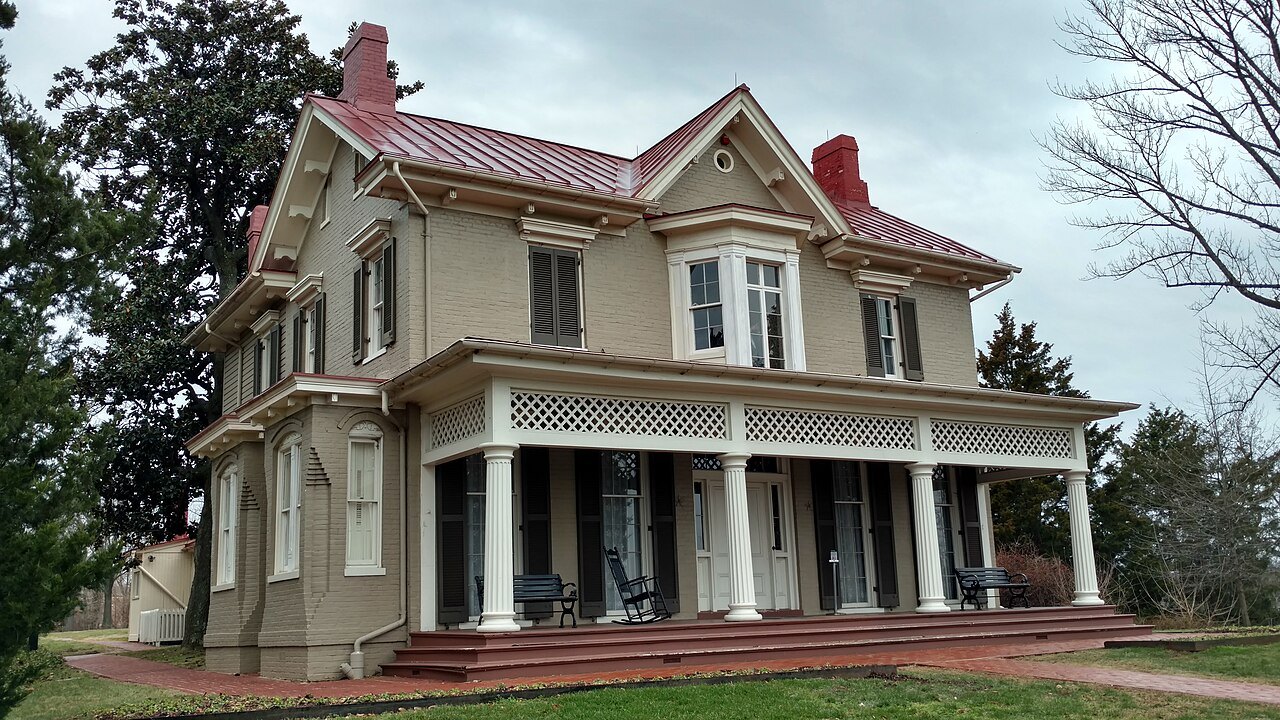
In full02
The Sights
How the sights are arranged
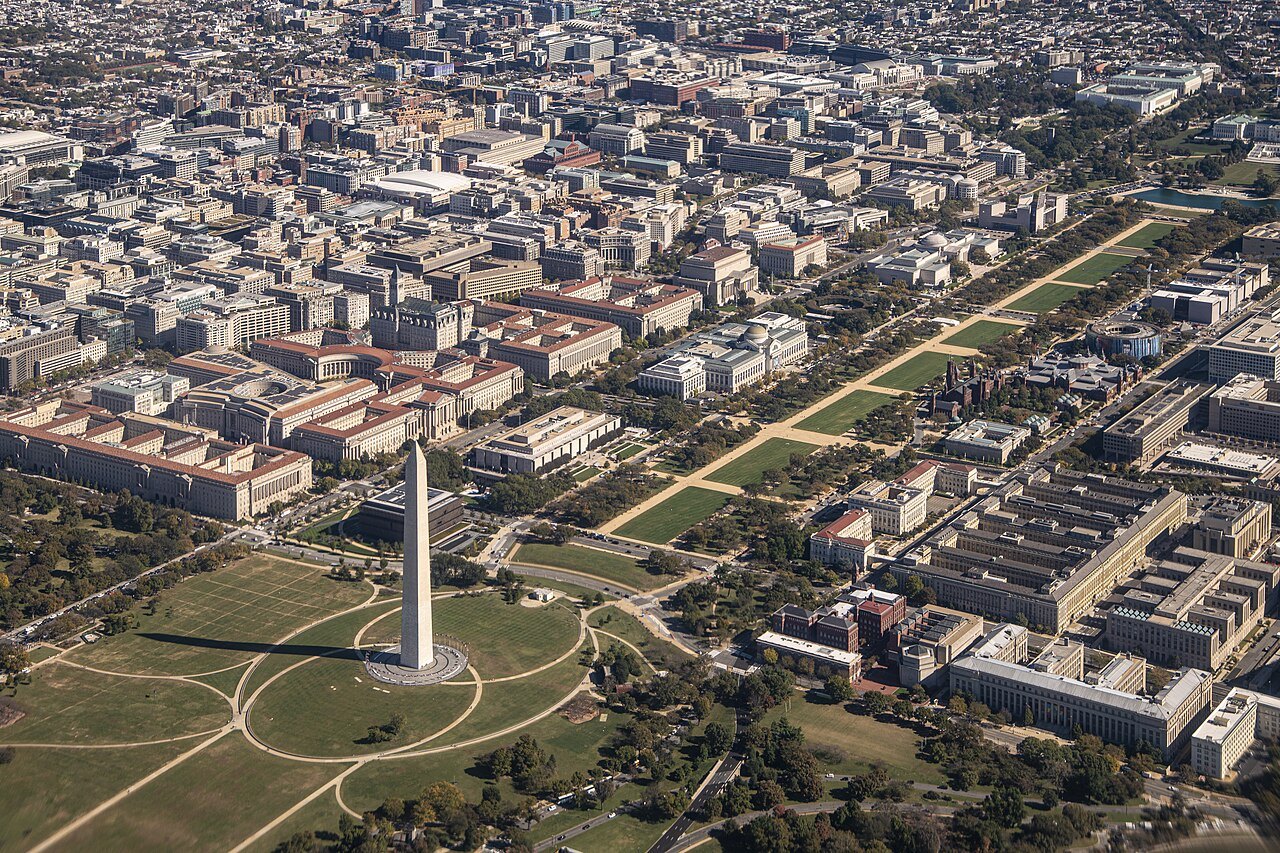
Washington's sights are laid out by its plan, and this page follows it. It starts on Capitol Hill, the zero point where the four quadrants meet, and runs west along the Mall, first past the museums on Constitution and Independence Avenues, then out among the monuments beyond 15th Street to the Lincoln Memorial and the Tidal Basin. From there it turns north to the White House and the neighborhoods of Northwest, and finally east across the Anacostia River to Frederick Douglass's house (see the plan).
Each page says what the place is, what you actually see, how a visit works, and what to check before you go. Every sight is inside the District of Columbia; the famous places across the rivers have their own page.
Where the District ends
The District of Columbia is small, about sixty-eight square miles, and its edges come sooner than visitors expect. The Potomac River is the boundary with Virginia: the Pentagon, Arlington National Cemetery, Old Town Alexandria, Mount Vernon and Great Falls are all in Virginia, and the airports at Reagan National and Dulles too. Annapolis and BWI airport are in Maryland. They are not on this list of city sights, and they have their own page (see day trips).
Inside the line, the city includes much more than the Mall: Georgetown, older than the capital itself, the cathedral on the heights of Northwest, and Anacostia across the river in Southeast are all part of Washington, and each has a page here.
The Hill
Capitol Hill holds the seat of Congress and the institutions around it. The Capitol, with its cast-iron dome, is the point from which the city's streets and quadrants are measured; behind it stand the Library of Congress, whose Jefferson Building has the grandest interior in the city, and the Supreme Court. At the foot of the hill to the north is Union Station, Daniel Burnham's station of 1907 and the arrival point for trains from the Northeast. A day here mixes a booked Capitol tour, the Library's timed entry and the free walk between them.
Along the Mall
The museums on the Mall are the heart of any visit, and nearly all of them are free. On the north side are the National Archives, with the Declaration of Independence, the Constitution and the Bill of Rights in its rotunda; the two buildings of the National Gallery of Art; the Natural History Museum; and the National Museum of African American History and Culture. On the south side are the Air and Space Museum and the Hirshhorn, the Smithsonian's museum of modern art in its concrete drum. Choose two a day, one side of the Mall at a time (see the Mall).
West of 15th Street
West of the Washington Monument, the Mall becomes a landscape of memorials and water. The Monument itself, the obelisk at the center of the city, can be climbed by elevator with a timed ticket. Beyond it lie the World War II Memorial, the Korean War Veterans Memorial and Maya Lin's Vietnam Veterans Memorial, the Reflecting Pool and the Lincoln Memorial at the end of the axis. To the south is the Tidal Basin, ringed with the Japanese cherry trees and the memorials to Jefferson, Franklin Roosevelt and Martin Luther King Jr. These places stand in the open air, cost nothing and never close; go early or after dark.
Northwest and across the river
North of the Mall stand the White House and Lafayette Square, seen from the pedestrian stretch of Pennsylvania Avenue and from the Ellipse, and the National Portrait Gallery and American Art Museum in the old Patent Office, a Greek Revival block in Penn Quarter. Farther west, Georgetown, the old tobacco port where the Chesapeake and Ohio Canal begins, keeps its brick streets and riverfront, and on the heights to the north the Washington National Cathedral, built from 1907 to 1990, stands on the highest ground in the city.
Across the Anacostia River, on a hill in the Anacostia neighborhood, is Cedar Hill, the house where Frederick Douglass lived from 1877 until his death in 1895. The Park Service shows it on ranger-led tours with limited places, and from its lawn you can see the Capitol dome across the river. It is the least visited sight on this list and one of the most rewarding.
Choosing what to see
With one day, walk the Mall from the Capitol to the Lincoln Memorial, with one museum on the way. With three days, add the Hill and the Library, the monuments and the Tidal Basin, and two or three of the big museums. With five, add the White House, Georgetown, the cathedral and Cedar Hill (see itineraries). Everyone has different priorities, but few visitors regret the Lincoln Memorial at night, the reading room of the Library of Congress or the view from Frederick Douglass's porch.
Tickets and transit
Most of these sights are free. The ones that need something arranged in advance are the White House, which needs a request through a member of Congress; the Washington Monument and the Library of Congress, which use timed tickets; Cedar Hill, with limited tour places; and at busy times the African American History and Culture Museum. The Capitol tour and the National Archives are free with optional reservations. Nearly every building screens visitors at the door (see booking ahead).
The Metro reaches almost all of them: Smithsonian, Federal Triangle, Archives and L'Enfant Plaza stations for the Mall; Capitol South and Union Station for the Hill; Foggy Bottom for the western memorials; Anacostia for Cedar Hill. Georgetown and the cathedral are reached by bus (see getting around).
What is not here
Some famous places are left out on purpose. The Pentagon, Arlington National Cemetery and Mount Vernon are in Virginia and belong to a day out, not to the city. Many fine museums and sights, from the American History Museum to the Holocaust Memorial Museum and Ford's Theatre, are covered on the Mall and booking pages rather than on pages of their own. And the government buildings that are not open to visitors, such as the agencies along Constitution Avenue, are not sights, however grand their fronts.