Home · Sights · Washington National Cathedral
What you are looking at01
Washington National Cathedral
Wisconsin Ave · Massachusetts Ave NW
- The naveA long, high Gothic nave of buff limestone, finished and dedicated with the west rose window in 1976.
- The Gloria in Excelsis towerThe central tower over the crossing, dedicated in 1964, with a carillon and a ring of change-ringing bells.
- The Pilgrim Observation GalleryA gallery high in the west towers with views over the city.
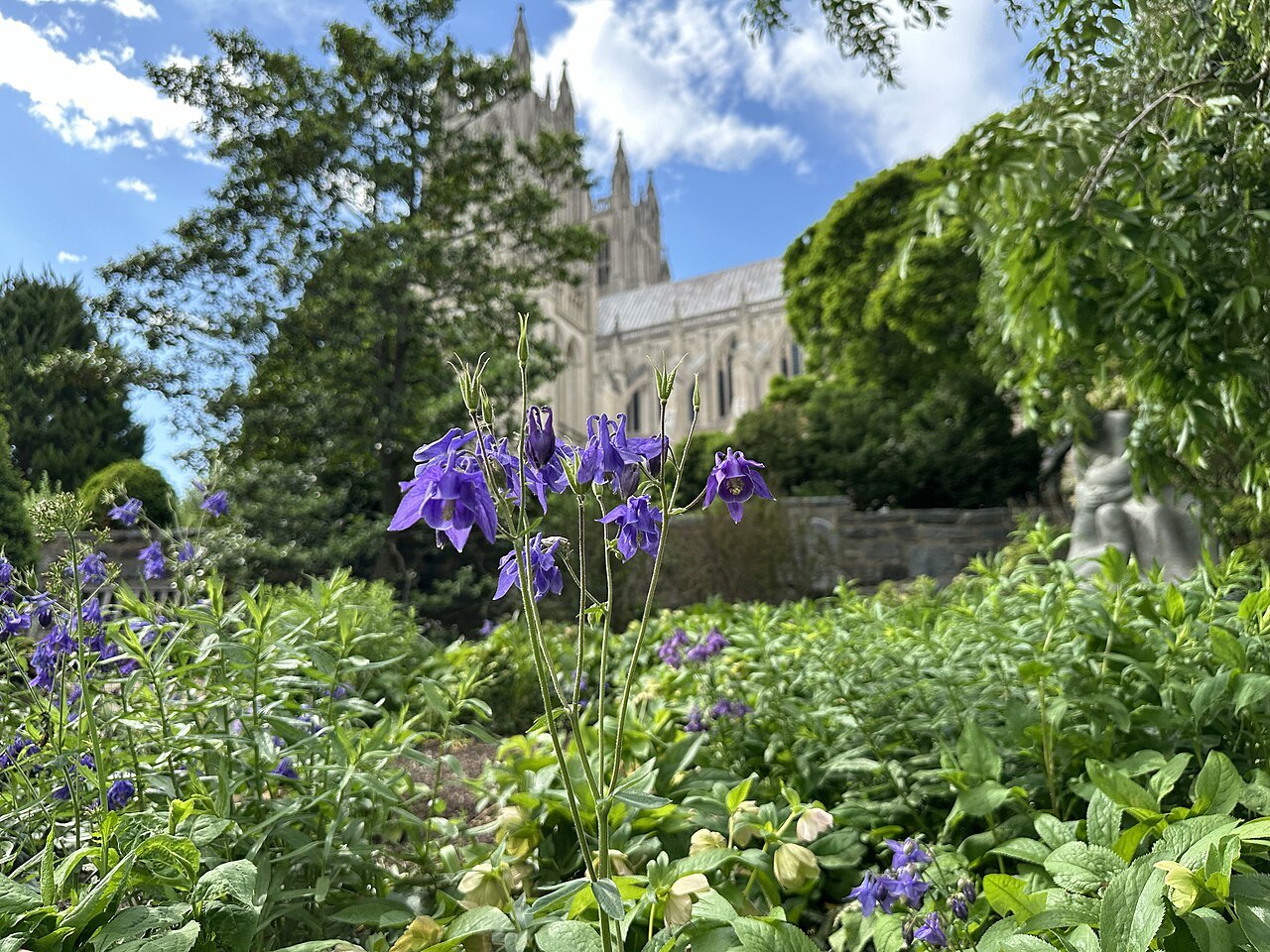
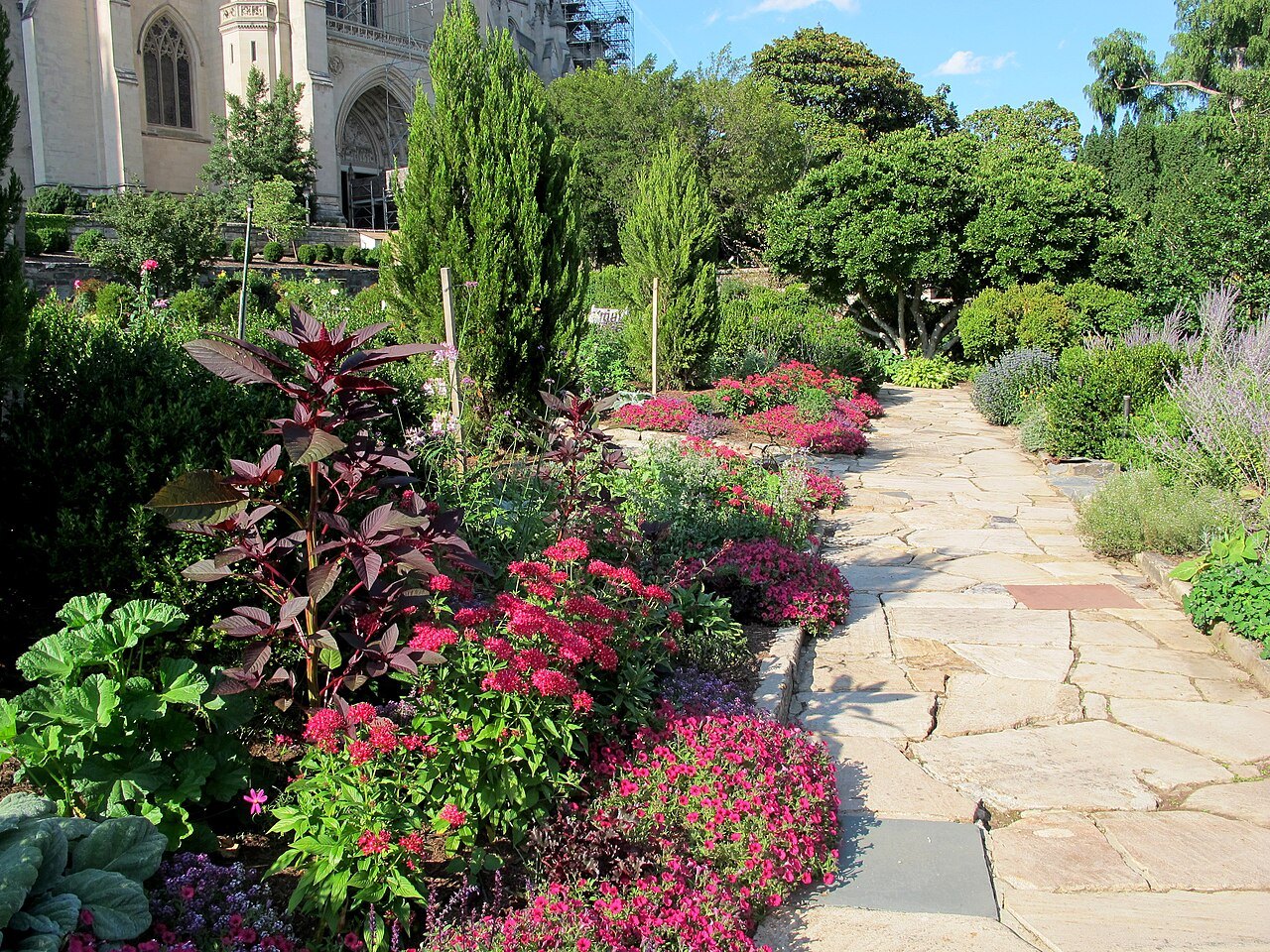
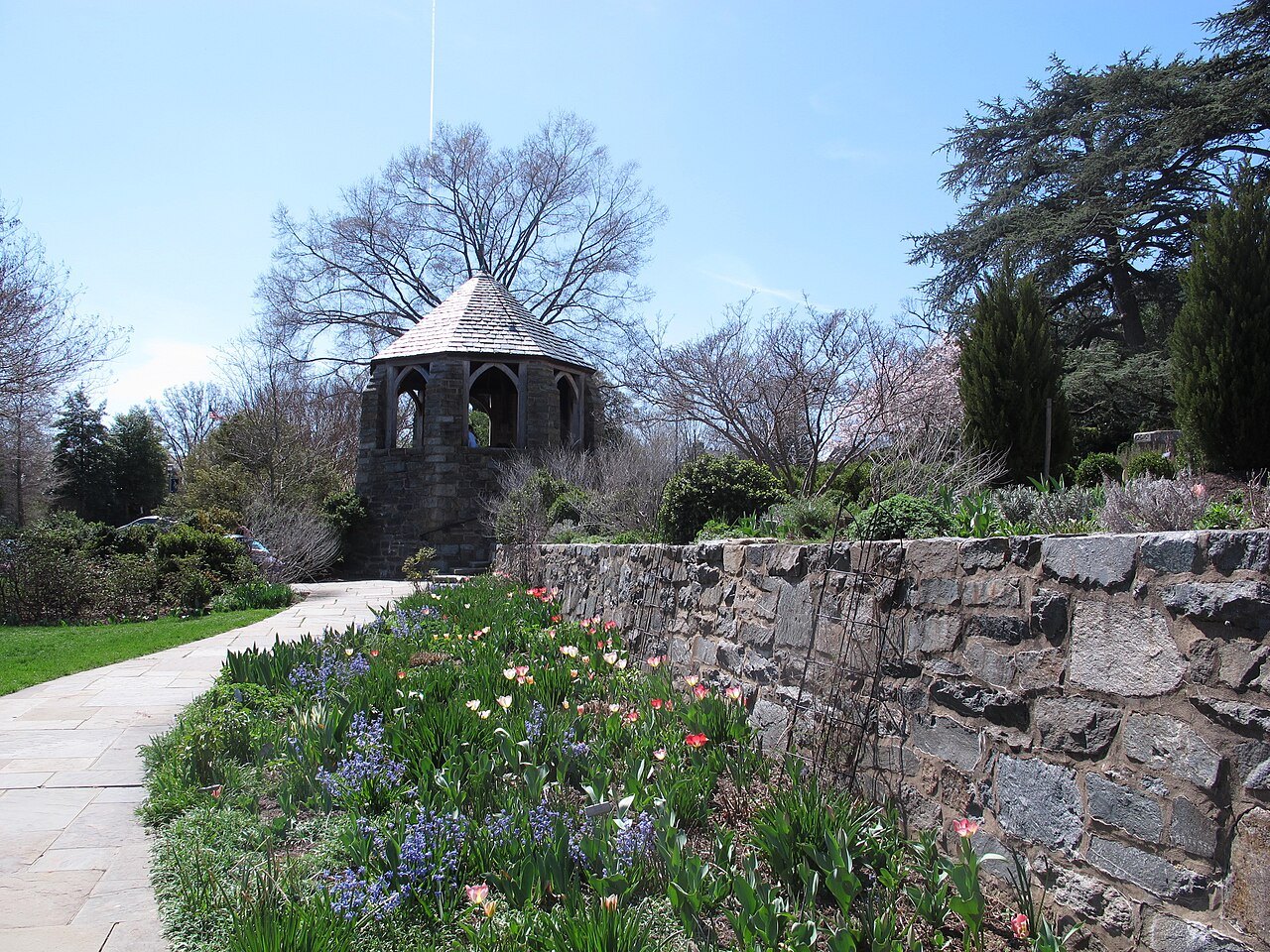
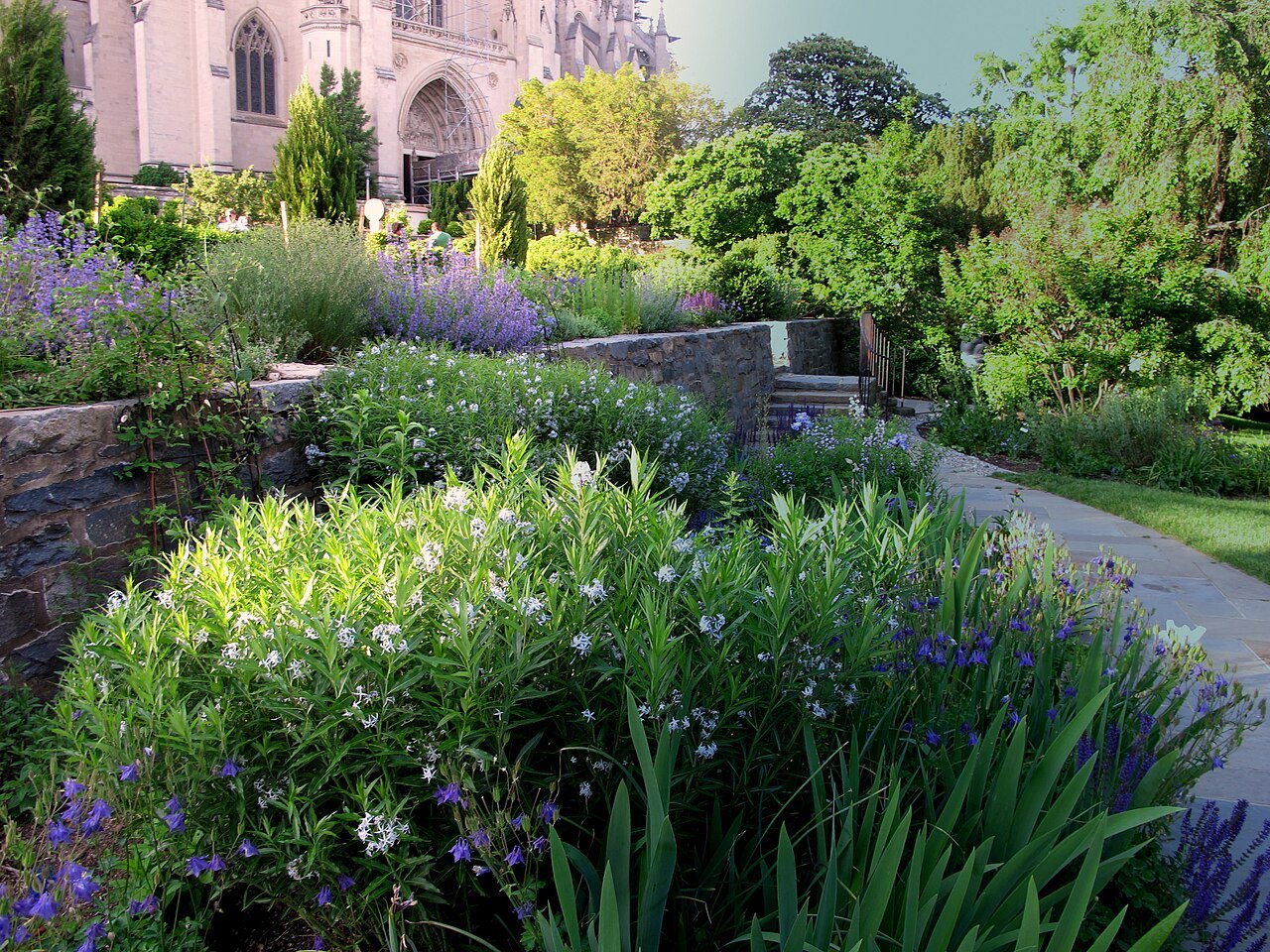
- The Bishop's GardenA walled garden on the south slope, with a knot garden by Nellie B. Allen.
- The Canterbury PulpitThe stone pulpit where Martin Luther King Jr. gave his last Sunday sermon in 1968.
- The Now and Forever windowsStained glass designed by Kerry James Marshall, dedicated in 2023.
The sight in full02
Reading the place
Why it matters
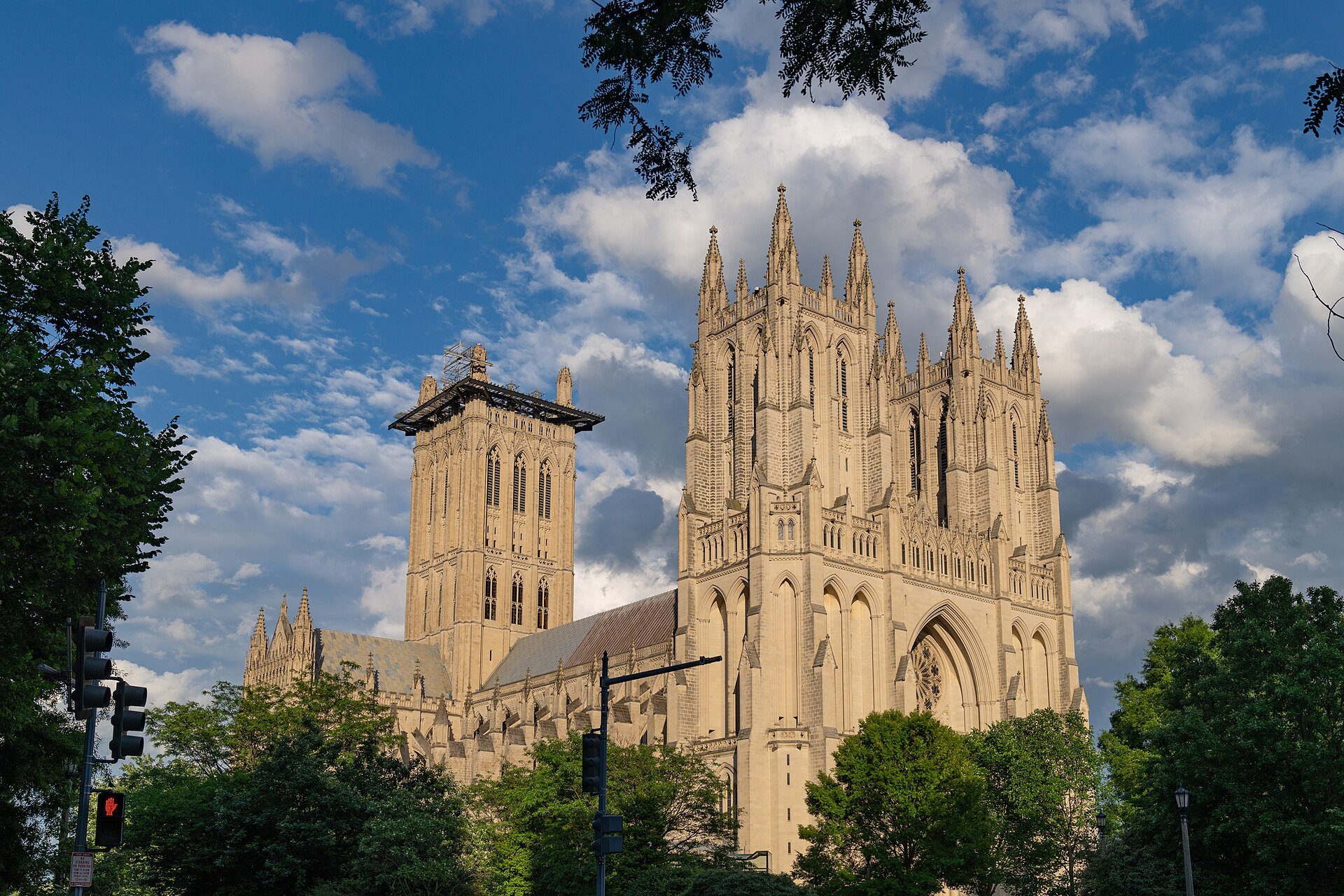
The Cathedral Church of Saint Peter and Saint Paul, called Washington National Cathedral, is a cathedral of the Episcopal Church, the seat of both the presiding bishop of the church and the bishop of Washington. It stands on Mount Saint Alban, at the meeting of Wisconsin and Massachusetts Avenues in Northwest, a wooded hill about four hundred feet above the Potomac that is the highest point in the city. It is the second-largest church building in the United States, and its central tower is visible from much of the District.
L'Enfant's plan of 1792 had called for a great church for national purposes, open to all, on the site now occupied by the National Portrait Gallery (see the plan). It was never built there. The cathedral that rose instead is a church of one denomination that has become the place of national services, state funerals and prayers in times of crisis, which is why it is called national.
A century of building
Congress chartered the Protestant Episcopal Cathedral Foundation in 1893, and Bishop Henry Yates Satterlee chose the hill in 1896. The foundation stone was laid on 29 September 1907, with President Theodore Roosevelt present, and it includes a stone from the fields near the Church of the Nativity in Bethlehem. The final stone, a limestone finial, was set on top of the south tower on 29 September 1990, eighty-three years to the day later, with President George H. W. Bush present.
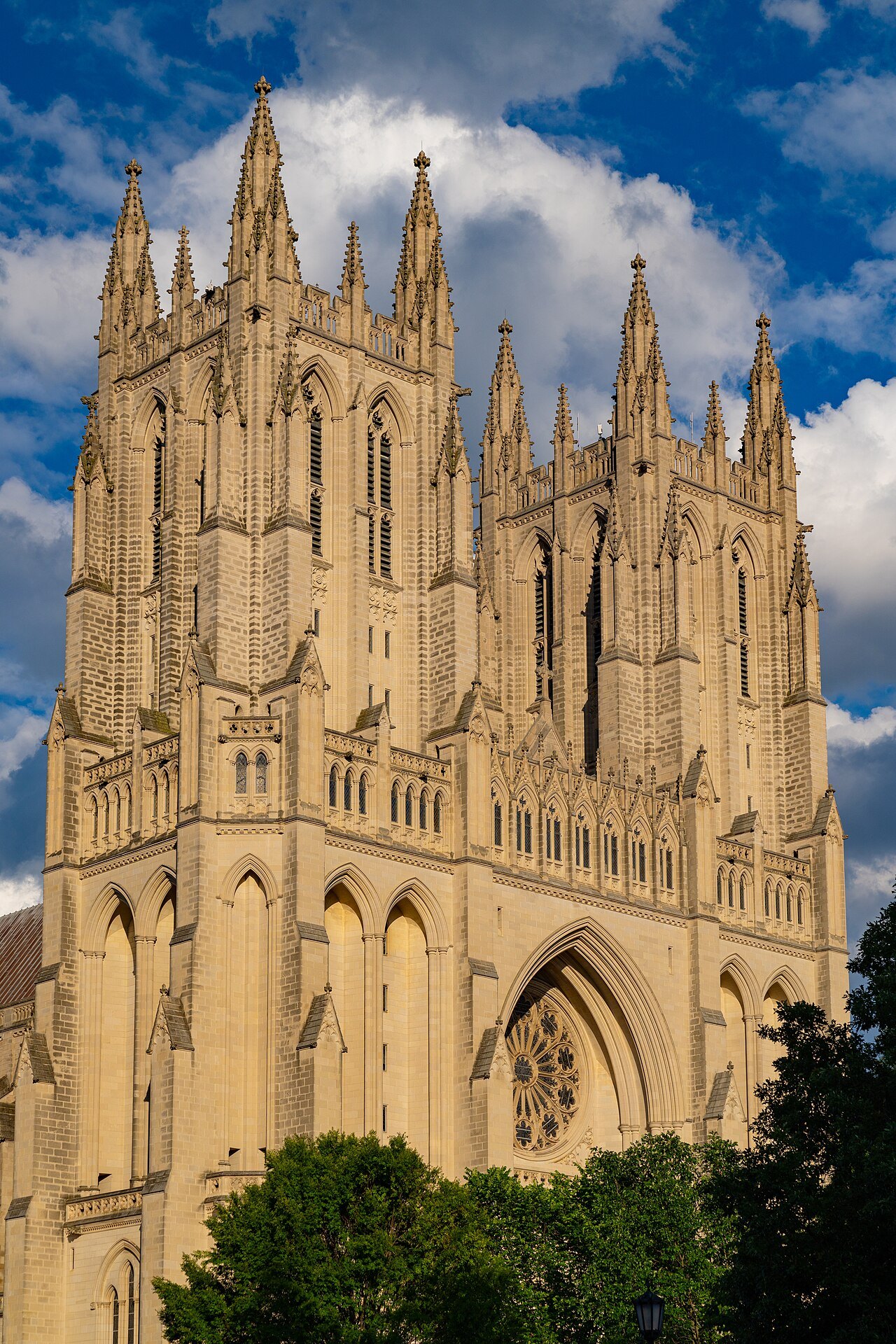
The design was by George Frederick Bodley, a British Gothic Revival architect, with Henry Vaughan, in the English Gothic style of the late fourteenth century. After both died, Philip Hubert Frohman carried it forward for decades, enlarging the west front and adding the carillon stage of the central tower. Construction stopped and started with the money: the funding came entirely from private sources, every block of Indiana limestone paid for by a donation, sometimes coin by coin. The longest unbroken stretch of work, from 1960 to 1977, built the central tower, the south transept, the nave and parts of the west front.
Frederick Law Olmsted Jr. planned the landscape of the Cathedral Close, the grounds around the church, which also hold schools and the Bishop's Garden.
Inside
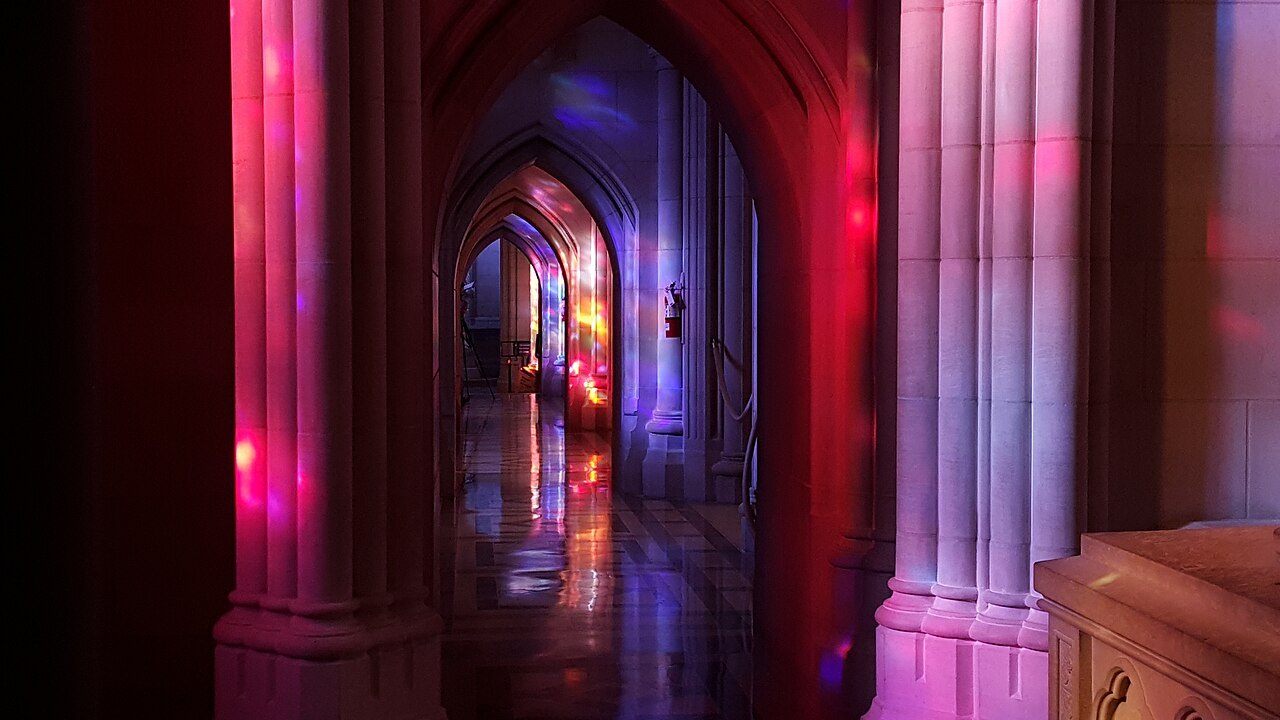
The plan is a long cross: a nine-bay nave with wide aisles, a five-bay chancel and a six-bay transept, vaulted in stone and lit by stained glass. The west rose window was dedicated with the nave in 1976. The bishop's seat, the cathedra, is made of stone from Glastonbury Abbey in England, and the stone pulpit from Canterbury Cathedral carries carved scenes of English church history, including the signing of Magna Carta. It was from this pulpit that Martin Luther King Jr. gave his last Sunday sermon, on 31 March 1968, four days before he was killed.
The glass and carving hold a whole century's gifts and memorials, many honoring Americans and events in the life of the nation. In 2023 the cathedral dedicated the Now and Forever windows, designed by the painter Kerry James Marshall, with a poem by Elizabeth Alexander, in the bays where windows honoring two Confederate generals had been removed. On the crypt level, the Bethlehem Chapel was the first part of the cathedral to be completed, and its architect, Henry Vaughan, is buried there.
The tower, the bells and the view
The Gloria in Excelsis central tower, dedicated in 1964, rises about three hundred feet over the crossing. It holds two complete sets of bells, a fifty-three-bell carillon and a ten-bell peal for English change ringing, a combination unique in North America, rung for services and occasions.
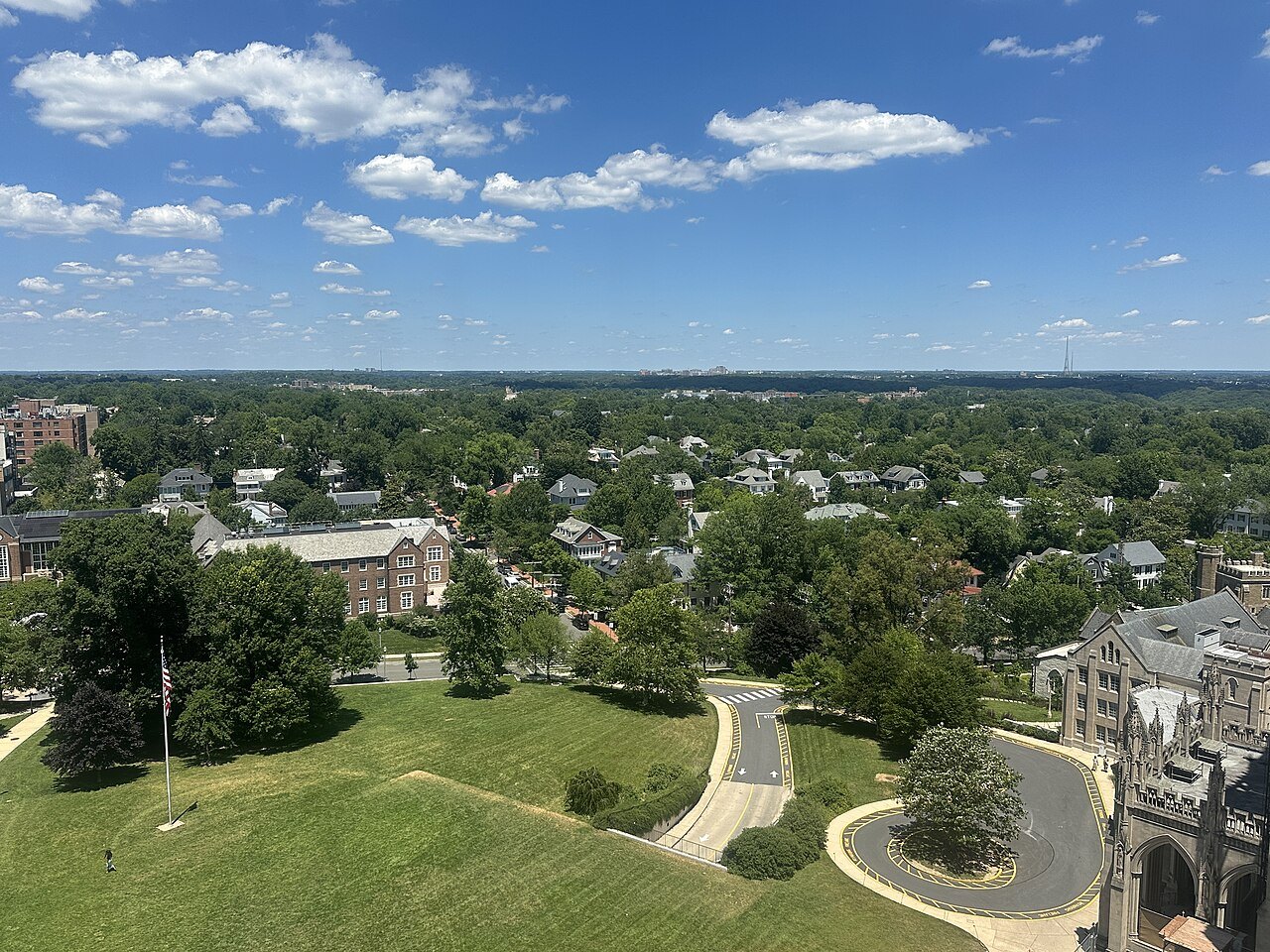
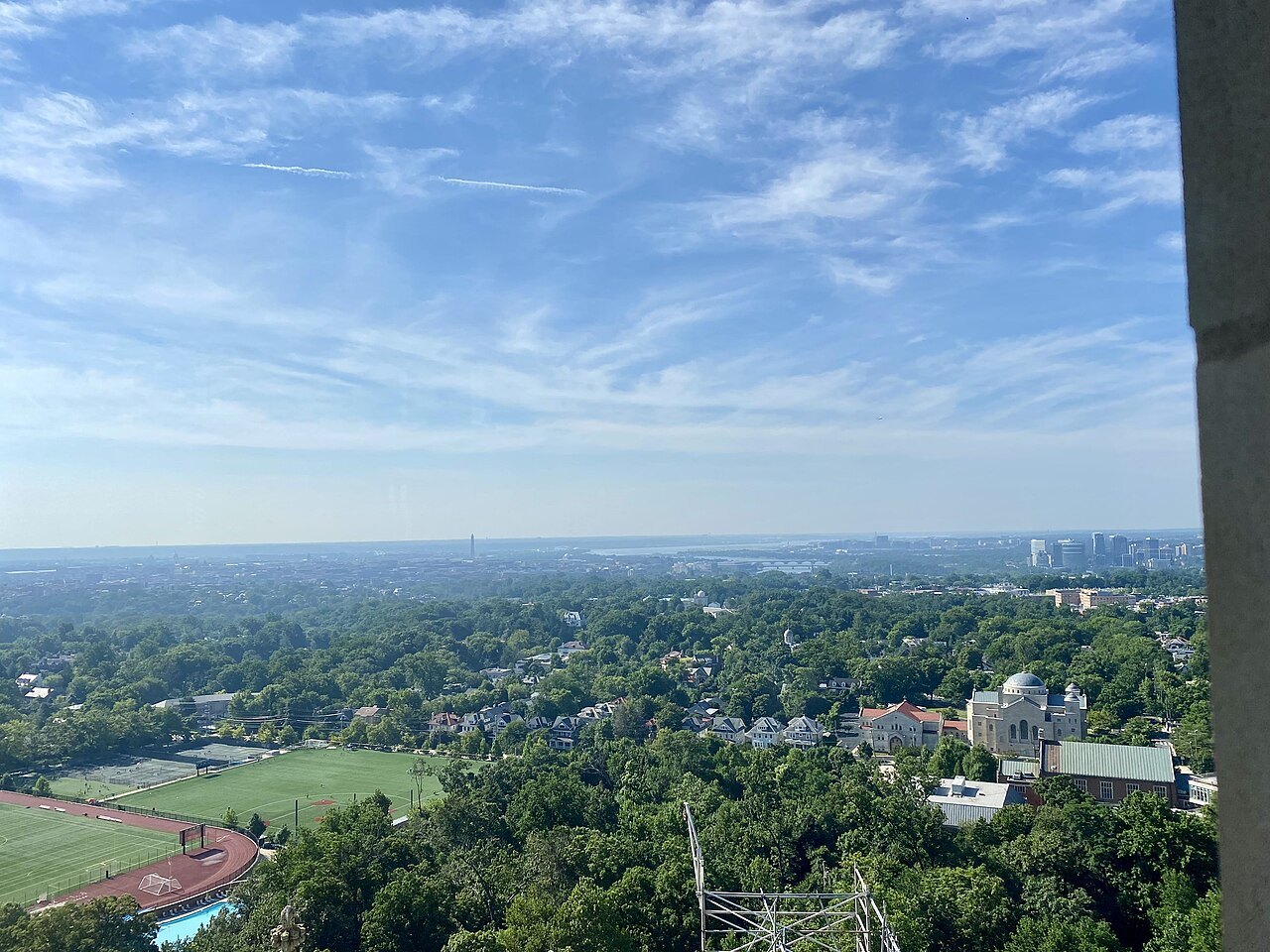
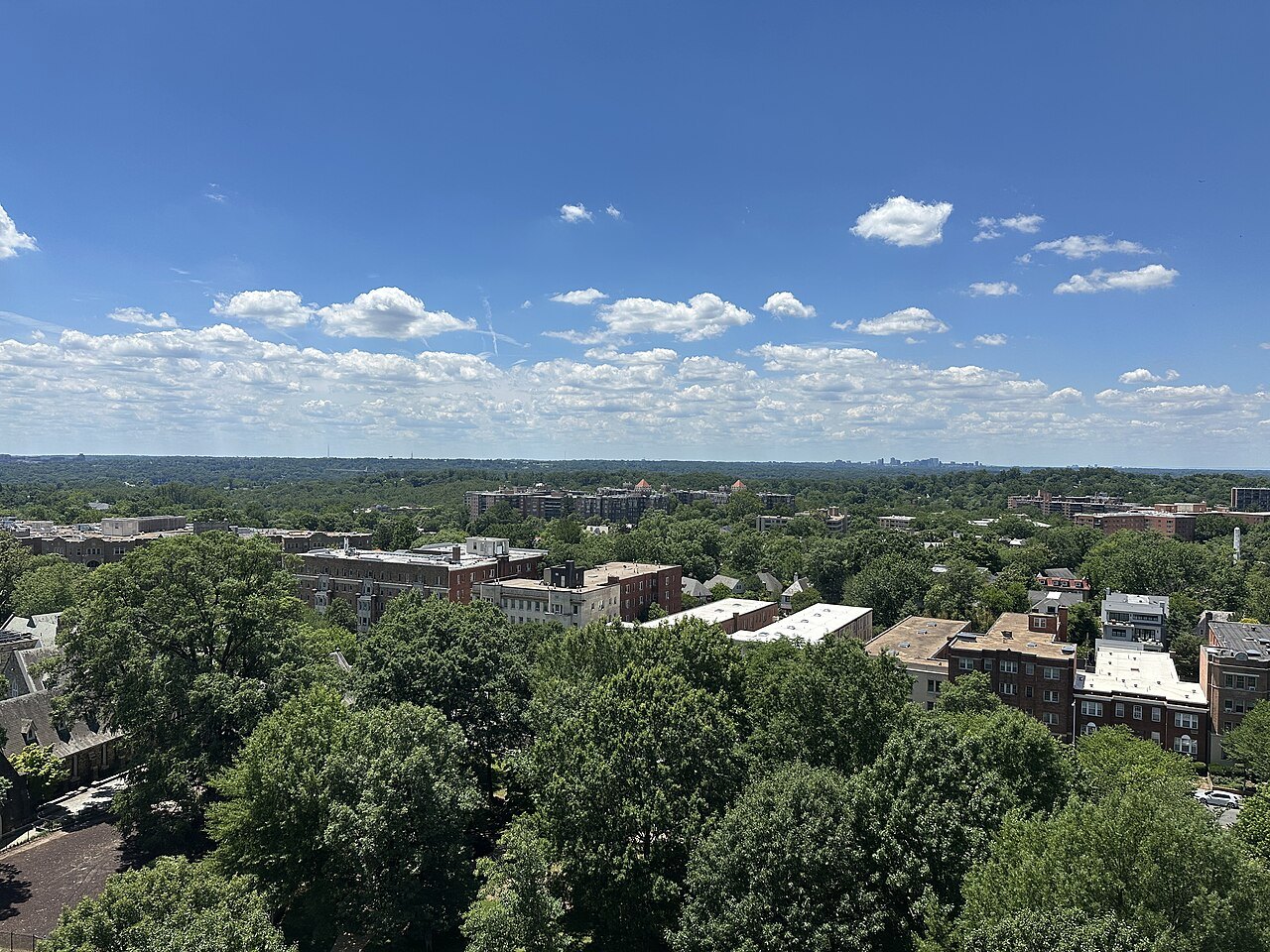
The Pilgrim Observation Gallery, high in the west towers, has some of the widest views in the city, out over the rooftops of Northwest toward the Mall and the river. Access to the gallery depends on the cathedral's own schedule and is not always available, so check before planning around it.
The earthquake
In 2011 an earthquake centered in central Virginia damaged the cathedral: pinnacles and carvings, including some gargoyles, were broken, falling masonry punched a hole in the roof, and netting was hung throughout the nave to protect visitors. Repair and restoration have gone on in stages ever since, funded by fresh appeals, so scaffolding on parts of the exterior is a normal sight. It is worth looking closely at the carving that has been restored.
How to visit
The cathedral is well north of the Mall. Buses run up Wisconsin Avenue, or you can walk up from the Red Line stations to the east (see getting around); allow extra time, because it is a real climb. The cathedral charges an admission fee for sightseeing visits, while anyone may attend worship services without paying, and it is a working church, so parts may close for services, weddings, funerals and national events. Check the cathedral's own calendar before you go.
Give it two hours with the Bishop's Garden. The cathedral runs guided tours of different kinds, so ask which are on offer when you book. The gargoyles and grotesques on the exterior are high up and small, so binoculars help. During services, put the camera away and follow the ushers.
Honest notes
The building looks medieval but is younger than many visitors' grandparents, finished in 1990. That is part of its interest: the carvings are full of twentieth-century people and things, placed among the saints. It is also far from the other sights, so pair it with Georgetown or with the neighborhoods of upper Northwest rather than with the Mall.
Where to go next03
Nearby
- Nearby · M St · Wisconsin Ave NWGeorgetown and the C&O CanalA Maryland tobacco port founded in 1751, forty years before the capital, with brick rowhouses on steep streets, the start of the Chesapeake and Ohio Canal, a riverfront, a university on the hill and a garden estate at the top.Read the page →
- Nearby · 1600 Pennsylvania Ave NWThe White House and Lafayette SquareThe house James Hoban designed in 1792, home to every president since John Adams in 1800, burned in 1814 and rebuilt inside its walls in the 1950s, seen best from the square to its north and the Ellipse to its south.Read the page →
- Nearby · West end of the Mall · 23rd StThe Lincoln Memorial and the Reflecting PoolHenry Bacon's Greek temple of 1922 at the west end of the Mall, Daniel Chester French's Lincoln seated inside, and in front of them a pool more than two thousand feet long that doubles the Washington Monument.Read the page →