Home · Sights · The Lincoln Memorial and the Reflecting Pool
What you are looking at01
The Lincoln Memorial and the Reflecting Pool
West end of the Mall · 23rd St
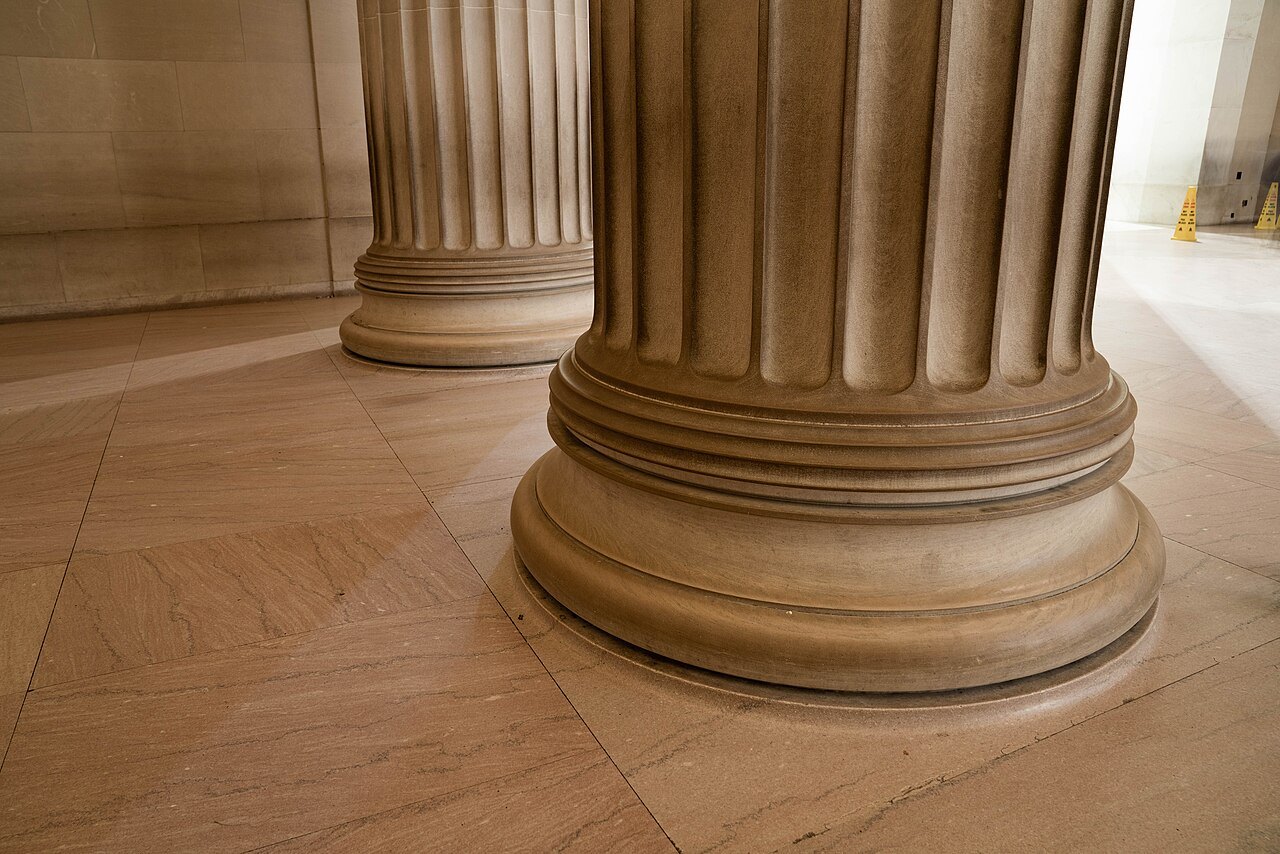
- The colonnadeThirty-six Doric columns of Colorado marble, one for each state in the Union when Lincoln died.
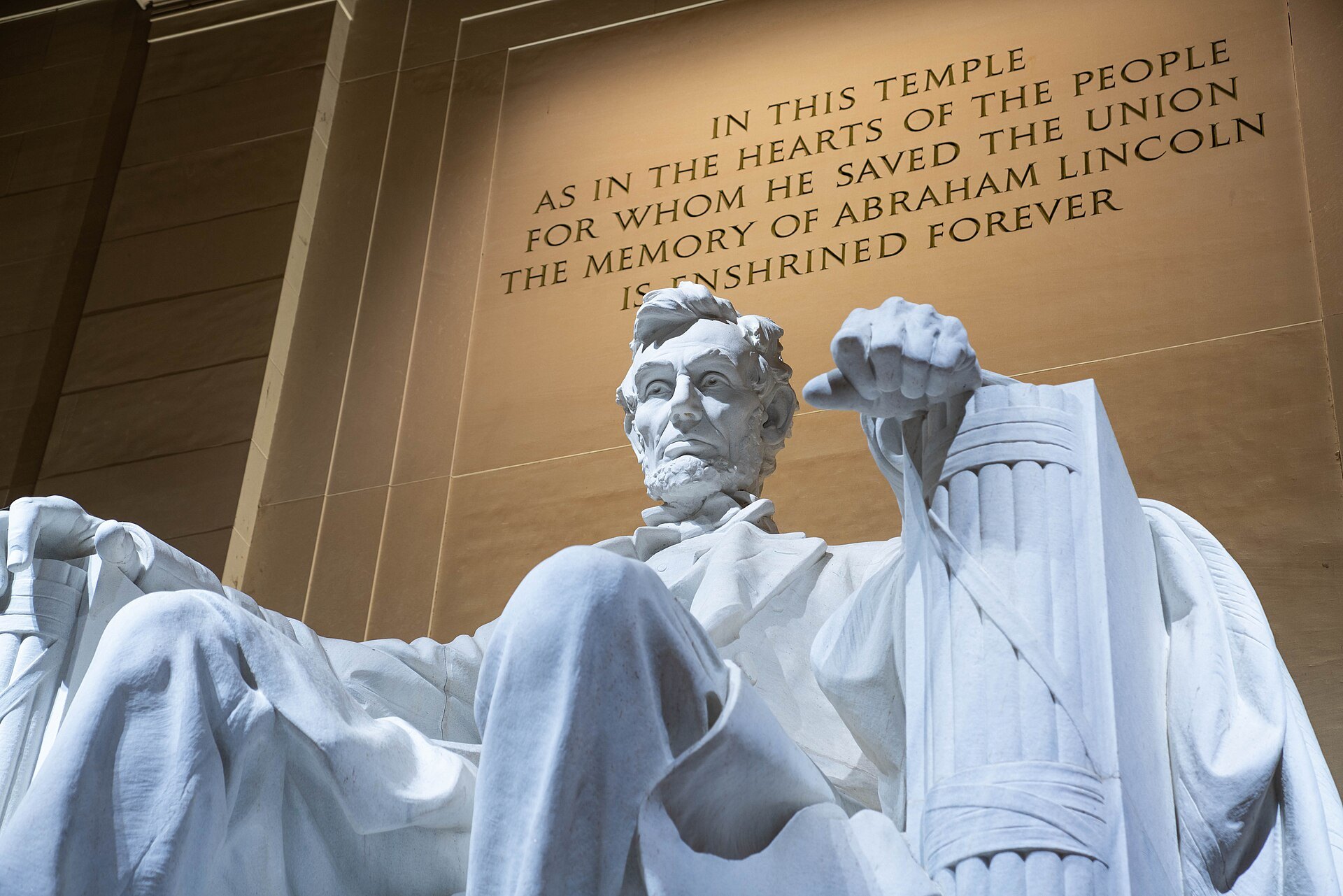
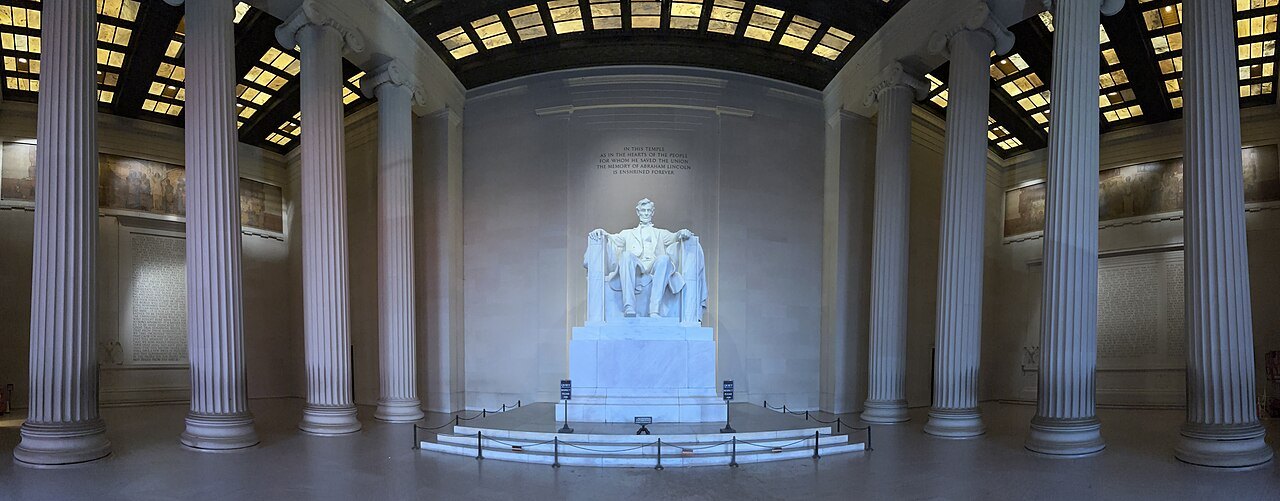
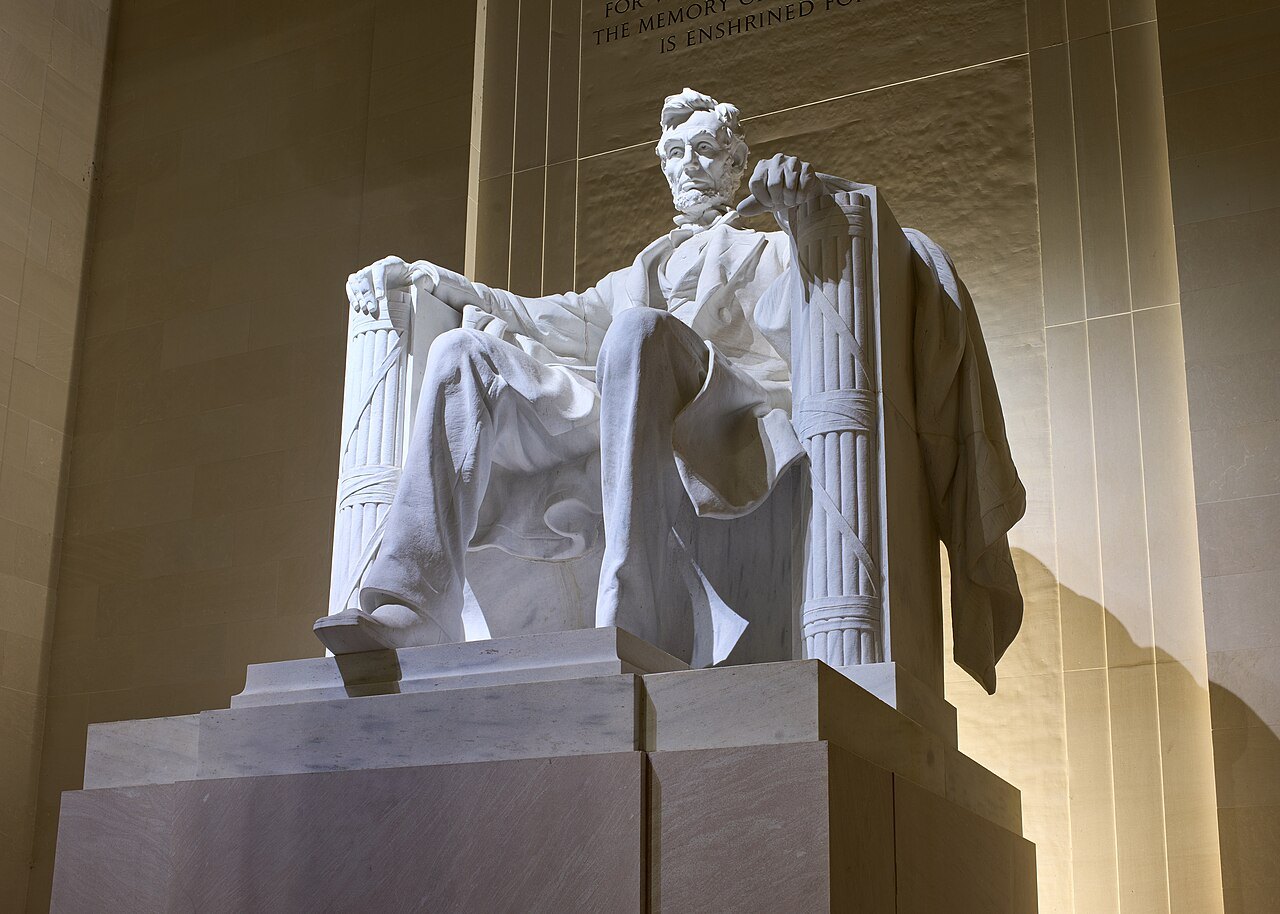
- The statueDaniel Chester French's seated Lincoln, nineteen feet tall, carved by the Piccirilli brothers.
- The two speechesThe Gettysburg Address and the Second Inaugural carved on the walls of the side chambers.
- Guérin's muralsTwo long paintings above the inscriptions: Freedom and Justice on one side, Unity on the other.
- The King landingThe engraved spot on the steps where Martin Luther King Jr. spoke in 1963.
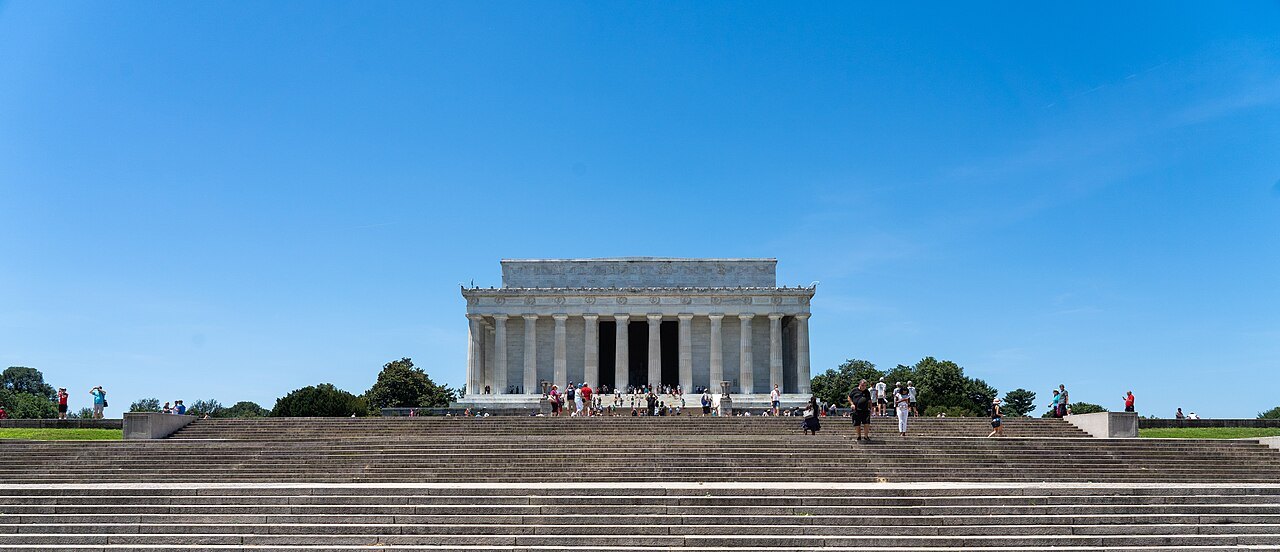
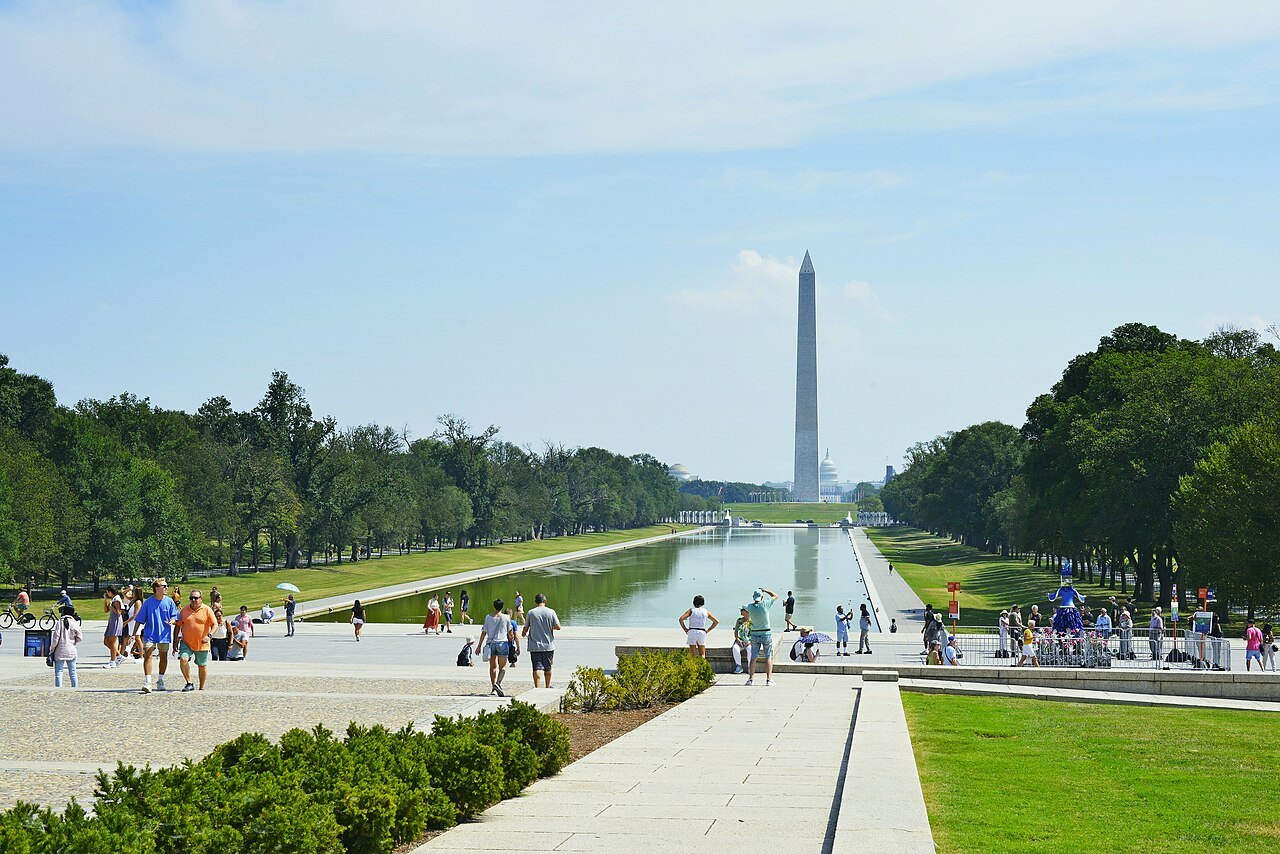
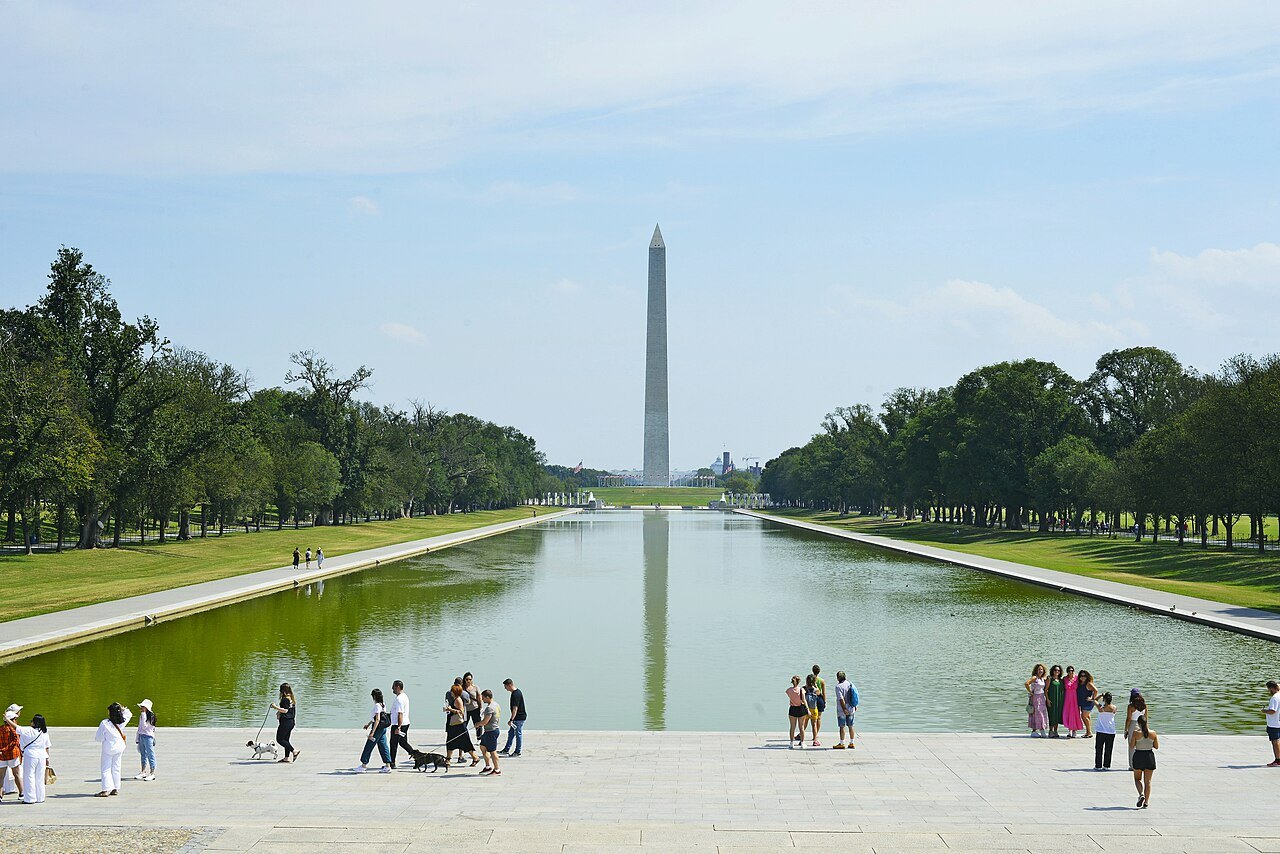
- The Reflecting PoolA pool 2,028 feet long between the memorial and the World War II Memorial.
The sight in full02
Reading the place
Why it matters
The Lincoln Memorial closes the west end of the Mall, on the axis that runs from the Capitol through the Washington Monument, and it is the most visited memorial in the city: more than seven million people come each year. It honors Abraham Lincoln, the sixteenth president, who led the Union through the Civil War and was assassinated in 1865, in the form of a Greek temple with the president seated inside.
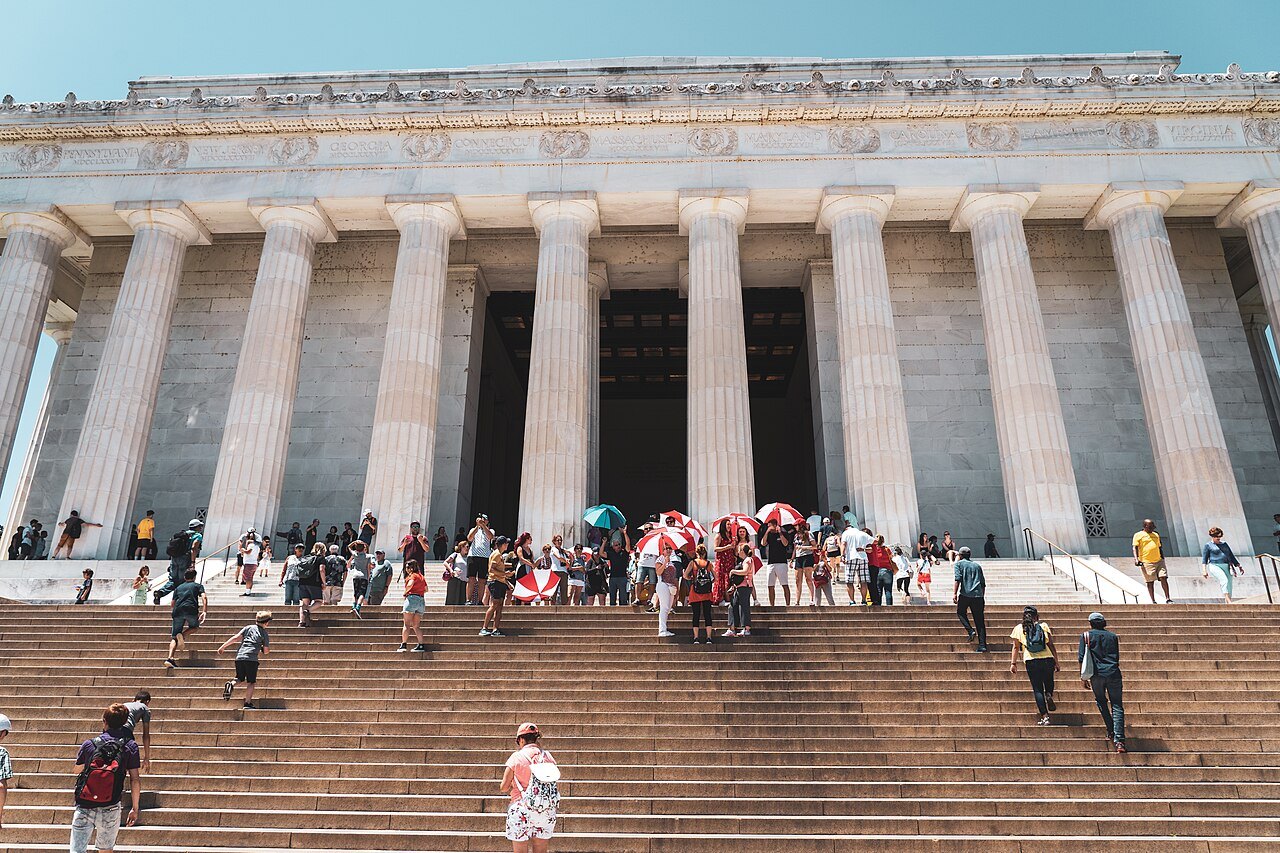
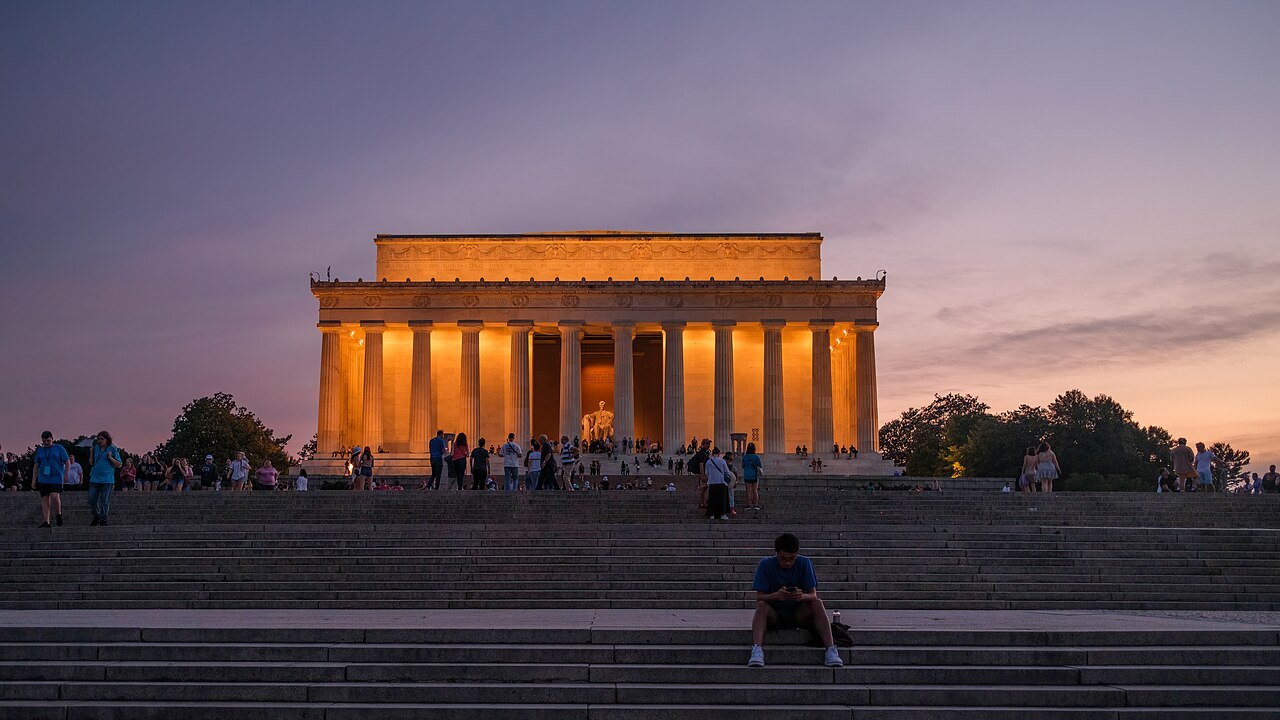
It has also become a stage. Its steps are where Marian Anderson sang in 1939 after she was refused a hall, and where Martin Luther King Jr. gave the I Have a Dream speech in 1963, and the Reflecting Pool in front of it has been the setting of many marches and gatherings since. It never closes: the public may walk up to it at any hour of the day or night, and many visitors come after dark.
A temple in a swamp
The land at the west end of the Mall was new; it had been reclaimed from the Potomac, and many thought it too swampy and too remote for a memorial to Lincoln. The McMillan Plan of 1901 had marked it out, and the site won. The memorial was placed on the axis of the Capitol and the Monument as built, which, because the Monument itself had been moved off its planned spot, is about one degree south of due west.
The architect, Henry Bacon, designed a Greek temple; ground was broken on February 12, 1914, Lincoln's birthday. Chief Justice William Howard Taft, himself a former president, dedicated the memorial on May 30, 1922. The dedication reflected the city's segregation: prominent African Americans invited to the ceremony found themselves seated in a separate section.
What you actually see
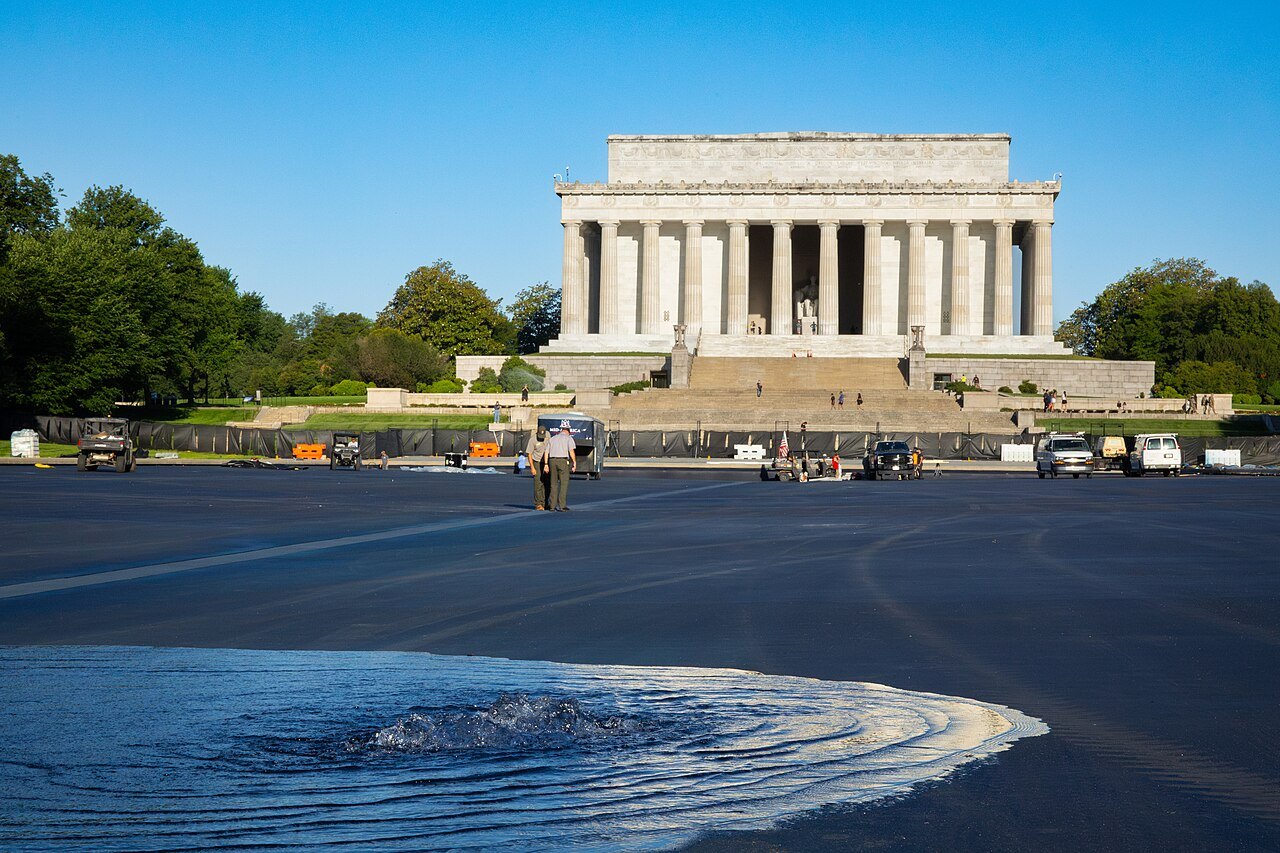
The outside is faced in Yule marble from Colorado and surrounded by 36 fluted Doric columns, one for each of the 36 states in the Union when Lincoln died; their names and dates of admission are carved on the frieze above. Higher up, the attic carries the names of the 48 states of 1922. From the Reflecting Pool the steps climb in stages, past the roadway around the memorial, to the entrance.
Inside, two rows of Ionic columns 50 feet high divide the memorial into three chambers. In the center sits Lincoln, carved by the six Piccirilli brothers under Daniel Chester French's supervision from Georgia white marble shipped in 28 pieces. French first planned a statue ten feet tall; it was enlarged to nineteen feet so that it would not look small in the great room, and if Lincoln stood up he would be about 28 feet tall. His arms rest on bundled rods, the Roman symbol of authority, and above his head is carved an epitaph by the critic Royal Cortissoz.
The side chambers hold Lincoln's two most famous speeches, the Gettysburg Address on one wall and the Second Inaugural Address on the other, with lettering and ornament by Evelyn Beatrice Longman. Above each is a mural by Jules Guérin, 60 feet long: Freedom, Liberty, Morality, Justice and the Law on the south wall; Unity, Fraternity and Charity on the north. The ceiling panels are of Alabama marble soaked in paraffin to let light through, and since 1929 hidden lights have added to the daylight on the statue.
The steps and the pool
On Easter Sunday 1939, after the Daughters of the American Revolution refused to let the contralto Marian Anderson sing before an integrated audience in their Constitution Hall, the Secretary of the Interior, Harold Ickes, arranged for her to sing on the memorial's steps instead, to 75,000 people and a national radio audience. On August 28, 1963, at the end of the March on Washington for Jobs and Freedom, Martin Luther King Jr. spoke here to a crowd estimated at 250,000. The spot where he stood, on the landing eighteen steps below the statue, was engraved in 2003.
Below the steps, the Reflecting Pool stretches east toward the Washington Monument: dedicated in 1922, it is 2,028 feet long and 167 feet wide and holds about four million gallons. Depending on where you stand, it reflects the Monument, the memorial, the trees of the Mall or the sky.
How to visit
The memorial can be visited at any hour, free, with no ticket. After dark the statue is lit and the view back along the Reflecting Pool to the lit Monument is at its best. There are many steps; an elevator was added in the 1970s for visitors who cannot climb them.
Walk down the steps to the pool and turn around for the classic view of the temple, then walk east along either side of the pool to the World War II Memorial, passing the Vietnam Wall to the north and the Korean War memorial to the south (see the war memorials). From the back of the memorial you look across the Potomac to Arlington Memorial Bridge and the hills of Virginia beyond.
Honest notes
The number of columns is often said to stand for the states at the time of the memorial's dedication; it is the 36 states of 1865, and the 48 states of 1922 are the names higher up. The statue was carved by the Piccirilli brothers, not by French himself, who designed and supervised it. And the memorial that stands for national unity was dedicated in front of a segregated audience.
Where to go next03
Nearby
- Nearby · 17th St · Constitution GardensThe World War II, Korean War and Vietnam MemorialsThree memorials to three wars around the Reflecting Pool: an oval of 56 granite pillars and two arches, nineteen steel soldiers crossing a field of juniper, and Maya Lin's black granite walls cut into the ground with more than 58,000 names.Read the page →
- Nearby · The Mall · 15th StThe Washington MonumentA marble obelisk 555 feet tall, begun in 1848, abandoned for more than twenty years at 152 feet, finished in 1884 and still marked by the change of stone where the work stopped.Read the page →
- Nearby · West Potomac Park · SWThe Tidal Basin and the Jefferson MemorialA man-made basin ringed by the cherry trees Tokyo gave the city in 1912, with John Russell Pope's domed Jefferson Memorial of 1943 on its southern shore and the memorials to Roosevelt and King along its western edge.Read the page →