Home · Sights · The Tidal Basin and the Jefferson Memorial
What you are looking at01
The Tidal Basin and the Jefferson Memorial
West Potomac Park · SW
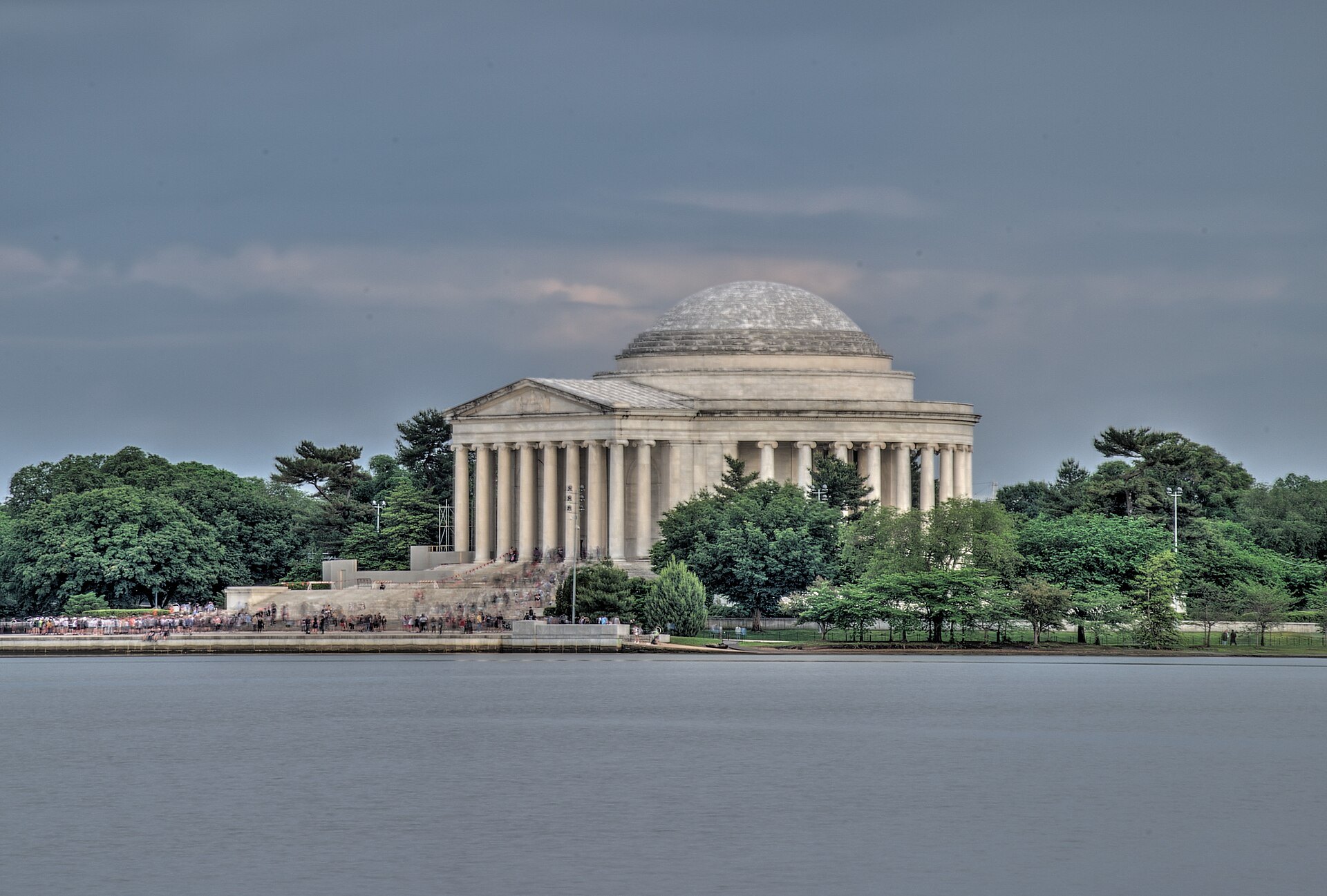
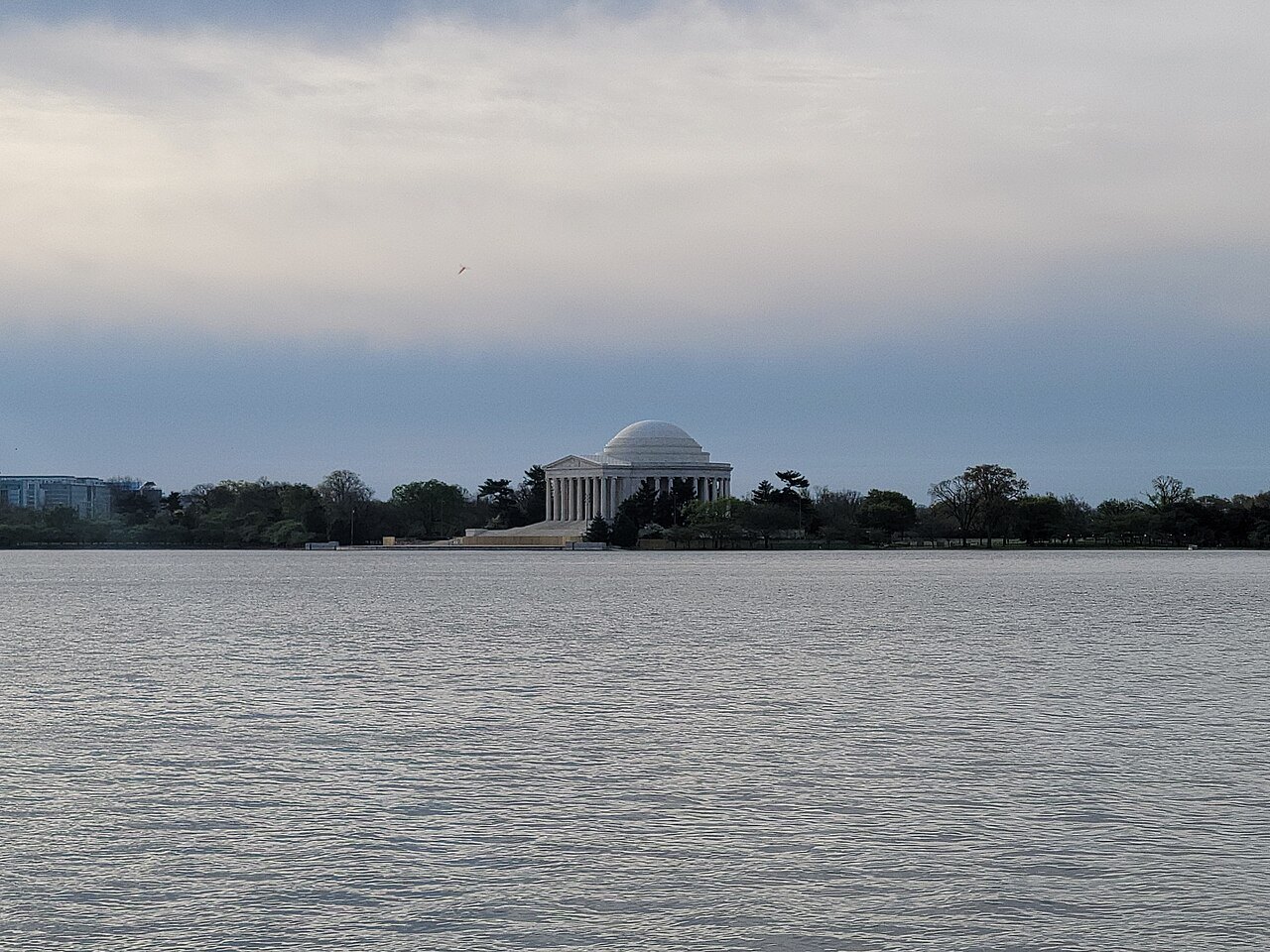
- The Jefferson MemorialA round, domed temple on the south shore, open at the sides, with Jefferson standing inside.
- The first two treesPlanted on March 27, 1912, and still standing at the end of 17th Street SW.
- The Martin Luther King Jr. MemorialKing carved from a Stone of Hope, split from a Mountain of Despair behind him.
- The Franklin Delano Roosevelt MemorialFour outdoor rooms, one for each of his terms, each with its own waterfall.
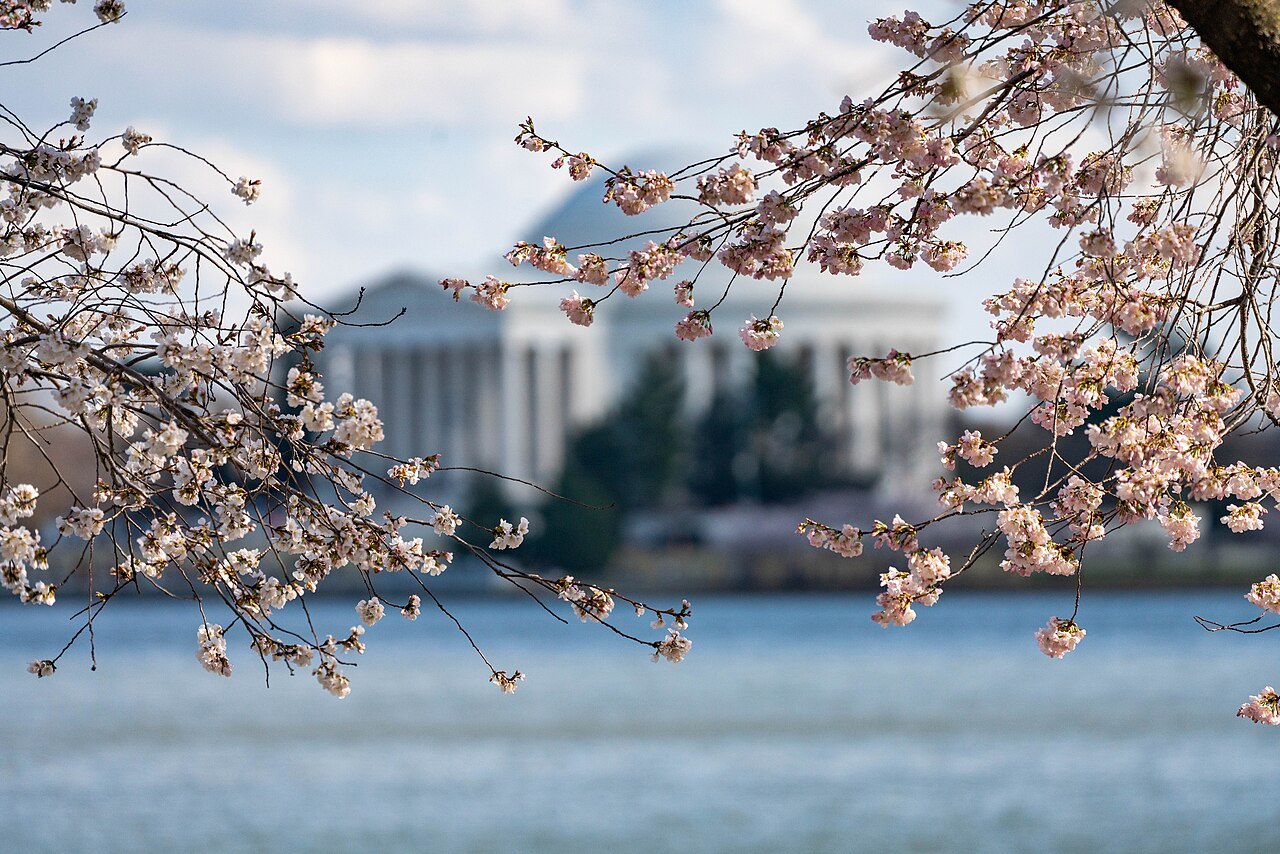
- The cherry treesYoshino cherries round the water, planted from 1913 onward from the gift of Tokyo.
The sight in full02
Reading the place
Why it matters
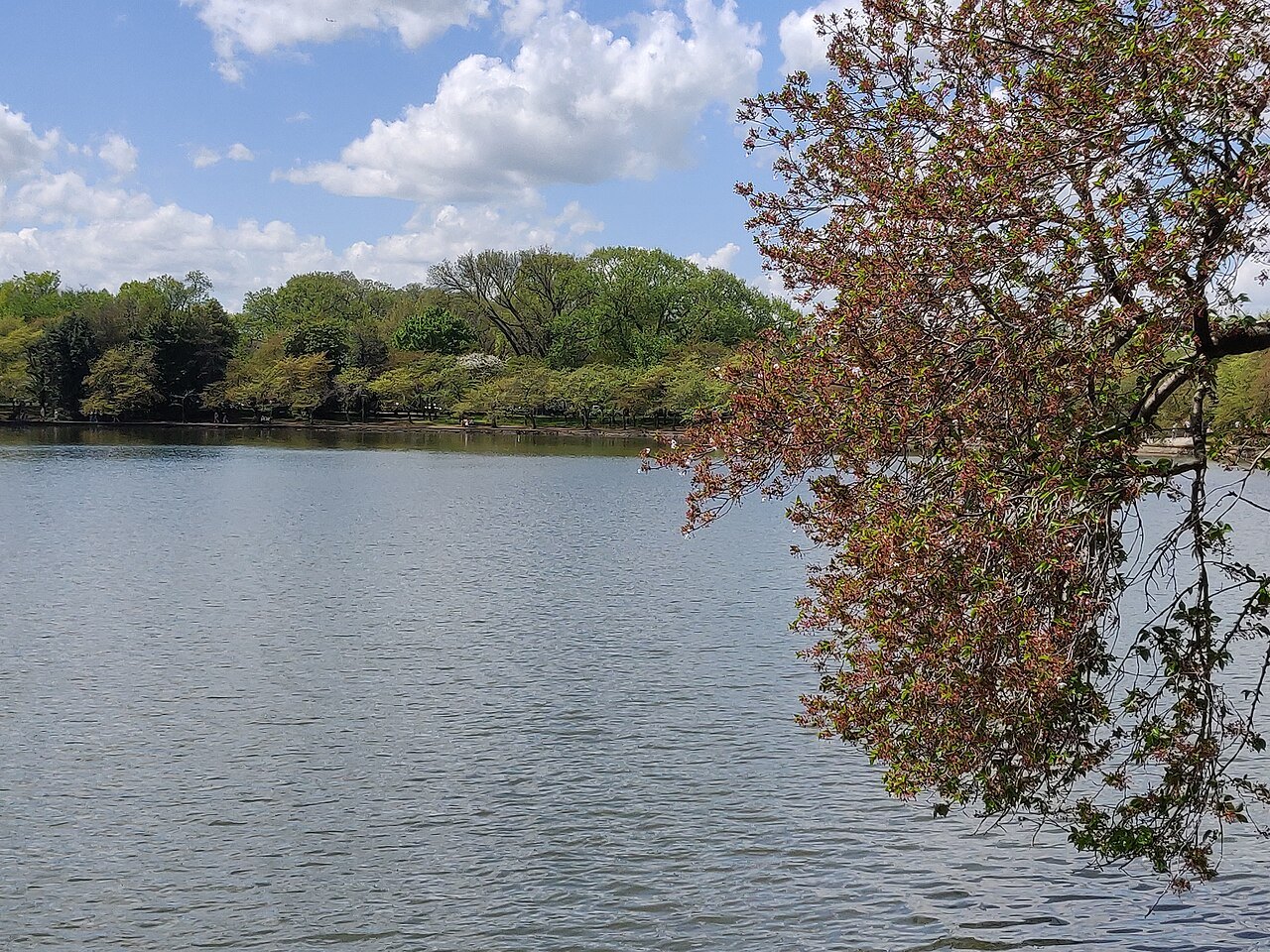
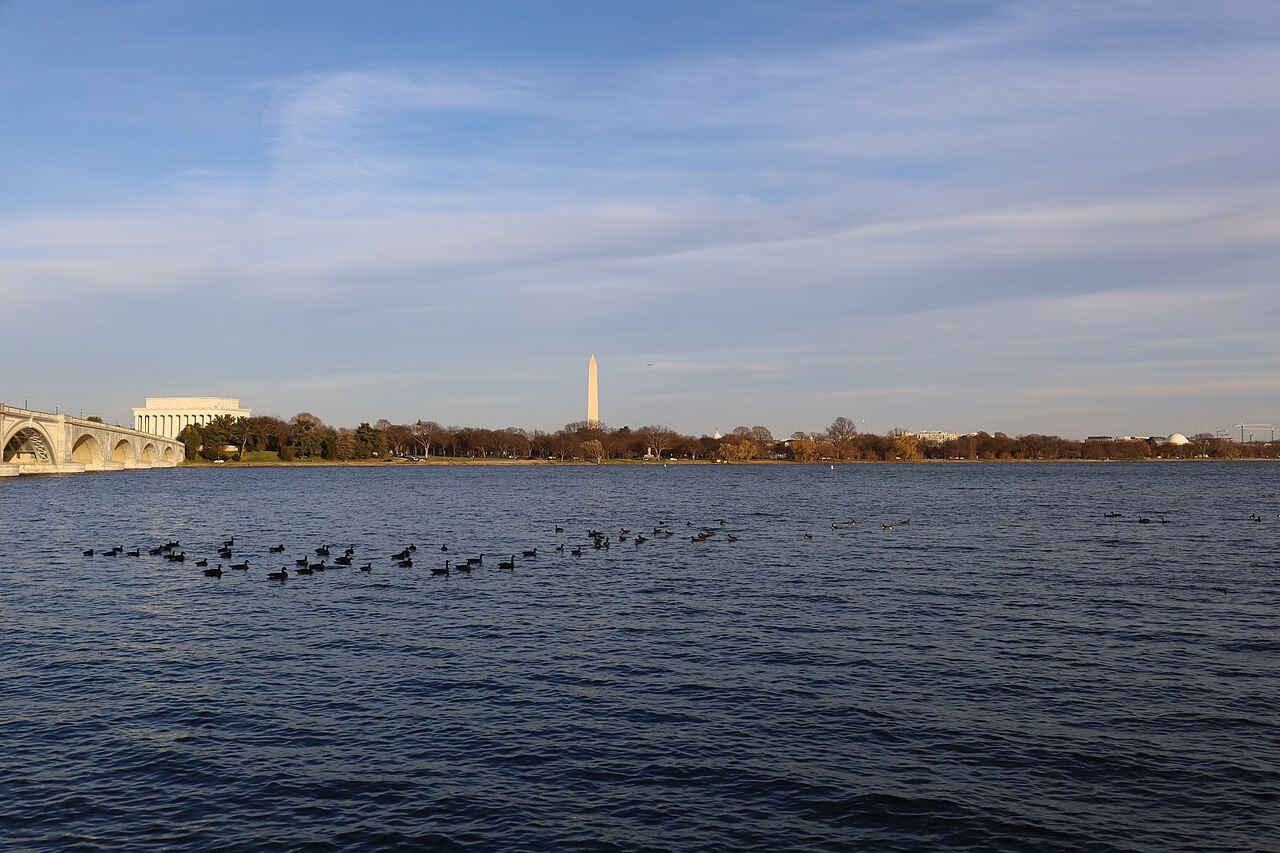
The Tidal Basin is a man-made reservoir between the Potomac River and the Washington Channel, just south of the Washington Monument, and it gathers three presidential memorials and the city's most famous trees around its shore. On the south side is the Jefferson Memorial; on the west side, along the path called the Cherry Tree Walk, are the memorials to Franklin Delano Roosevelt and Martin Luther King Jr. Around the whole basin grow the Japanese cherry trees whose flowering each spring is the city's great seasonal event (see when to come).
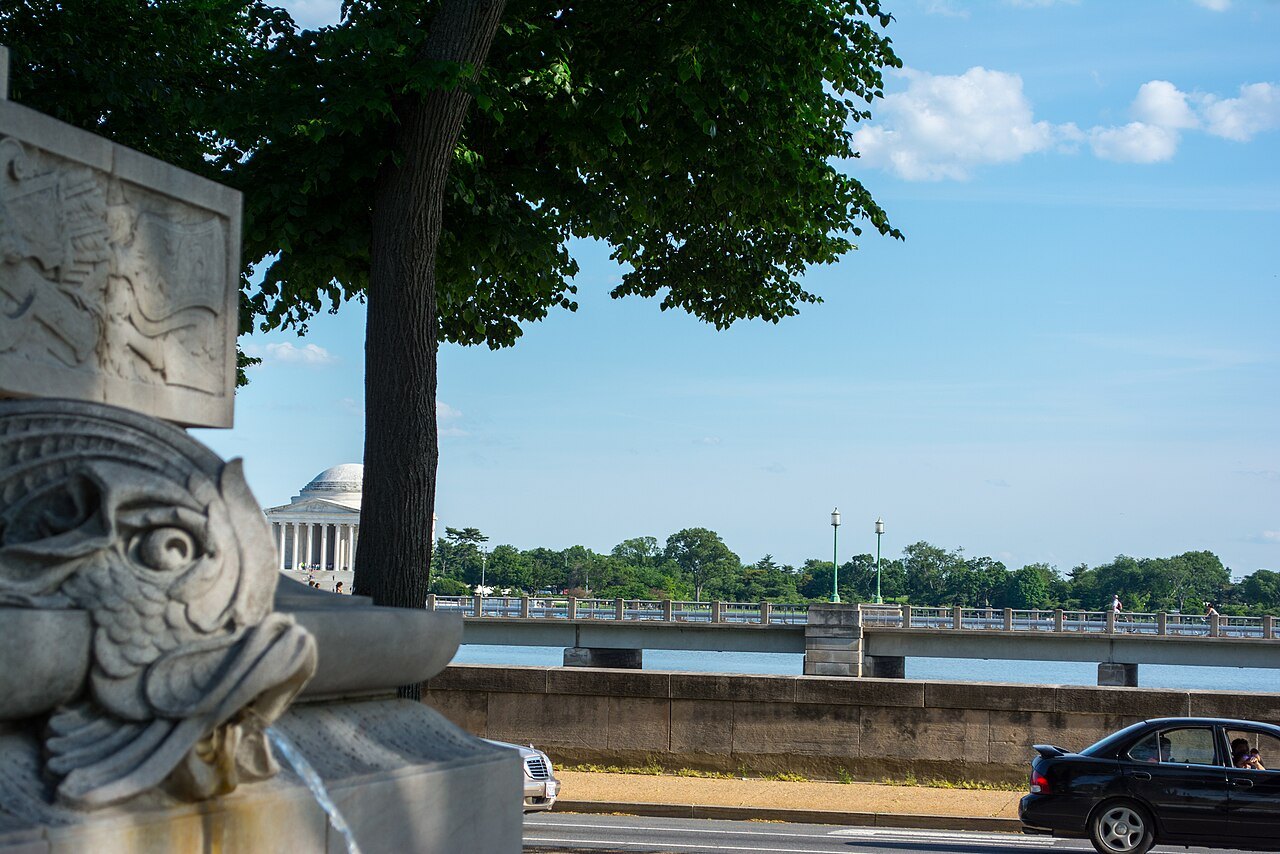
It also completes the plan. The Jefferson Memorial stands exactly south of the White House, on the cross-axis that meets the Mall's axis near the Washington Monument, so that from its steps the White House is straight ahead across the water, and President Roosevelt ordered trees cut to keep that view open.
The gift of the trees
The idea came from the writer Eliza Scidmore, who first proposed cherry trees along the reclaimed Potomac waterfront in 1885 and kept asking for twenty-four years. In 1909 the First Lady, Helen Herron Taft, took up the plan, and the Japanese chemist Jōkichi Takamine offered 2,000 trees in the name of Tokyo. They arrived in January 1910 infested with insects and worms, and on President Taft's order they were burned.
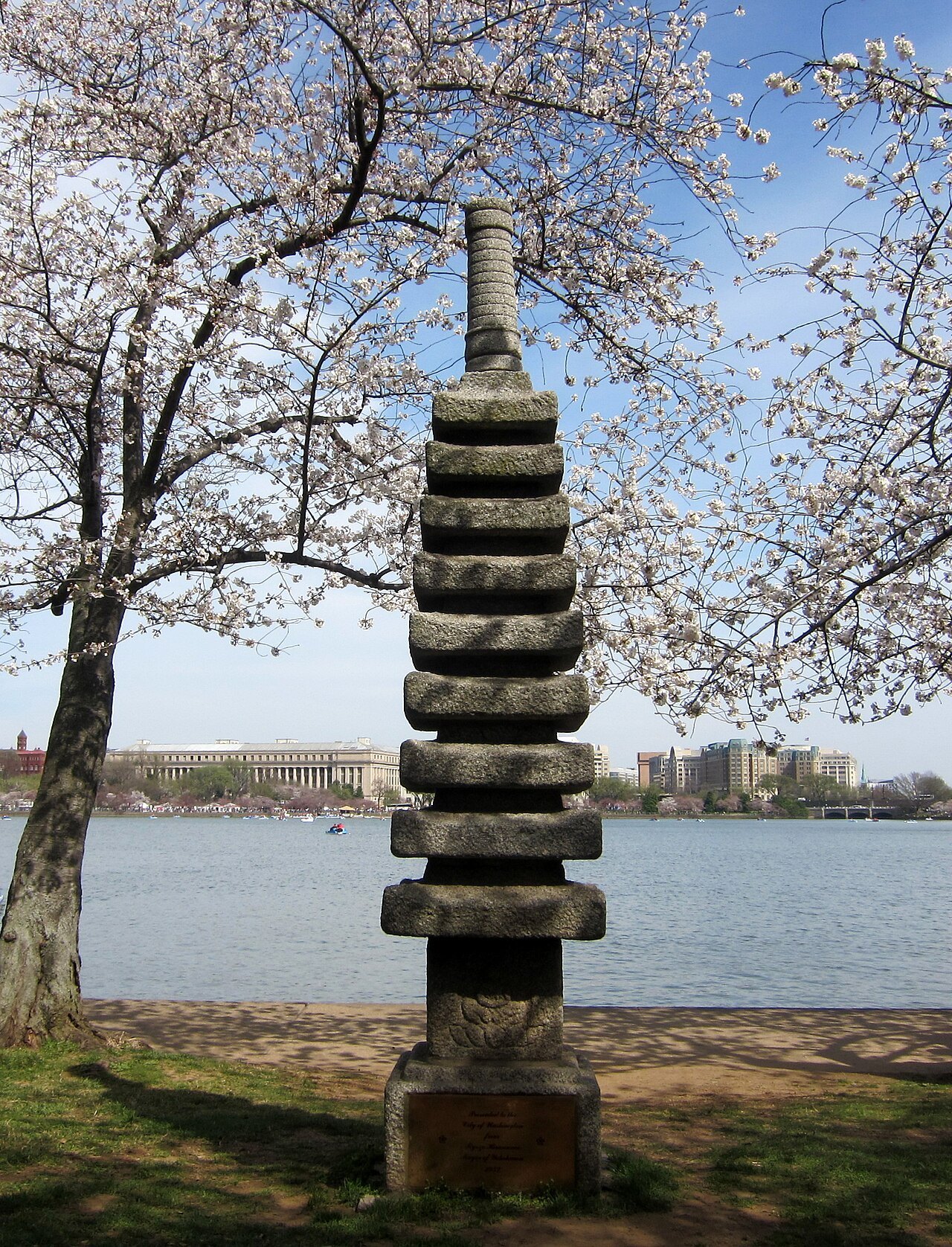
Tokyo sent a new and larger gift, grown from clean stock. On March 27, 1912, Mrs. Taft and Viscountess Chinda, the wife of the Japanese ambassador, planted the first two on the north bank of the Tidal Basin; those two trees still stand at the end of 17th Street SW, marked by a large plaque. From 1913 the Yoshino cherries, the largest part of the gift, were planted around the basin, and the other varieties in East Potomac Park. The United States sent flowering dogwoods to Japan in return.
The trees have their own history since. In 1938 women chained themselves to trees on the site of the planned Jefferson Memorial to stop them being cut down, and a compromise planted more along the south side of the basin. Four trees were cut down four days after the attack on Pearl Harbor, and during the war they were called Oriental cherries. In 1952, when the grove in Tokyo that had supplied the original trees needed restoring, the National Park Service sent cuttings back to Japan.
The Jefferson Memorial
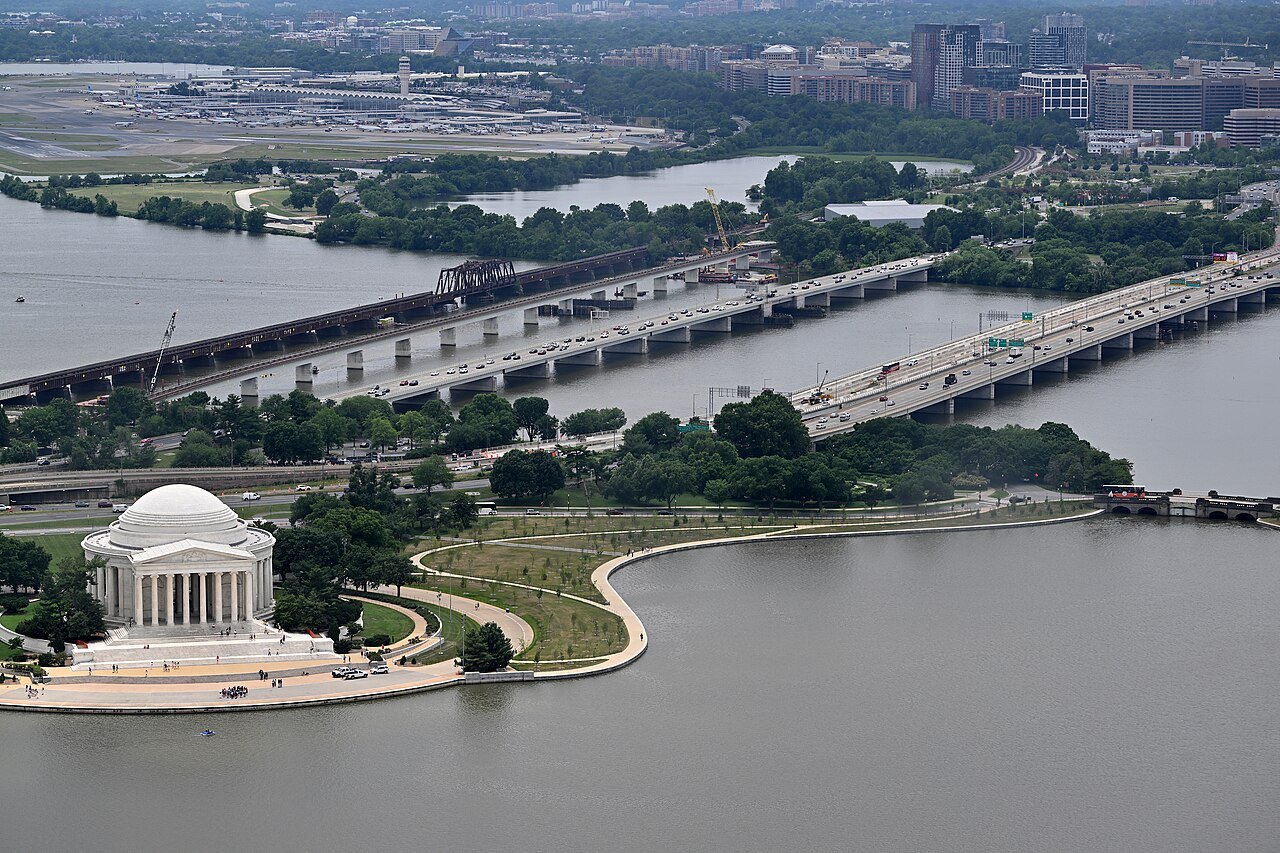
The memorial to Thomas Jefferson, principal author of the Declaration of Independence and third president, was designed by John Russell Pope, who took as his models the Pantheon in Rome and Jefferson's own rotunda at the University of Virginia. Pope died in 1937, and his partners completed the design. It was built from 1939 to 1943 on filled land, on foundations reaching ninety feet down, and President Roosevelt dedicated it on April 13, 1943, the two hundredth anniversary of Jefferson's birth.
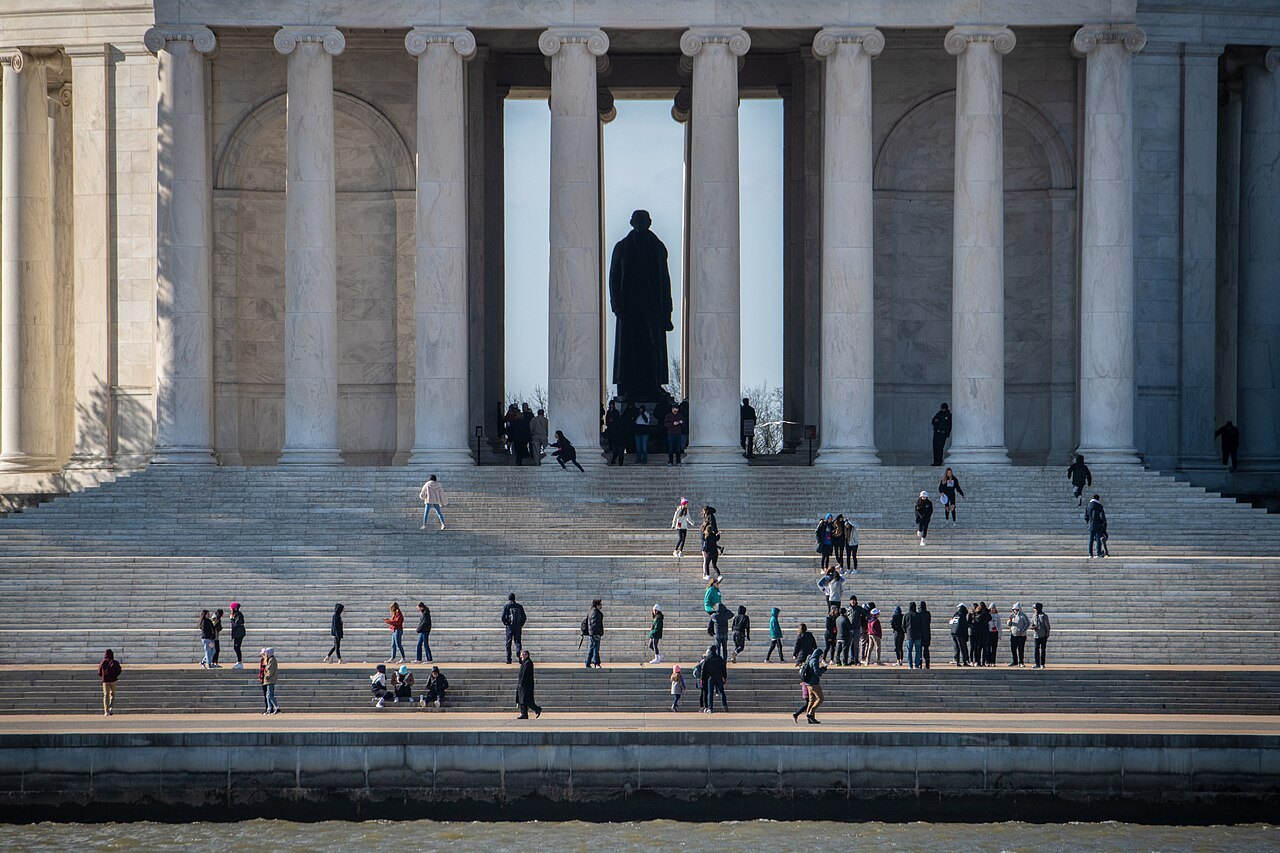
Wartime shortages of metal meant that the statue was at first a painted plaster cast. Rudulph Evans's bronze Jefferson, nineteen feet tall and weighing some five tons, was installed in April 1947. The walls of the round chamber carry passages from Jefferson's writings, chosen to capture his ideas about democracy, and Adolph Weinman carved the pediment over the entrance.
The ground has not been kind to it. The land around the memorial sank for years, the seawall began to fall into the basin, and by the 2020s high tides regularly washed over it, sometimes reaching the memorial, so the seawall around the basin is being rebuilt.
The Roosevelt and King memorials
The Franklin Delano Roosevelt Memorial, dedicated on May 2, 1997, spreads over seven and a half acres along the basin's southwest side. It tells the twelve years of his presidency in four open-air rooms, one for each term, each with a waterfall, and among its sculptures is Roosevelt with his dog, Fala.
The Martin Luther King Jr. Memorial, on the northwest side, opened on August 22, 2011, after more than twenty years of planning. It takes its form from a line in the I Have a Dream speech, out of the mountain of despair, a stone of hope: visitors pass between two halves of a split granite mountain to find the Stone of Hope, pushed forward, with King carved from it by the sculptor Lei Yixin. Its official address, 1964 Independence Avenue SW, honors the Civil Rights Act of 1964.
How to visit
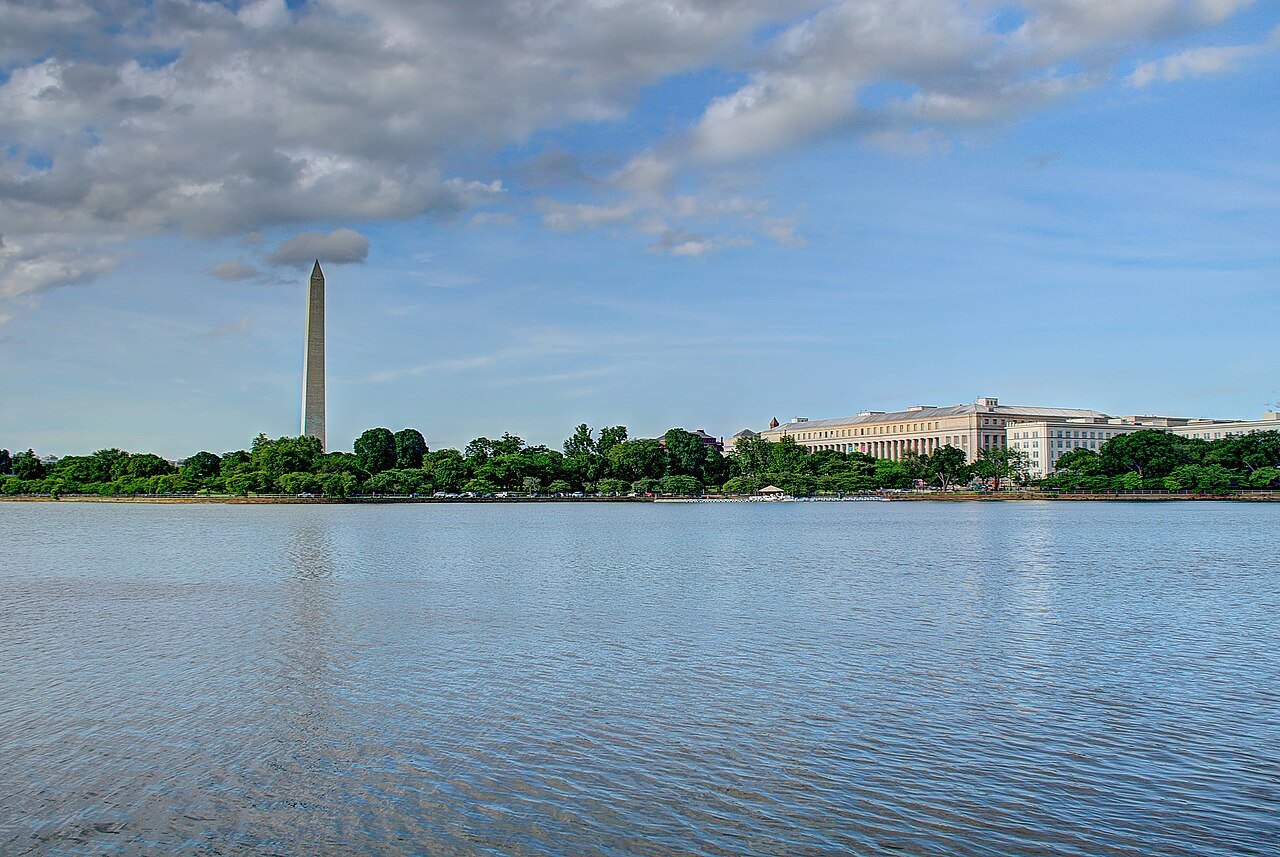
The path around the basin passes all three memorials, which are free, in the open air and need no ticket. In blossom season the paths and the Metro are very crowded. The trees flower for a short time and the date moves from year to year with the weather, so check the forecast of peak bloom rather than planning around a fixed date. Morning light falls across the water onto the Jefferson Memorial's white dome.
Parts of the shore may be fenced while the seawall is rebuilt, which changes the walking route; check before you go. From the Jefferson Memorial the White House is due north across the water, and the Washington Monument is a short walk back north past the basin's inlet bridge (see the Washington Monument).
Honest notes
The basin was not always a place of memorials. In 1918 a public beach opened on the site of the Jefferson Memorial, when the water was treated for swimming; it was for white bathers only, and in 1925 it was closed for good rather than face the question of opening it to everyone. The cherry festival grew out of a small reenactment of the first planting by schoolchildren in 1927, and became a national annual event in 1935. And the Jefferson Memorial was not in L'Enfant's plan: some Washingtonians opposed its site because it did not follow the original plan and would cost the trees.
Where to go next03
Nearby
- Nearby · The Mall · 15th StThe Washington MonumentA marble obelisk 555 feet tall, begun in 1848, abandoned for more than twenty years at 152 feet, finished in 1884 and still marked by the change of stone where the work stopped.Read the page →
- Nearby · West end of the Mall · 23rd StThe Lincoln Memorial and the Reflecting PoolHenry Bacon's Greek temple of 1922 at the west end of the Mall, Daniel Chester French's Lincoln seated inside, and in front of them a pool more than two thousand feet long that doubles the Washington Monument.Read the page →
- Nearby · 17th St · Constitution GardensThe World War II, Korean War and Vietnam MemorialsThree memorials to three wars around the Reflecting Pool: an oval of 56 granite pillars and two arches, nineteen steel soldiers crossing a field of juniper, and Maya Lin's black granite walls cut into the ground with more than 58,000 names.Read the page →