Home · Sights · The World War II, Korean War and Vietnam Memorials
What you are looking at01
The World War II, Korean War and Vietnam Memorials
17th St · Constitution Gardens
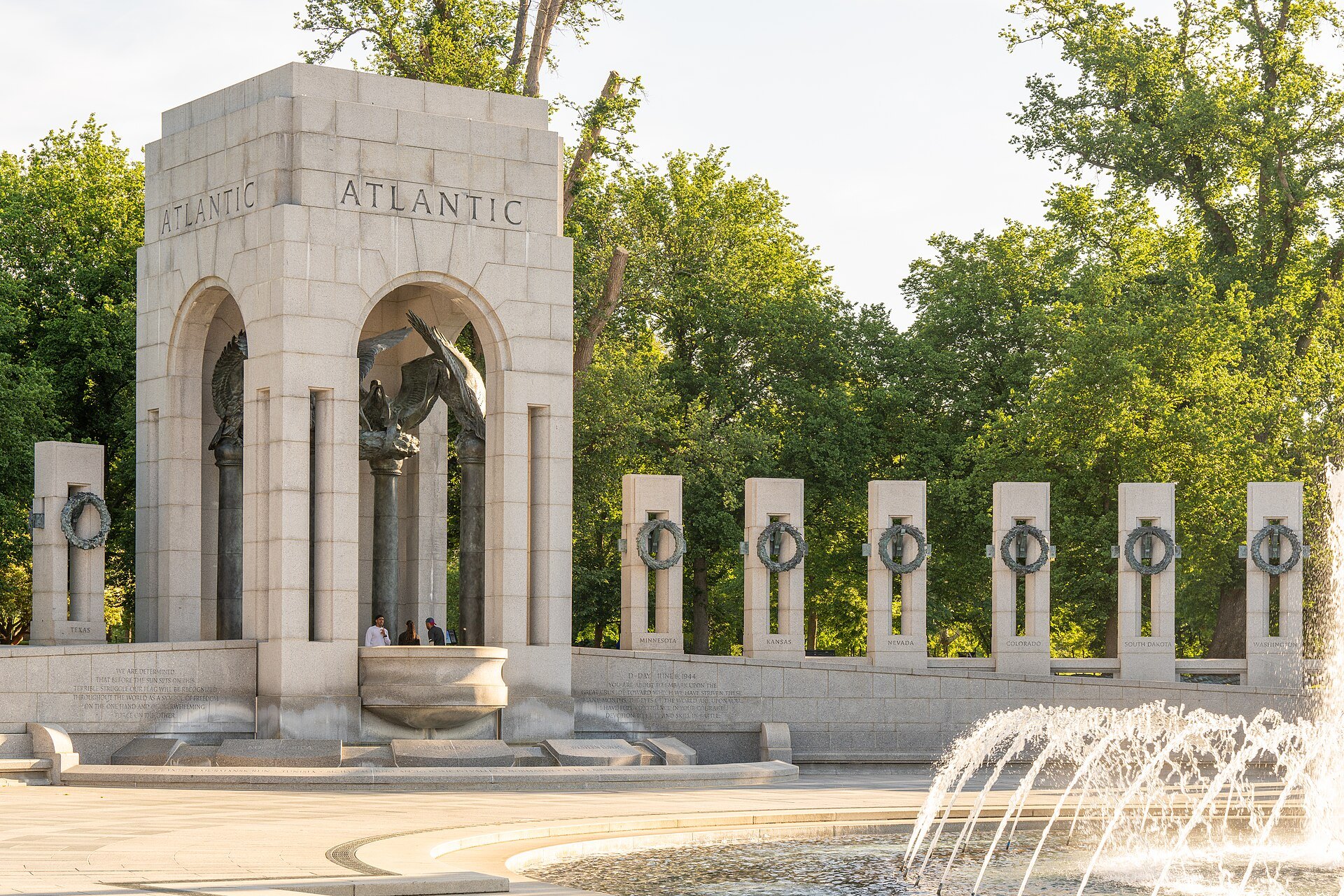
- The World War II ovalFifty-six granite pillars and two arches round a sunken plaza and fountain at 17th Street.
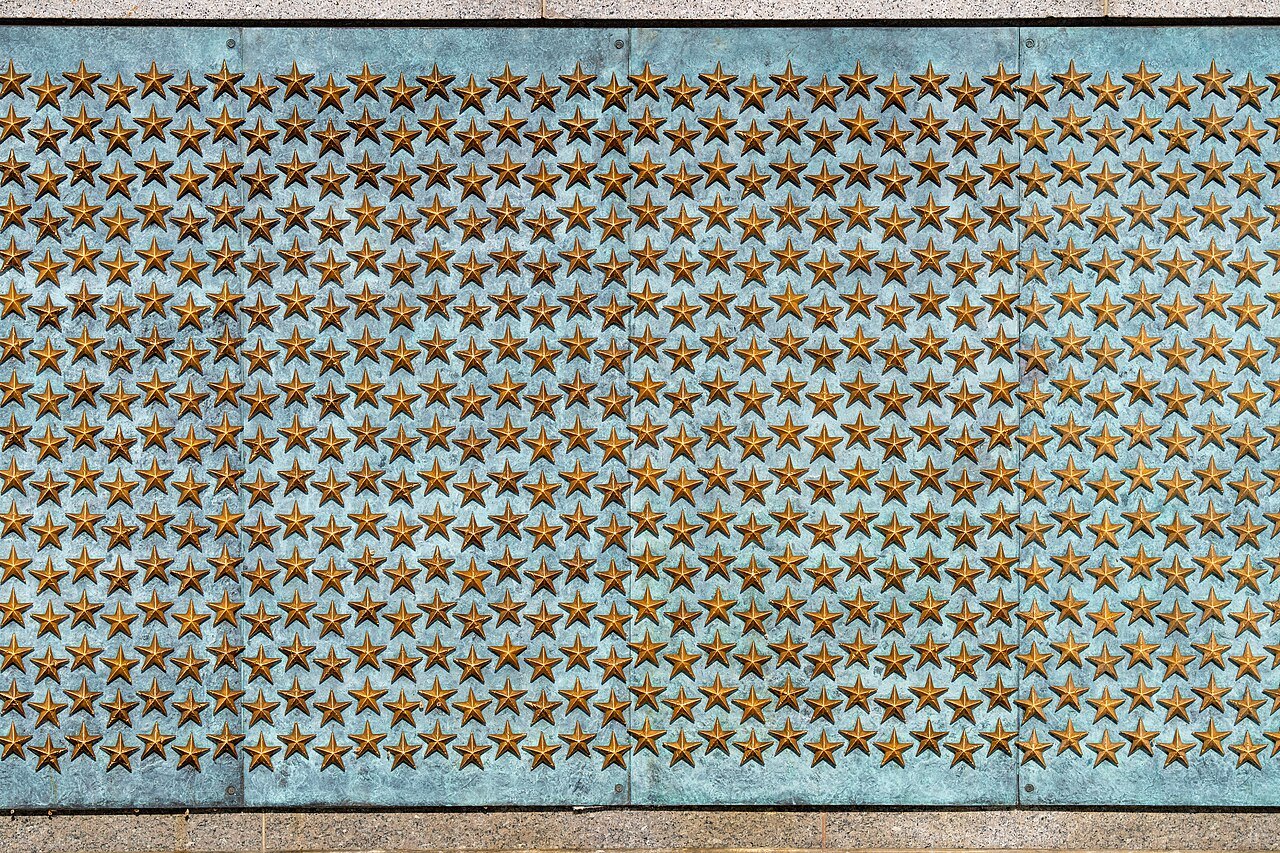
- The Freedom WallFour thousand and forty-eight gold stars, each standing for a hundred Americans who died.
- The ColumnNineteen stainless steel soldiers in combat gear, moving through granite strips and juniper.
- The mural wallFaces sandblasted into dark granite, reflecting the soldiers so they seem to number thirty-eight.
- The Vietnam WallTwo polished black walls meeting at an angle, one aimed at the Monument, one at the Lincoln.
- Three Servicemen and the Women's MemorialTwo bronze groups added near the Wall in 1984 and 1993.
The sight in full02
Reading the place
Why it matters
Between the Washington Monument and the Lincoln Memorial, the Mall becomes a place of war memorials. At the east end of the Reflecting Pool, on the axis at 17th Street, is the National World War II Memorial. On the south side of the pool, in West Potomac Park, is the Korean War Veterans Memorial; on the north side, in Constitution Gardens, the Vietnam Veterans Memorial. Each is a different answer to the same question of how to remember the dead of a war, and each was built long after the war it marks.
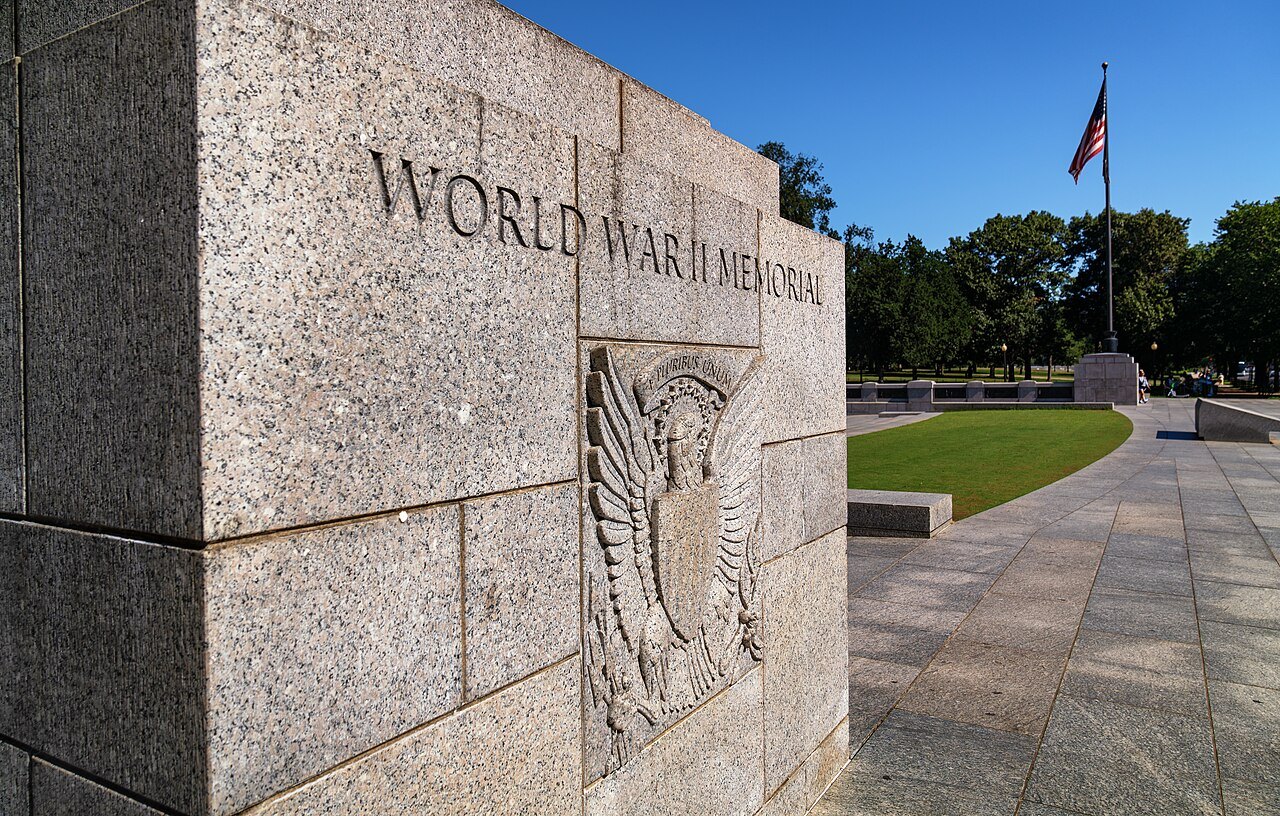
They are also among the most visited places on the Mall. More than four and a half million people came to the World War II Memorial in 2018, and the Vietnam Wall, with its names, draws people who come to find one name in particular. Visitors should remember that for many people these are places of mourning (see the Mall).
The World War II Memorial
The idea came from a veteran. In 1987 Roger Durbin asked his representative, Marcy Kaptur of Ohio, why there was no memorial to his war, and she introduced a bill; it took four attempts before President Bill Clinton signed the World War II Memorial Act in 1993. Much of the money came from individual Americans by mail and from veterans' groups. The design, by the Austrian-American architect Friedrich St. Florian, replaced the old Rainbow Pool at the east end of the Reflecting Pool, and the memorial opened on April 29, 2004, and was dedicated that May.
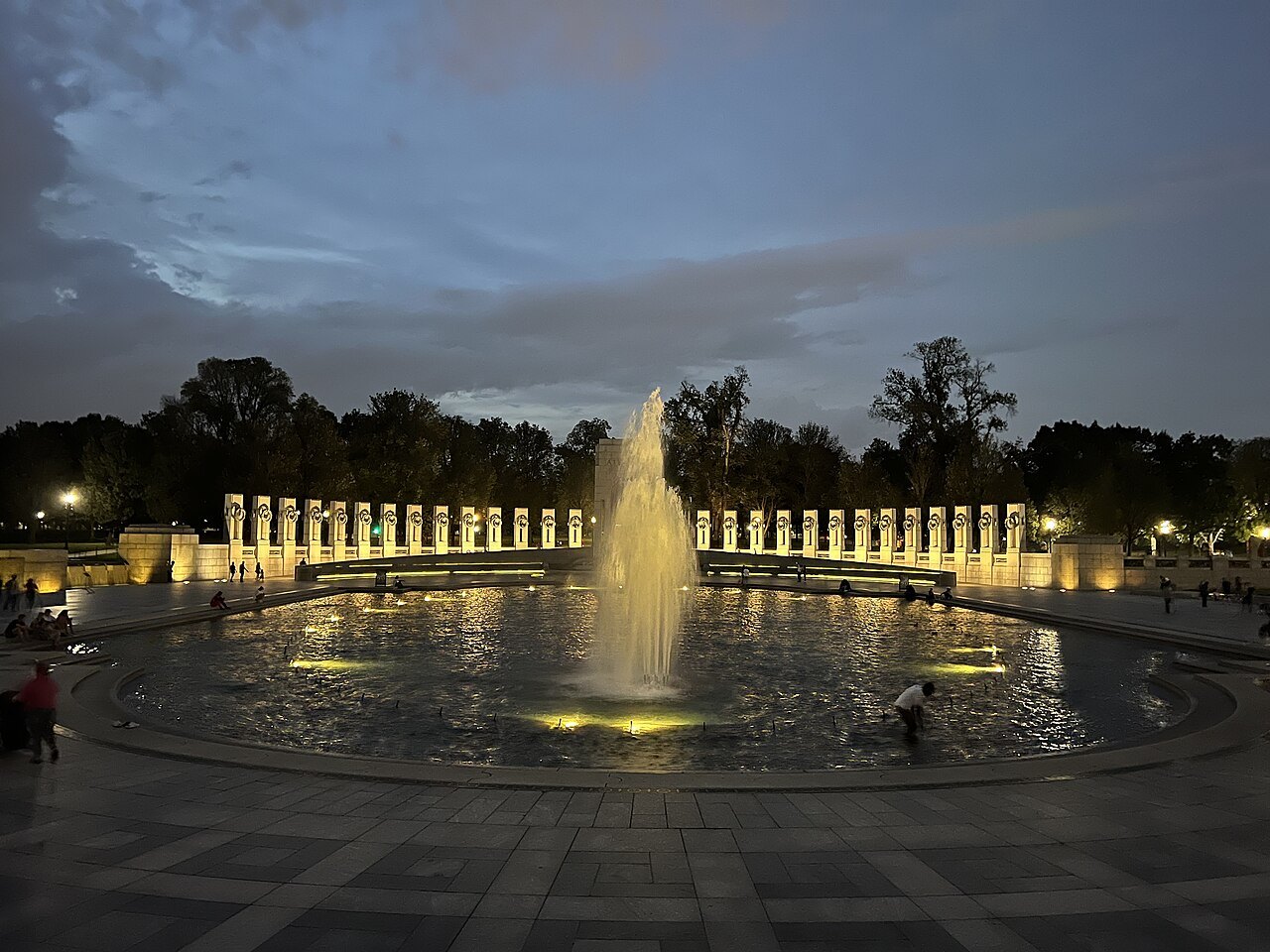
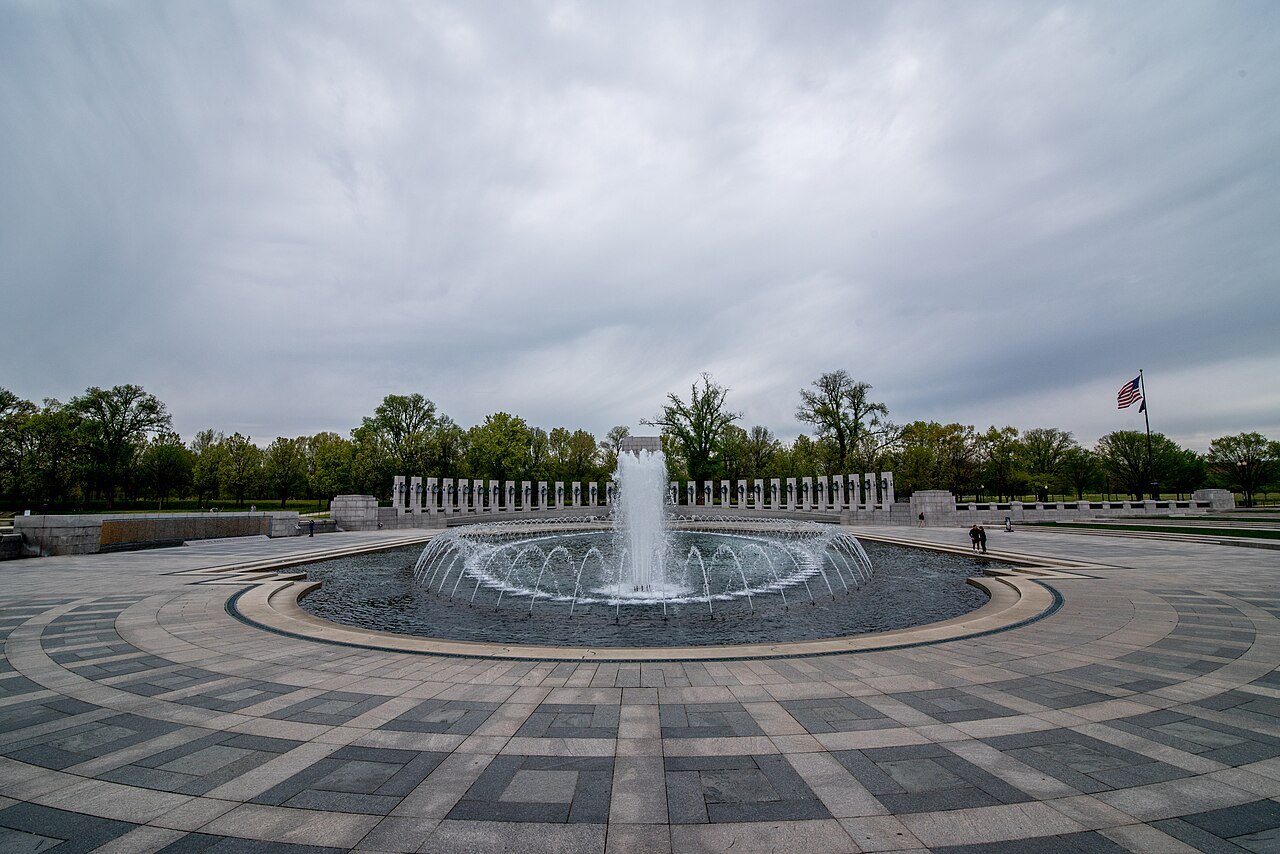
It is an oval plaza sunk six feet below the ground, with a fountain in its pool. Around it stand 56 granite pillars, each 17 feet tall and hung with bronze wreaths, inscribed with the names of the 48 states of 1945 and the District of Columbia, the territories and the Philippines. At the north and south ends two arches 43 feet high are marked Atlantic and Pacific. The approach from 17th Street runs between walls of bronze reliefs that follow the war from the recruiting office to the homecoming, the Pacific scenes on one side and the European on the other.
On the west side of the plaza, looking toward the Lincoln Memorial, is the Freedom Wall: 4,048 gold stars, each representing a hundred Americans who died in the war, above an inscription that marks them as the price of freedom. Hidden somewhere in the memorial are two small engravings of Kilroy was here, the doodle soldiers left wherever they went.
The Korean War Veterans Memorial
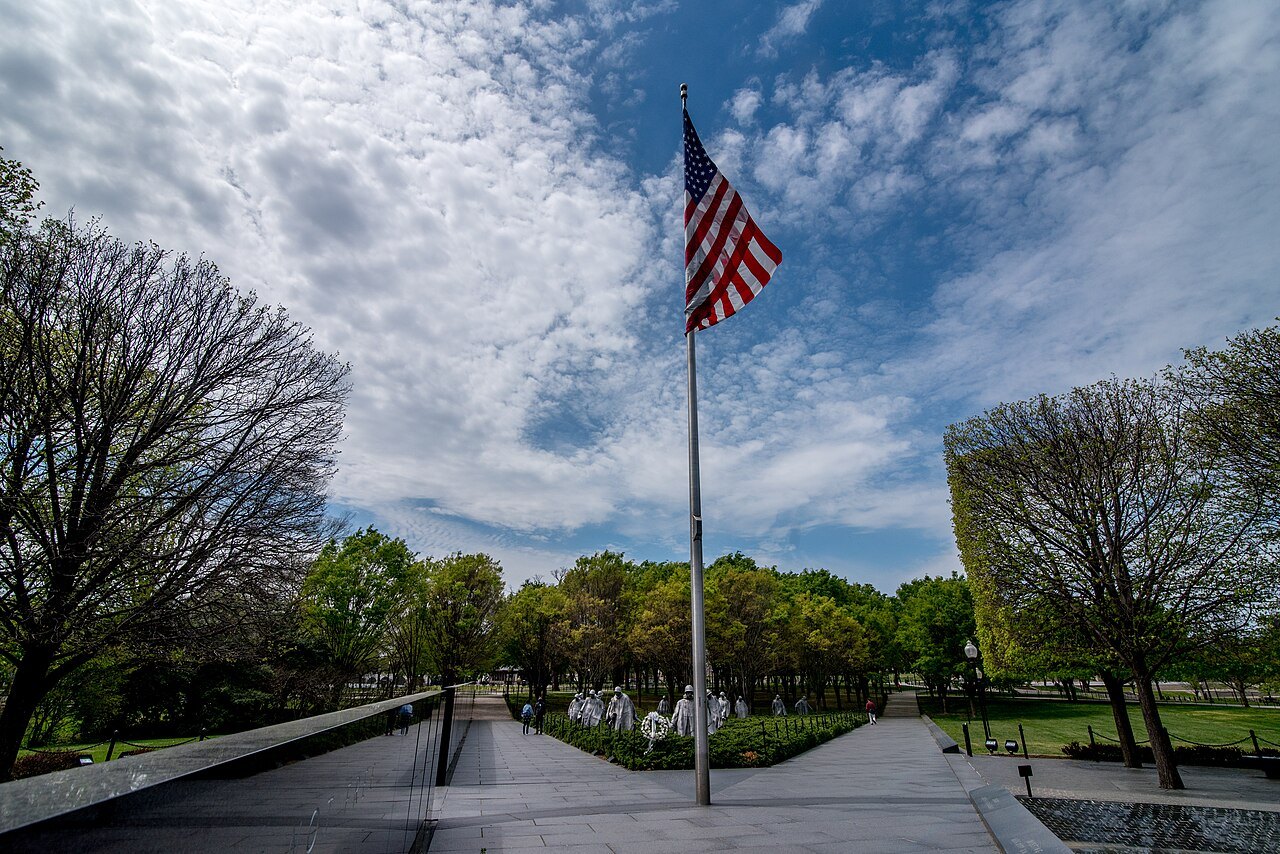
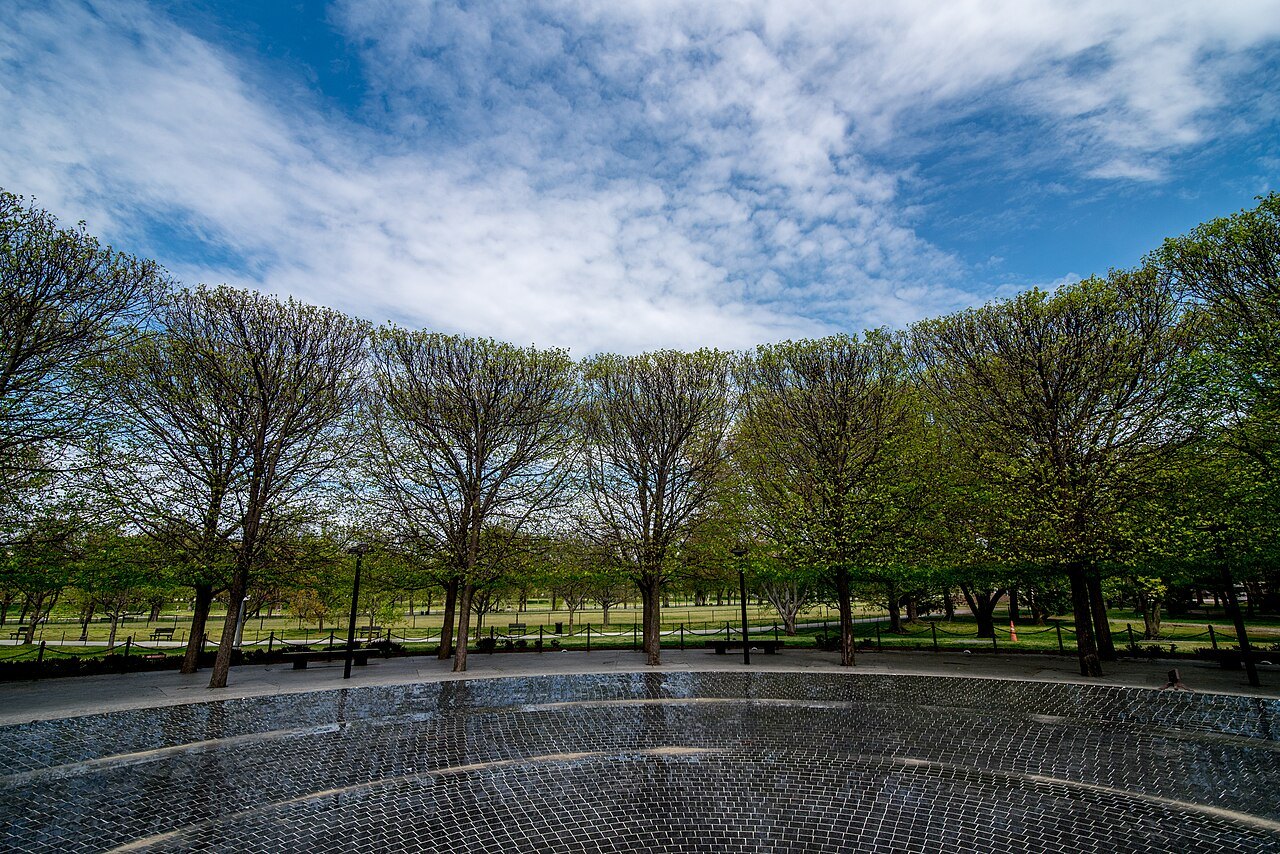
Dedicated in 1995, southeast of the Lincoln Memorial and just south of the Reflecting Pool, the Korean War memorial is a triangle cutting into a circle. Within the walled triangle are nineteen stainless steel statues by Frank Gaylord, known together as The Column: soldiers in full combat gear moving on patrol among strips of granite and juniper bushes that stand for the rugged terrain of Korea.
Beside them runs a polished granite mural by Louis Nelson, sandblasted with photographic images of the soldiers, equipment and people of the war. The statues are reflected in it, so that there seem to be 38 soldiers, a number that stands for the 38 months of the war and the 38th parallel that divided North and South Korea. In 2022 the memorial was expanded with a granite wall carrying the names of the Americans, and the South Koreans serving in American units, who died in the war.
The Vietnam Veterans Memorial
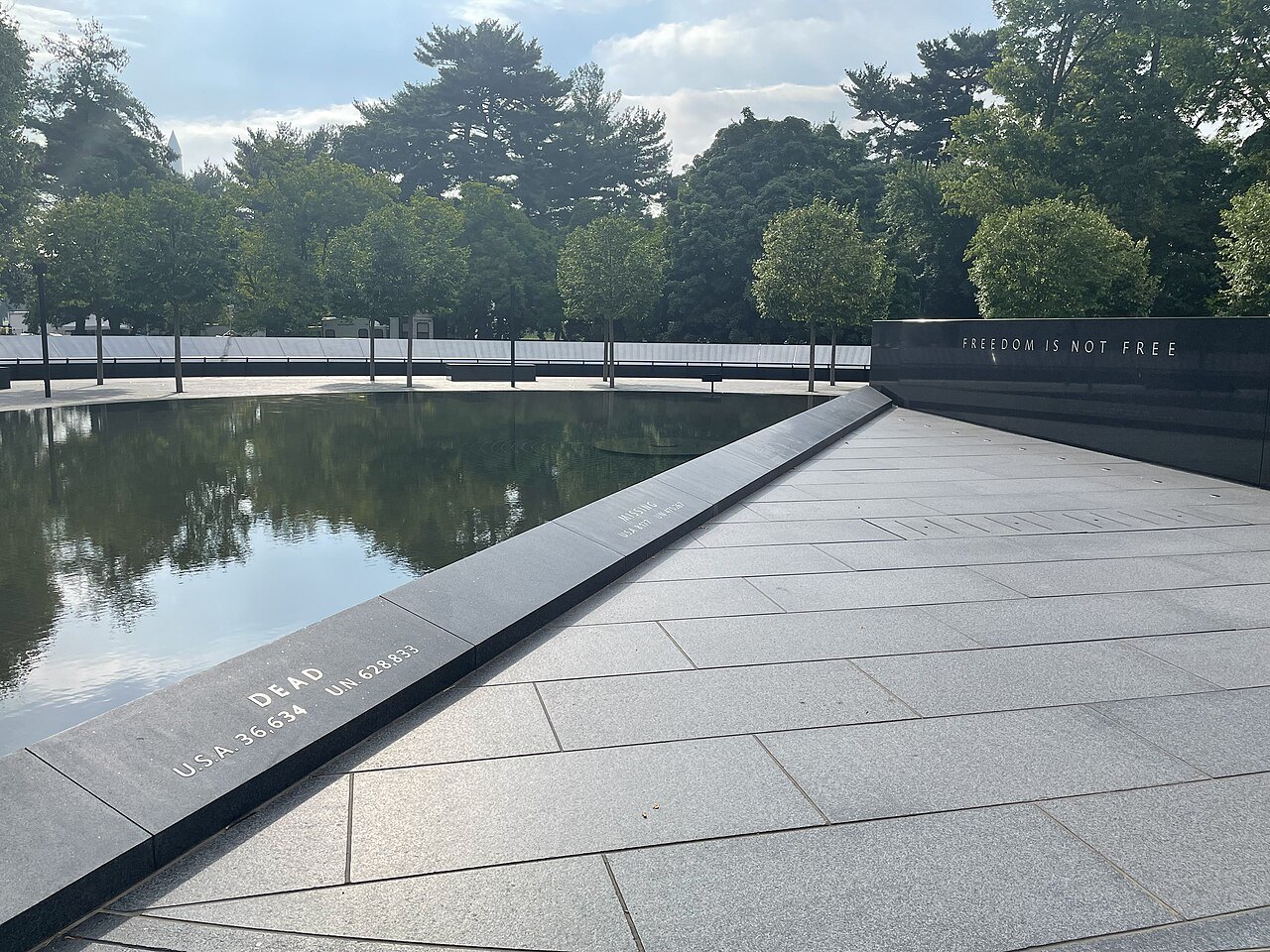
The Vietnam memorial came from a national design competition held in 1981, open to any American over eighteen; 1,421 designs were submitted. The winner was the young American architect Maya Lin, and her design was a V of two walls of black granite, cut into the ground so that they rise from nothing at each end to just over ten feet where they meet. One wall points to the Washington Monument and the other to the Lincoln Memorial.
Each wall is 246 feet 9 inches long and made of polished black granite panels that reflect the visitor and the sky. On them are the names of those who died or remain missing, listed not alphabetically but in the order of their deaths, starting at the apex in 1959, running out to the end of the east wall, and continuing from the far end of the west wall back to the center. There were 57,939 names when it was dedicated in 1982; by 2018 there were 58,320.
The design was controversial. Opponents wanted a figurative sculpture at the apex, which would have made the Wall a backdrop; instead Frederick Hart's bronze Three Servicemen was added nearby in 1984, two years after the Wall, and the Vietnam Women's Memorial followed in 1993. Directories at each end list every name and its panel. Several thousand items are left at the Wall every year; park staff collect them, and everything but perishable things such as fresh flowers is catalogued and kept in a museum store. The largest ever left was a sliding glass storm door with a full-size replica of a prisoner's tiger cage.
How to visit
All three memorials are in the open air, free and need no ticket, and they can be walked in one loop: from the World War II Memorial at 17th Street along the north side of the Reflecting Pool to the Vietnam Wall, on to the Lincoln Memorial, and back along the south side past the Korean War memorial (see the Lincoln Memorial). Allow at least an hour.
To find a name on the Vietnam Wall, use the directories at either end, which give the panel and line. The World War II Memorial is at its best by day, when the fountain is running and the reliefs are lit by the sun; the Korean War patrol is most striking in low light, when the steel figures and their reflections in the mural wall merge.
Where to go next03
Nearby
- Nearby · The Mall · 15th StThe Washington MonumentA marble obelisk 555 feet tall, begun in 1848, abandoned for more than twenty years at 152 feet, finished in 1884 and still marked by the change of stone where the work stopped.Read the page →
- Nearby · West end of the Mall · 23rd StThe Lincoln Memorial and the Reflecting PoolHenry Bacon's Greek temple of 1922 at the west end of the Mall, Daniel Chester French's Lincoln seated inside, and in front of them a pool more than two thousand feet long that doubles the Washington Monument.Read the page →
- Nearby · West Potomac Park · SWThe Tidal Basin and the Jefferson MemorialA man-made basin ringed by the cherry trees Tokyo gave the city in 1912, with John Russell Pope's domed Jefferson Memorial of 1943 on its southern shore and the memorials to Roosevelt and King along its western edge.Read the page →