Home · Sights · The National Museum of Natural History
What you are looking at01
The National Museum of Natural History
Constitution Ave · 10th St NW
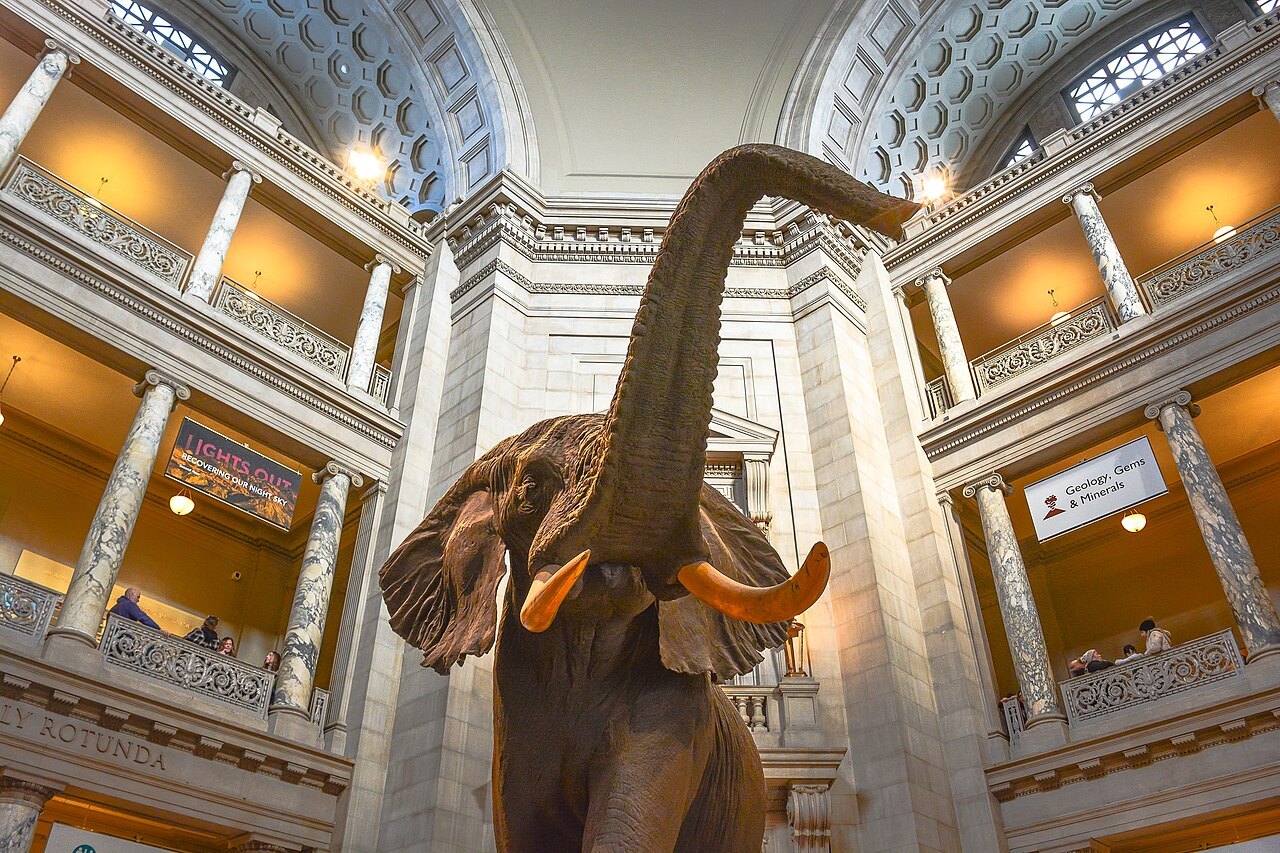
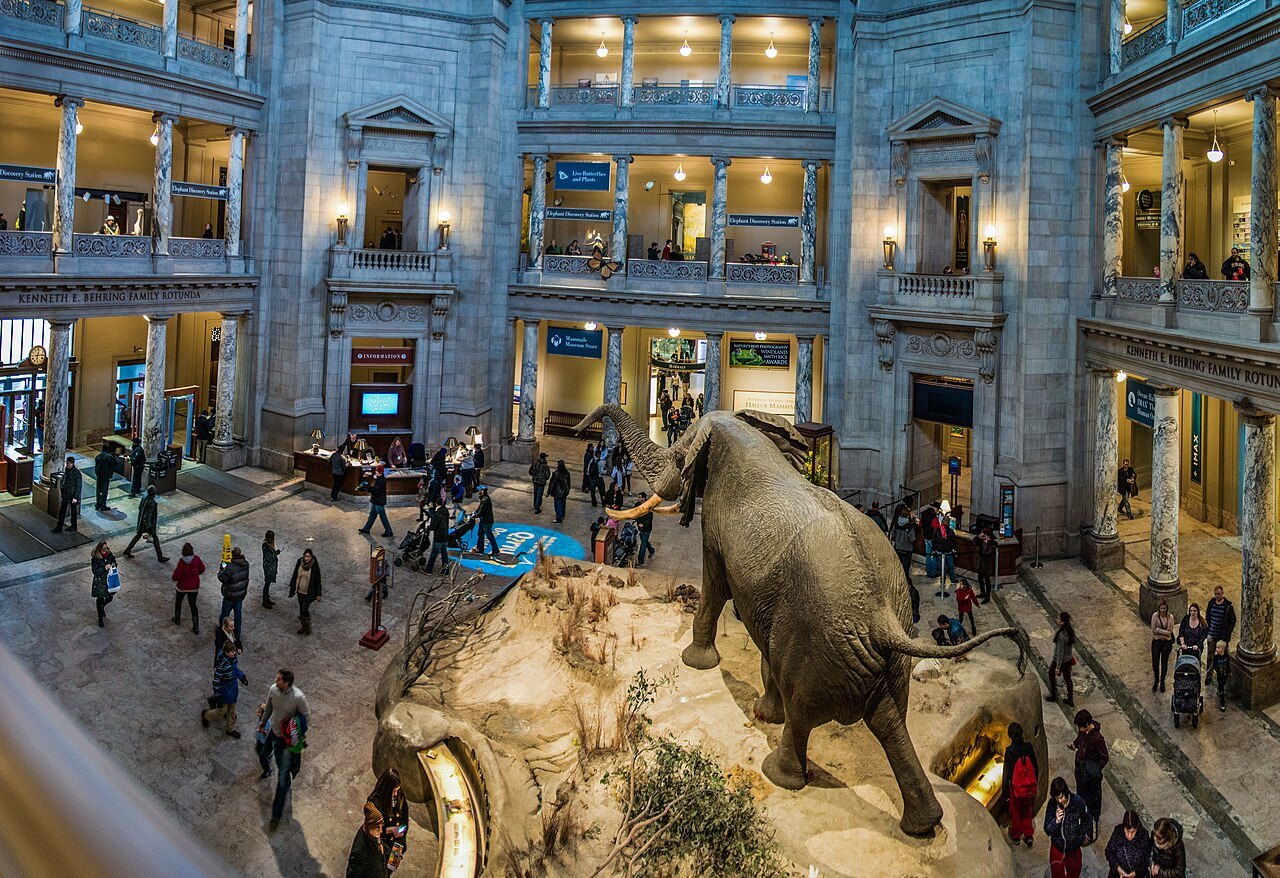
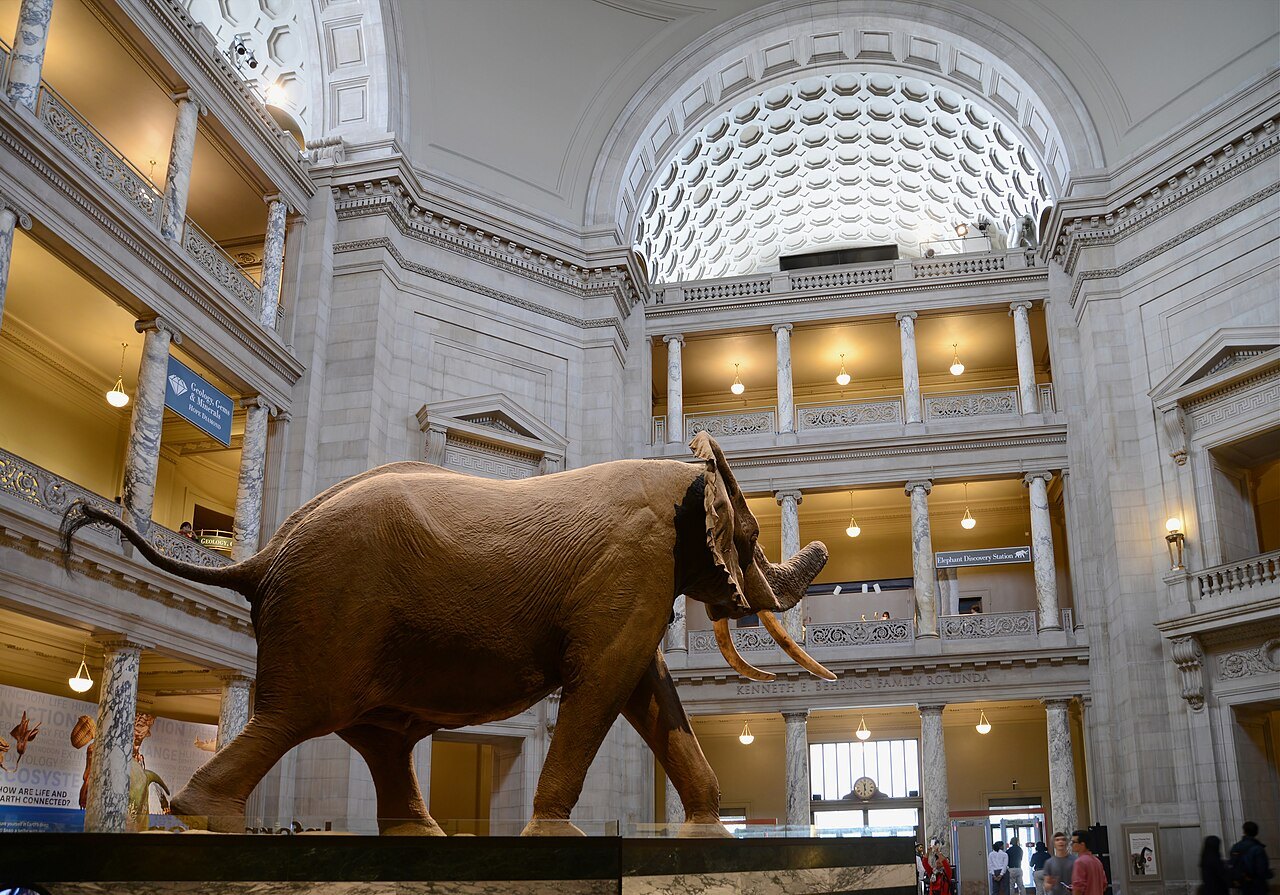
- The RotundaThe domed entrance hall on the Mall side, with an African elephant at its center.
- The Hope DiamondThe blue diamond of just over 45 carats, in the hall of gems and minerals since 1958.
- The fossil hallDeep Time: dinosaurs and fossil life, reopened in 2019 after a five-year rebuild.
- The Sant Ocean HallA North Atlantic right whale, a giant squid and a living coral-reef aquarium.
- The Hall of Human OriginsOpened in 2010 for the museum's centenary, with skulls of many human species.
- The Hall of MammalsSpecimens set out like modern sculpture, each showing how mammals adapted to their worlds.
The sight in full02
Reading the place
Why it matters
The National Museum of Natural History is one of the most visited museums in the world, and it is free: it opened on March 17, 1910, it received well over three million visits in 2025, and it closes only one day a year. Its public halls, which cover 325,000 square feet, are only the front of the building; behind and below them are the collections and laboratories of one of the largest research institutions of its kind.
The museum's vertebrate collection alone is the largest in the world, nearly twice the size of the next. The collections hold more than 148 million specimens of plants, animals, fossils, minerals, rocks, meteorites, human remains and cultural artifacts, the largest natural history collection in the world, and the museum employs some 185 professional scientists. What is on show is a small fraction of that, chosen to explain rather than to store.
The first building on the new Mall
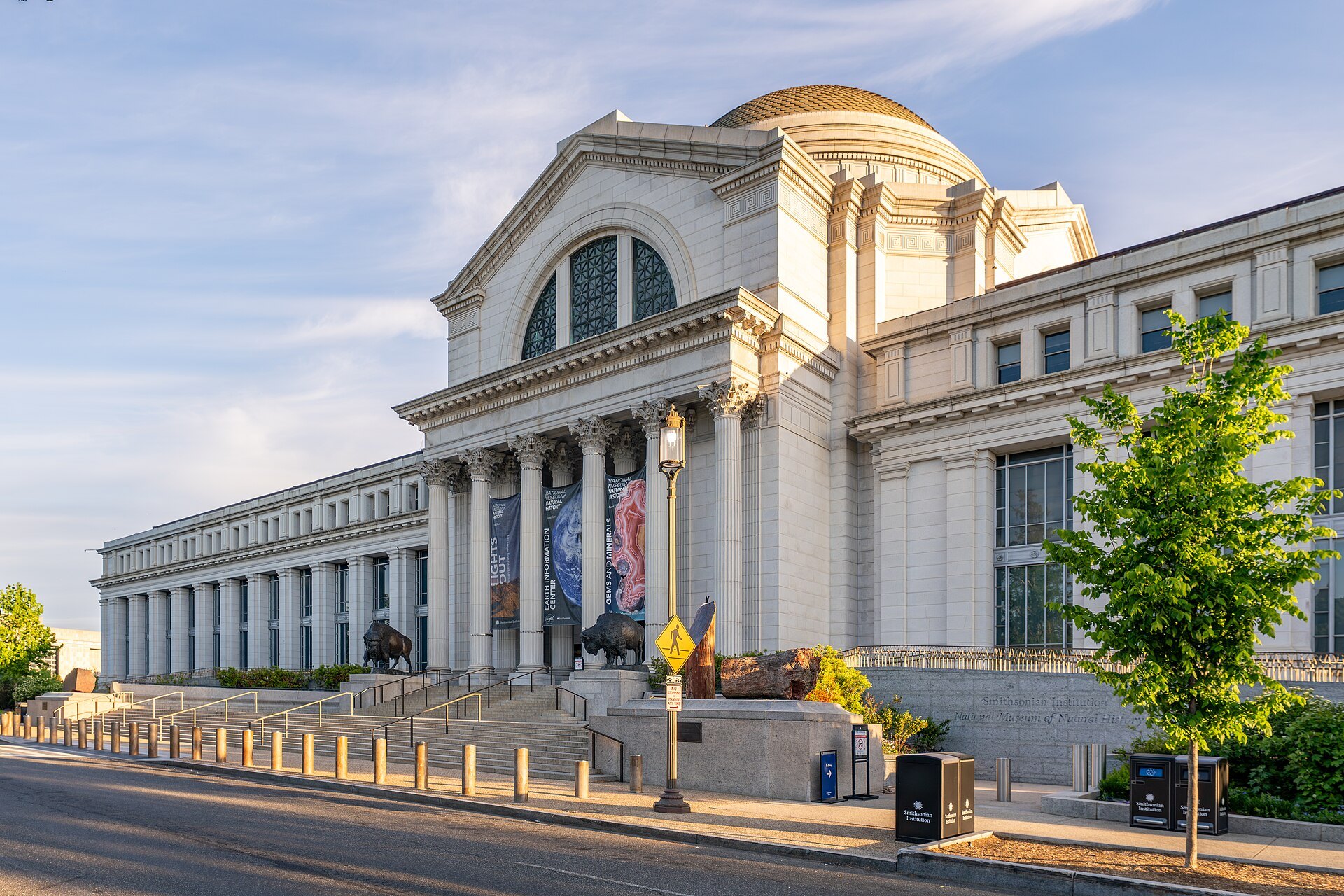
The Smithsonian's national museum began in 1846, the year the Institution itself was founded, in the Smithsonian Castle and then filled the Arts and Industries Building, which opened in 1881. When that too ran out of room, Congress authorized a new building in 1902. The site chosen was on the north side of what was then B Street, now Constitution Avenue, between 9th and 12th Streets, and the Washington firm of Hornblower and Marshall designed it.
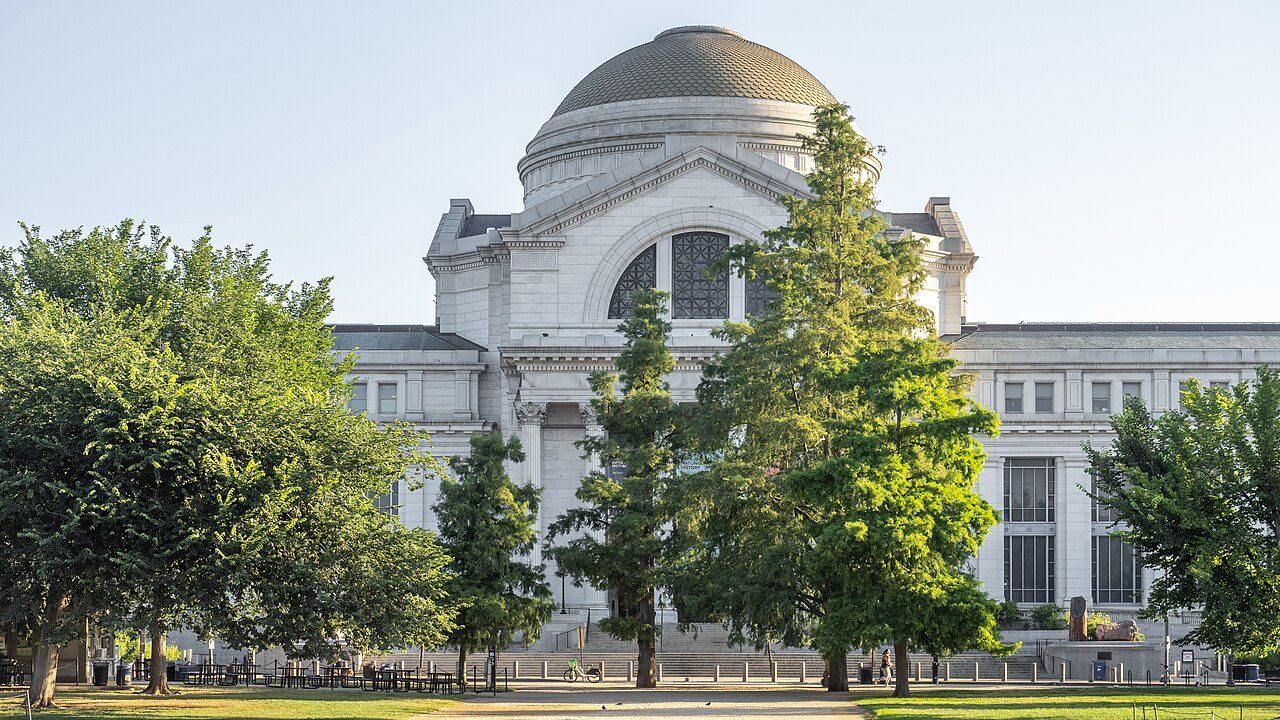
It was the first building put up on the north side of the Mall under the McMillan Plan of 1901, the plan that cleared the Mall of railroad tracks and gave it the shape it has today. When it opened, in 1910, it also housed the Smithsonian's collections of American history and art; those later moved to museums of their own. Beneath the rotunda is the Baird Auditorium, whose shallow tile dome by the Guastavino company spans 90 feet.
What you actually see
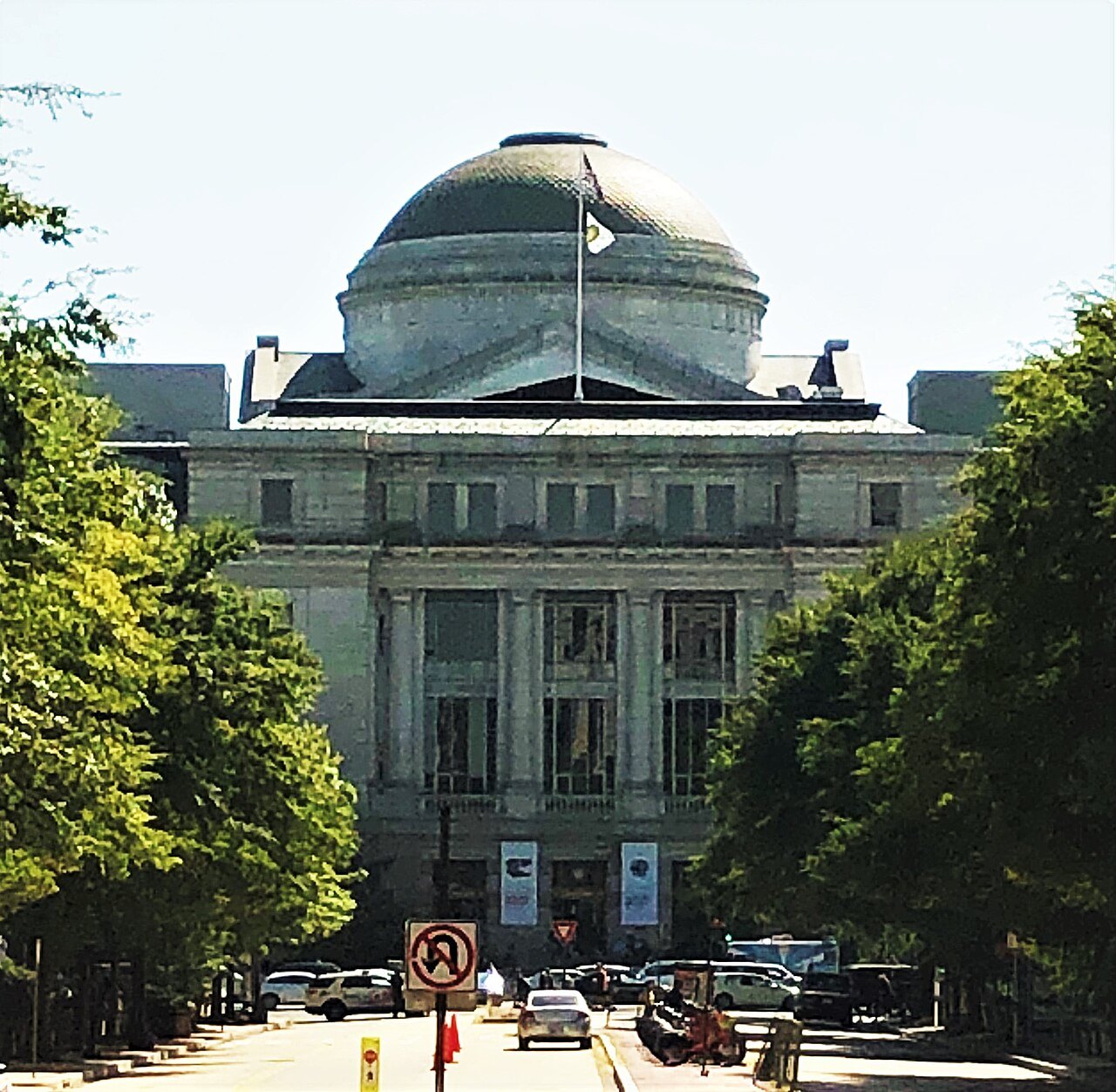
The Mall entrance opens into the rotunda, and at its center stands a large African elephant, the museum's best-known specimen. From the rotunda the halls run off on each floor, and the balconies above let you look down on the elephant from the upper levels.
On the second floor is the Hall of Geology, Gems and Minerals. The National Gem and Mineral Collection holds more than 15,000 gems, 350,000 minerals and some 45,000 meteorites, including an example of every known type of meteorite, and among them are the Hope Diamond, the Star of Asia sapphire and the Carmen Lúcia ruby. The Hope Diamond, a blue diamond of just over 45 carats, was cut and sold to Louis XIV of France in 1668 as the French Blue; its last private owner, the jeweler Harry Winston, gave it to the museum in 1958, and it has been on permanent display since.
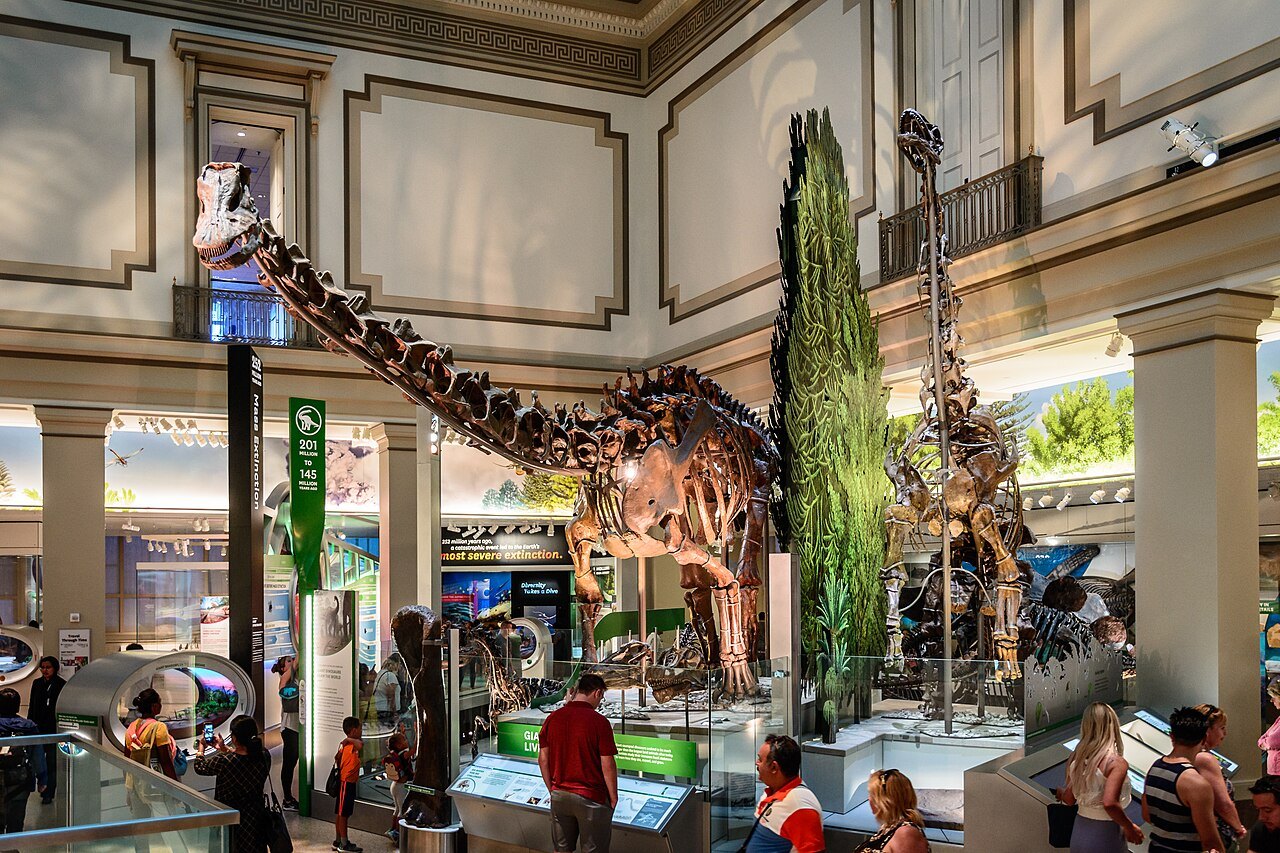
The Deep Time fossil hall, rebuilt from 2014 and reopened in June 2019, holds 46 complete and important dinosaur specimens, with a Tyrannosaurus rex facing a Triceratops, and the story of fossil life around them. The Sant Ocean Hall, opened in 2008 as the museum's largest renovation since 1910, has a North Atlantic right whale overhead, two giant squid and a 1,500-gallon aquarium of living fish and corals.
The Hall of Human Origins opened on March 17, 2010, the museum's hundredth anniversary, with 76 skulls of different species, among them a female skull of Homo floresiensis, a small human species that may have died out only some 17,000 years ago, and the Behring Hall of Mammals, opened in November 2003, sets its specimens out like works of modern art in spare settings, each showing how mammals adapted to very different worlds.
The O. Orkin Insect Zoo keeps live insects in habitats made to show how they adapted to a freshwater pond, a house, a mangrove swamp, a desert and a rainforest, and Butterflies + Plants is a live butterfly pavilion on how butterflies and plants evolved together. In the Bone Hall, vertebrate skeletons are grouped by their evolutionary relationships.
How to visit
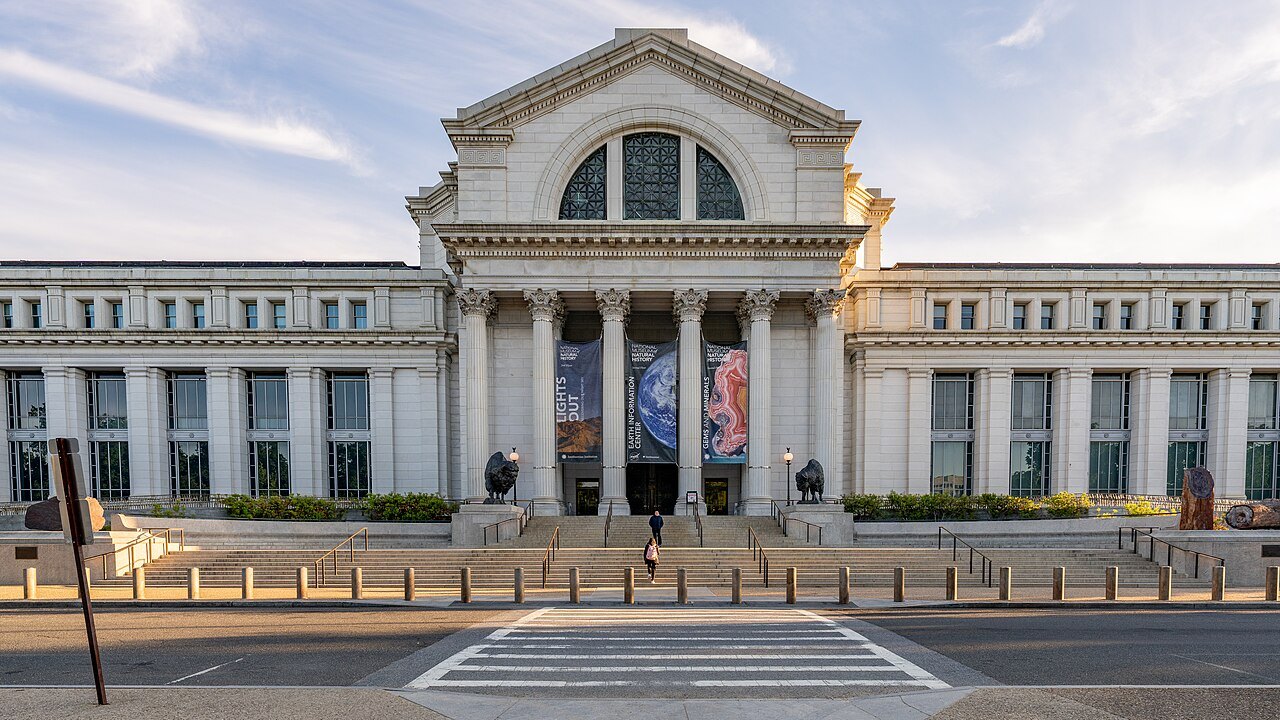
Admission is free and no ticket is needed for the permanent halls; the butterfly pavilion and some special exhibitions have arrangements of their own, so check the museum's pages. The main entrance faces the Mall.
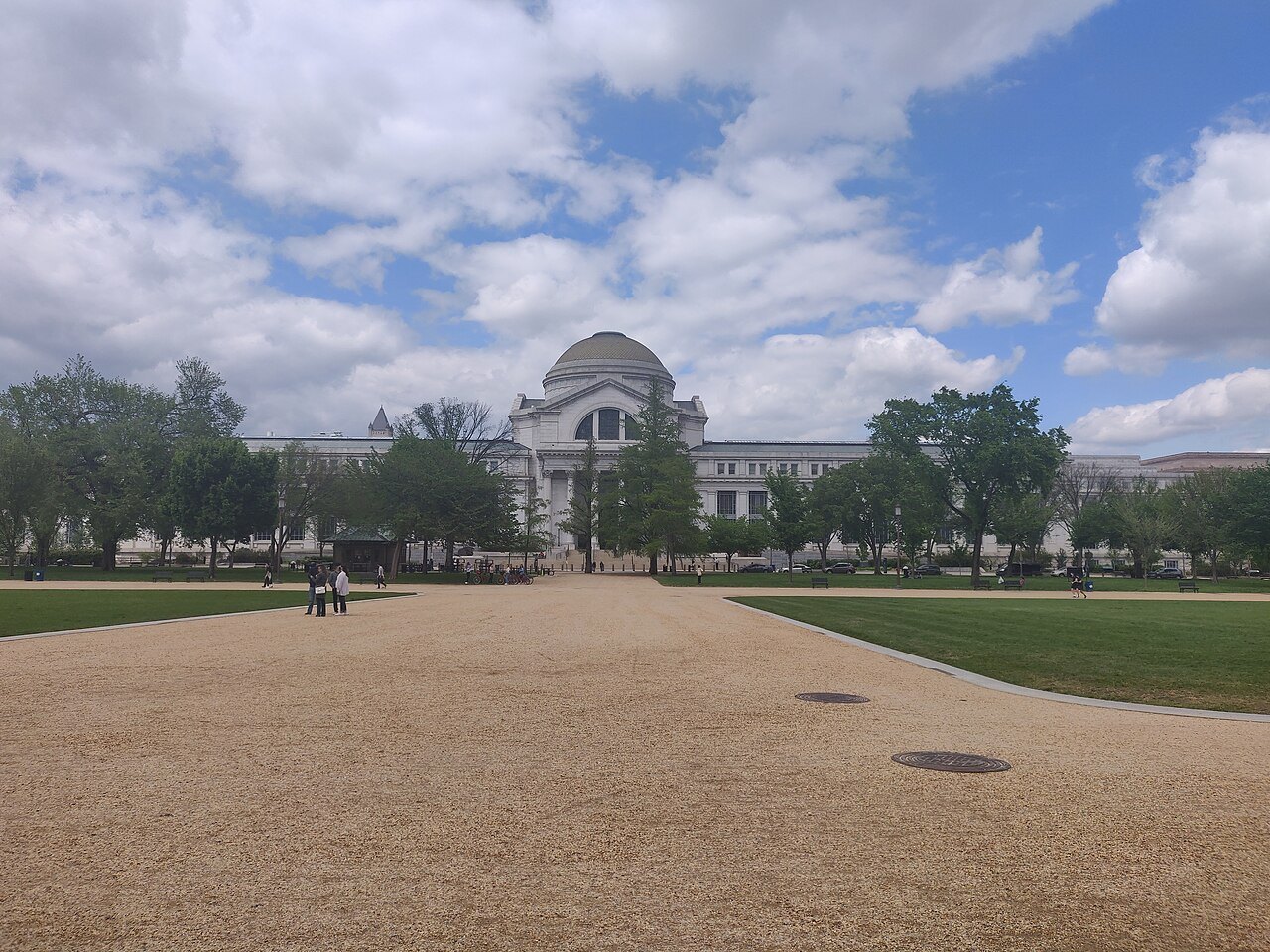
With more than three million visits a year the halls are rarely quiet. Choose two or three halls rather than trying to see all of them in a single visit: the rotunda and the gems upstairs, then either the fossils or the ocean. The National Gallery of Art is next door to the east and the National Museum of American History next door to the west (see the Mall).
Honest notes
The dinosaur skeletons are a mixture of real fossil bone and casts, and the labels say which is which. The museum's Tyrannosaurus rex was the first real T. rex skeleton it had displayed, on a fifty-year lease from the Army Corps of Engineers from 2013.
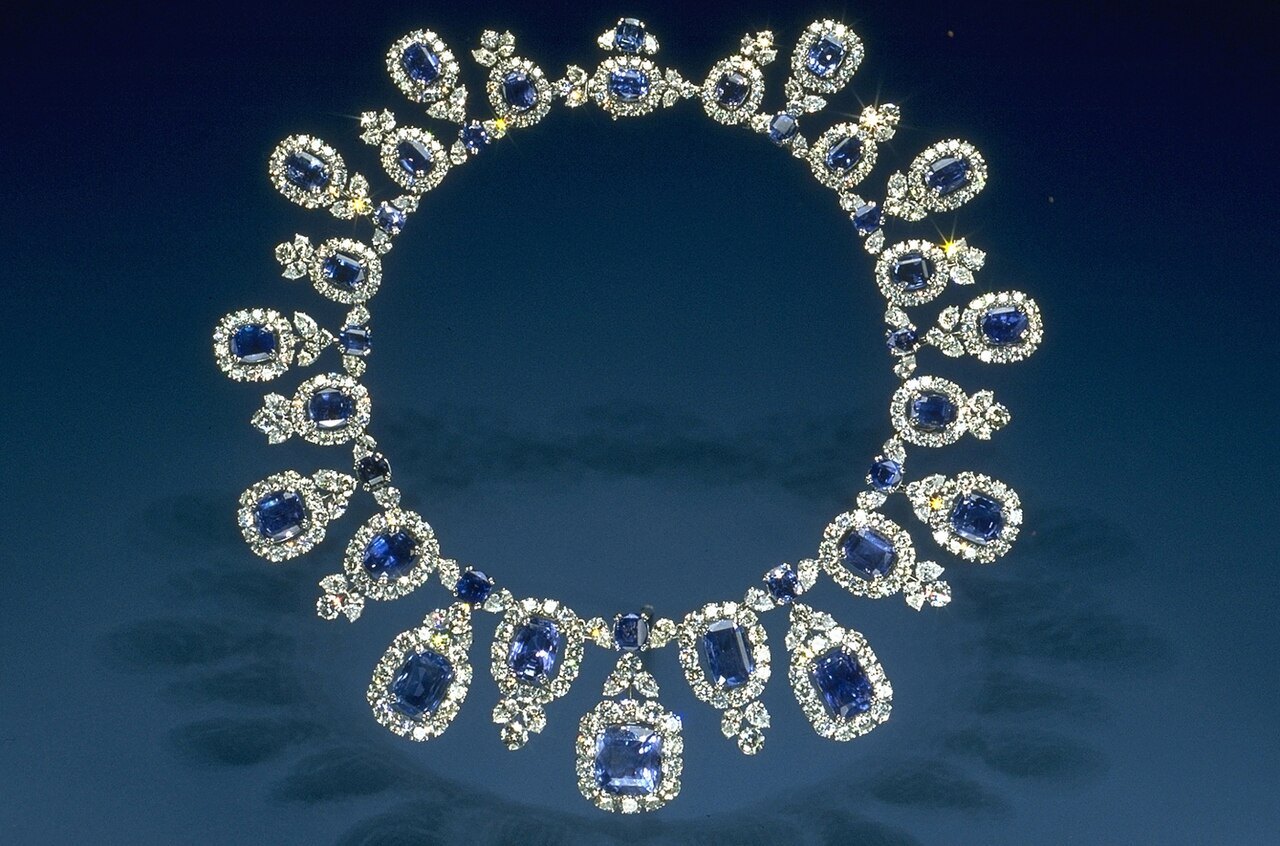
The Hope Diamond's famous curse is a story: the historical record does not support the tales of beheaded owners, and one account suggests an owner may have fed the legend to raise the stone's value. What is real is that the diamond glows red for some time after ultraviolet light is switched off, which may have helped the legend along. And the museum is not a zoo: apart from the insects, the butterflies and the fish in the ocean hall, the animals on show are specimens.
Where to go next03
Nearby
- Nearby · Constitution Ave · 4th St NWThe National Gallery of ArtA free national museum of Western art from the Middle Ages to now, in two buildings joined underground: John Russell Pope's marble temple of 1941 and I.Read the page →
- Nearby · 700 Pennsylvania Ave NWThe National ArchivesJohn Russell Pope's temple of the nation's records, built in the 1930s over a buried creek, where the Declaration of Independence, the Constitution and the Bill of Rights lie under glass in a rotunda.Read the page →
- Nearby · Constitution Ave · 14th St NWThe National Museum of African American History and CultureThe Smithsonian's newest museum on the Mall, opened in 2016: a three-tiered bronze-colored corona drawn from a Yoruba crown, and inside it the history of Black America from the Middle Passage to the present, told from the bottom floor up.Read the page →