Home · Sights · The National Archives
What you are looking at01
The National Archives
700 Pennsylvania Ave NW
- The Rotunda for the Charters of FreedomThe domed hall where the Declaration, the Constitution and the Bill of Rights are shown.
- Barry Faulkner's muralsTwo great paintings flanking the charters: Jefferson in Congress, Madison at the Convention.
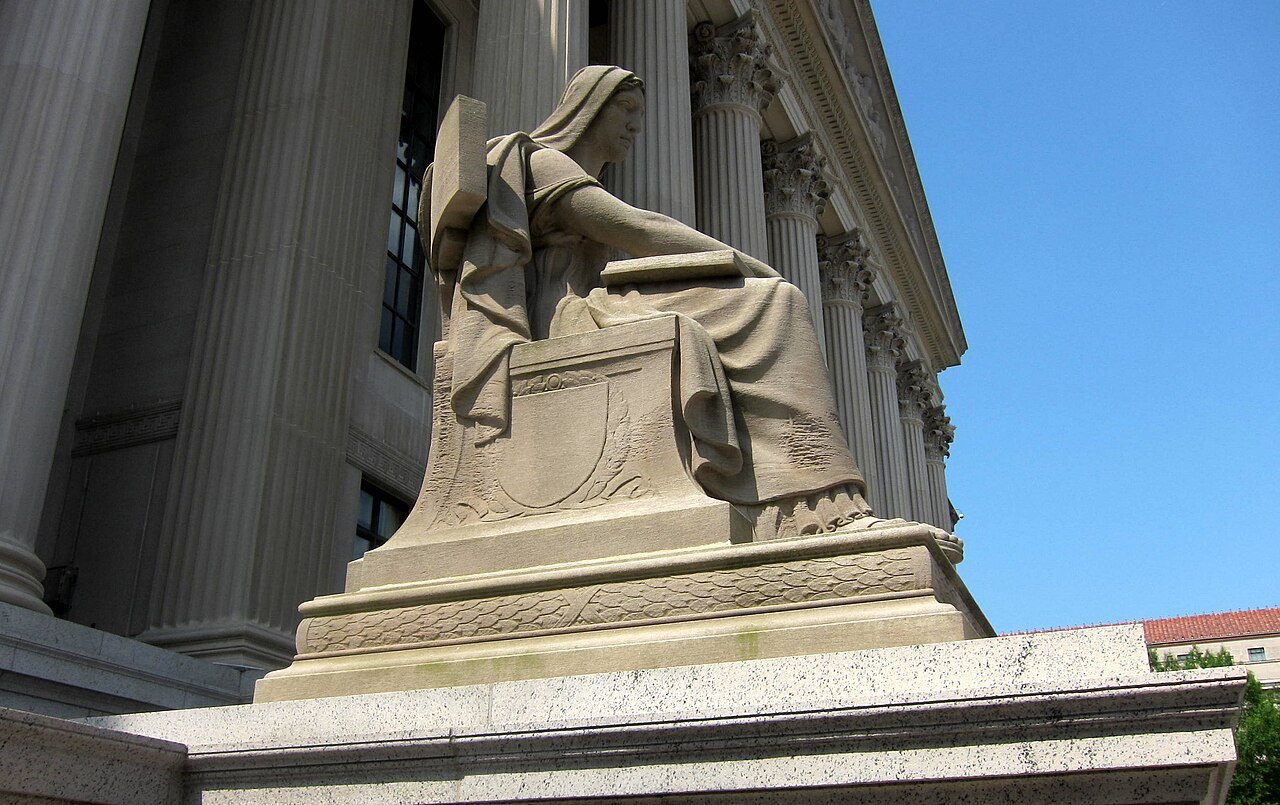
- The four statuesPast, Future, Heritage and Guardianship, carved in Indiana limestone in 1934 and 1935.
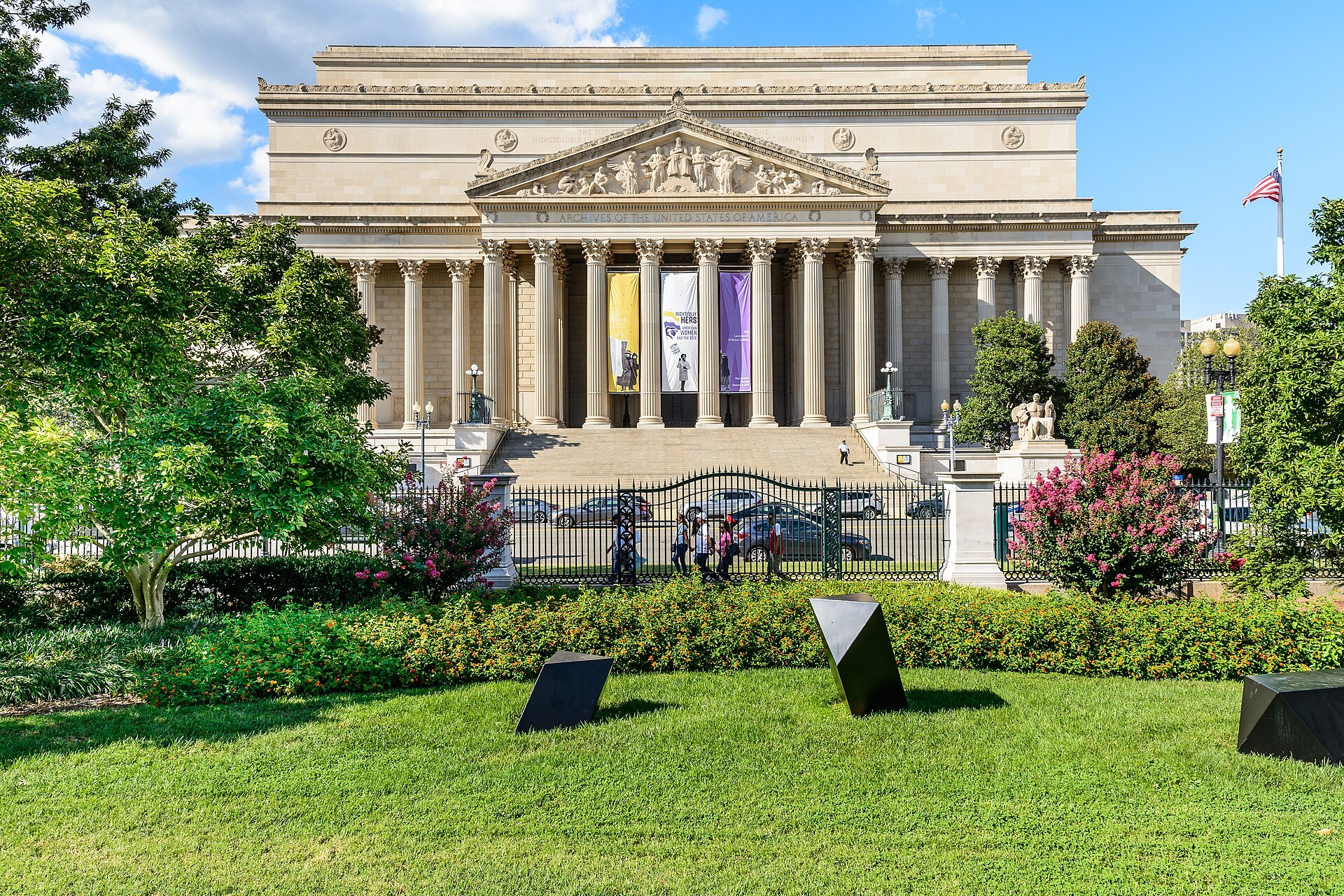
- The Constitution Avenue frontA colonnaded temple front and pediment facing the Mall, the public entrance.
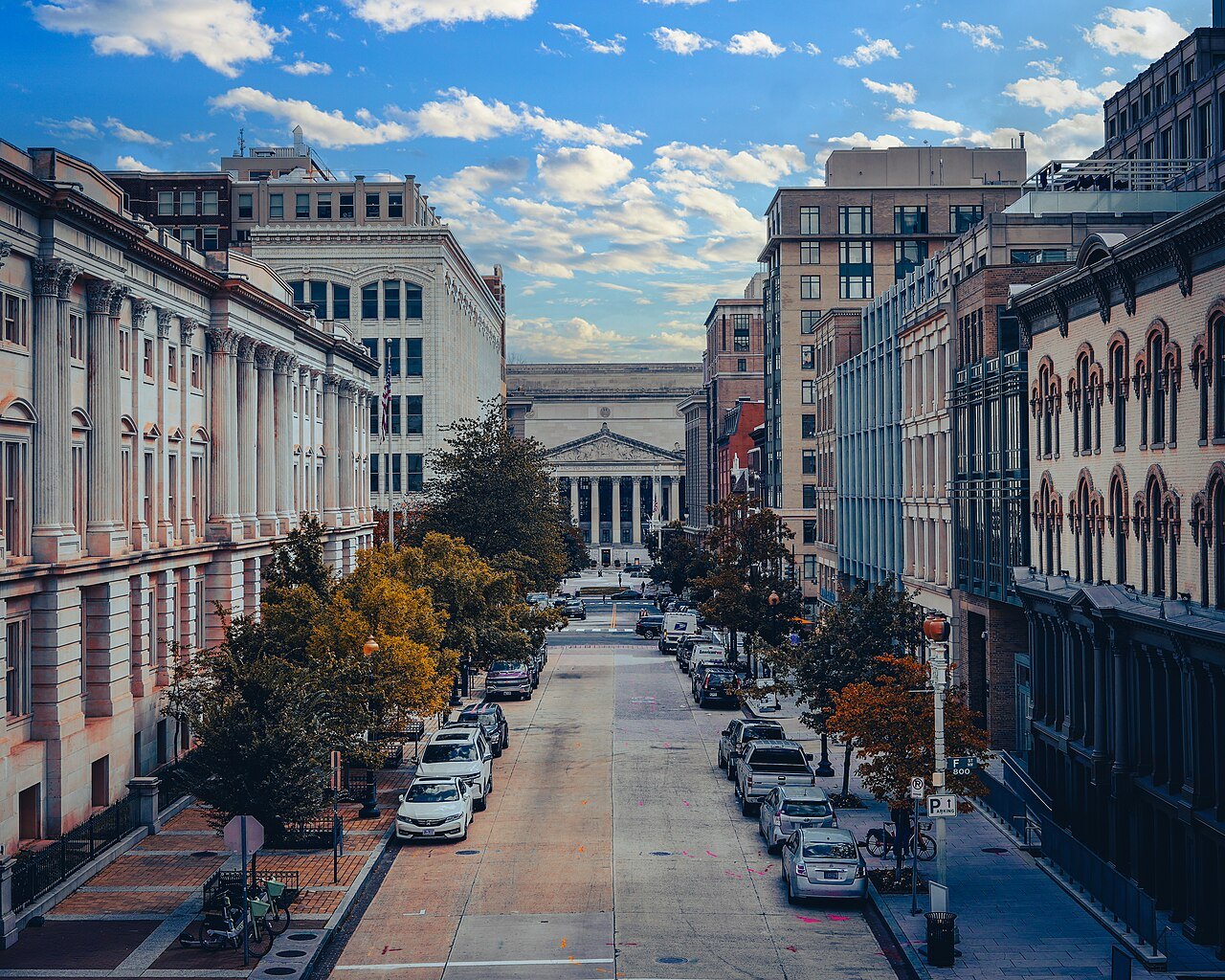
- The Pennsylvania Avenue frontThe research entrance, across the avenue from the Navy Memorial plaza.
The sight in full02
Reading the place
Why it matters
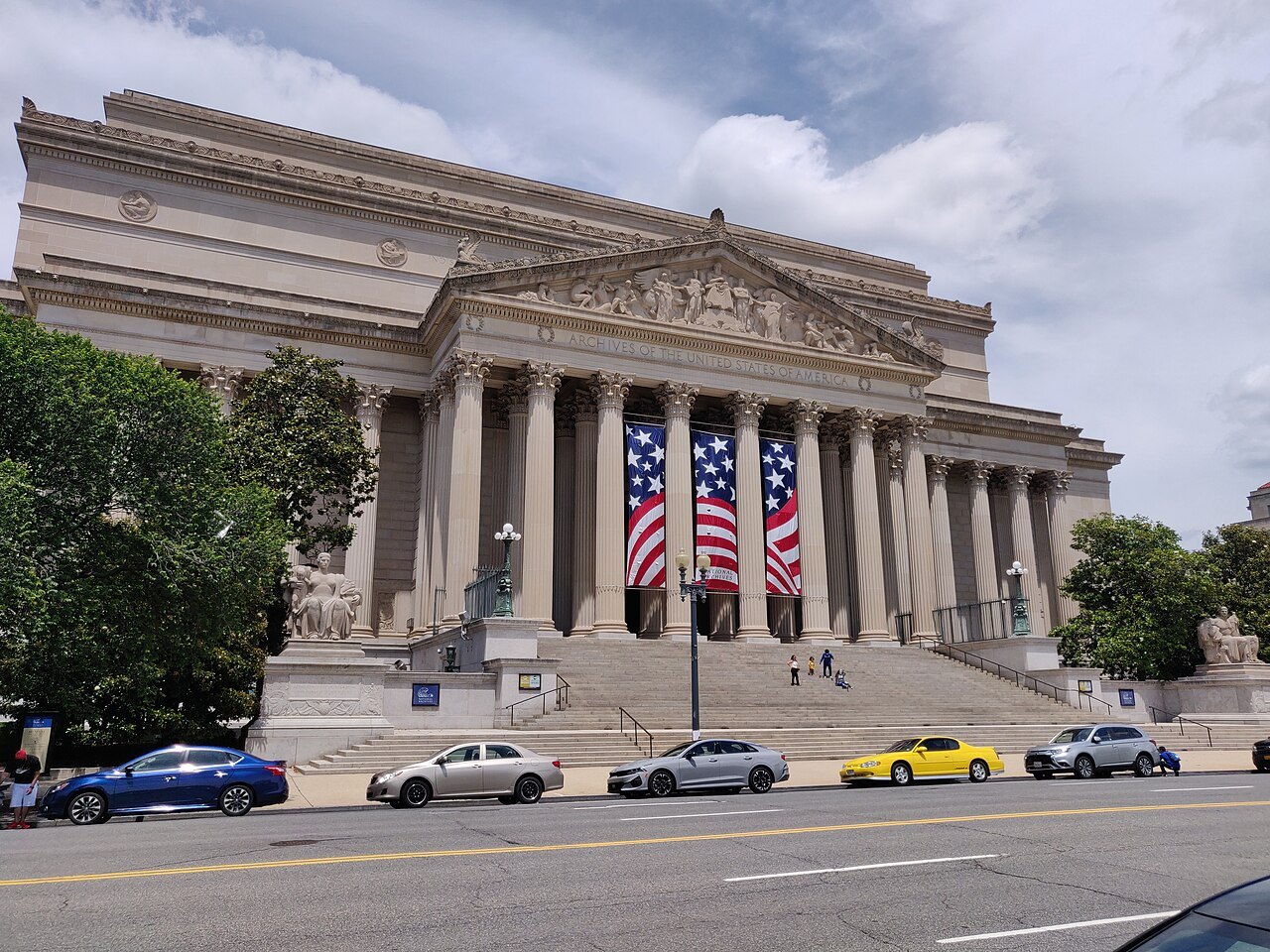
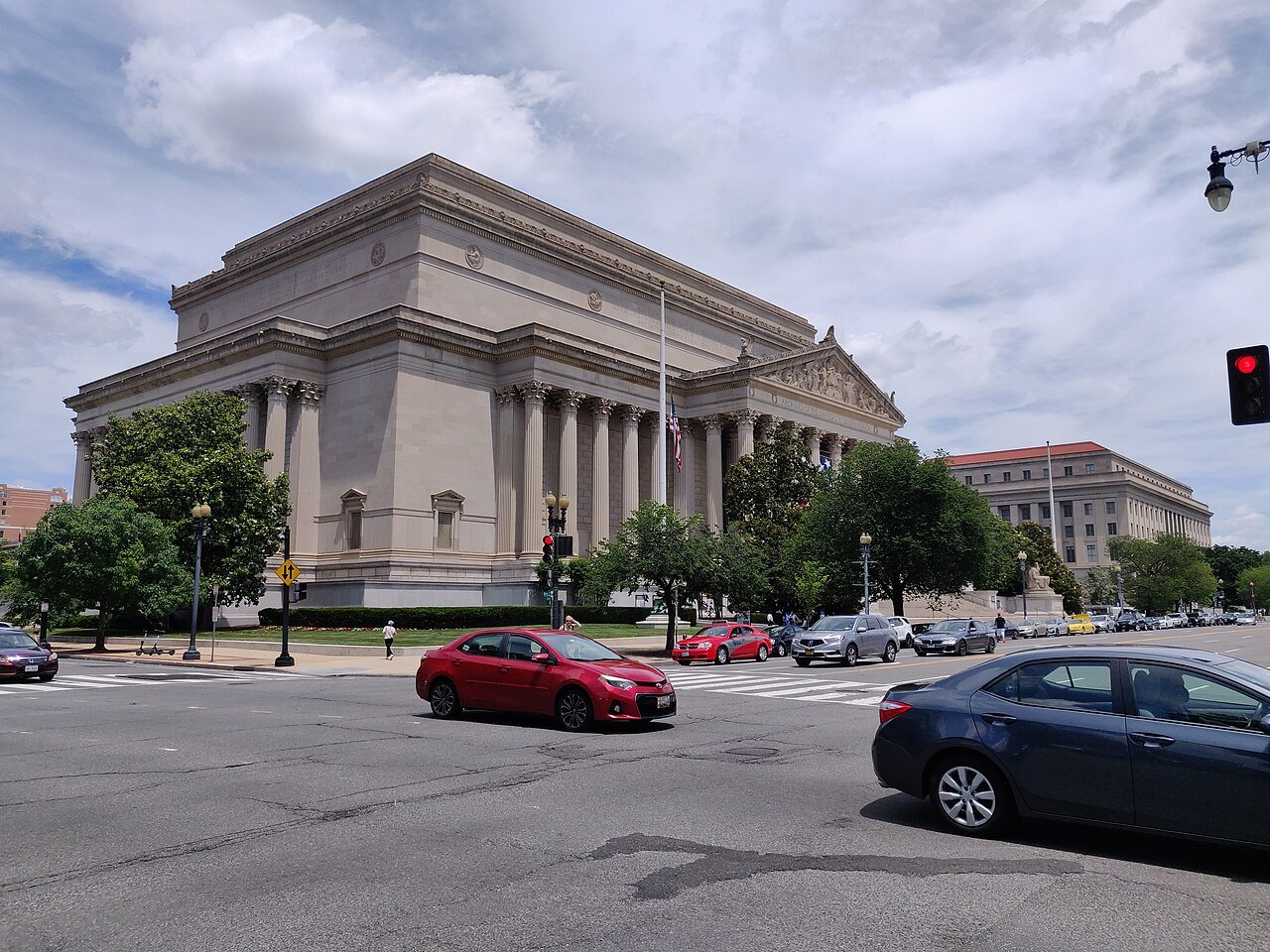
The National Archives Building, known inside the agency as Archives I, is the headquarters of the National Archives and Records Administration and the place where three documents are kept on public view: the Declaration of Independence, the Constitution and the Bill of Rights. It stands between Pennsylvania Avenue and Constitution Avenue at 7th Street, on the north side of the Mall, and it is the one building on the Mall's edge that exists to keep the nation's paper.
For almost a century and a half the federal government had no proper place to keep its records, and fires destroyed some of them. Congress finally approved a National Archives Building in 1926, as part of the public buildings program that produced the Federal Triangle between the two avenues.
A temple on a buried creek
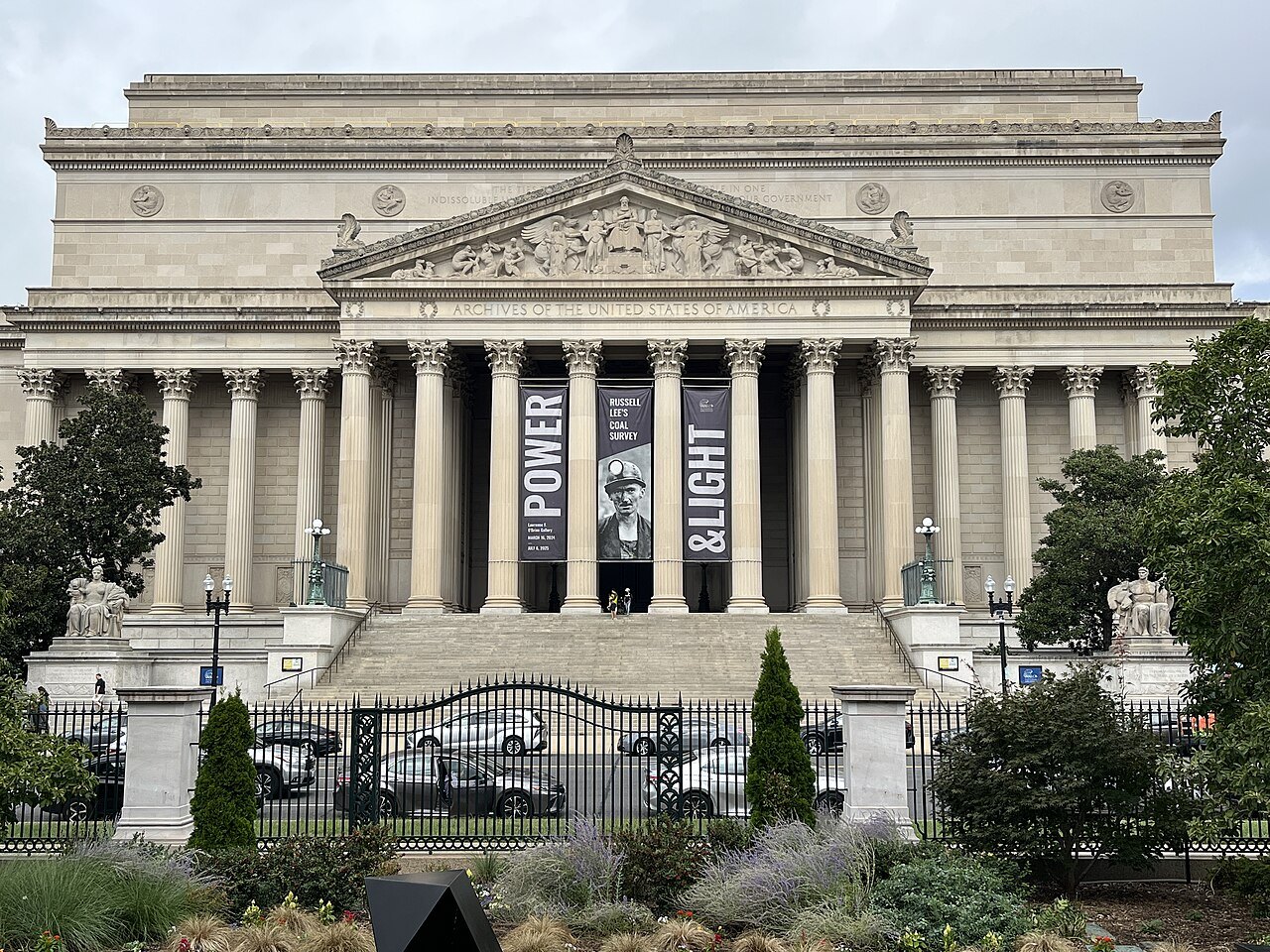
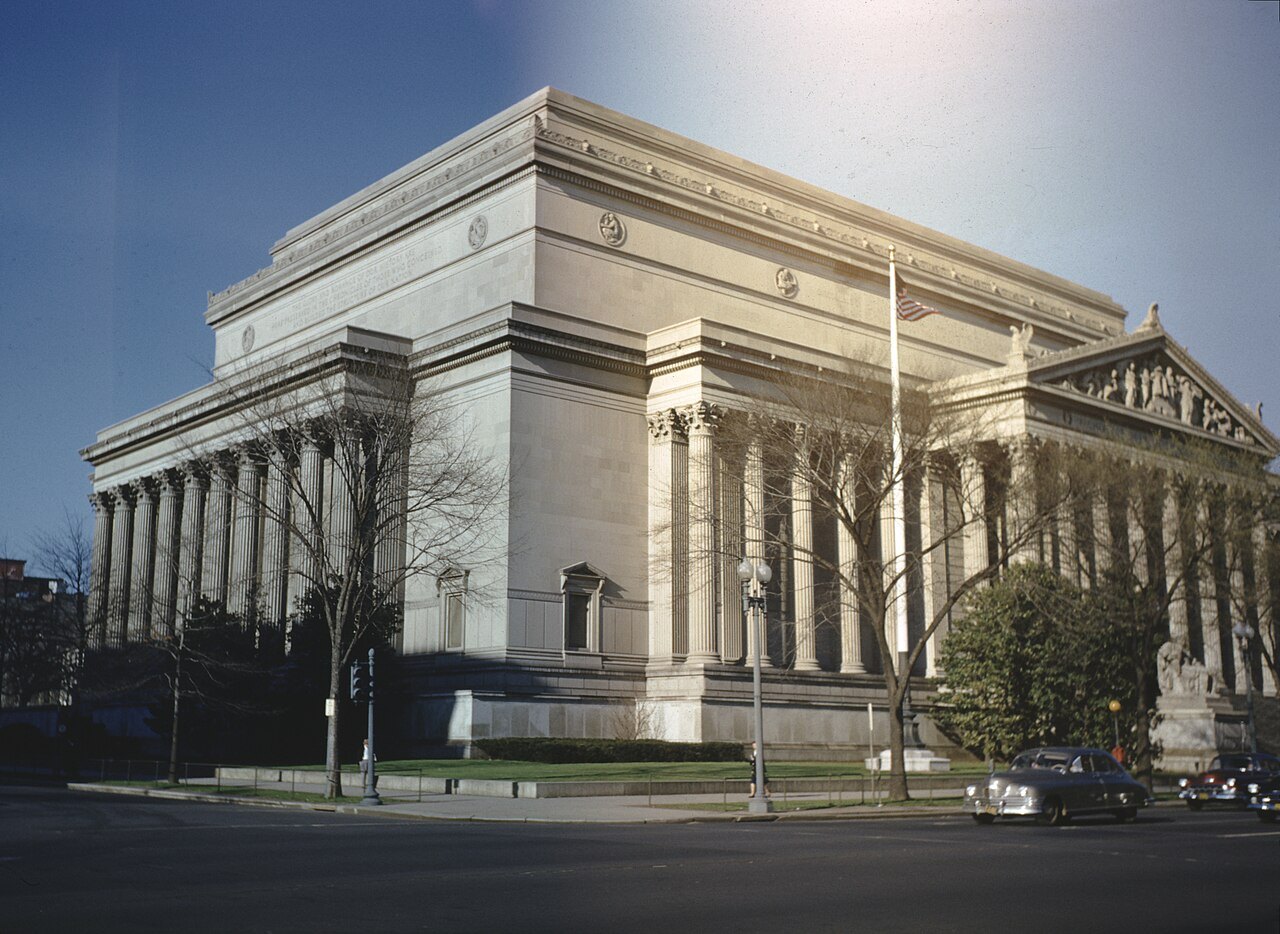
The first design, by Louis A. Simon of the Treasury's architects, put the Archives on Pennsylvania Avenue between 9th and 10th Streets. When the model of the whole Triangle was shown in 1929, the Commission of Fine Arts criticized it and proposed that John Russell Pope design the building instead. Pope moved it to the block between 7th and 8th Streets, where the old Center Market stood, and redrew it as a neoclassical temple for an institution devoted to American history. The market was demolished.
The site hid a problem. Tiber Creek, once an open stream across the Mall, ran underneath, and 8,575 piles had to be driven into the soft ground before a huge concrete bowl was poured as a foundation. Ground was broken on September 5, 1931, President Herbert Hoover laid the cornerstone in February 1933, and in November 1935 the first 120 staff moved into an unfinished building. It was completed in 1937, and almost at once the courtyard was filled in to double the storage space.
The charters
The Declaration, the Constitution and the Bill of Rights, which the archives call the Charters of Freedom, have been on display in the Rotunda since December 1952. Before that the Declaration and the Constitution had spent years in State Department safes, and from 1924 in a shrine at the Library of Congress. In 1952 they were sealed in cases filled with helium; when inspections in 1995 found the glass deteriorating, they were taken off display in 2001, conserved, and put back in new cases in September 2003.
The cases are bronze-framed, bulletproof and moisture-controlled, and at night the documents go down into vaults. The Bill of Rights on show is the copy kept by the First Congress; George Washington had fourteen made, one for Congress and one for each of the original thirteen states. On either side of the charters hang Barry Faulkner's two murals, one of Jefferson among the Continental Congress, the other of Madison at the Constitutional Convention, and beside them a display on the formation of the Union from 1774 to 1791, from the Articles of Association to Washington's first inaugural address.
What you actually see outside
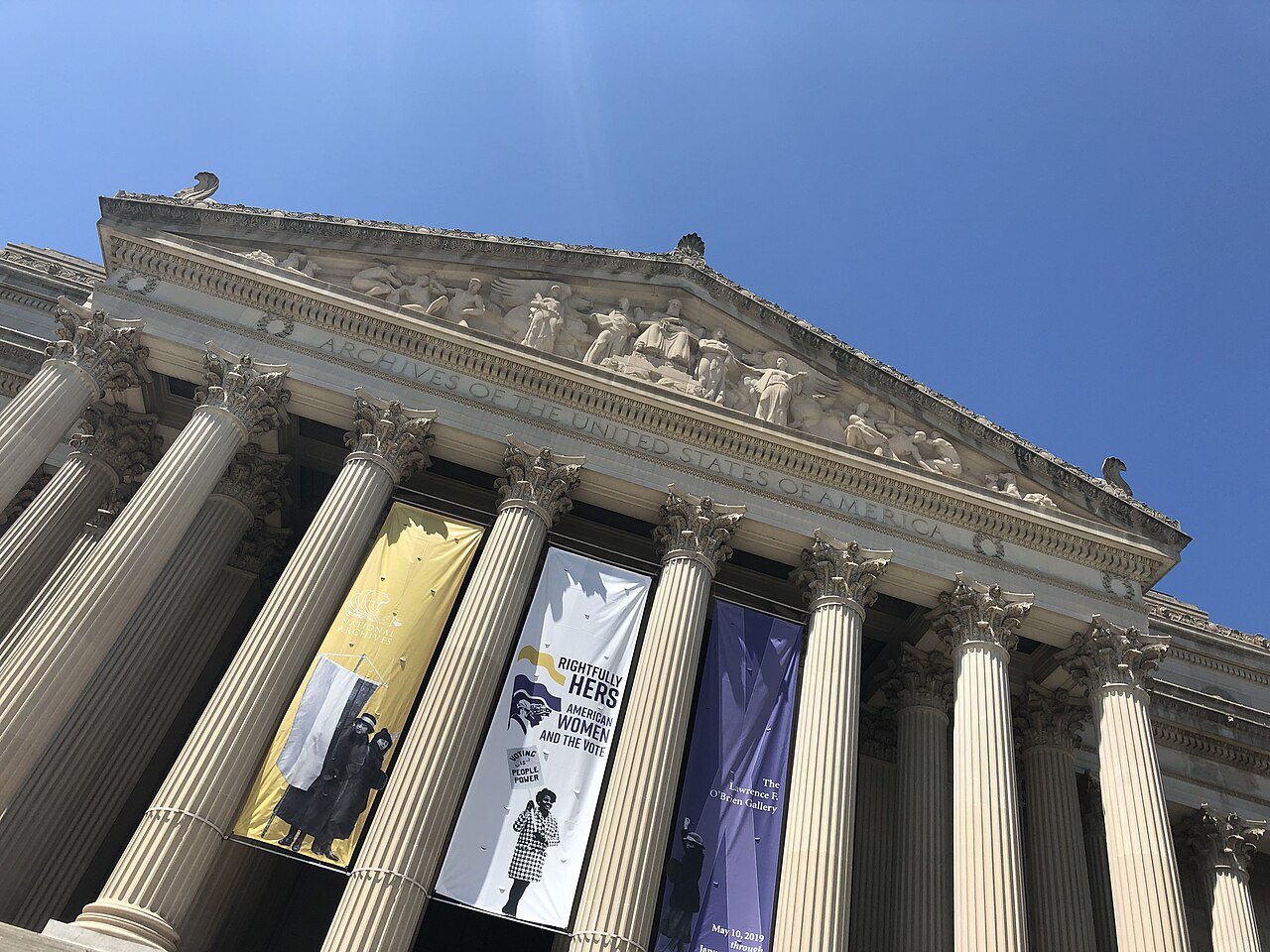
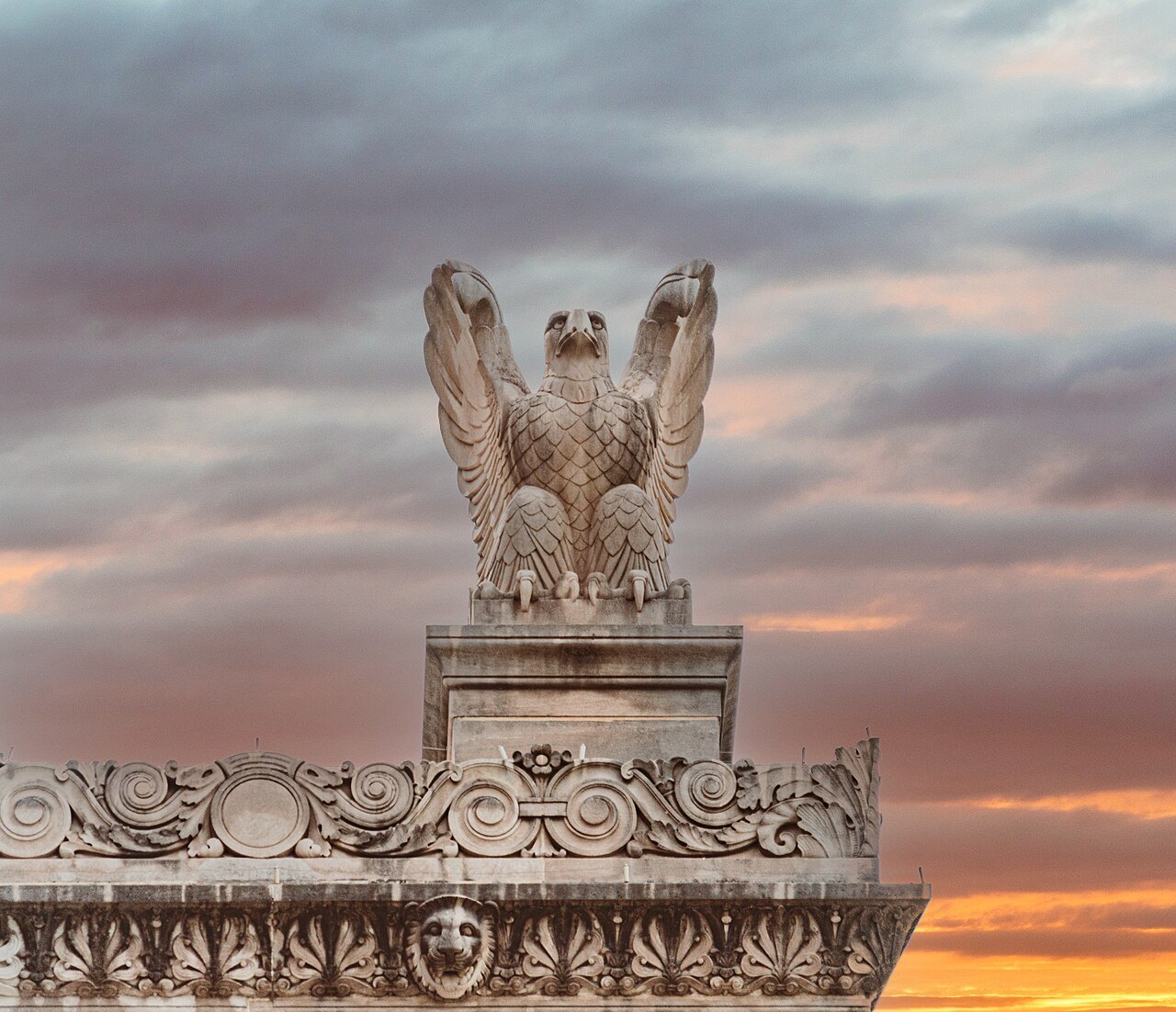
Walk around the building before you go in. It is the most ornate of the Federal Triangle buildings, and its pediments carry figures representing history, inspiration, destiny and guardianship. Four statues, each ten feet tall and weighing some 65 tons, were carved from Indiana limestone in 1934 and 1935. On the Pennsylvania Avenue side are Robert Aitken's Past, an old man, and Future, a young woman, their pedestals inscribed Study the Past and What is Past is Prologue, from The Tempest. On the Constitution Avenue side are James Earl Fraser's Heritage and Guardianship.
The building also holds much more than the charters: the Continental Association, the Articles of Confederation and the Louisiana Purchase Treaty are among its papers, and an original 1297 confirmation of Magna Carta by Edward I is on display. The Warren Commission, investigating the assassination of President Kennedy, held its first formal meeting in a hearing room upstairs on December 5, 1963.
How to visit
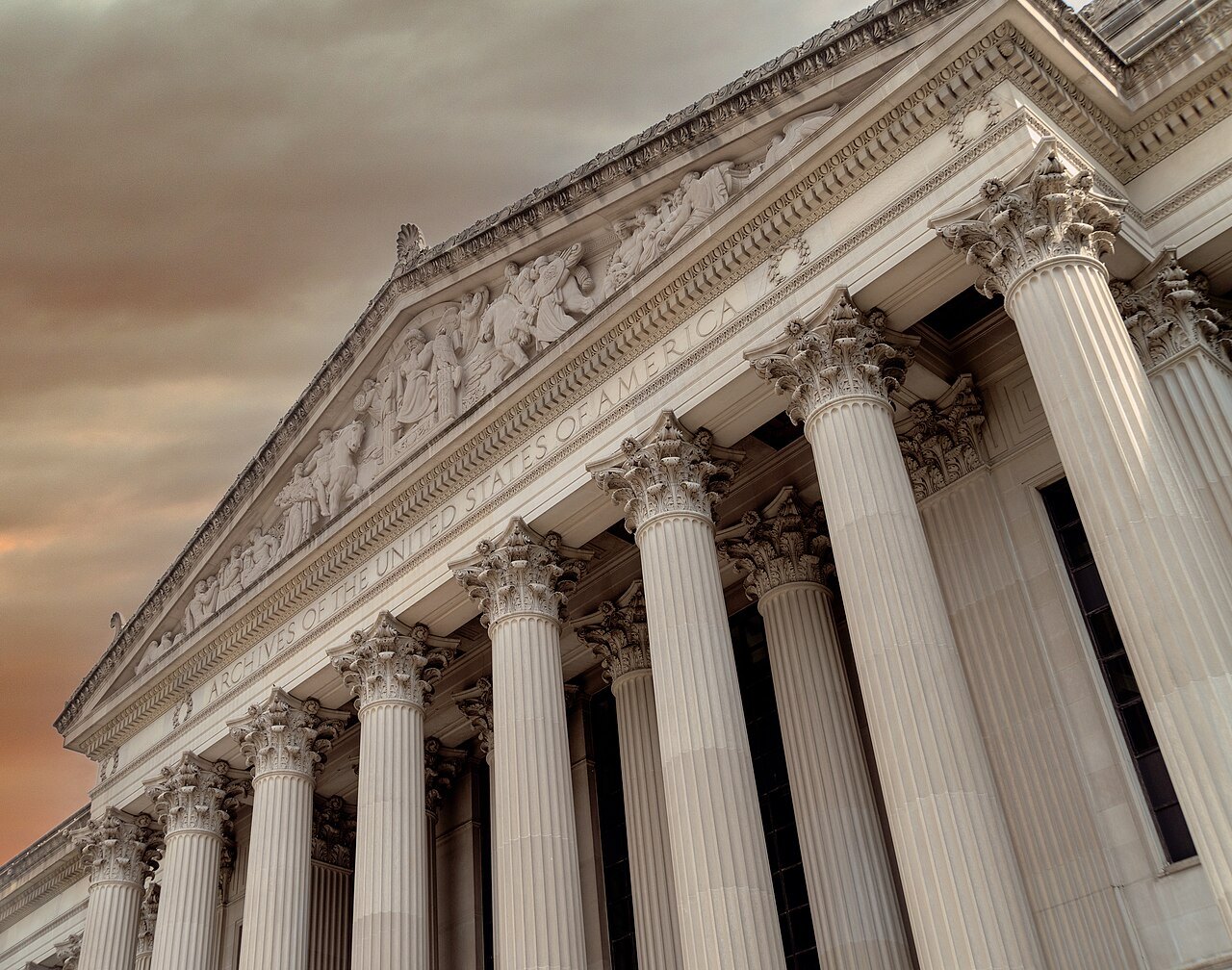
The museum and the Rotunda are entered from the Constitution Avenue side; the Pennsylvania Avenue entrance is for researchers. From the Archives-Navy Memorial-Penn Quarter Metro station, on the Yellow and Green lines, cross Pennsylvania Avenue and walk around the building to the Constitution Avenue door.
The museum's own pages say tickets are not required, but they recommend reserving: there are free general-admission reservations, and timed-entry tickets for a small fee that let you skip the longer line. Everyone passes through security screening. Check the museum's guidelines on photography in the Rotunda and the exhibition rooms before you raise a camera, and expect the Rotunda itself to be crowded at busy times; the charters are read slowly, one case at a time.
Researchers use the separate research room, where appointments are encouraged and walk-ins are also possible. The National Gallery of Art and the Natural History museum are across Constitution Avenue (see the National Gallery).
Honest notes
The film National Treasure had the Declaration stolen from this building; the real documents are protected in sealed cases by day and in vaults at night. The documents were not always treated as treasures: in 1883 a historian found the parchment Constitution folded in a small tin box on the floor of a closet in the State, War and Navy Building, and for its first century it was hardly looked at. And much of the nation's archive is no longer here: since 1993 a second building in College Park, Maryland, has held most of the records.
Where to go next03
Nearby
- Nearby · Constitution Ave · 4th St NWThe National Gallery of ArtA free national museum of Western art from the Middle Ages to now, in two buildings joined underground: John Russell Pope's marble temple of 1941 and I.Read the page →
- Nearby · Constitution Ave · 10th St NWThe National Museum of Natural HistoryThe Smithsonian's museum of the natural world, opened in 1910: an elephant under the rotunda, the Hope Diamond upstairs, and behind the halls the largest natural history collection on earth.Read the page →
- Nearby · F St · 8th St NWThe National Portrait Gallery and the Old Patent OfficeTwo Smithsonian museums in one Greek Revival block, the Old Patent Office begun in 1836: every president's portrait on one side, American art from the colonial period onward on the other, and a glass-roofed courtyard between them.Read the page →