Home · Sights · The National Gallery of Art
What you are looking at01
The National Gallery of Art
Constitution Ave · 4th St NW
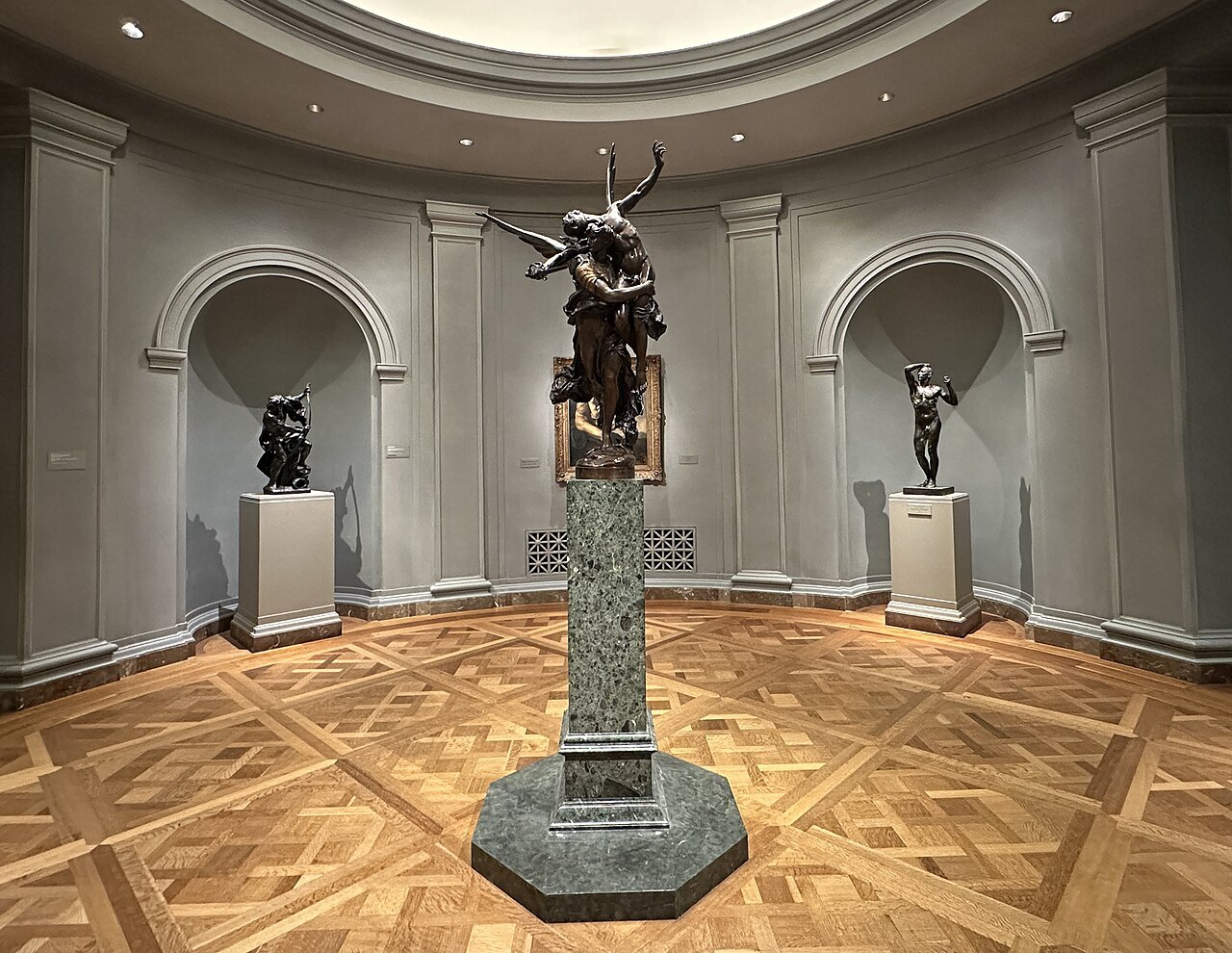
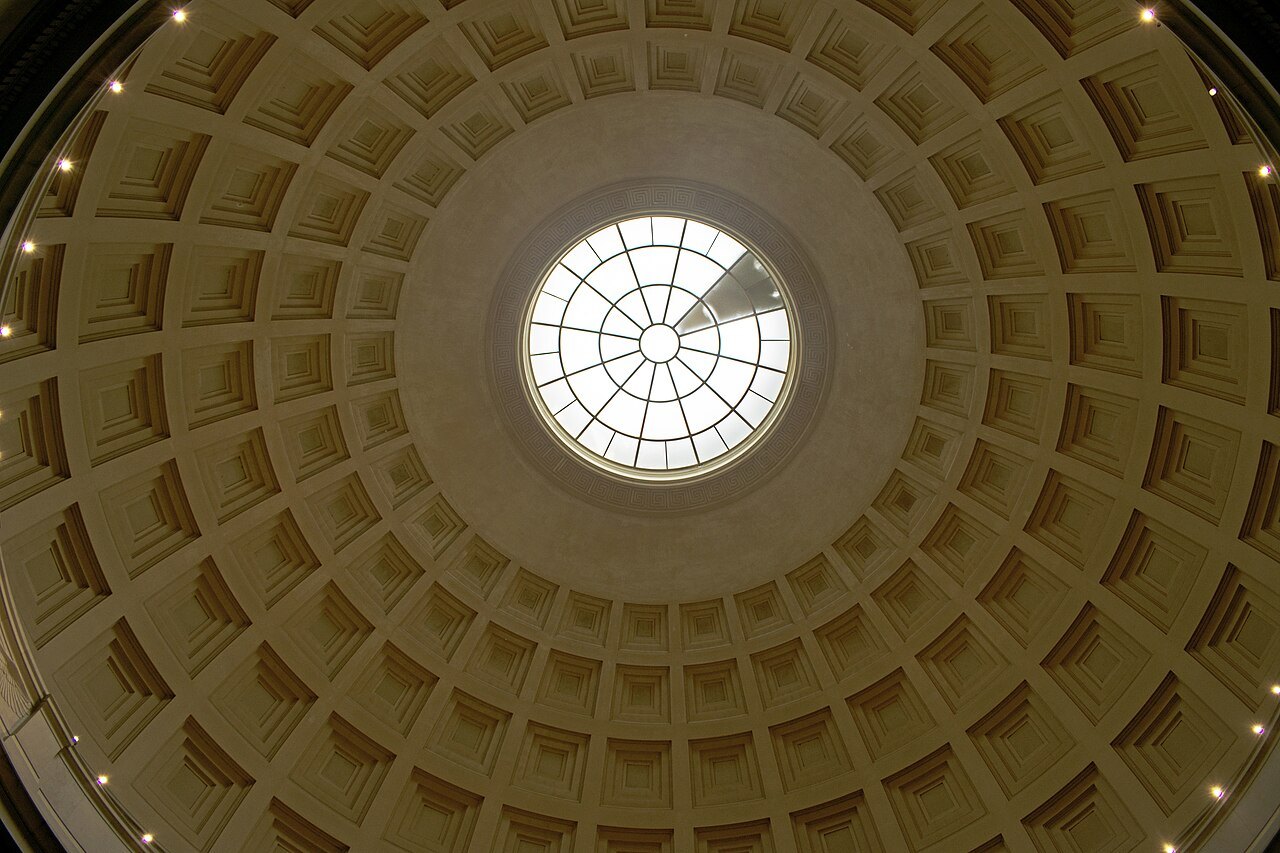
- The RotundaA domed hall at the heart of the West Building, modeled on the Pantheon in Rome.
- The sculpture hallsTwo long skylit halls running east and west from the Rotunda, the building's main spine.
- Ginevra de' BenciThe only painting by Leonardo da Vinci on public view anywhere in the Americas.
- The East Building atriumPei's triangular glass-roofed court, hung with the largest mobile Alexander Calder ever made.
- The underground passageThe link between the two buildings, so you can cross without going outside.
- The Sculpture GardenSix acres of modern sculpture round a fountain that becomes a skating rink in winter.
The sight in full02
Reading the place
Why it matters
The National Gallery of Art holds one of the great collections of Western painting and sculpture in the world, and it is free. Its paintings, drawings, prints, photographs, sculpture, medals and decorative arts trace the development of Western art from the Middle Ages to the present day. It occupies the north side of the Mall between 3rd and 9th Streets, on Constitution Avenue, and in 2024 nearly four million people visited, making it the second most visited museum in the United States. Of the three most visited art museums in the country it is the only one that charges no admission.
It was founded privately. Andrew W. Mellon, the financier and Secretary of the Treasury, gave his collection and the money to build, and Congress accepted the gift by joint resolution in 1937. Other collectors followed: Samuel H. Kress and his brother Rush, the Wideners, Chester Dale, Lessing J. Rosenwald, and Mellon's son Paul and daughter Ailsa. The gallery is part of the Mall's row of museums, but it is not one of the Smithsonian's (see the Mall).
A marble temple on a railroad site
The site had a history before the gallery. The Baltimore and Potomac Railroad station stood here, and in 1881 President James Garfield was shot in it by a disappointed office seeker. The station was demolished in 1908 because it did not fit the McMillan Plan for the Mall; temporary war buildings followed, then the foundations of a memorial building that was never finished.
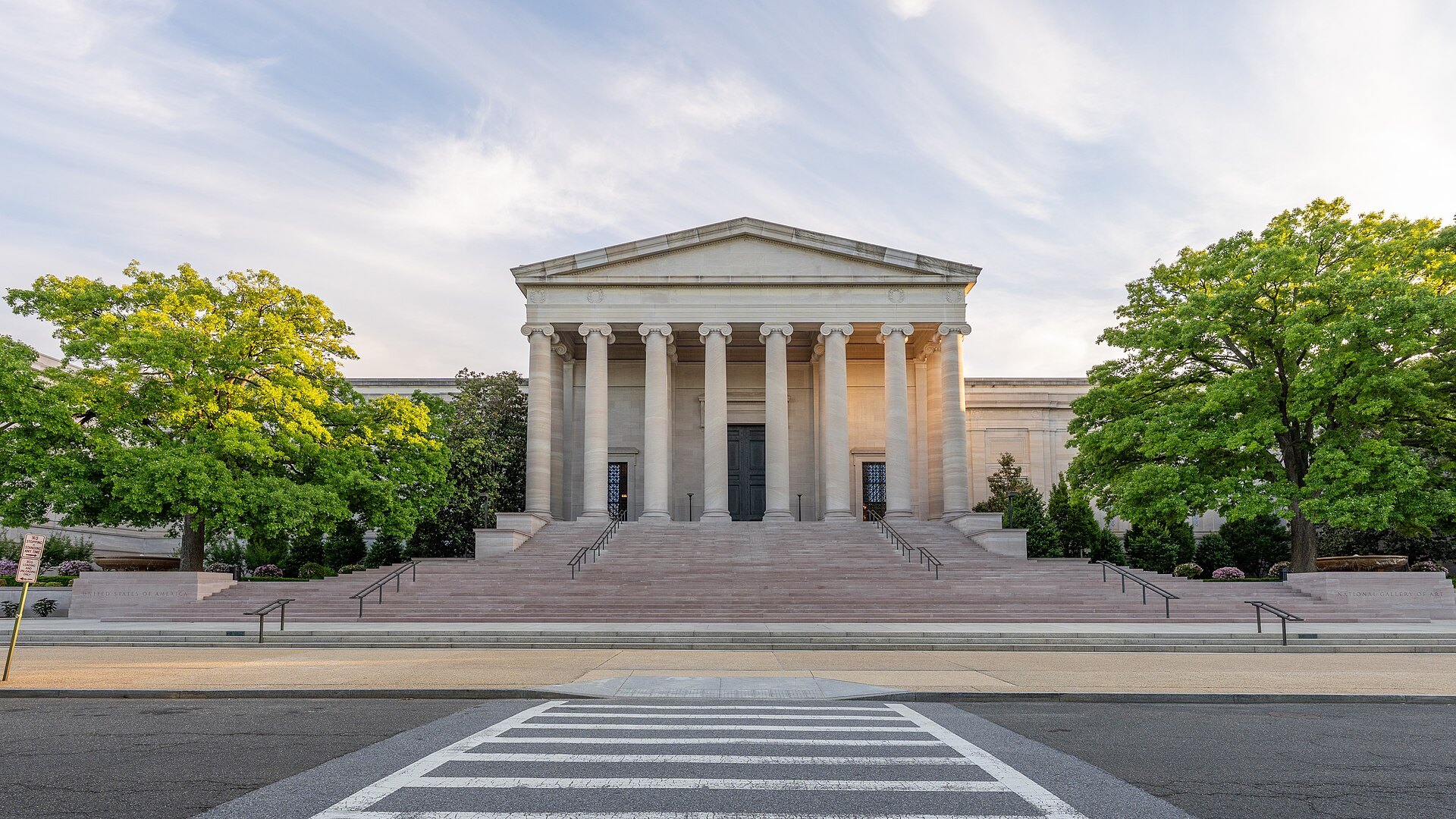
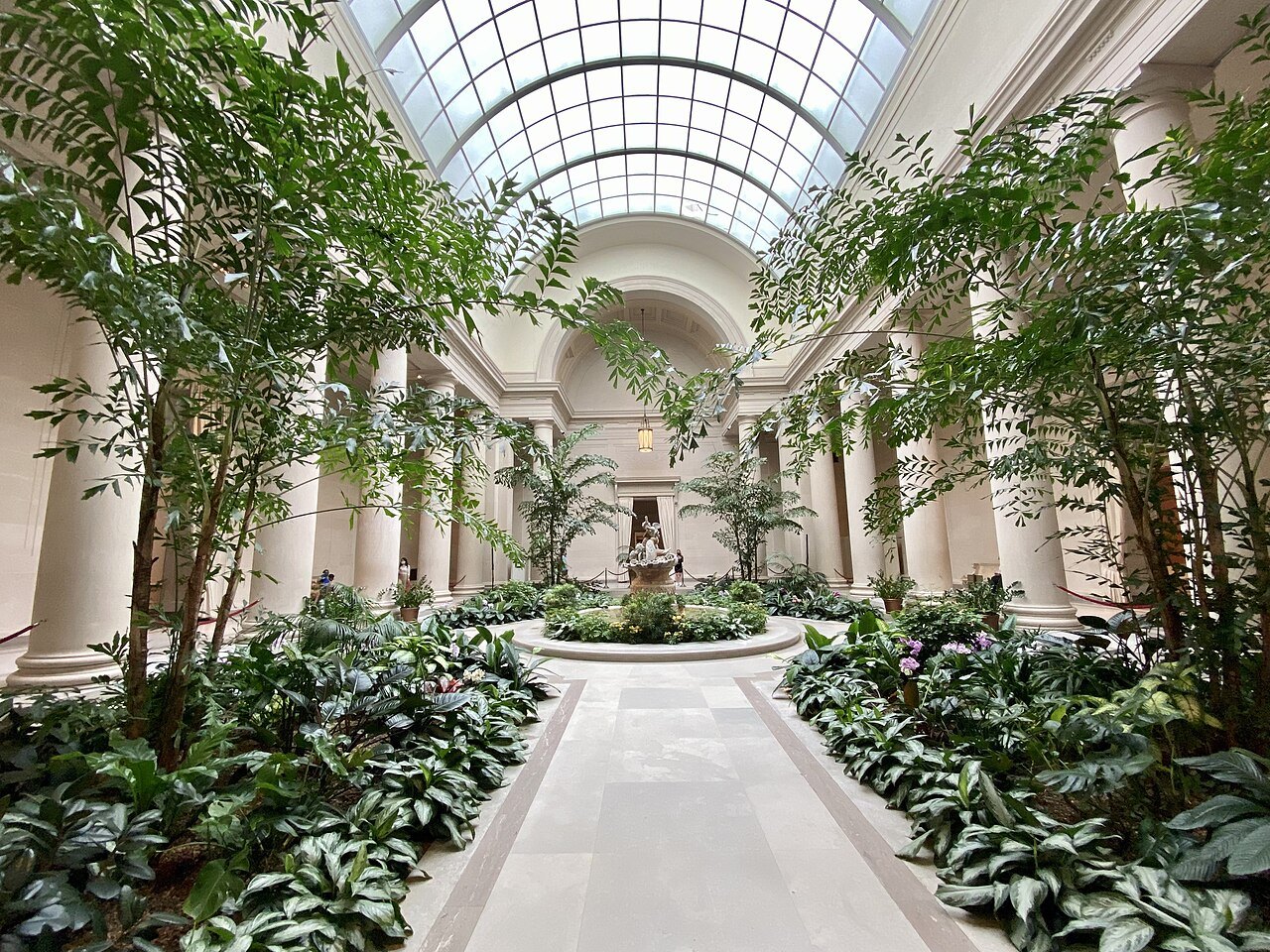
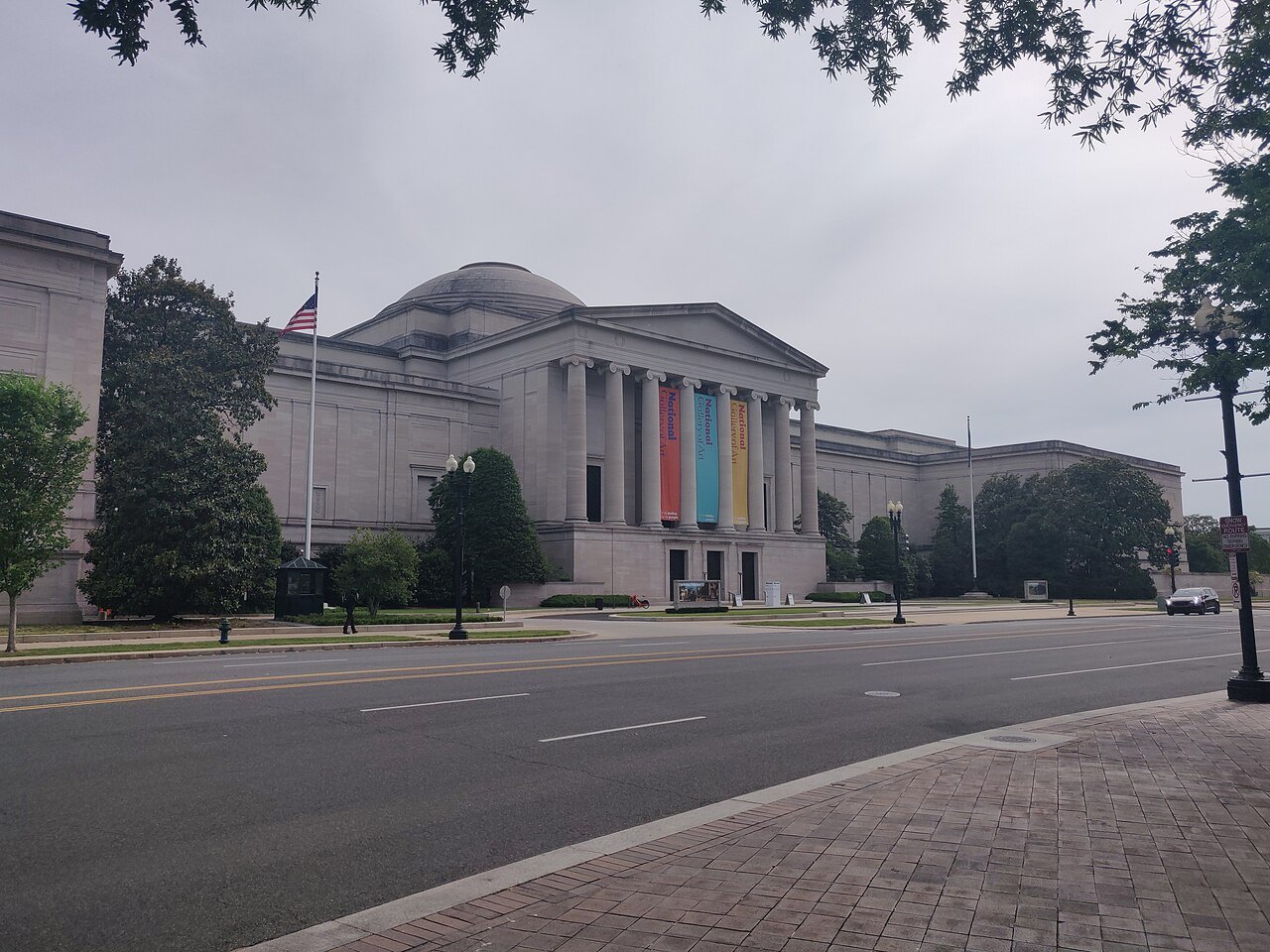
John Russell Pope designed the gallery in 1937 in the neoclassical manner he also used for the Jefferson Memorial. The West Building is faced in pink Tennessee marble and laid out as an elongated H around a domed rotunda modeled on the Pantheon, with long skylit sculpture halls running east and west and garden courts beside them. When it was completed it was the largest marble structure in the world. Neither Mellon nor Pope lived to see it: both died in 1937, and President Franklin D. Roosevelt accepted the building for the nation on March 17, 1941.
Pei's triangles
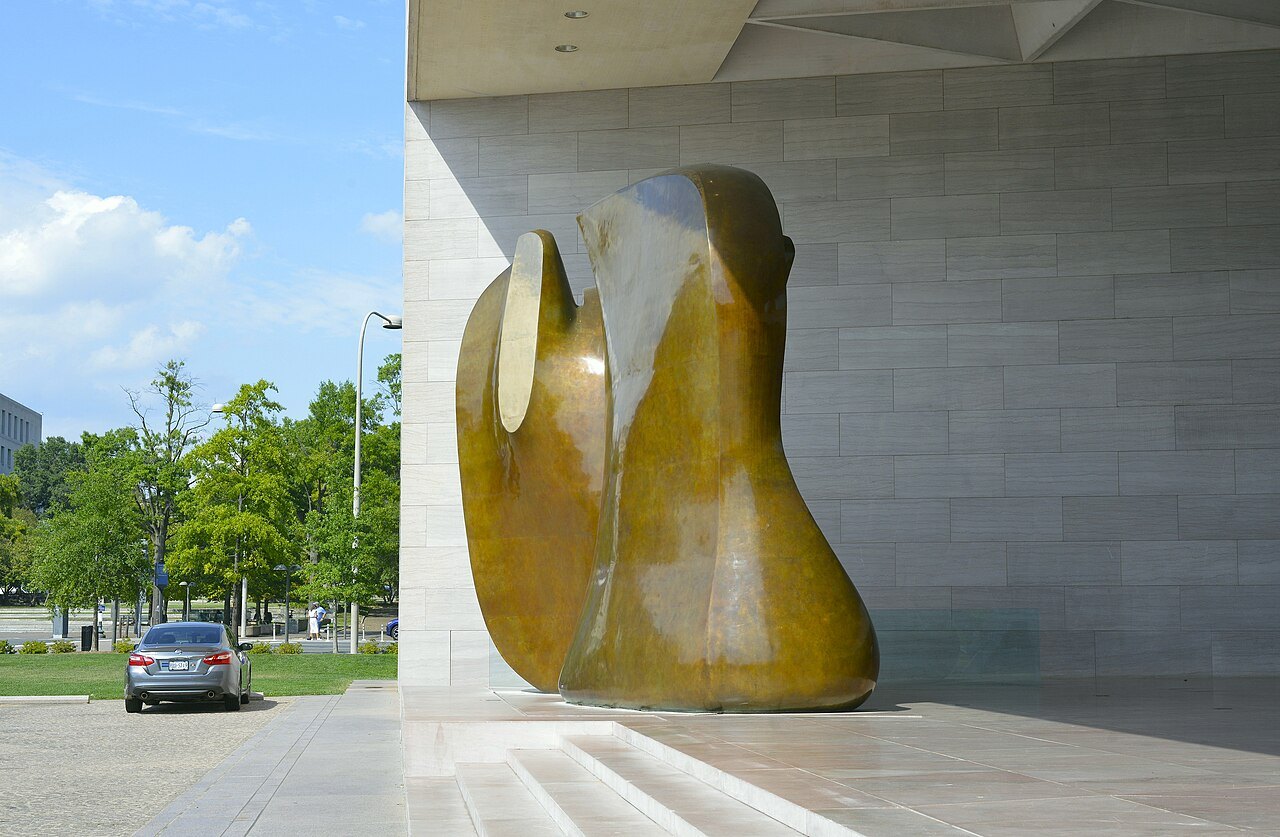
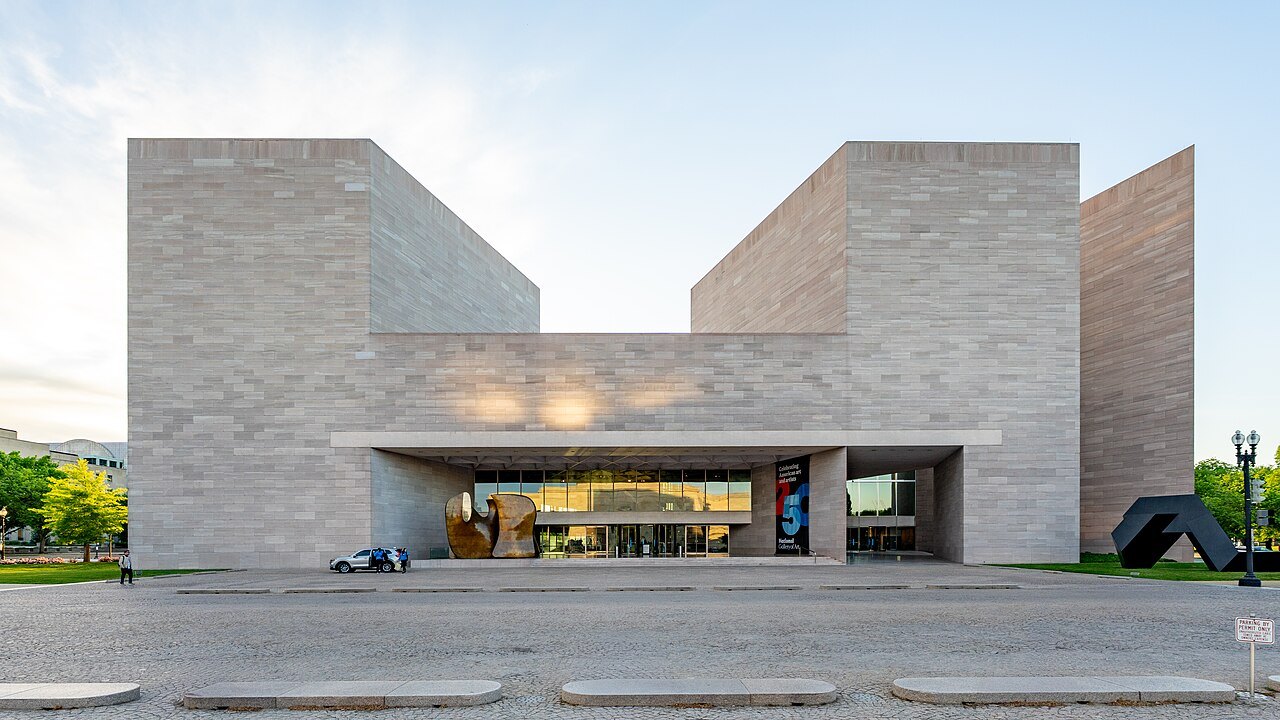
The East Building was built in the 1970s on the last of the land Congress had set aside, a trapezoid at the Capitol end of the site. I. M. Pei divided the trapezoid into two triangles, one for public galleries and one for a library, offices and the study center, so that the whole building is made of sharp angles, in deliberate contrast to Pope's symmetry. It opened on June 1, 1978, and holds the modern and contemporary collections.
Its center is a triangular atrium under a glass roof, and hanging in it is Alexander Calder's largest mobile. The two buildings are joined by an underground passage, so you can go from Renaissance Florence to the twentieth century without going outside.
What you actually see
In the West Building, the Italian Renaissance rooms hold two panels from Duccio's Maestà, the round Adoration of the Magi by Fra Angelico and Filippo Lippi, Giovanni Bellini's Feast of the Gods and Giorgione's Allendale Nativity, and works by Raphael and Titian. Nearly every visitor looks for one painting in particular. The one most people come to find is Leonardo da Vinci's Ginevra de' Benci, a small portrait of a young Florentine woman, bought from the Prince of Liechtenstein in February 1967 for what was then a record price for a painting, and the only painting by Leonardo on public view in the Americas.
Further on are the Northern and later European rooms: Rogier van der Weyden, Dürer, Cranach, Frans Hals, Rembrandt and Vermeer, El Greco, Goya, and the French painters of the nineteenth century, followed by American painting before 1900. The East Building carries the story into the modern and contemporary period.
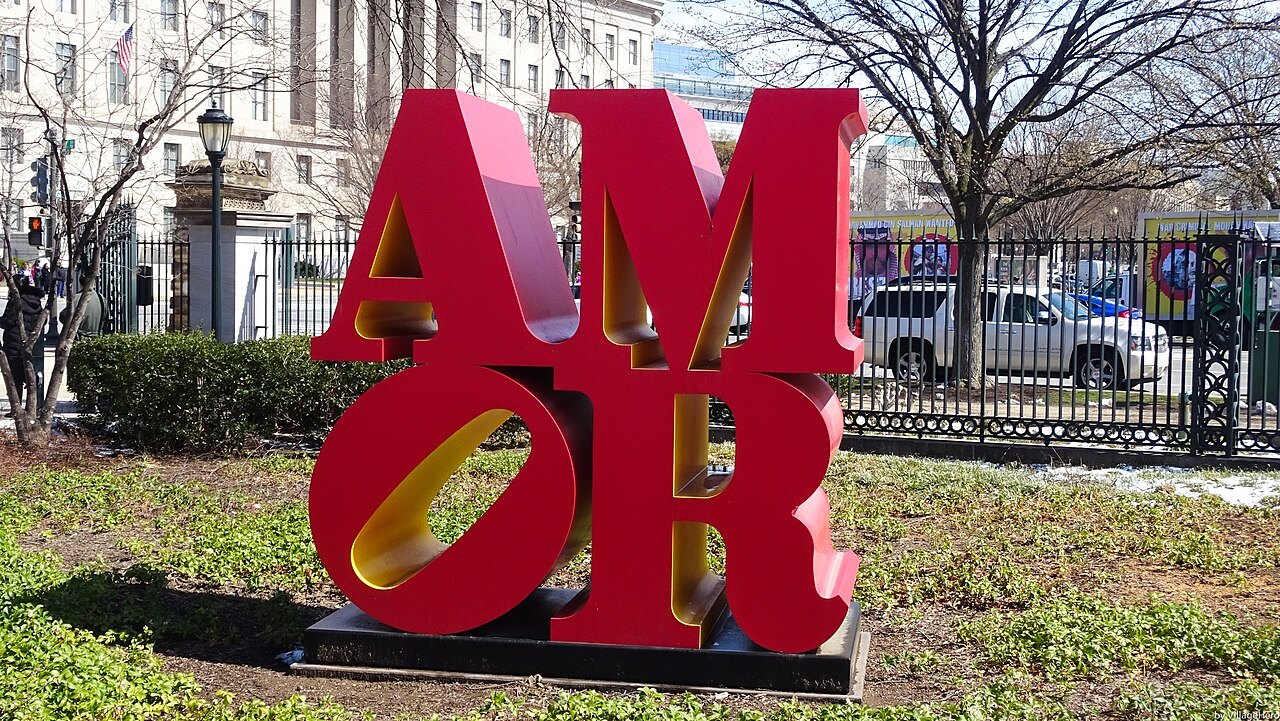
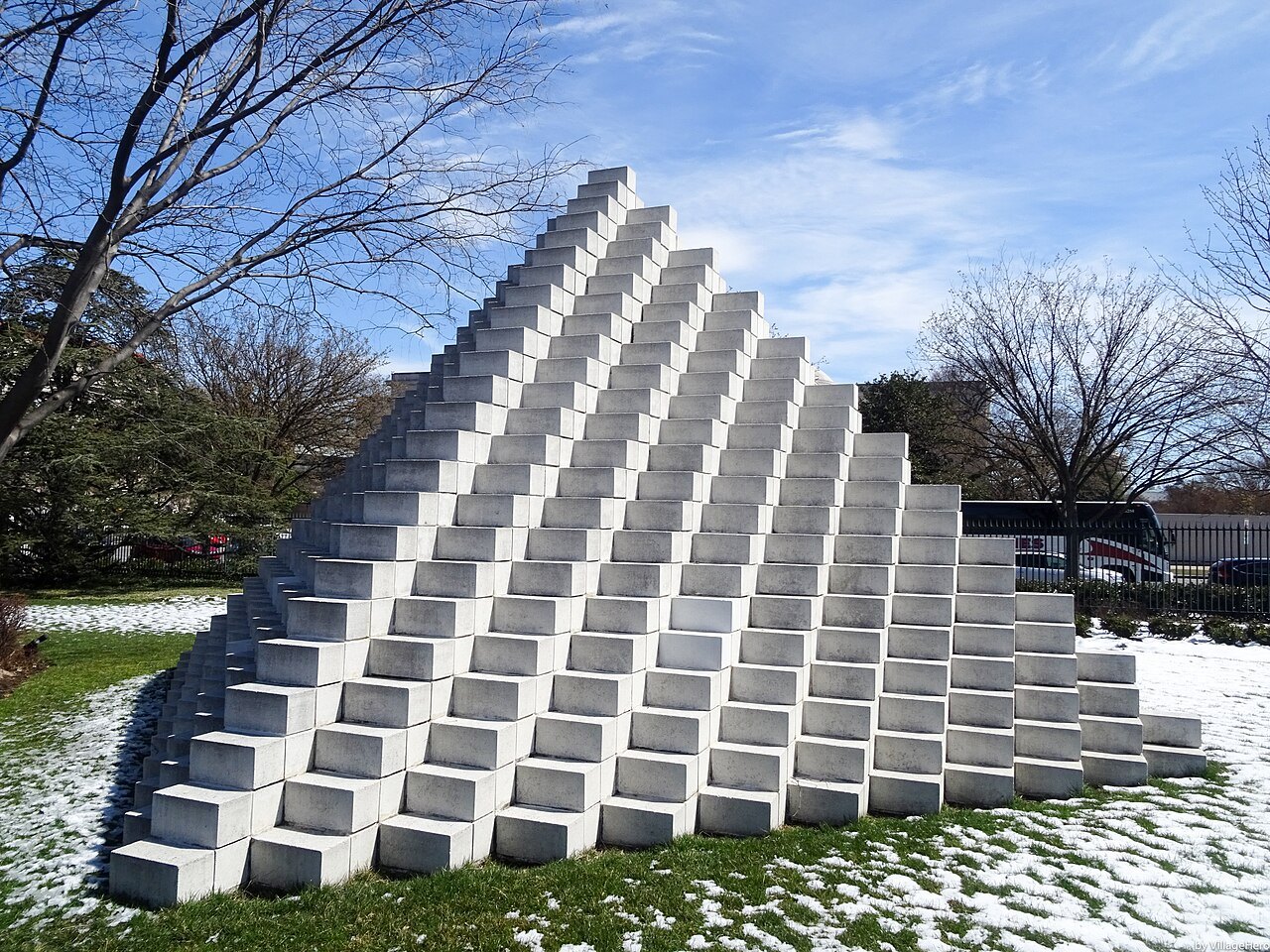
West of the West Building, across 7th Street, is the Sculpture Garden, opened on May 23, 1999, and landscaped around a fountain. From December to March the fountain becomes an ice-skating rink. Around it stand Louise Bourgeois's Spider, Claes Oldenburg and Coosje van Bruggen's Typewriter Eraser, Roy Lichtenstein's House I, Robert Indiana's AMOR, a Paris Métro entrance by Hector Guimard and some twenty other works.
How to visit
Admission is free, and no ticket is needed for the permanent collection; some special exhibitions have their own arrangements, so check the gallery's pages before you go. The West Building's main entrance faces the Mall.
A realistic plan is one building at a time. Choose the West Building for the Old Masters and walk its sculpture halls end to end, or the East Building for the modern galleries and the atrium, and use the underground passage to cross between them. The Sculpture Garden needs no ticket and makes a good pause between museums; the National Archives is across Constitution Avenue and the Natural History museum is next door to the west (see Natural History).
Honest notes
The National Gallery is often assumed to be part of the Smithsonian; it is a separate institution, founded with private money and run by its own trustees. The gallery took its name from an older Smithsonian collection, which was renamed and is now the Smithsonian American Art Museum. The site's own past is easy to miss: the railroad station where President Garfield was shot in 1881 stood where the West Building stands now. And the collection is European and American: the art of Asia and the Middle East is shown by the Smithsonian's own museums along the Mall.
Where to go next03
Nearby
- Nearby · 700 Pennsylvania Ave NWThe National ArchivesJohn Russell Pope's temple of the nation's records, built in the 1930s over a buried creek, where the Declaration of Independence, the Constitution and the Bill of Rights lie under glass in a rotunda.Read the page →
- Nearby · Constitution Ave · 10th St NWThe National Museum of Natural HistoryThe Smithsonian's museum of the natural world, opened in 1910: an elephant under the rotunda, the Hope Diamond upstairs, and behind the halls the largest natural history collection on earth.Read the page →
- Nearby · East end of the Mall · the zero pointThe United States CapitolThe seat of Congress since November 1800, rebuilt after the fire of 1814, crowned by a cast-iron dome finished around 1866, and the point from which every address in the city is counted.Read the page →