Home · Sights · The National Portrait Gallery and the Old Patent Office
What you are looking at01
The National Portrait Gallery and American Art Museum
F St · 8th St NW
- The Hall of PresidentsPortraits of every American president, with Gilbert Stuart's Lansdowne portrait of Washington at its center.
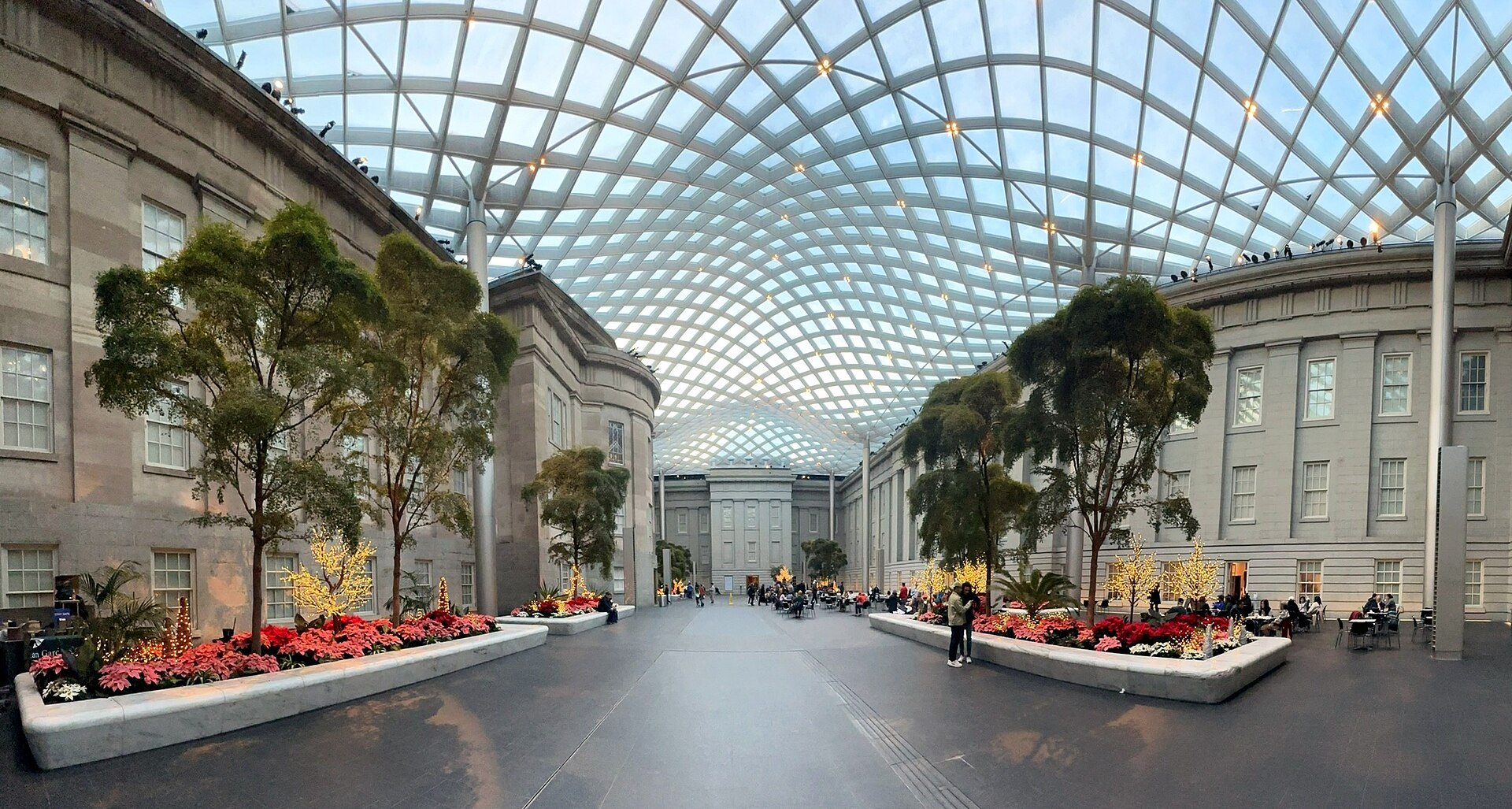
- The Kogod CourtyardThe enclosed courtyard at the heart of the building, under a rippling glass canopy by Foster and Partners.
- The Luce Foundation CenterVisible storage where thousands of works from the American Art Museum sit on shelves and screens for browsing.
- The Lunder Conservation CenterGlass-walled laboratories where you watch conservators treat paintings and objects.
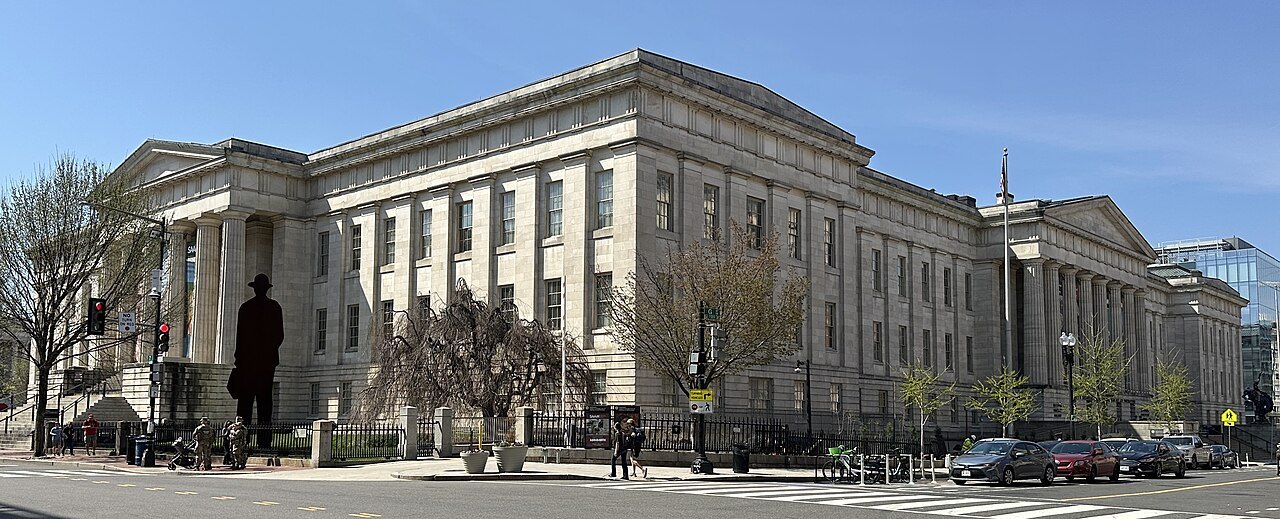
- The porticosColumned fronts that Robert Mills modeled on the proportions of the Parthenon in Athens.
- The top-floor galleriesLong vaulted and skylit rooms, where the larger modern canvases hang.
The sight in full02
Reading the place
Why it matters
The Old Patent Office Building fills a whole block between F and G Streets and 7th and 9th Streets NW, in Penn Quarter at the edge of Chinatown. It holds two Smithsonian museums at once: the National Portrait Gallery, which collects images of the Americans who shaped the country, and the Smithsonian American Art Museum, one of the largest collections of art made in the United States, with more than seven thousand artists represented. Together they go by the name of the Donald W. Reynolds Center for American Art and Portraiture.
It is also the museum stop off the Mall. L'Enfant set this site aside, halfway between the Capitol and the President's House, for a monumental building, first a church of the Republic and then a pantheon of great Americans (see the plan). A portrait gallery is not far from what he had in mind.
The building
Robert Mills, the architect of the Washington Monument, designed it in the Greek Revival style, and construction began in 1836. It took three decades. Mills said the proportions of the central portico were exactly those of the Parthenon, which was new for Washington, where the grand public buildings until then had followed Roman and Renaissance models. To make it fireproof he vaulted the interiors in masonry without wooden beams, and lit them with skylights and light courts.
The Patent Office moved in in 1842, when inventors still had to submit scale models of their inventions, and the models filled glass cases in the galleries. A fire in the west wing in 1877 destroyed some eighty-seven thousand of them. Clara Barton worked here as a clerk in the 1850s. During the Civil War the building served as barracks, hospital and morgue; Walt Whitman came to read to wounded soldiers lying among the cases, and Lincoln's second inaugural ball was held here in 1865.
In the 1950s it was nearly demolished for a parking lot. Congress gave it to the Smithsonian instead, in 1958, an early victory for historic preservation, and both museums opened in it in 1968. A renovation from 2000 to 2006 restored the porticos, the curving double staircase, the vaulted galleries and skylights as long as a city block.
The Portrait Gallery
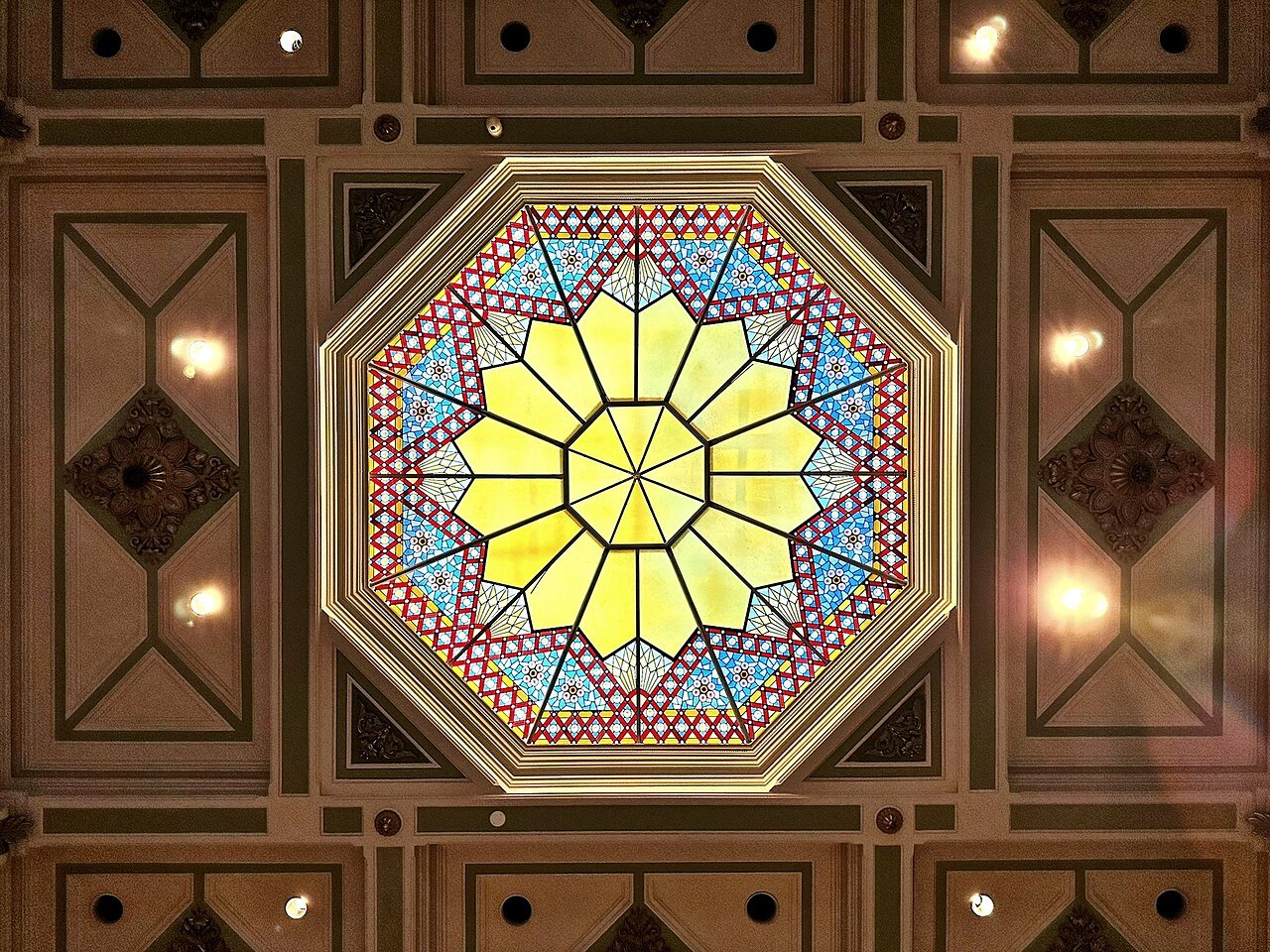
The National Portrait Gallery was founded by Congress in 1962 and opened in 1968. The hallmark of its collection is the Hall of Presidents, which holds a portrait of every American president; its centerpiece is Gilbert Stuart's full-length Lansdowne portrait of George Washington, bought for the museum with a gift from the Reynolds Foundation. The presidential portraits commissioned by the gallery itself, among them the portraits of Barack and Michelle Obama by Kehinde Wiley and Amy Sherald, draw some of the biggest crowds in the building.
Beyond the presidents, the galleries hang portraits of artists, scientists, inventors, activists and performers, in painting, sculpture, drawing and, since Congress allowed it in 1976, photography. The gallery also holds the Outwin Boochever Portrait Competition, a juried show of contemporary portraiture every three years.
The American Art Museum
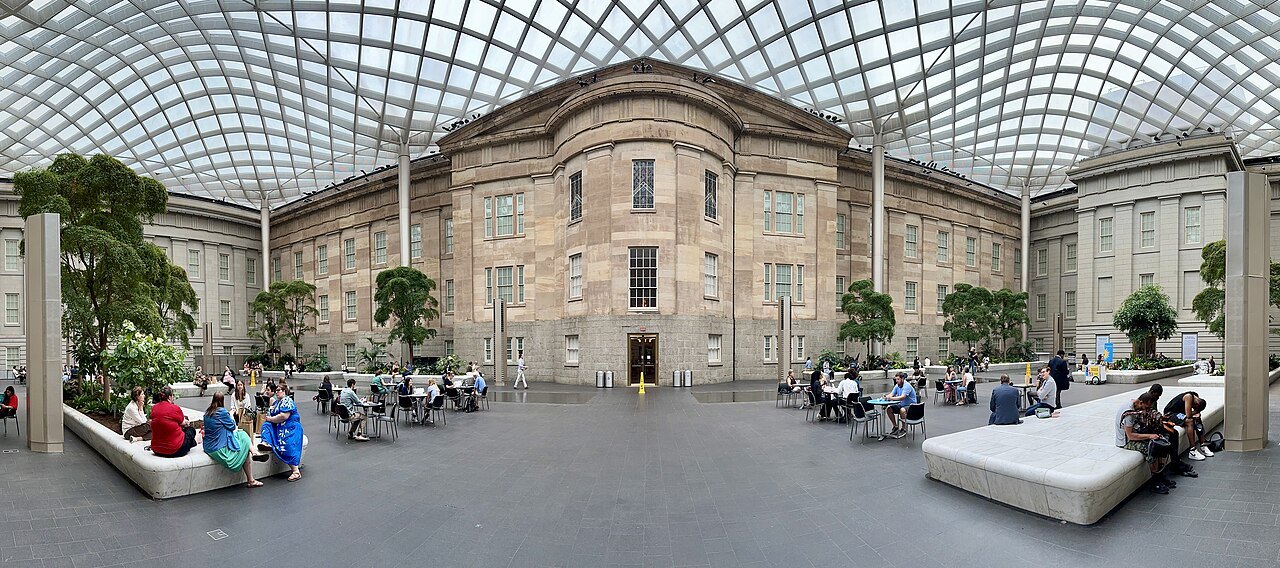
The Smithsonian American Art Museum traces its roots to the Smithsonian's founding act of 1846, which called for a gallery of art. Its collection runs from the colonial period to the present: Winslow Homer, Albert Bierstadt, Thomas Moran, John Singer Sargent, Georgia O'Keeffe, Edward Hopper, the sculptor Edmonia Lewis and the video artist Nam June Paik, among many others. The largest canvases hang in the high, skylit rooms of the top floor.
Two features make it unusual. The Luce Foundation Center is visible storage, with thousands of works densely hung on screens and set out on shelves, from paintings to folk art and crafts, so you can browse far more of the collection than the galleries hold. The Lunder Conservation Center puts the conservation labs behind glass, the first facility of its kind to give the public permanent views of the work.
The Kogod Courtyard
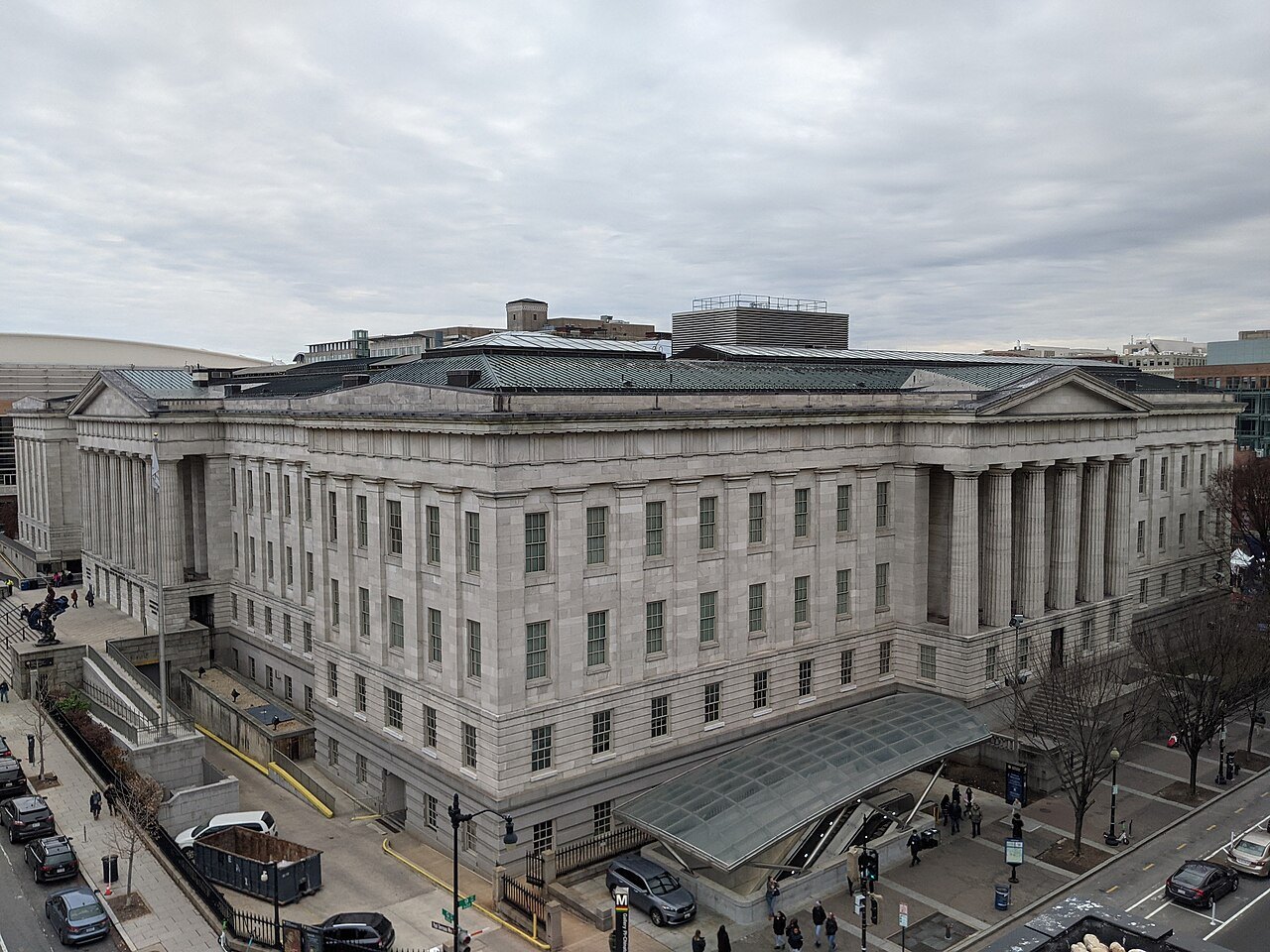
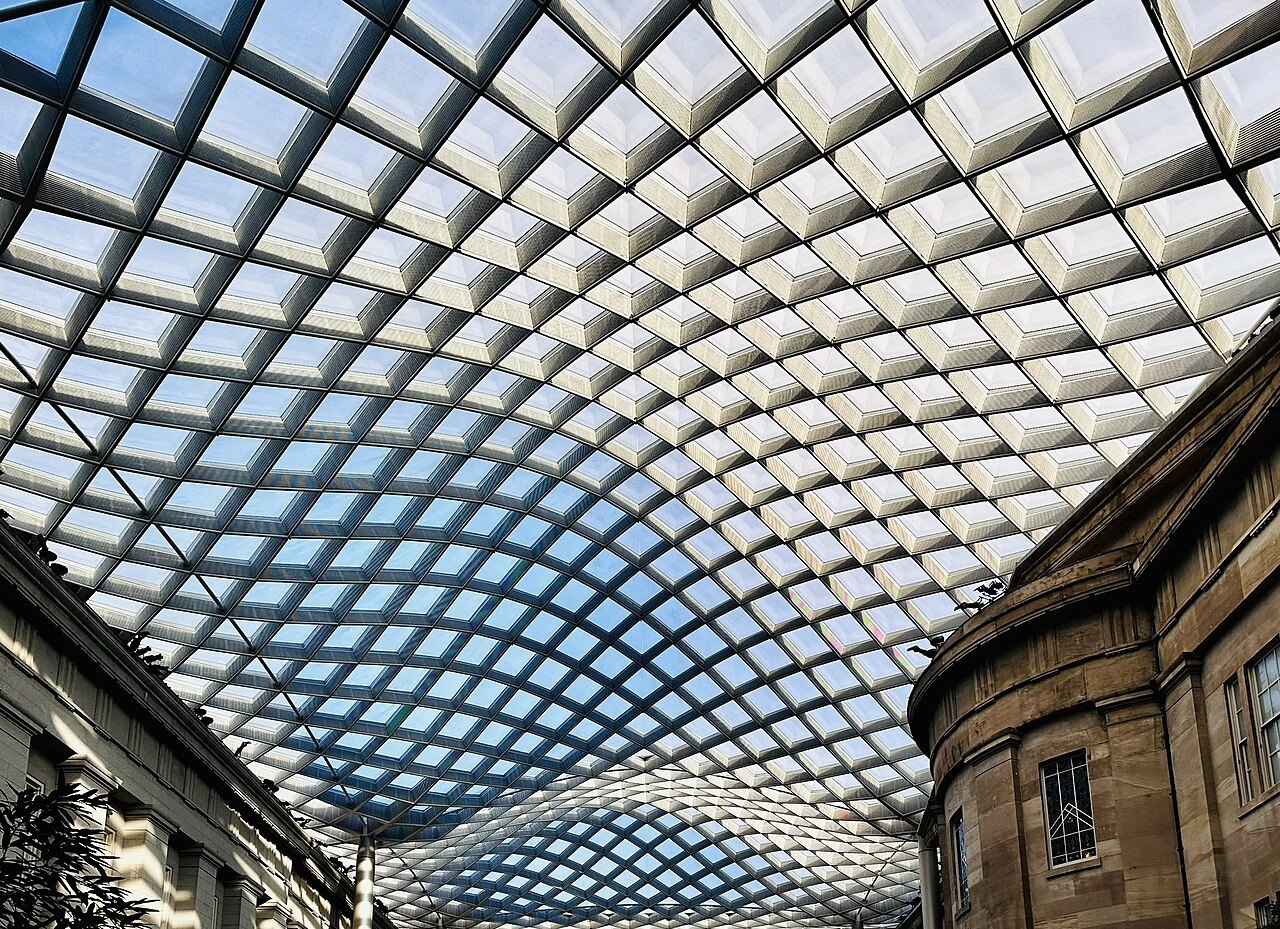
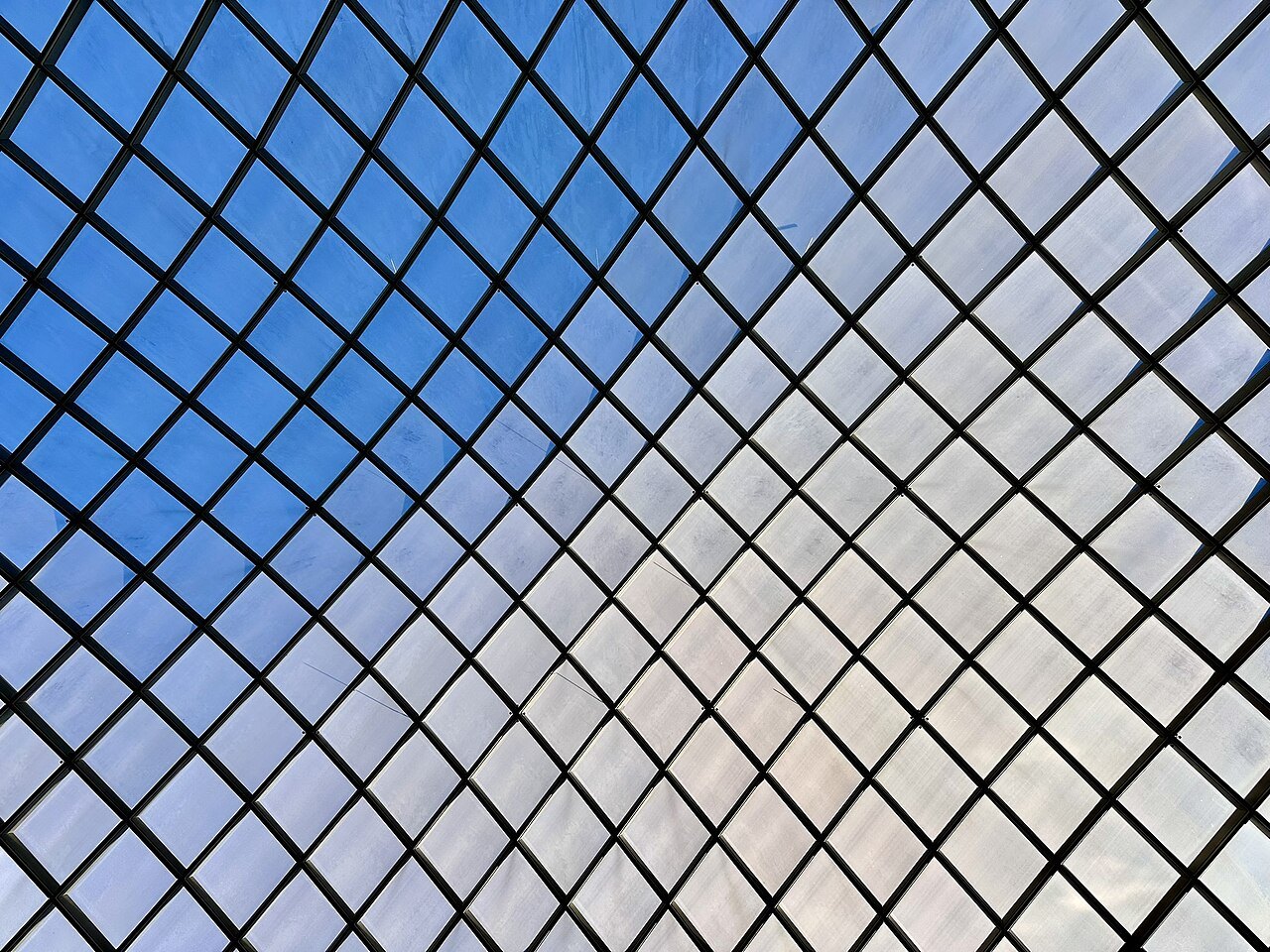
The open courtyard in the middle of the block was enclosed during the renovation. Foster and Partners designed its glass canopy, a gently undulating roof of glass on a steel grid carried on slender columns, installed after the museums reopened, in 2007. The design was argued over, and the architects lowered it and changed its lighting in response. Under it the Robert and Arlene Kogod Courtyard is a large, bright public room with trees, shallow sheets of water and seating.
It is the building's great resting place, a covered space in the middle of downtown where you can sit between galleries, and it often hosts events. When the weather on the Mall turns, it is worth remembering.
How to visit
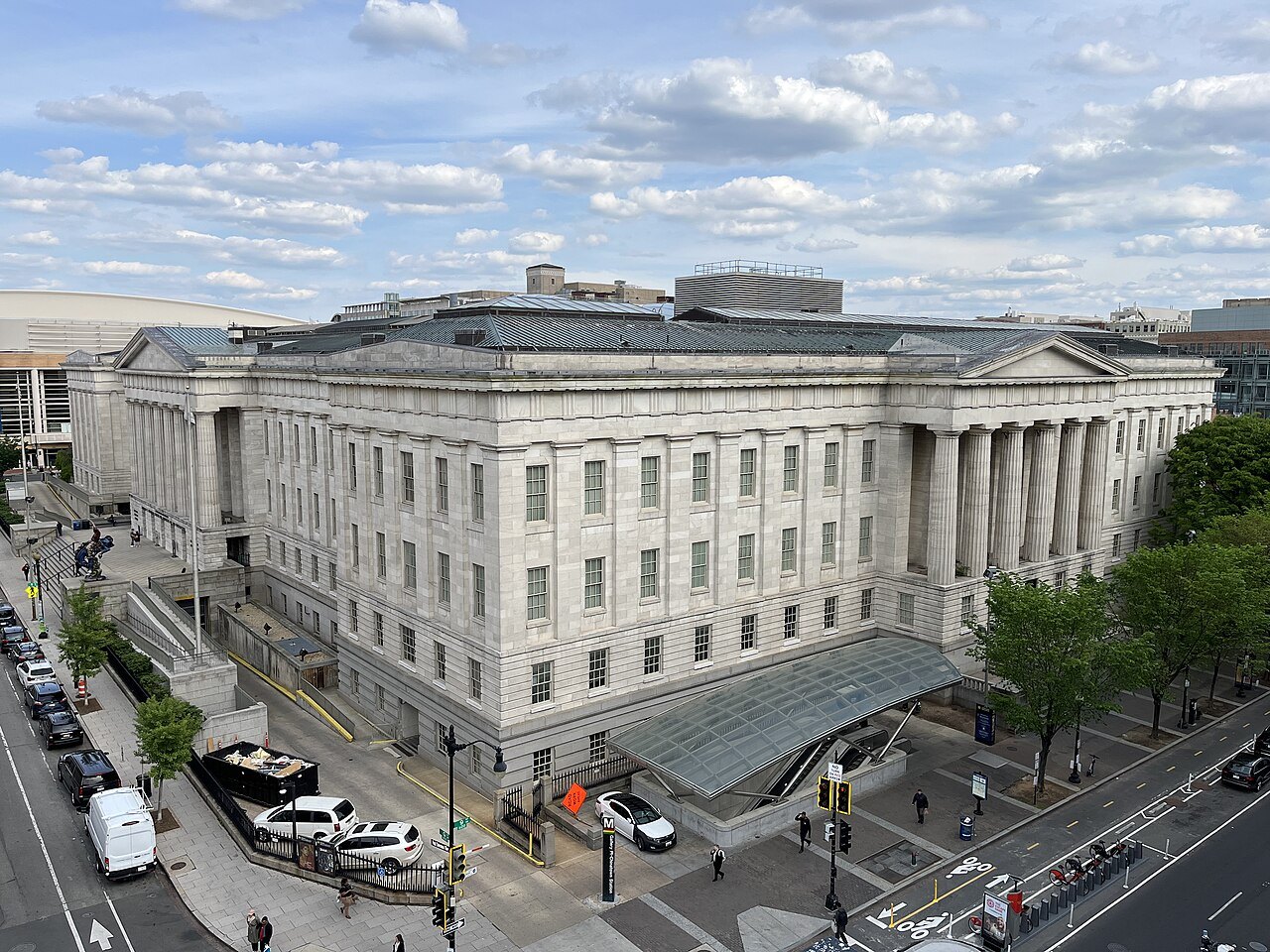
Entry to both museums is free and needs no ticket; there is a bag check at the doors. The entrances are on F Street and G Street, and one visit covers both collections, since the galleries connect. Gallery Place station is at the corner of the block. Check the Smithsonian's own pages for the day's arrangements before you go.
Give it at least two hours, and choose a wing rather than trying to see everything. A good route is the Hall of Presidents first, then the courtyard, then one floor of American art. The Chinatown Friendship Archway, dedicated in 1986, stands a block east on H Street, and the National Archives are a short walk south down 8th Street. Photography for personal use is generally allowed in the permanent galleries, while loans in temporary shows can carry restrictions, so look for signs.
Honest notes
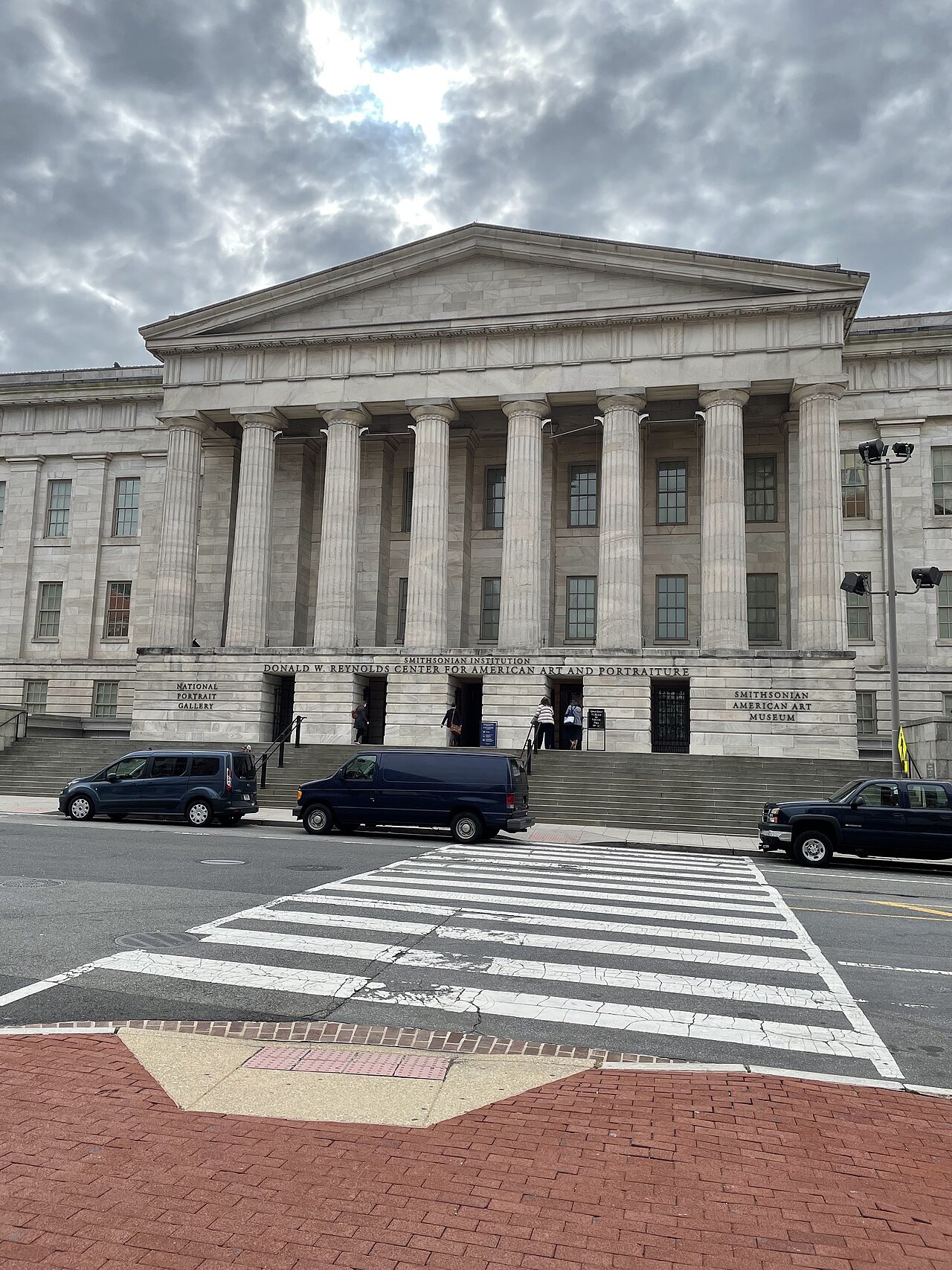
It is easy to miss: the building is off the Mall, and many visitors never leave the museums along Constitution and Independence Avenues. That also makes it calmer than the Mall museums on a busy day. The display of individual works changes, portraits rotate for conservation, and particular pieces may be on loan or off view, so if you come for one picture, check that it is hanging.
Where to go next03
Nearby
- Nearby · 700 Pennsylvania Ave NWThe National ArchivesJohn Russell Pope's temple of the nation's records, built in the 1930s over a buried creek, where the Declaration of Independence, the Constitution and the Bill of Rights lie under glass in a rotunda.Read the page →
- Nearby · 1600 Pennsylvania Ave NWThe White House and Lafayette SquareThe house James Hoban designed in 1792, home to every president since John Adams in 1800, burned in 1814 and rebuilt inside its walls in the 1950s, seen best from the square to its north and the Ellipse to its south.Read the page →
- Nearby · Constitution Ave · 4th St NWThe National Gallery of ArtA free national museum of Western art from the Middle Ages to now, in two buildings joined underground: John Russell Pope's marble temple of 1941 and I.Read the page →