Home · Sights · The National Museum of African American History and Culture
What you are looking at01
The National Museum of African American History and Culture
Constitution Ave · 14th St NW
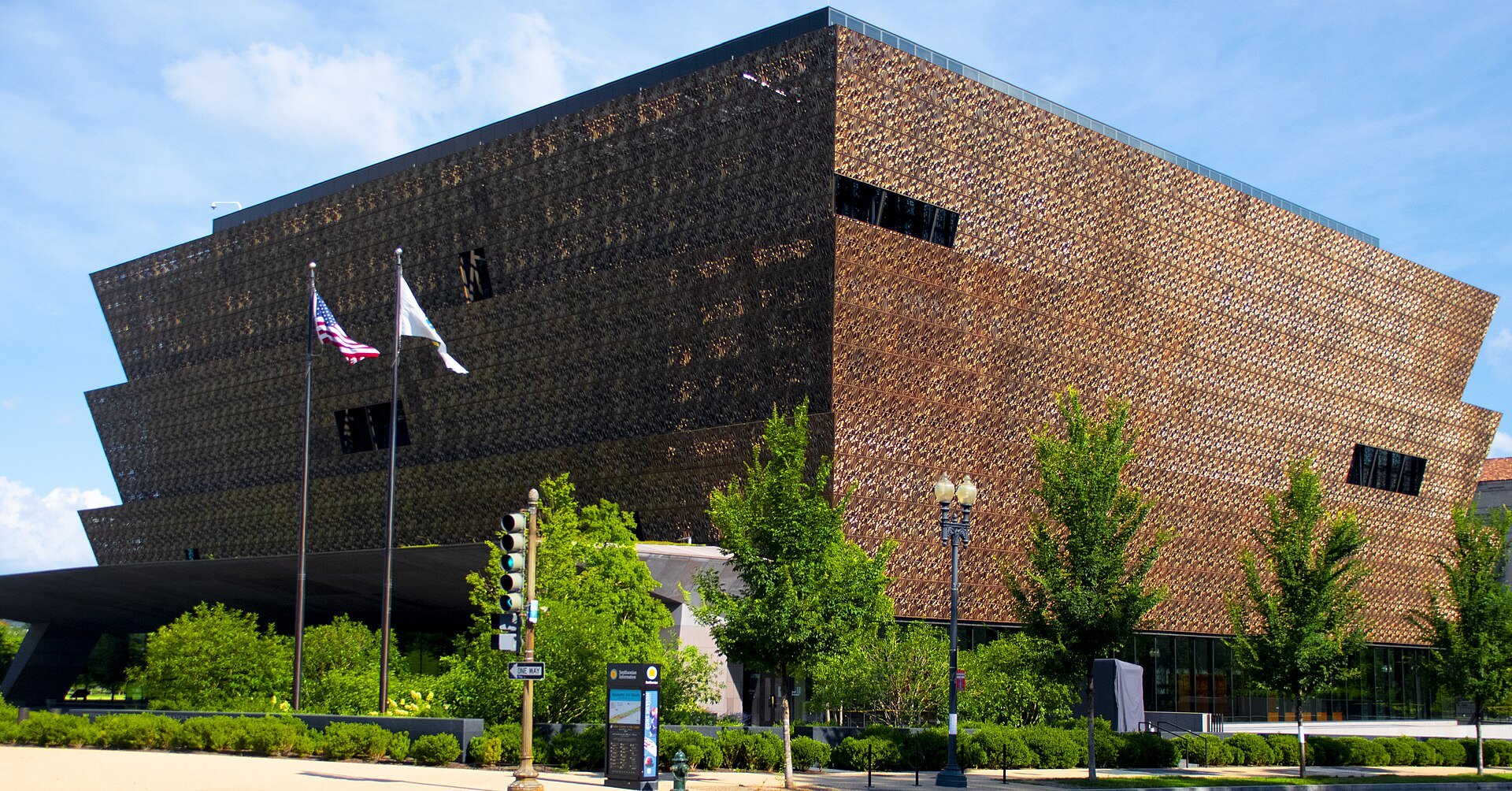
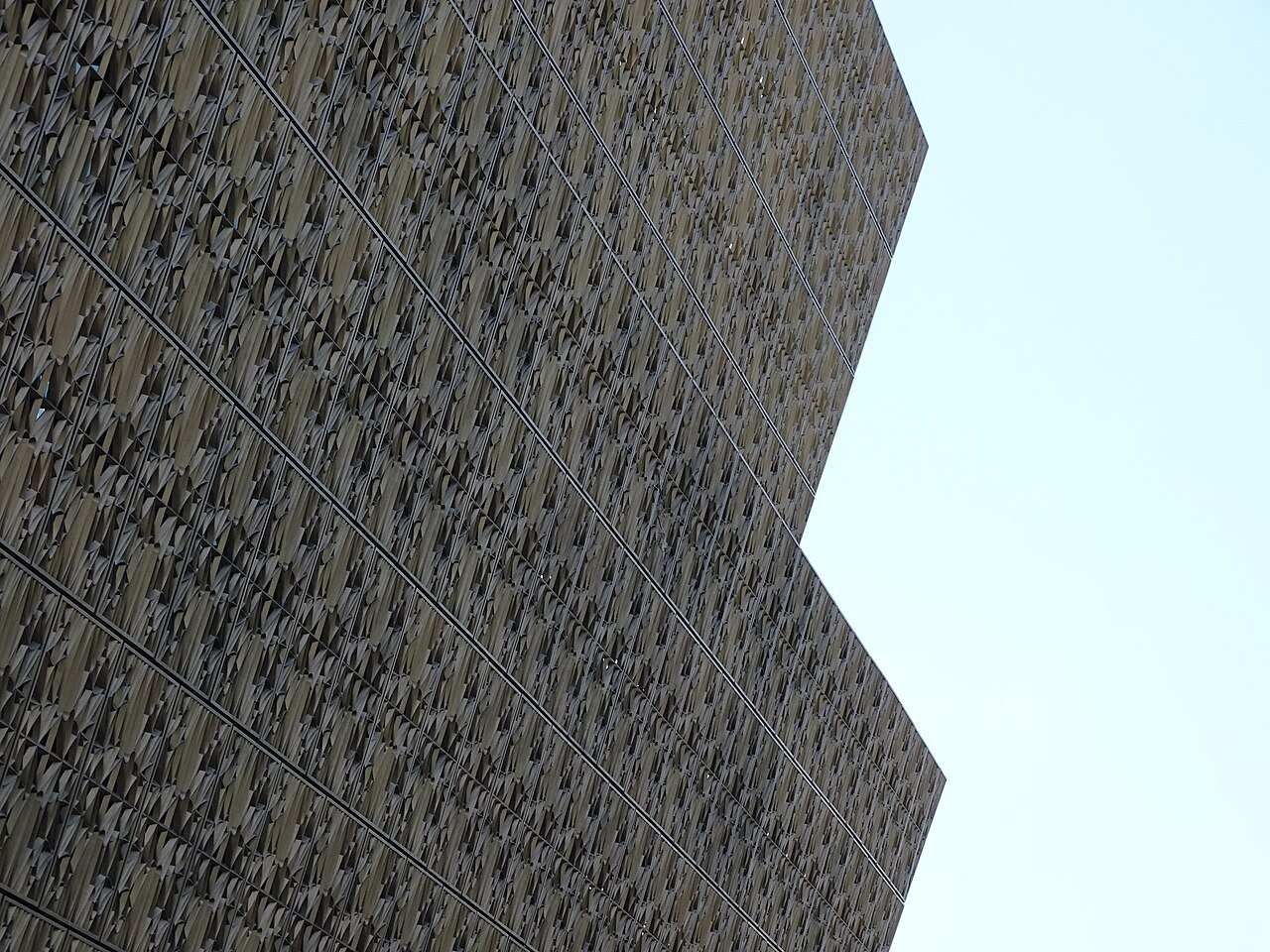
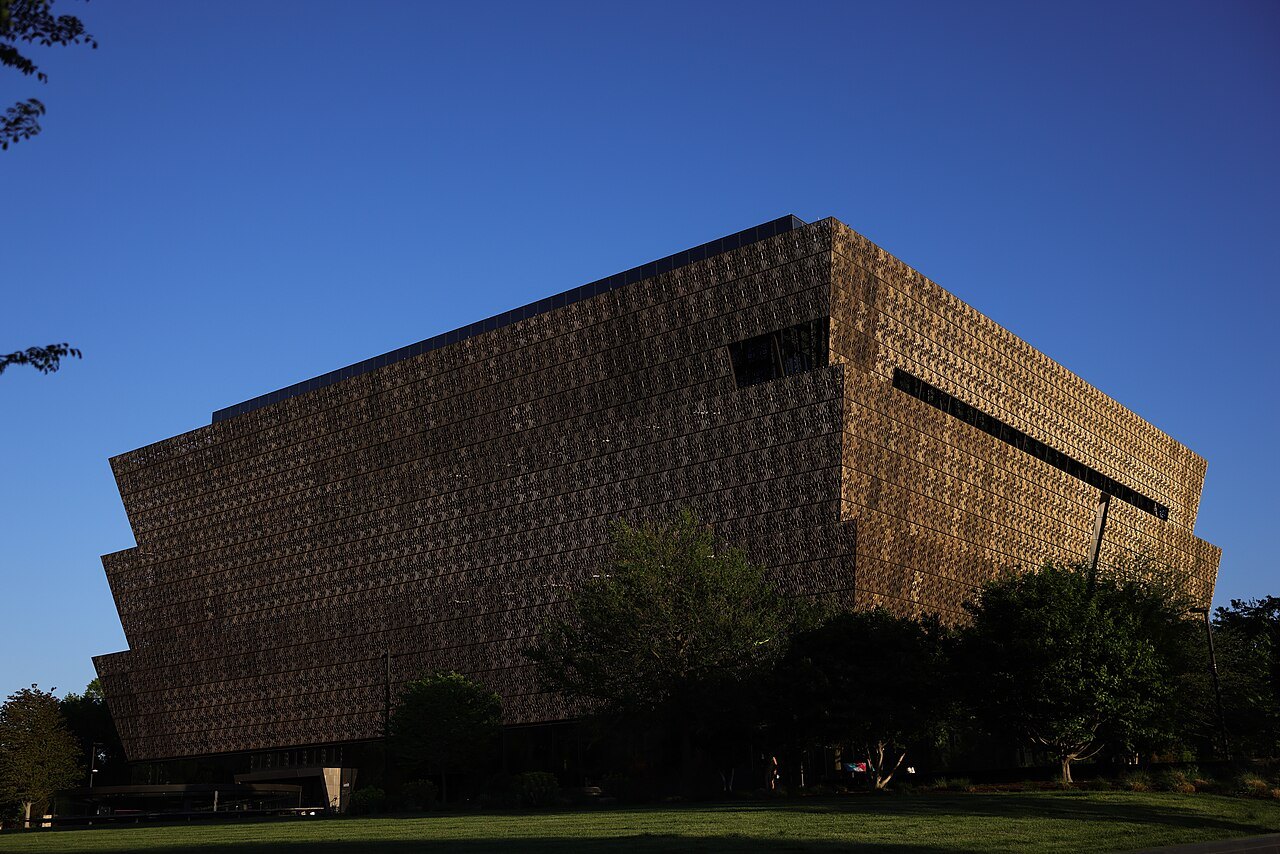
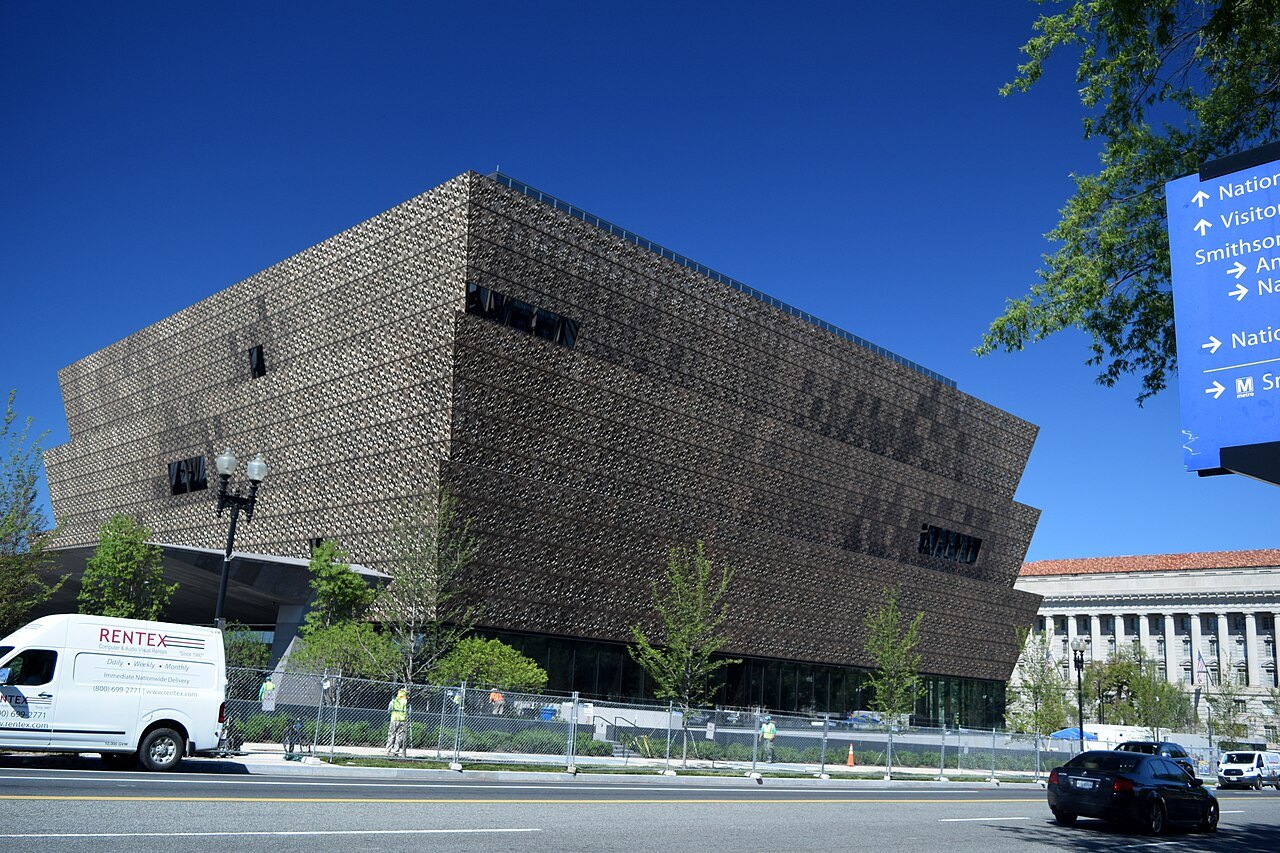
- The coronaThree stacked, outward-leaning tiers of 3,600 bronze-colored panels, perforated in patterns of historic ironwork.
- The porchA deep canopy 200 feet long over the south entrance, a place of shade and welcome.
- The history galleriesUnderground, rising through time from slavery and the Middle Passage toward the present day.
- The culture galleriesThe upper floors, given to music, art, sport, food and the life of communities.
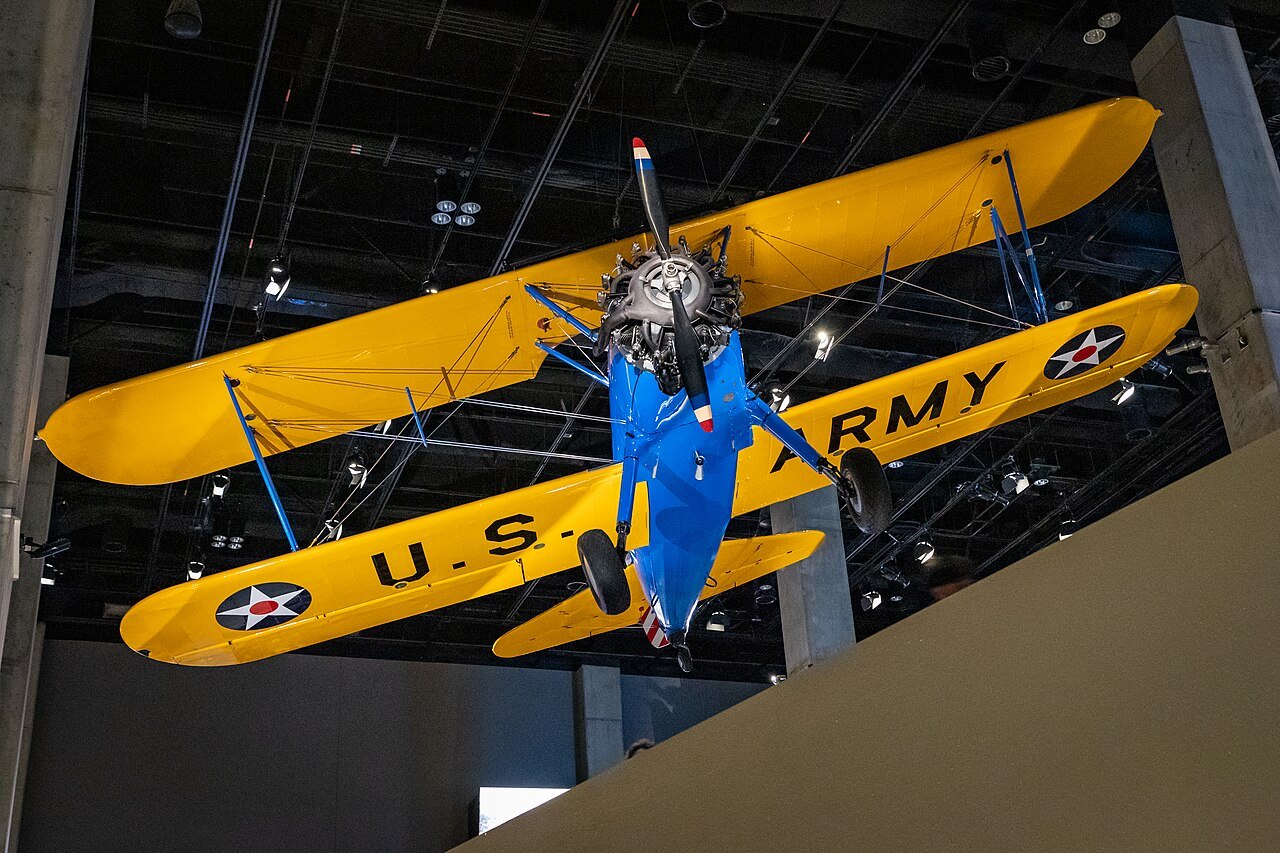
- The Tuskegee trainerA biplane used in 1944 to train the Tuskegee Airmen, hanging inside the building.
The sight in full02
Reading the place
Why it matters
The National Museum of African American History and Culture is the largest museum in the world devoted to African American history and culture, and the newest of the Smithsonian's museums on the Mall. It was established by Congress in 2003 and opened its building on September 24, 2016, when President Barack Obama opened it together with four generations of one family, from 99-year-old Ruth Bonner to her great-granddaughter. More than 600,000 people came in its first three months, and more than a million in its first six.
It took a century to build. The first proposal for a federal museum of African American history was made in 1915, and serious efforts began again in the 1970s; a legislative push starting in 1988 finally led to its authorization. People sometimes call it the Blacksonian. Private gifts helped pay for it, and the largest single gift came from Oprah Winfrey, after whom the Smithsonian named the museum's 350-seat theater. The building rose over four years, from the groundbreaking to the opening day. Its collection holds more than 45,000 objects, of which about 3,500 are on display, in a building of ten storeys, five above ground and five below.
A crown on the Mall
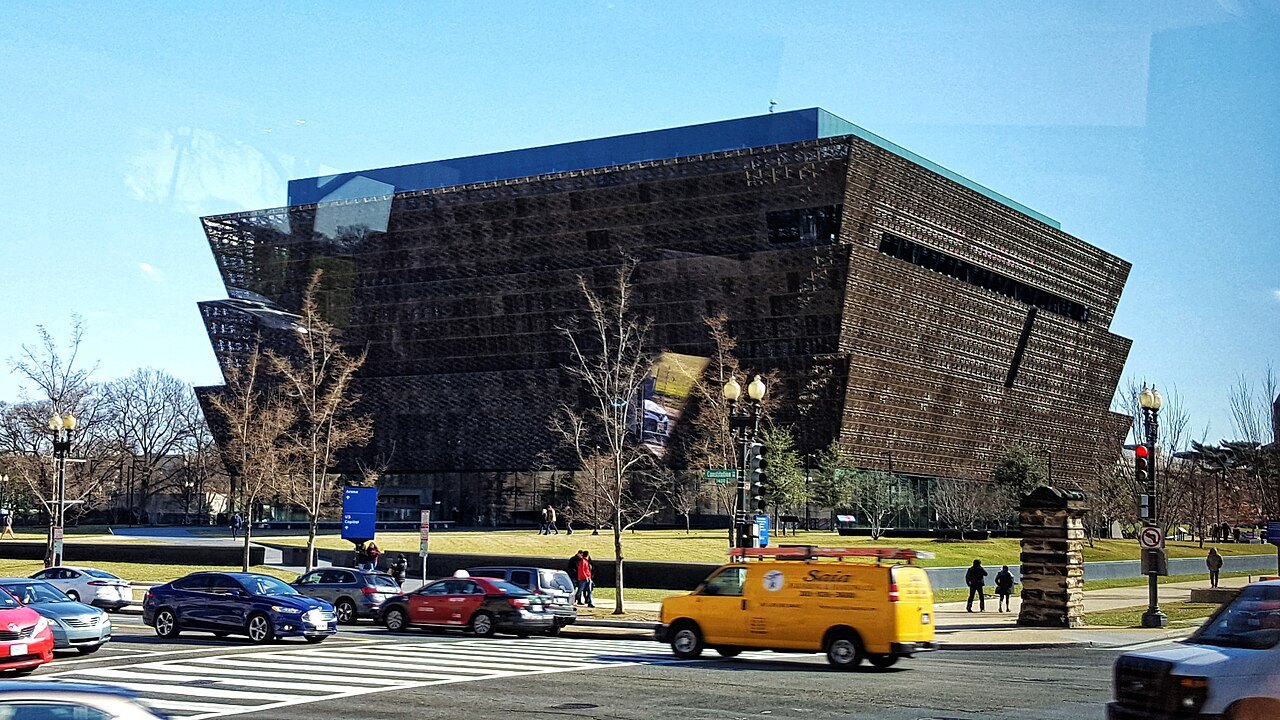
The site, chosen in 2006, is on the Washington Monument grounds at the corner of Constitution Avenue and 14th Street, just west of the National Museum of American History. The land had been set aside for a building in both L'Enfant's plan of 1791 and the McMillan Plan of 1902. In 2009 the design by the Freelon Group, Adjaye Associates and Davis Brody Bond was chosen, and building began with a groundbreaking in February 2012.
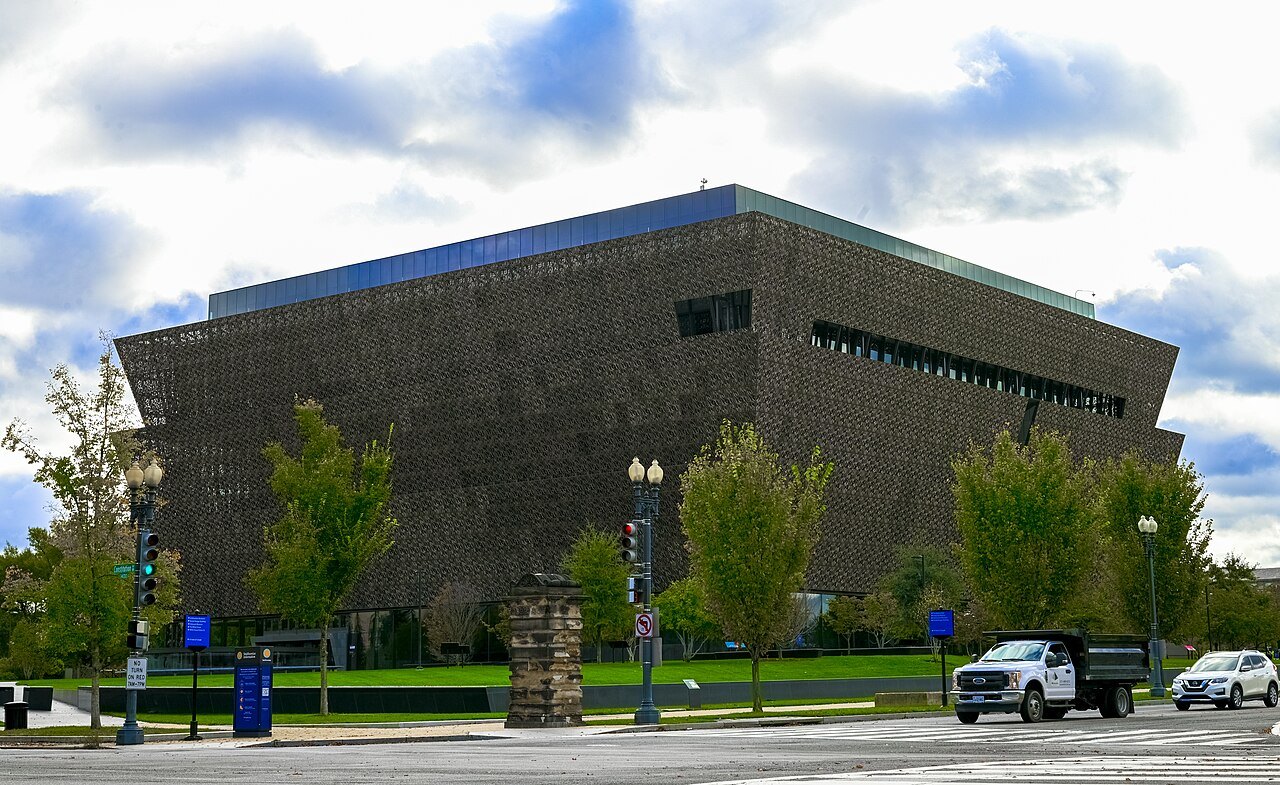
On a Mall of white limestone and marble, the building stands out on purpose. Its three stacked, inverted tiers, each wider than the one below, are taken from an Oba's crown in Yoruba culture, and specifically from the top of a sculpture by Olowe of Ise, one of the most important Yoruba artists of the twentieth century, that is now on display inside. The tiers are clad in a screen, or scrim, of 3,600 bronze-colored panels, perforated with patterns based on the historic iron grilles of Black communities in Charleston and New Orleans.
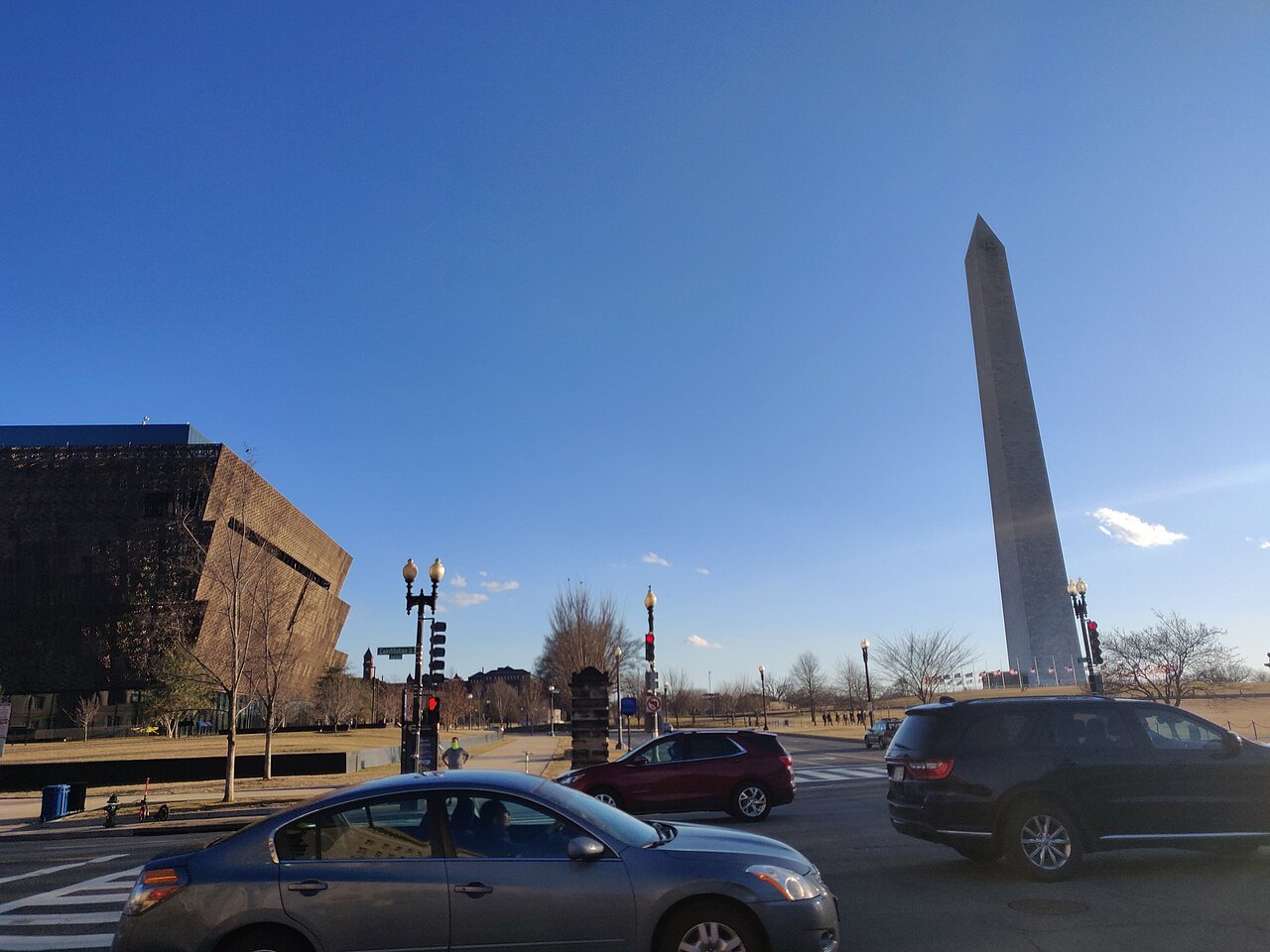
The architects wanted real bronze, which would have made it the only building on the Mall not faced in stone. Costs forced a change to bronze-painted aluminum in 2012, and the Commission of Fine Arts approved it while regretting that painted metal would lack bronze's warm sheen. At the south entrance a porch 200 feet long reaches out toward the Mall, sheltering the entrance; the engineers, Guy Nordenson and Associates, built it of long steel plate girders and box columns.
What you actually see
The visit is designed as a climb. The history galleries are underground, and you start at the bottom, with the Middle Passage and slavery, in rooms deliberately low and cramped, and rise through slavery and freedom, segregation and the civil rights movement toward the present day. Some objects were so large they were lowered into the building before it was finished: a segregated railroad passenger car and a guard tower from the Louisiana State Penitentiary were set in place by crane in 2013.
Among the objects on the way are a slave cabin taken down and rebuilt from Edisto Island in South Carolina; things that belonged to Harriet Tubman, among them her hymnal and a shawl given to her by Queen Victoria; a segregated drinking fountain marked for Black use; a biplane used in 1944 to train the Tuskegee Airmen, which now hangs in the building; and the glass-topped casket in which fourteen-year-old Emmett Till, murdered in Mississippi in 1955, was buried and shown to the world.
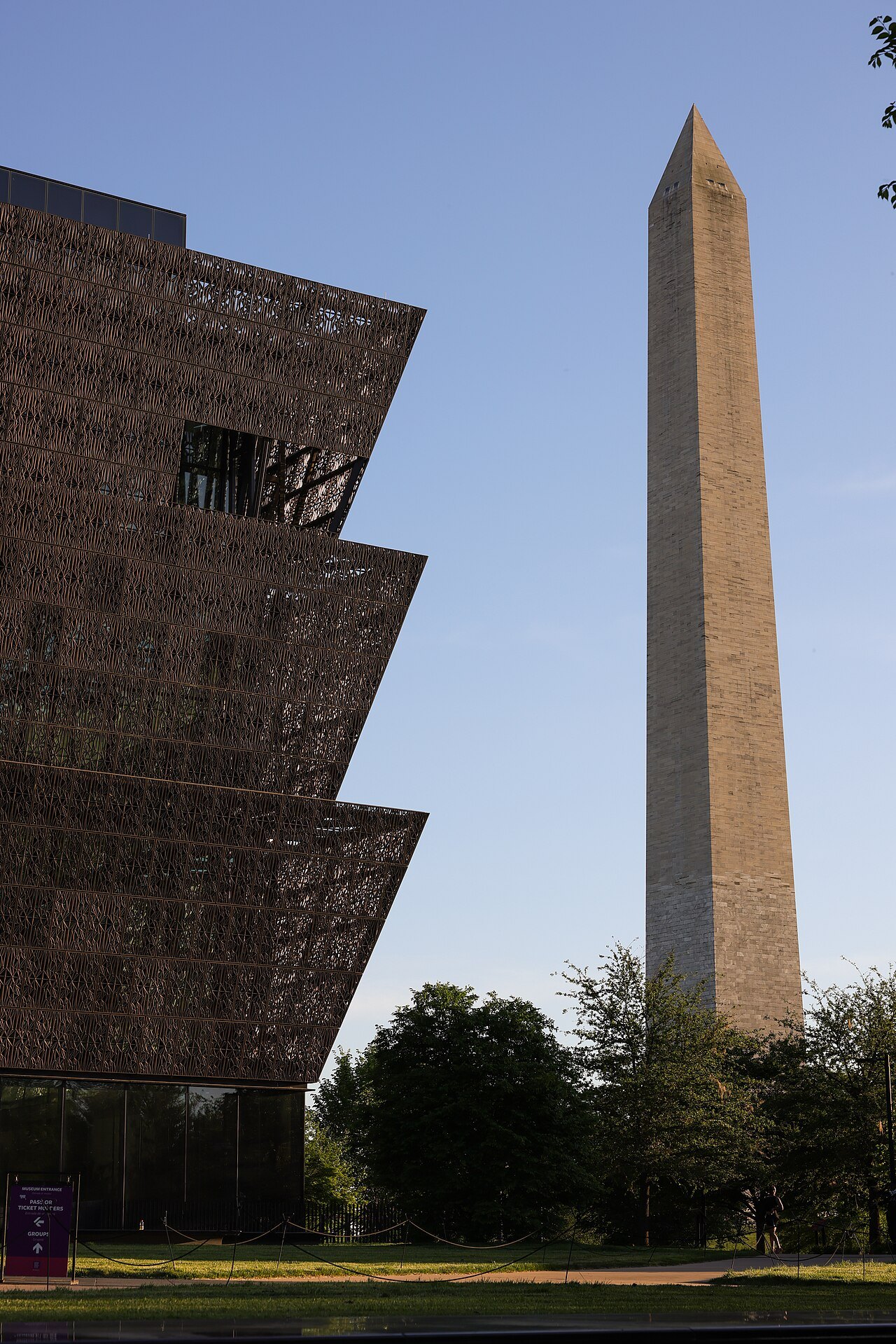
Above ground the mood changes. The upper floors are given to culture and community. The music galleries hold the prop spaceship George Clinton used on stage with Parliament and Funkadelic and Chuck Berry's cherry red Cadillac convertible, and the art collection includes works such as Allan Rohan Crite's Stations of the Cross of 1947 and David Driskell's Behold Thy Son of 1956. From the upper windows the Washington Monument fills the view.
How to visit
Admission is free. Since it opened the museum has used timed-entry passes to manage the crowds, at first releasing a small number of same-day passes as well, and demand was so high that the same-day release had to be cut back. Check the museum's own pages for whether passes are needed on your date and how they are released (see booking ahead).
Allow more time than for most museums. The history galleries alone take a long visit, and many people find them emotionally demanding, so plan a pause before the upper floors. A good plan is to go straight down to the history galleries first, while you are fresh, and come up through the building. The Washington Monument is directly across 15th Street, and the National Museum of American History is next door (see the Washington Monument).
Honest notes
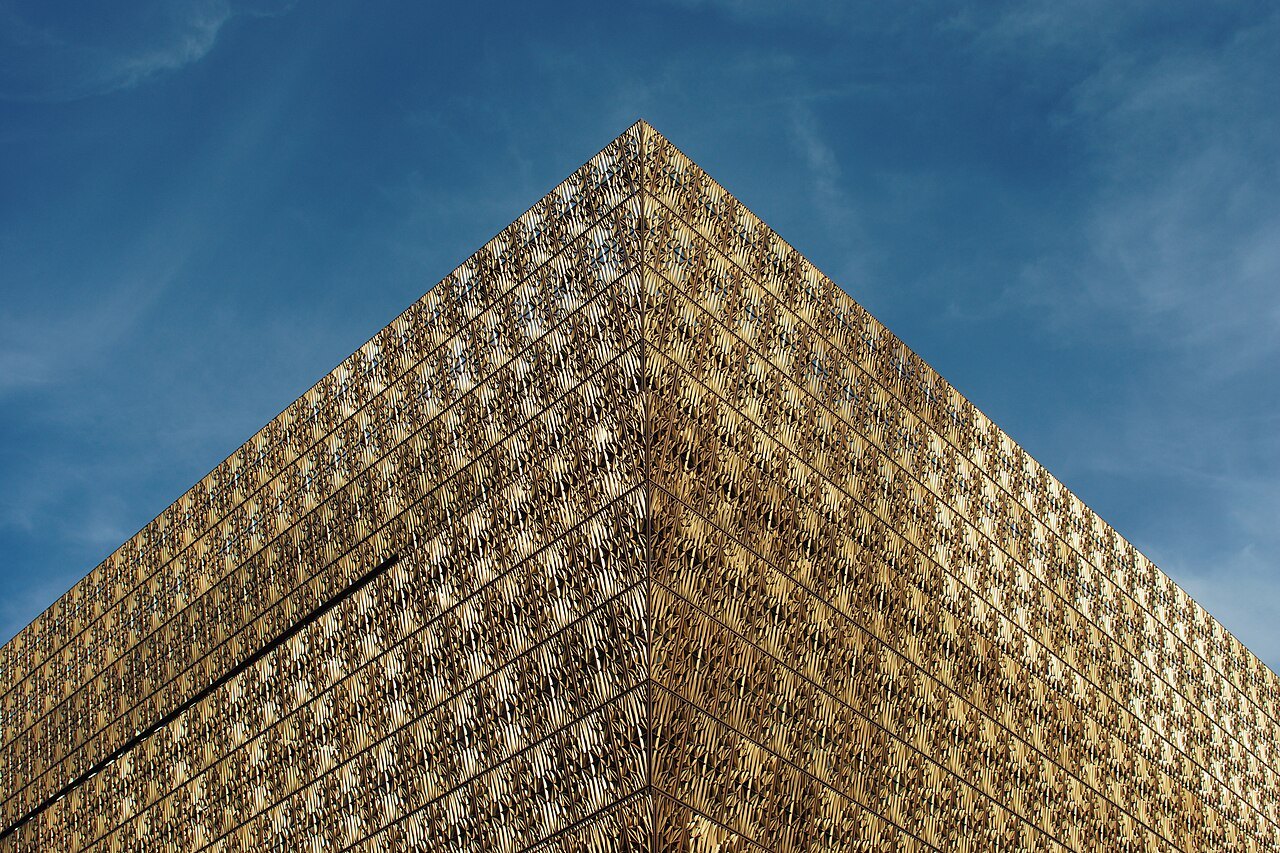
The corona is not bronze; it is aluminum painted to look like it, after the real metal proved too expensive. The museum does not show everything it owns: about 3,500 of its more than 45,000 objects are on display at a time. And the building is larger than it looks, because half of it is underground, which is why the history galleries feel like a descent before they become a climb.
Where to go next03
Nearby
- Nearby · The Mall · 15th StThe Washington MonumentA marble obelisk 555 feet tall, begun in 1848, abandoned for more than twenty years at 152 feet, finished in 1884 and still marked by the change of stone where the work stopped.Read the page →
- Nearby · Constitution Ave · 10th St NWThe National Museum of Natural HistoryThe Smithsonian's museum of the natural world, opened in 1910: an elephant under the rotunda, the Hope Diamond upstairs, and behind the halls the largest natural history collection on earth.Read the page →
- Nearby · 1600 Pennsylvania Ave NWThe White House and Lafayette SquareThe house James Hoban designed in 1792, home to every president since John Adams in 1800, burned in 1814 and rebuilt inside its walls in the 1950s, seen best from the square to its north and the Ellipse to its south.Read the page →