Home · Sights · The Library of Congress and the Supreme Court
What you are looking at01
The Library of Congress and the Supreme Court
First St SE · East Capitol St
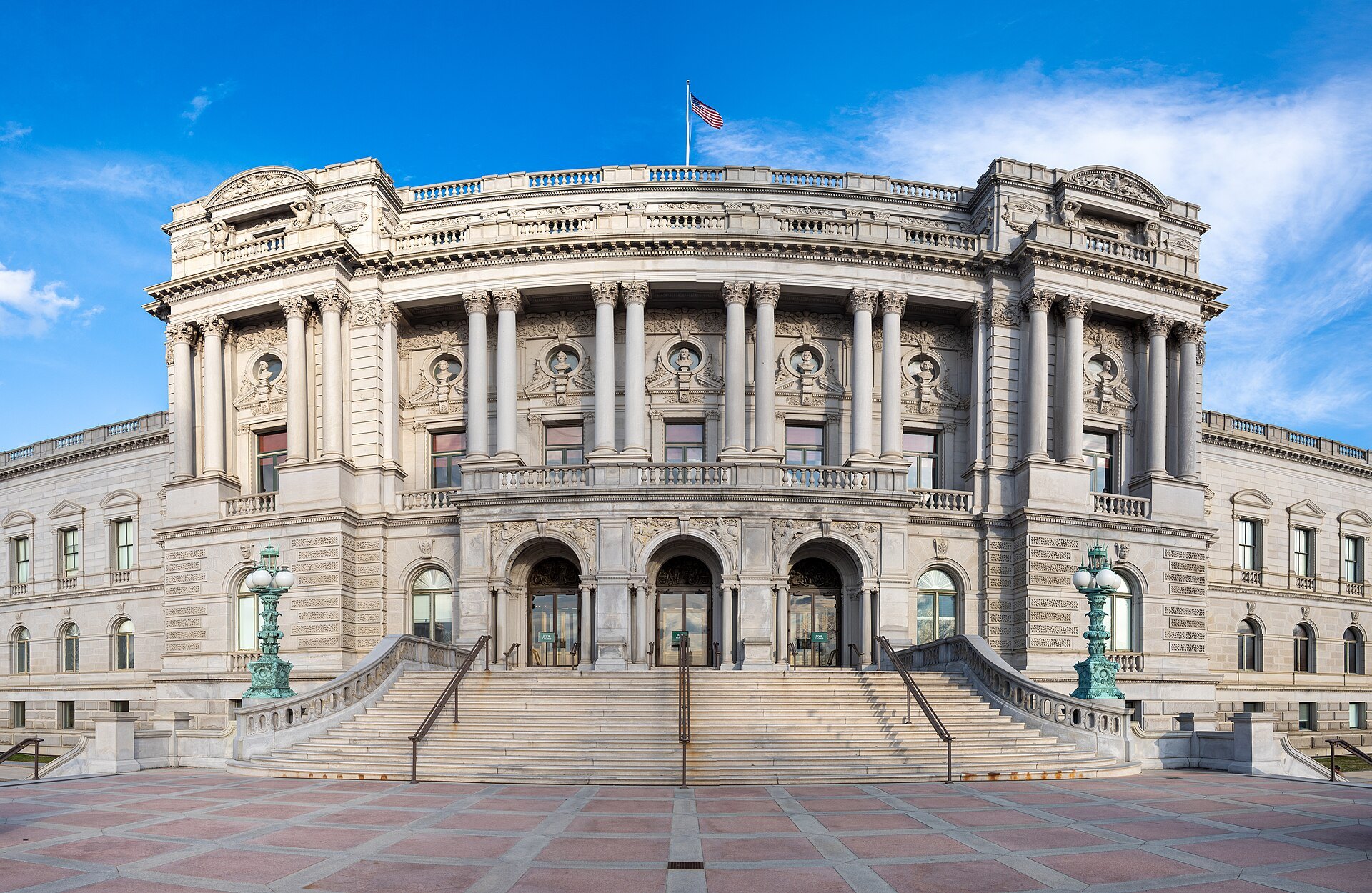
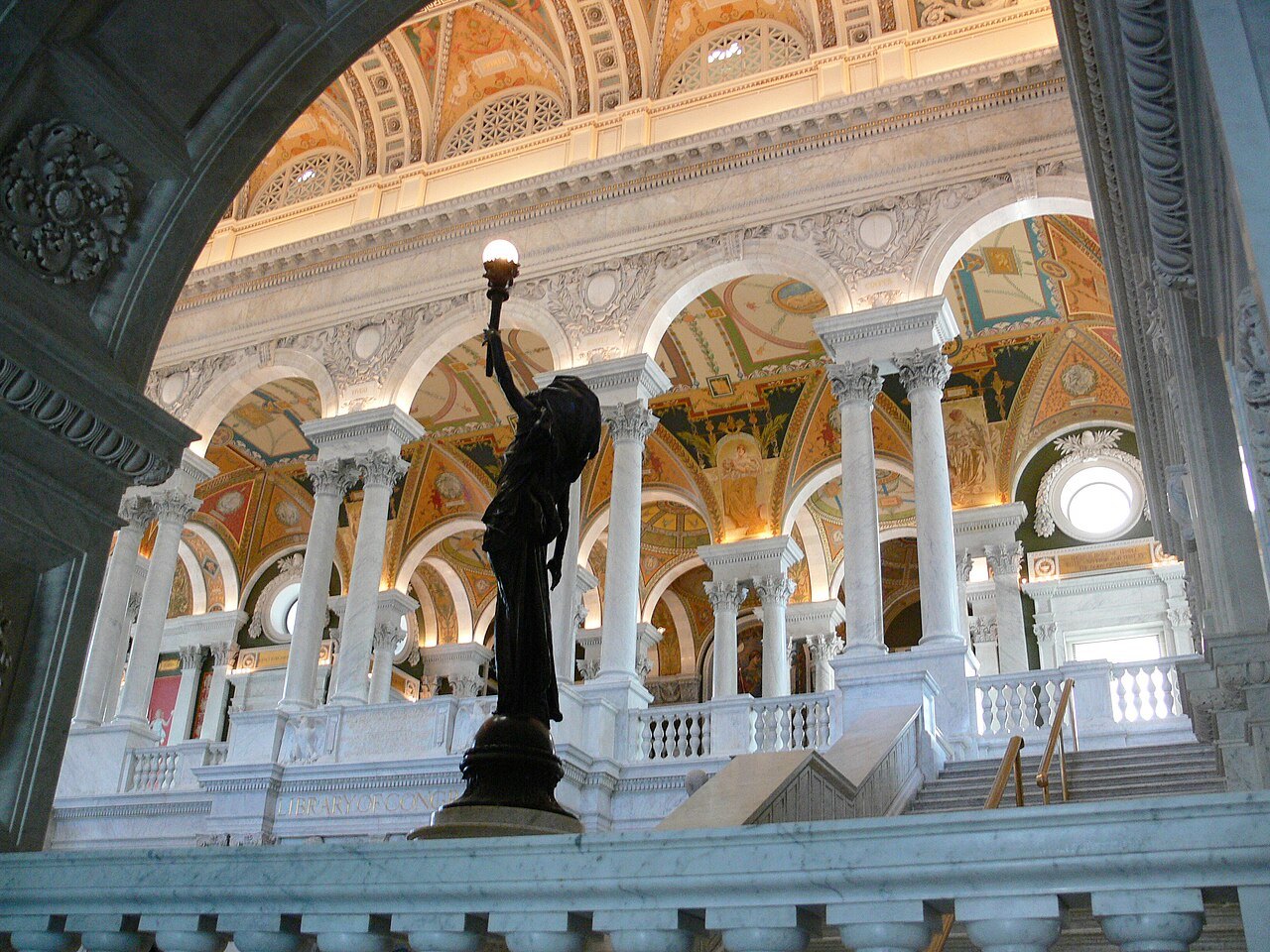
- The Great HallThe Jefferson Building's entrance hall of marble, mosaic and paired stairs under a painted, coffered ceiling.
- The Main Reading RoomA round room under the central dome, seen from above or on a short walk-through.
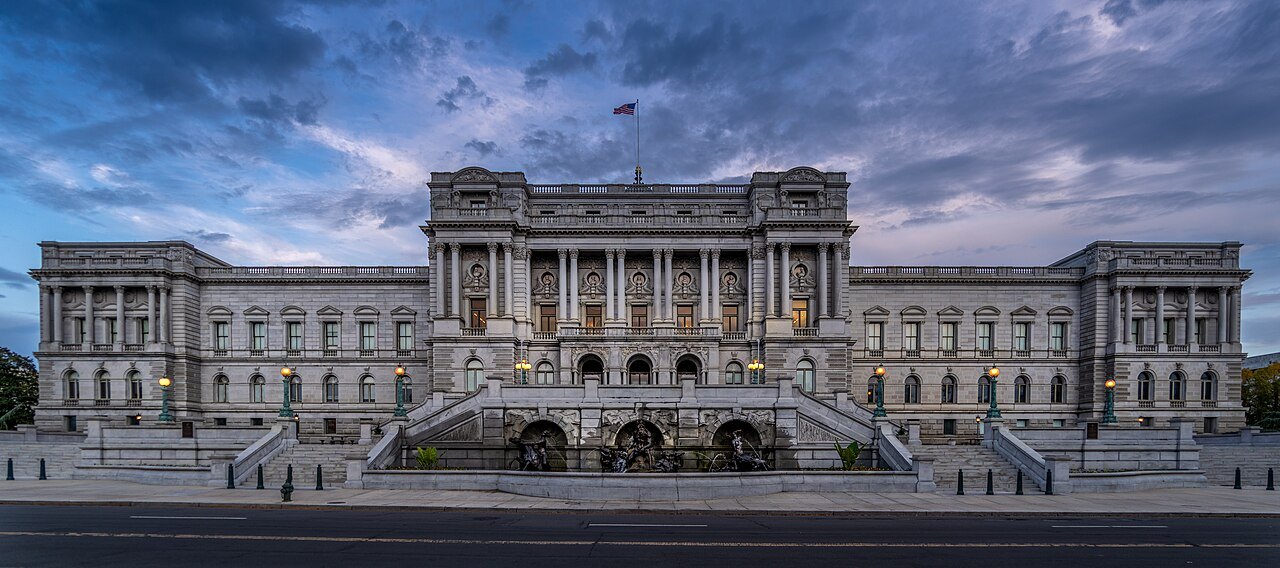
- The Court of NeptuneA bronze fountain of sea gods and nymphs set into the library's west front.
- The dome's muralEdwin Blashfield's figures ringing the lantern, twelve civilizations and what each gave to knowledge.
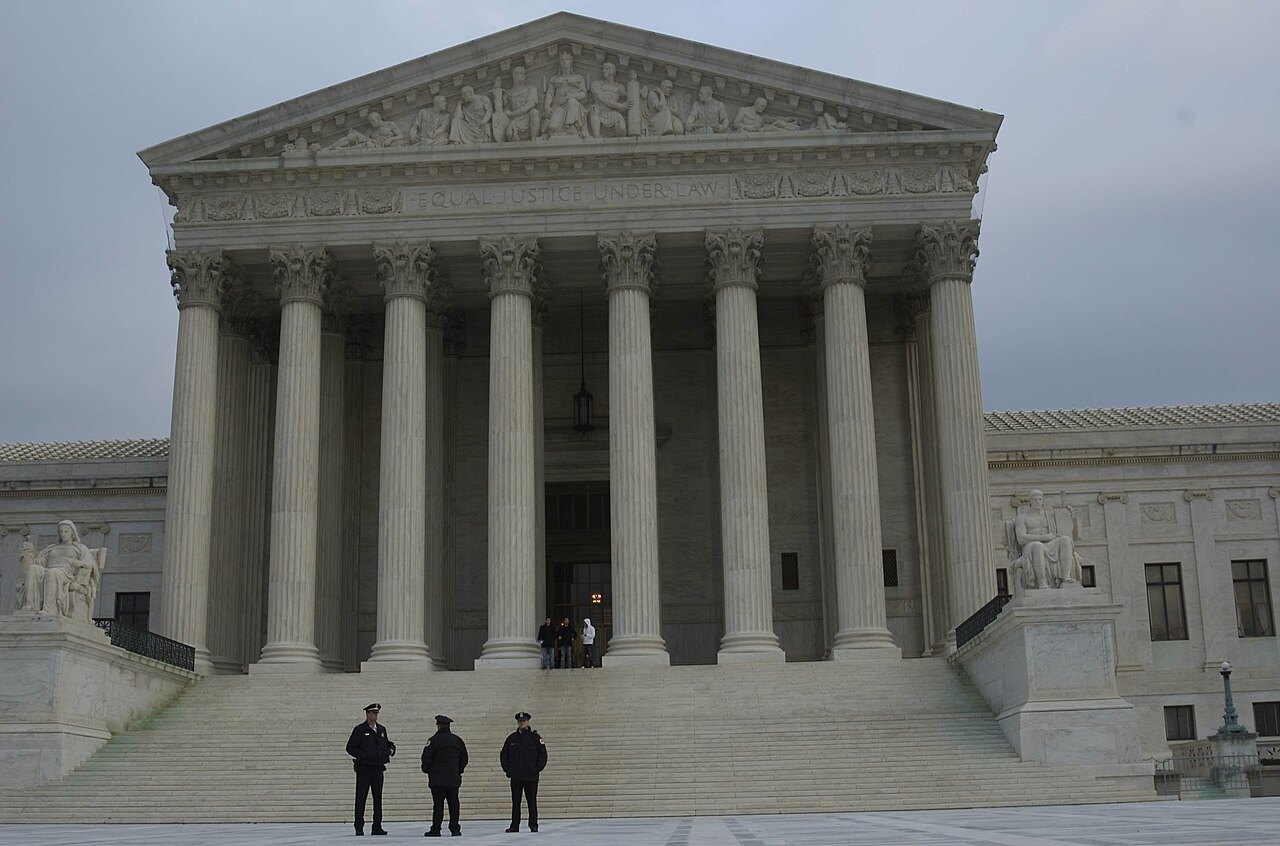
- The Supreme Court's west frontCass Gilbert's marble portico of 1935 carrying the words Equal Justice Under Law.
The sight in full02
Reading the place
Why it matters
The Library of Congress was founded in 1800, the year Congress moved to Washington, as a working library for the legislature, and it is the oldest federal cultural institution in the United States. It began in a room in the Capitol. It is now one of the largest libraries in the world, holding roughly 173 million items in three buildings on Capitol Hill, and it serves as the national library in practice, though only members of Congress, their staff and the library's employees may borrow from it.
For a visitor the reason to come is one building, the Thomas Jefferson Building, finished in 1897 and still the most elaborate interior in Washington. It stands on First Street SE, facing the Capitol's East Front, and next to it, across East Capitol Street, is the Supreme Court. Together with the Capitol they form the three sides of the square at the top of the hill.
Jefferson's books
The first library burned with the Capitol. When British forces set fire to the public buildings of Washington in August 1814, much of the original collection was lost. The following year Congress accepted Thomas Jefferson's offer to sell his personal library of 6,487 books, and that purchase became the foundation of the collection. A second fire in 1851 destroyed about two-thirds of Jefferson's original volumes.
The collection kept growing, most of all after the Copyright Law of 1870 required every applicant for a copyright to deposit two copies of the work with the library. Books, maps, music, prints and photographs arrived faster than the rooms in the Capitol could hold them, and the Librarian, Ainsworth Rand Spofford, pressed Congress for a building of the library's own.
A building made to be looked at
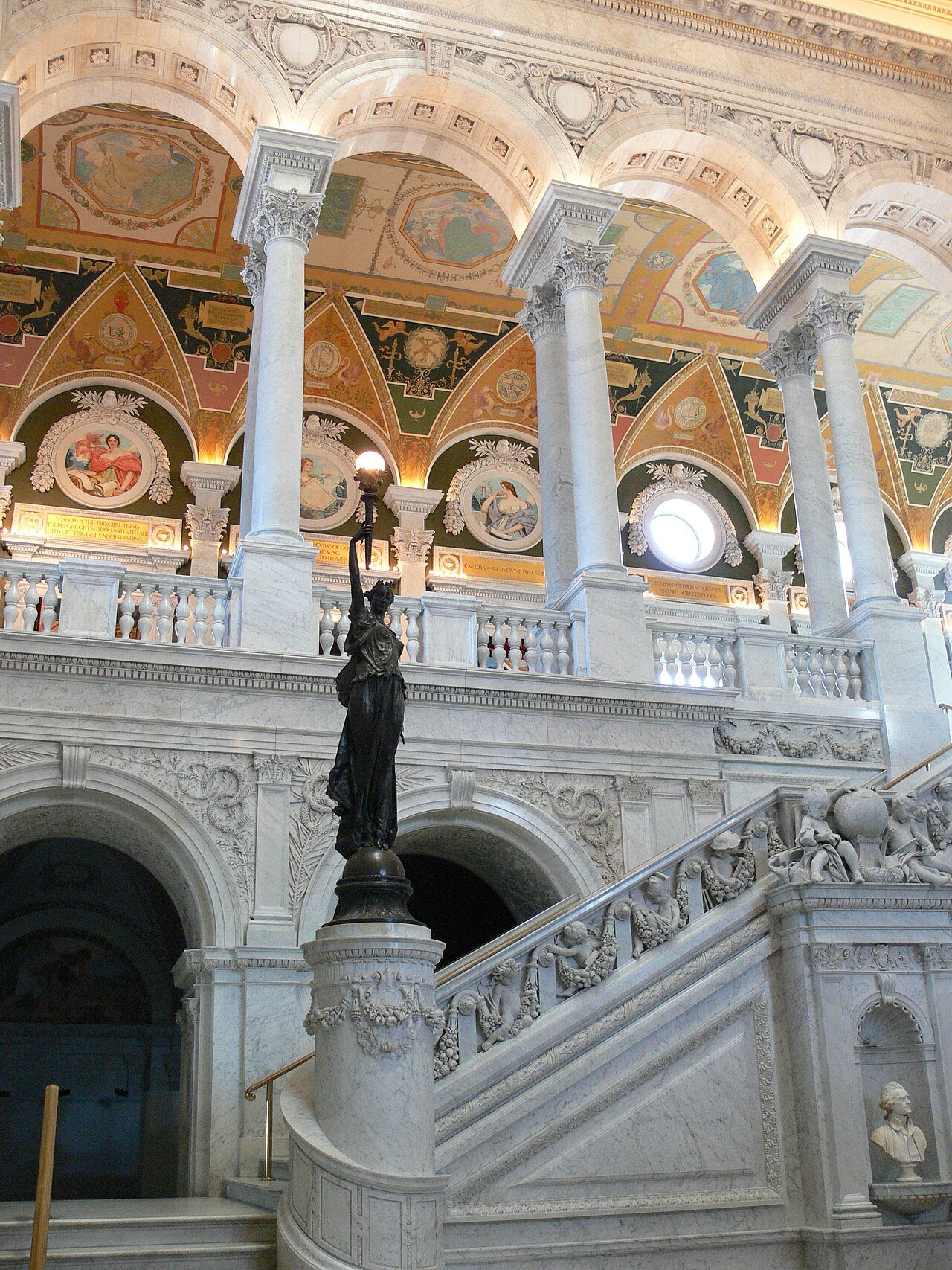
John L. Smithmeyer and Paul J. Pelz won the design competition in 1873, but Congress did not vote to build until 1886. Smithmeyer was dismissed in 1888 and Pelz in 1892; Edward Pearce Casey and the engineer Bernard Green completed the interiors. The building opened on November 1, 1897, and was seen at once as a national monument. It was named for Jefferson in 1980.
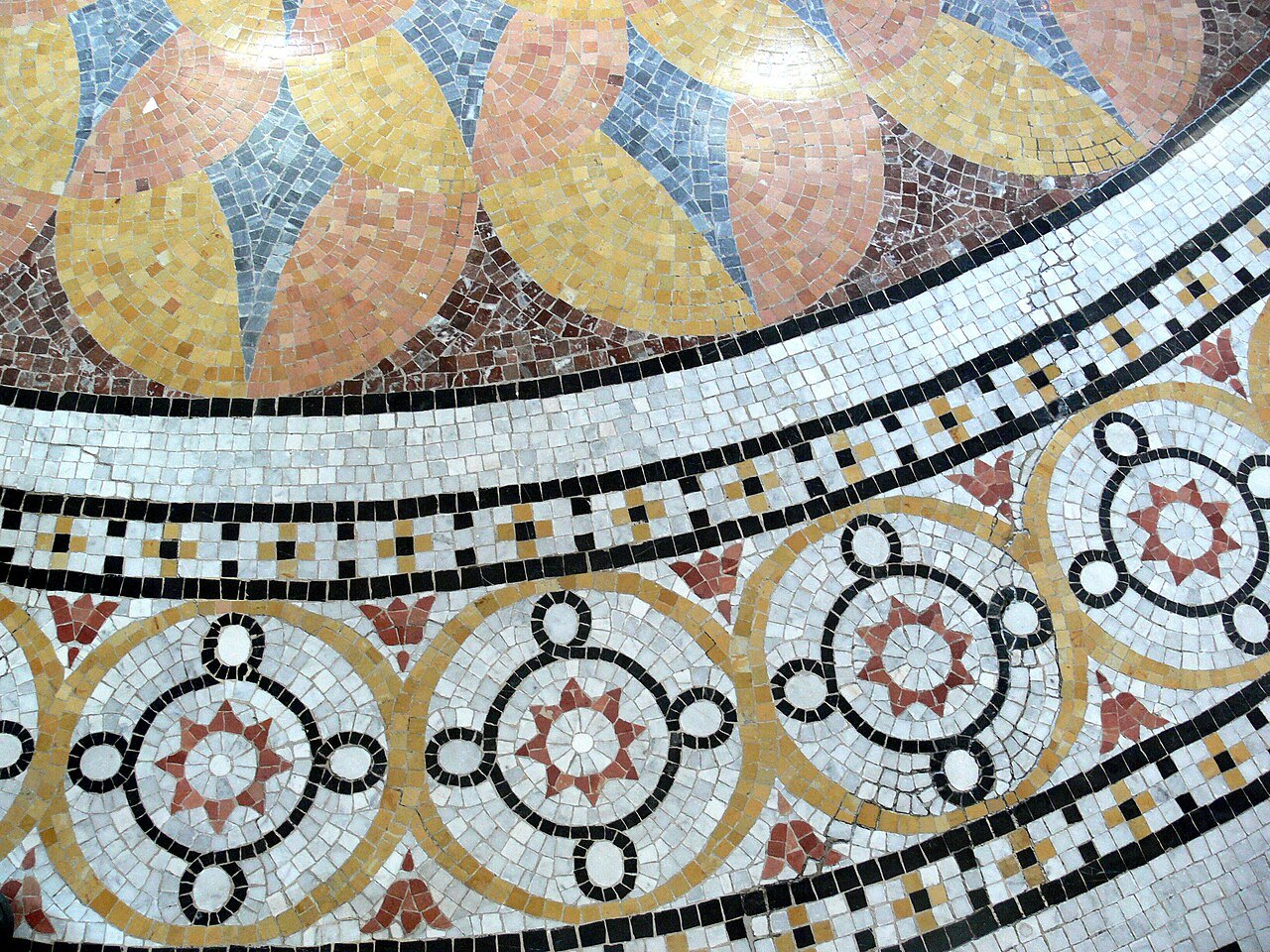
Green believed that the art was part of the structure, not decoration added to it. In 1894 twenty American sculptors were offered commissions and nineteen accepted, and in all more than fifty painters and sculptors produced work for the building. The result is a Beaux-Arts palace in which almost every surface of the public rooms carries paint, mosaic, carving or an inscription.
What you actually see
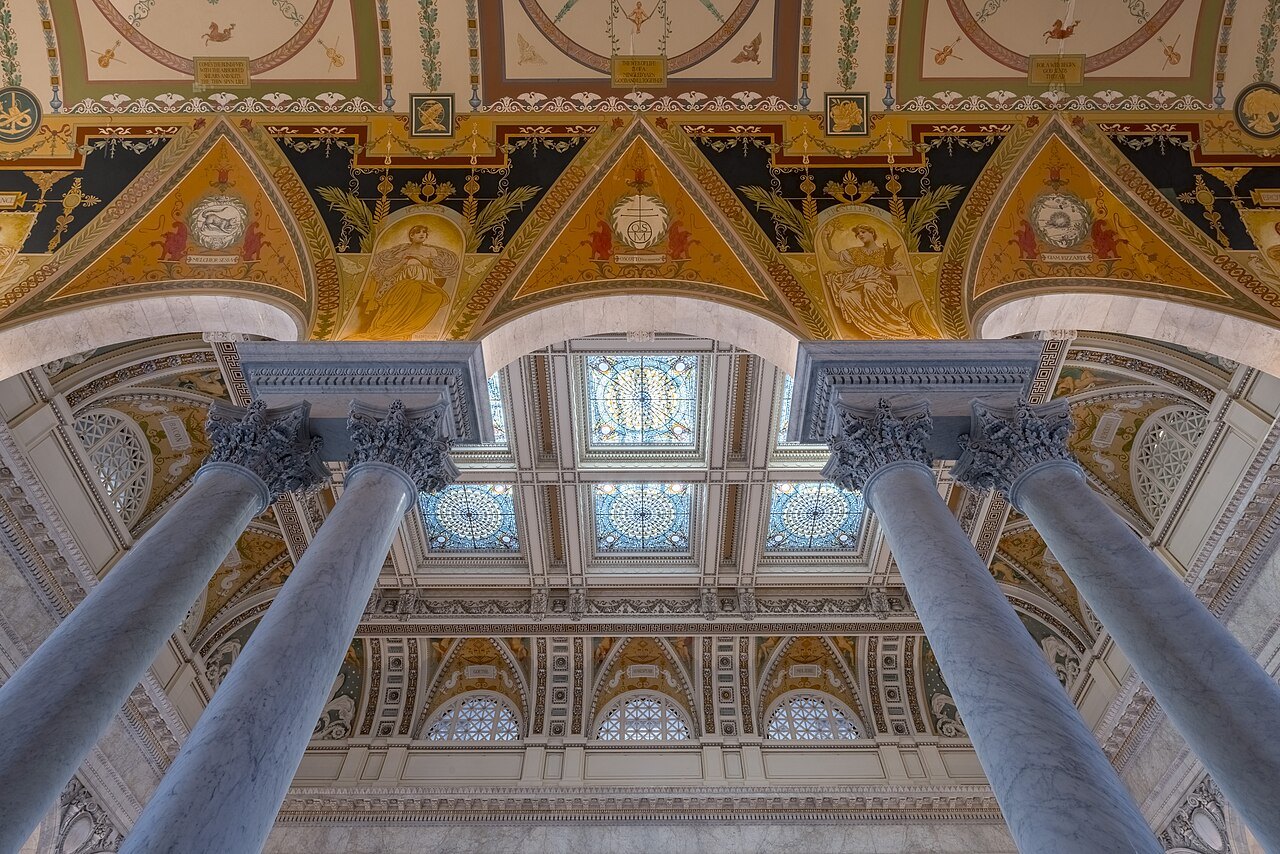
The Great Hall is the entrance: two storeys of marble, mosaic floors, paired staircases and a painted ceiling, with galleries around the upper level. From an overlook on the upper floor you look down into the Main Reading Room, a circular room under the central dome. Its dome was painted by Edwin Blashfield in 1896. At the top a female figure representing Human Understanding lifts a veil from her face, and around the base of the lantern twelve winged figures stand for civilizations and the gift each is said to have made to knowledge, from Egypt and written records to America and science.
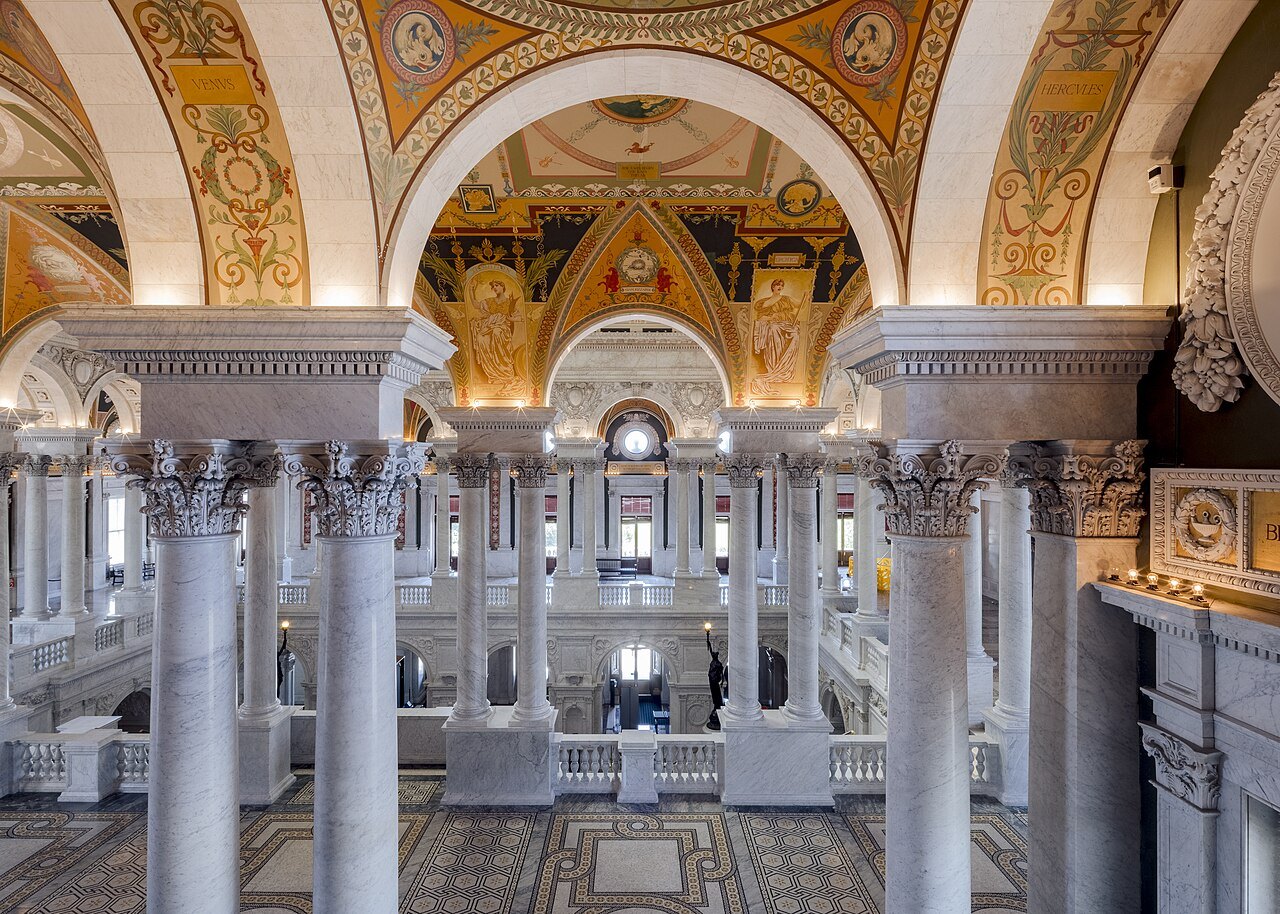
Around the room eight marble columns carry plaster figures, and the reading desks form rings around the central catalog desk. Outside, set into the base of the west front on First Street, is the Court of Neptune fountain of 1898, Roland Hinton Perry's bronze Neptune among tritons blowing conch shells and naiads riding sea horses, a design inspired by the Trevi Fountain in Rome.
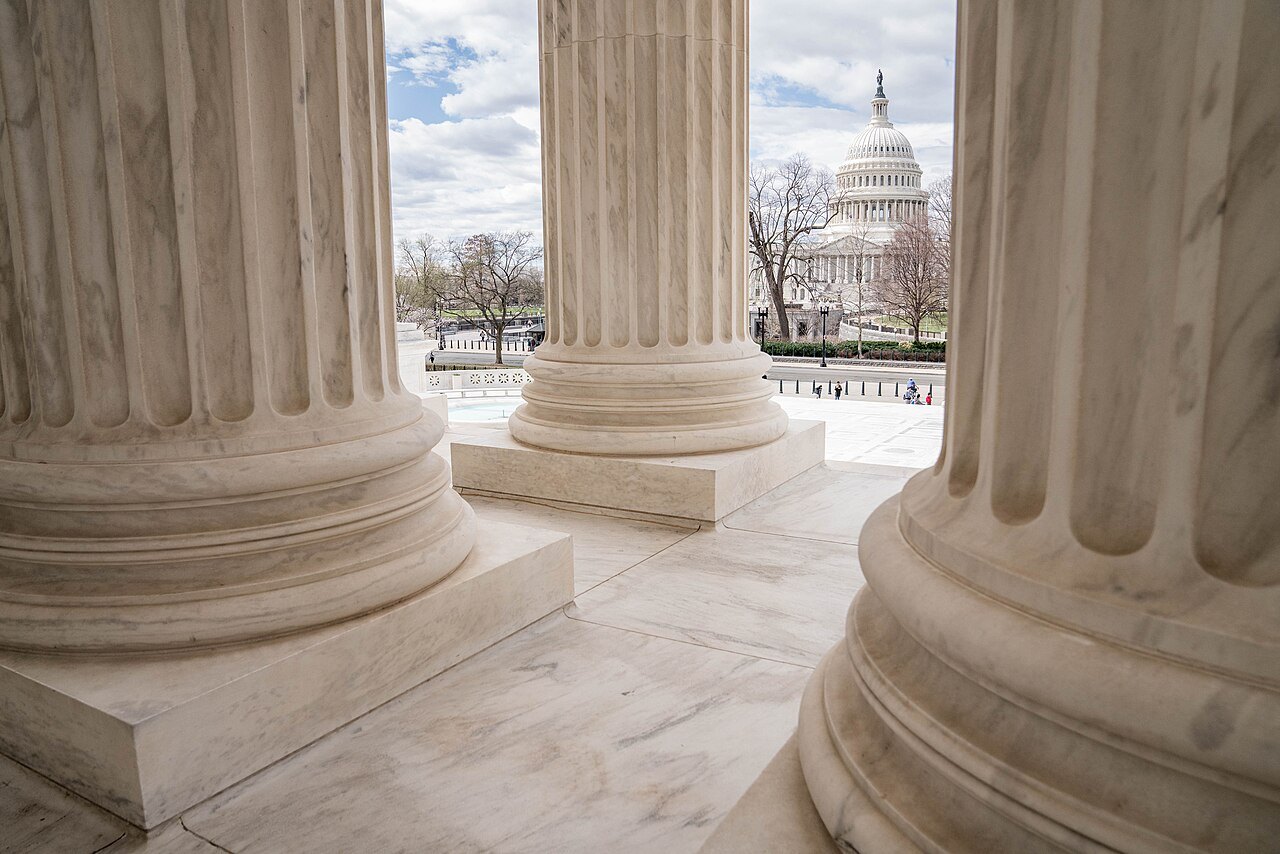
Across East Capitol Street is the Supreme Court Building. Until 1935 the Court sat in the Capitol. Cass Gilbert designed its own building, which was built from 1932 to 1935: a white marble temple faced with stone from Vermont, its interior lined with Alabama marble and its courtroom with ivory-veined Spanish marble and 24 columns of Italian marble. The west front carries the motto Equal Justice Under Law; the east front, Justice, the Guardian of Liberty. One justice said the Court would look like nine black beetles in the Temple of Karnak.
How to visit
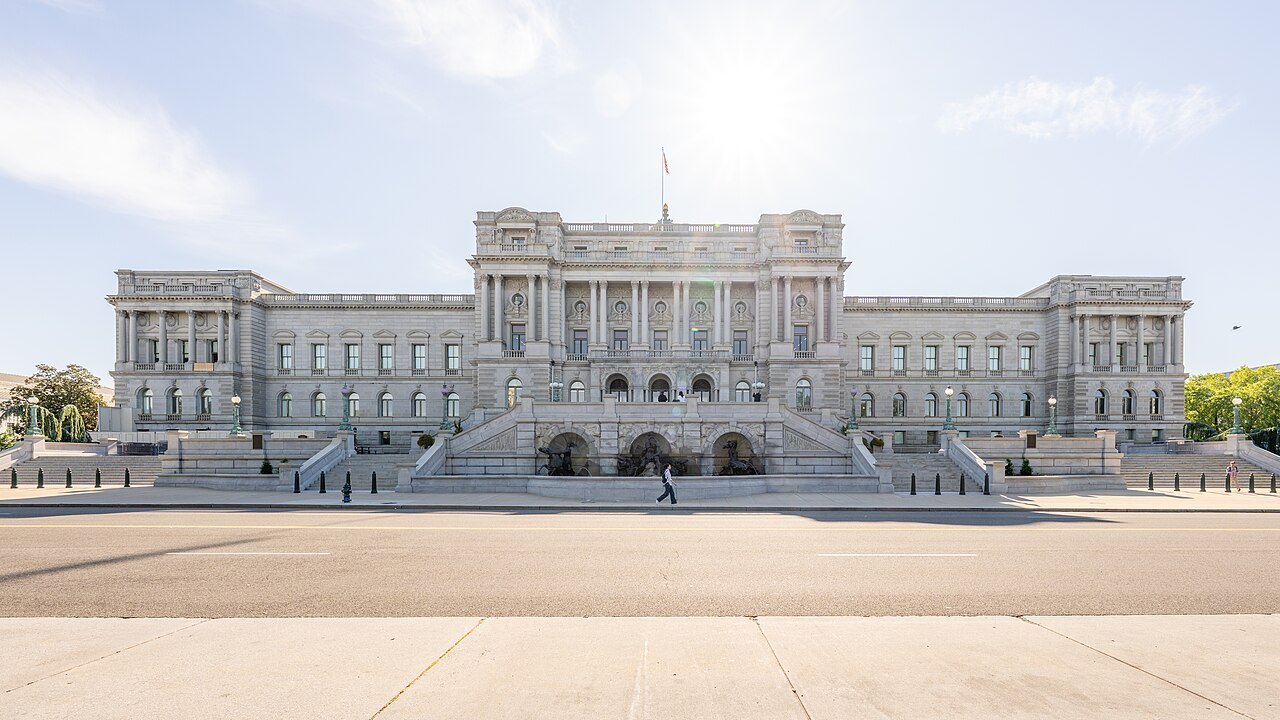
Free timed-entry tickets are required to enter the Jefferson Building. The library's visitor page says they can be reserved online up to thirty days ahead, and that a further release of same-day tickets is made online each day. Every visitor goes through security screening, and the library warns that from March through July the lines at screening are longer than usual.
The Main Reading Room is normally for registered researchers, but the library runs short walk-throughs around its center desk at set times, with a limited number of free tickets, so check its page for the current arrangement. Casual photography is part of most visits; posed or staged photography, such as portrait or wedding sessions, needs a permit. Anyone who wants to use the collections can register for a reader card.
The Supreme Court Building is a working court, and access to the building and to sessions follows the Court's own calendar and rules; check the Court's visitor pages before you plan around it. The front plaza and the steps are the best place to see Gilbert's facade. The Capitol, the Library and the Court are a few minutes' walk apart, and the Capitol Visitor Center is linked to the Library by a tunnel (see the Capitol).
Honest notes
The Library of Congress is not a lending library for the public, and most of what it holds is in closed stacks; a visit is a visit to the building and its exhibitions. The Jefferson Building is not where Jefferson's books were first kept, and fewer than half of his volumes survived the fire of 1851. And the name Library of Congress covers three buildings: the John Adams Building of the 1930s and the James Madison Memorial Building of the 1970s stand next to the Jefferson Building.
Where to go next03
Nearby
- Nearby · East end of the Mall · the zero pointThe United States CapitolThe seat of Congress since November 1800, rebuilt after the fire of 1814, crowned by a cast-iron dome finished around 1866, and the point from which every address in the city is counted.Read the page →
- Nearby · Massachusetts Ave · First St NEUnion StationDaniel Burnham's Roman gateway of 1907, five blocks from the Capitol: a vaulted hall 96 feet high, 46 stone centurions, and still the station where the Northeast Corridor ends.Read the page →
- Nearby · Constitution Ave · 4th St NWThe National Gallery of ArtA free national museum of Western art from the Middle Ages to now, in two buildings joined underground: John Russell Pope's marble temple of 1941 and I.Read the page →