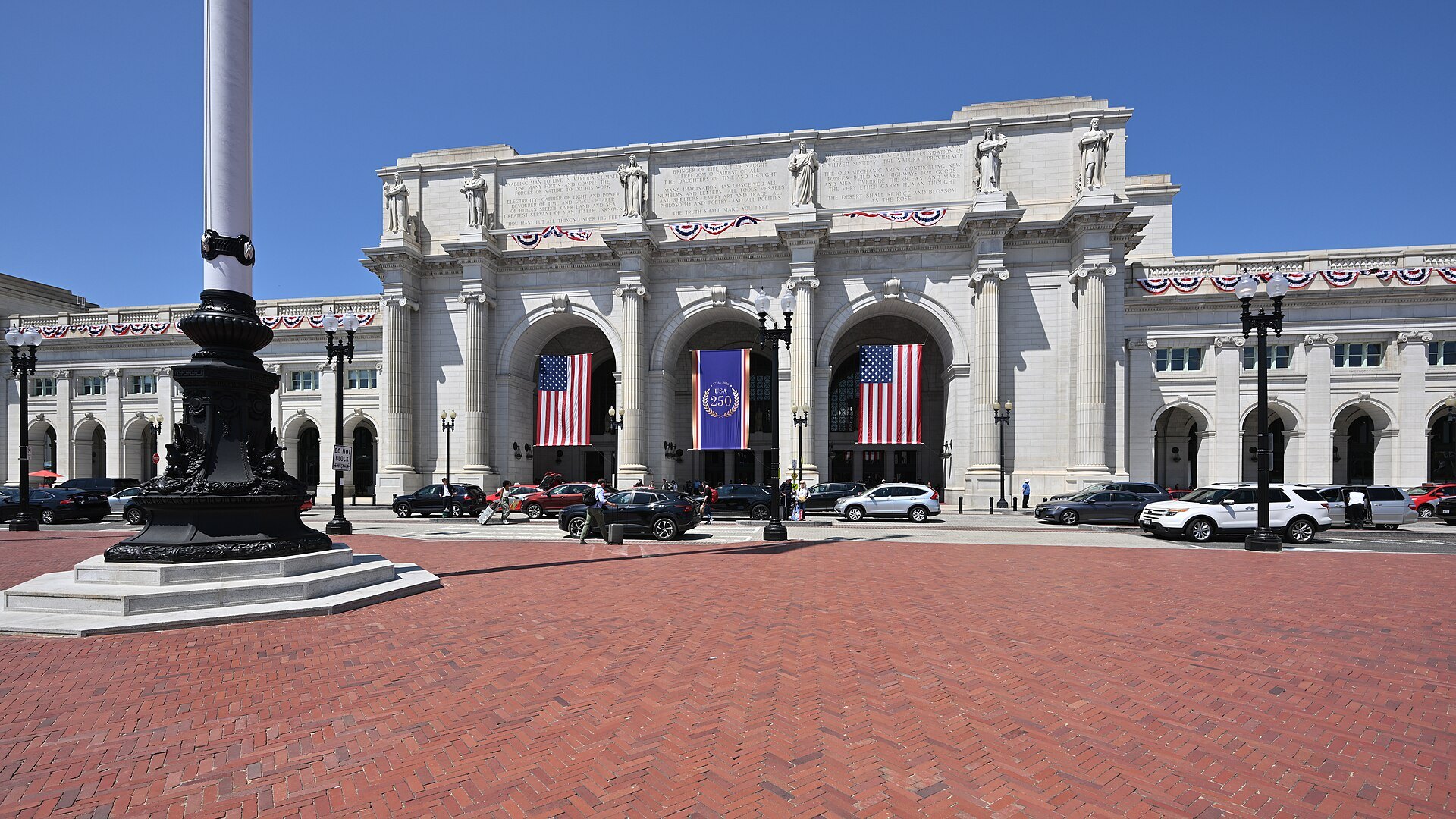
What you are looking at01
Union Station
Massachusetts Ave · First St NE
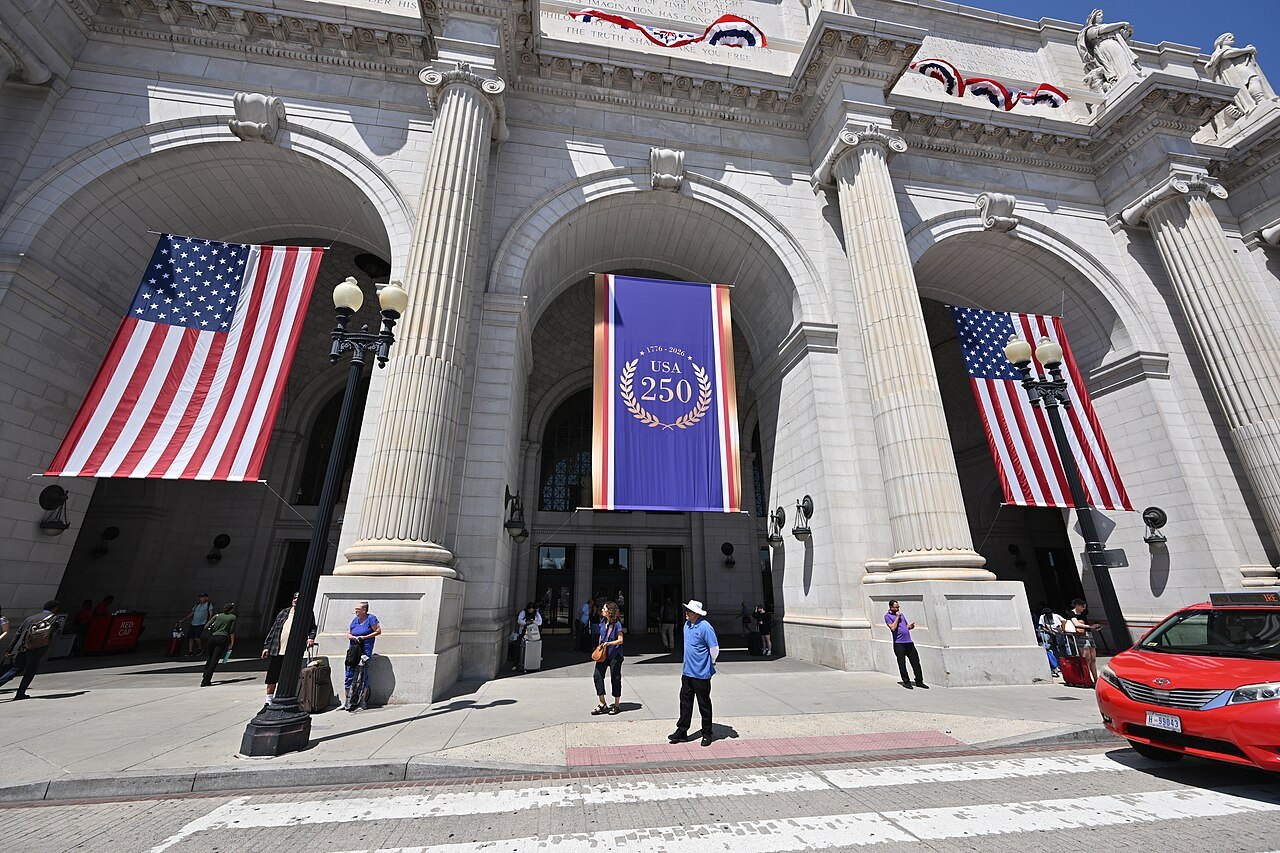
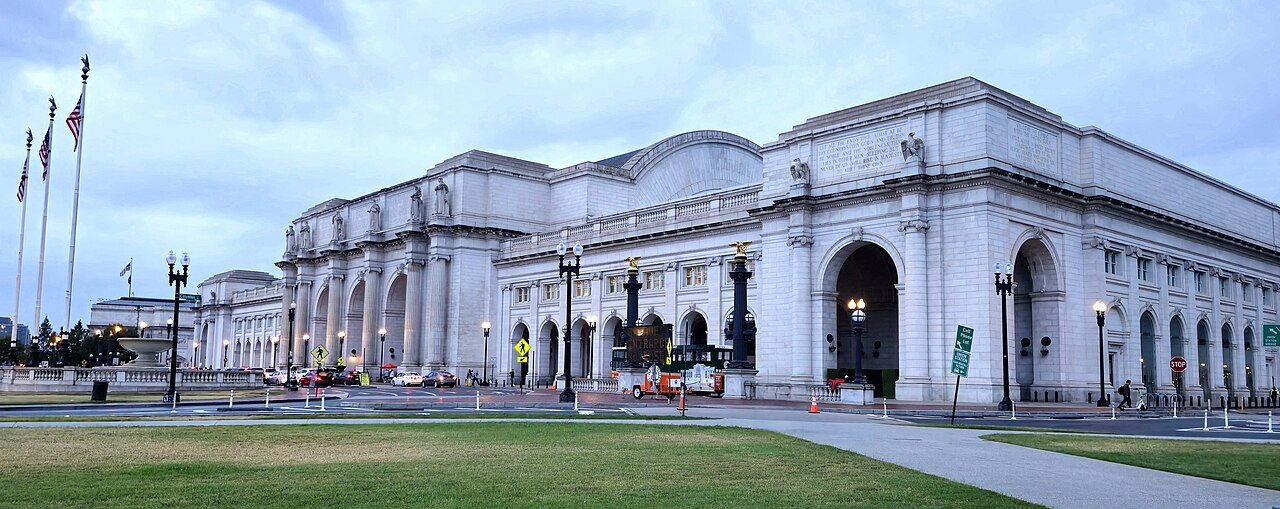
- The facadeMore than 600 feet of white granite, its central arches taken from the Arch of Constantine.
- The six statuesLouis Saint-Gaudens's colossal figures above the cornice, modeled on the Dacian prisoners of Rome.
- The Main HallA barrel-vaulted waiting room 96 feet high, coffered and gilded, after the Baths of Diocletian.
- The centurionsForty-six stone legionaries around the hall, one for each state when the station opened.
- Columbus CircleThe plaza in front, with Lorado Taft's Columbus Fountain, unveiled in 1912, facing the Capitol.
The sight in full02
Reading the place
Why it matters
Union Station is the railroad gateway to Washington. It opened in 1907, it is Amtrak's second-busiest station, and it is the southern end of the Northeast Corridor, the electrified line north through Baltimore, Philadelphia and New York to Boston and the busiest passenger railroad in the country. Commuter trains from Maryland and Virginia, the Metro's Red Line, intercity buses and city buses all meet here (see getting here).
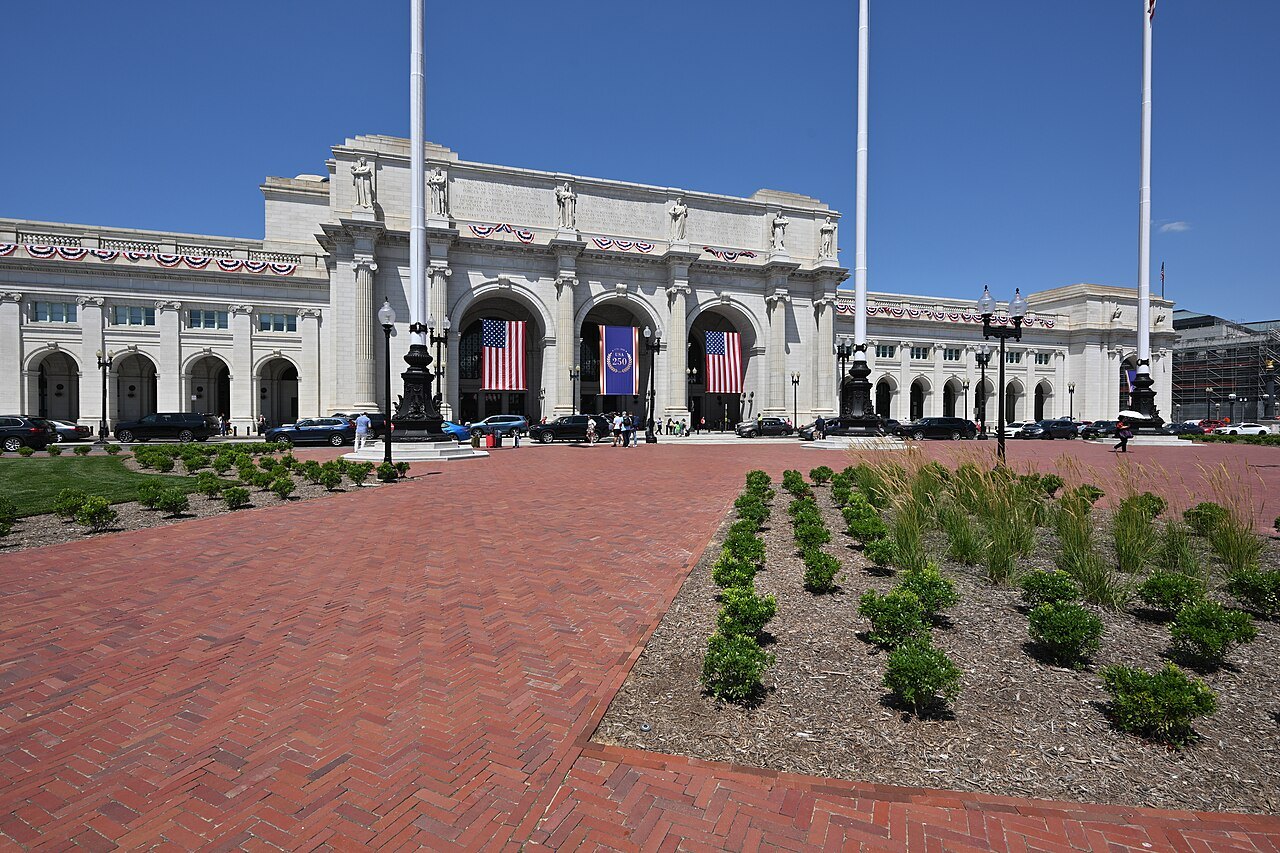
It is also one of the great buildings of the plan. Daniel Burnham set it where two of L'Enfant's diagonal avenues meet, facing the Capitol five blocks away, and gave arriving travelers a Roman arch to walk through. For anyone who comes by train, the first sight of the city is the Capitol dome across the plaza from the front steps.
A station that cleared the Mall
Before 1907 each railroad had its own station. The Baltimore and Ohio used a depot on New Jersey Avenue, and from 1873 the Baltimore and Potomac, part of the Pennsylvania Railroad, ran its trains across the Mall on 6th Street to a station on the Mall's north side, where the West Building of the National Gallery of Art now stands. Tracks on the Mall were exactly what the planners of the early 1900s wanted gone.
Union Station was the answer: one terminal for all the lines, north of the Capitol and off the Mall. Burnham, the Chicago architect who also sat on the commission that shaped the Mall, designed it with Pierce Anderson. It was built as a monument as much as a station. At the height of its traffic, during the Second World War, as many as 200,000 passengers passed through it in a single day, and it even carries an airport code, ZWU.
Rome on Massachusetts Avenue
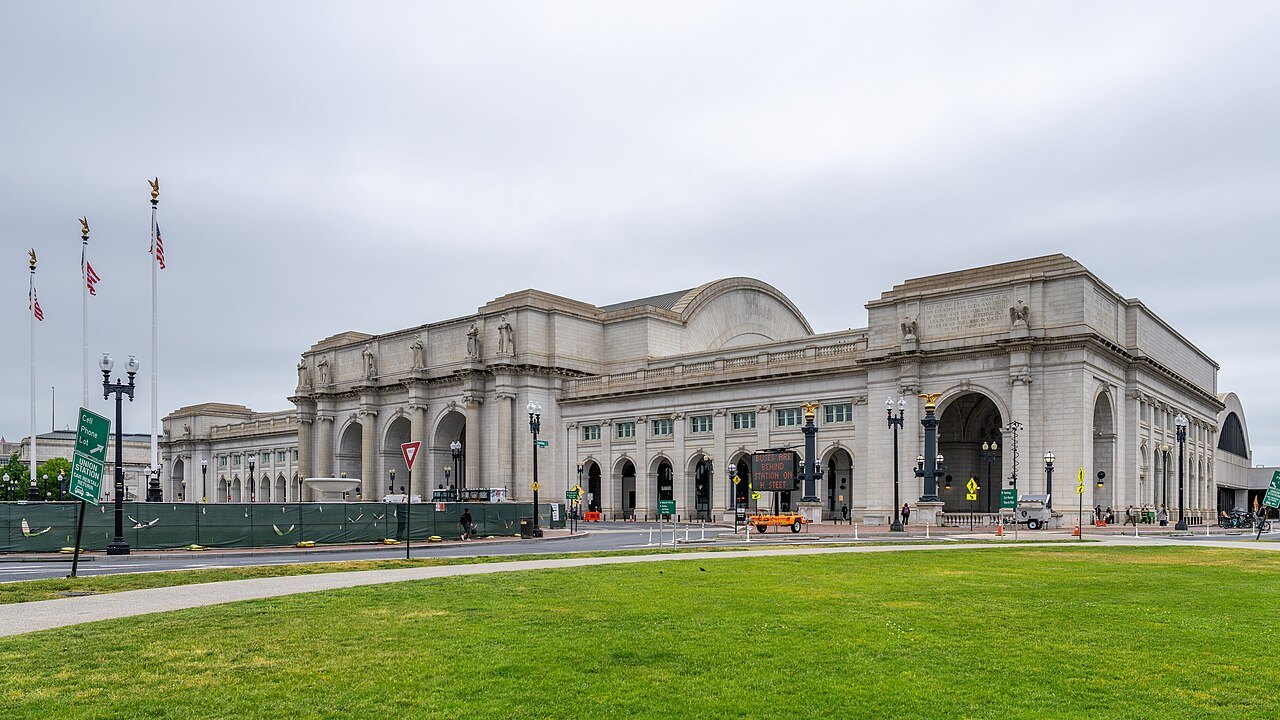
Burnham borrowed openly. The facade, more than 600 feet long and built of white granite from a previously unused quarry, takes its central arches from the Arch of Constantine. The great vaulted rooms inside follow the Baths of Diocletian. Gold leaf, marble and inscriptions carved in stone complete the effect of a public building rather than a railroad shed.
Above the main cornice stand six colossal statues by Louis Saint-Gaudens, modeled on the Dacian prisoners of the Arch of Constantine. Inside he made 46 centurions, one for each state in the Union when the station opened. Their large shields were added shortly after installation, after complaints about the figures' nudity from the hips down.
Decline and return
As air travel and the car took over, the station declined. In the 1970s it was converted into a National Visitor Center for the Bicentennial, with a sunken pit in the Main Hall for a slide show, which Washingtonians nicknamed the Pit. With little publicity and poor parking it was never popular, and the theaters and the slide show closed. In 1981 part of the ceiling collapsed, which alarmed Congress into action: money was found to finish the roof repairs and a parking garage, and the station was handed over for restoration as a railroad station with shops.
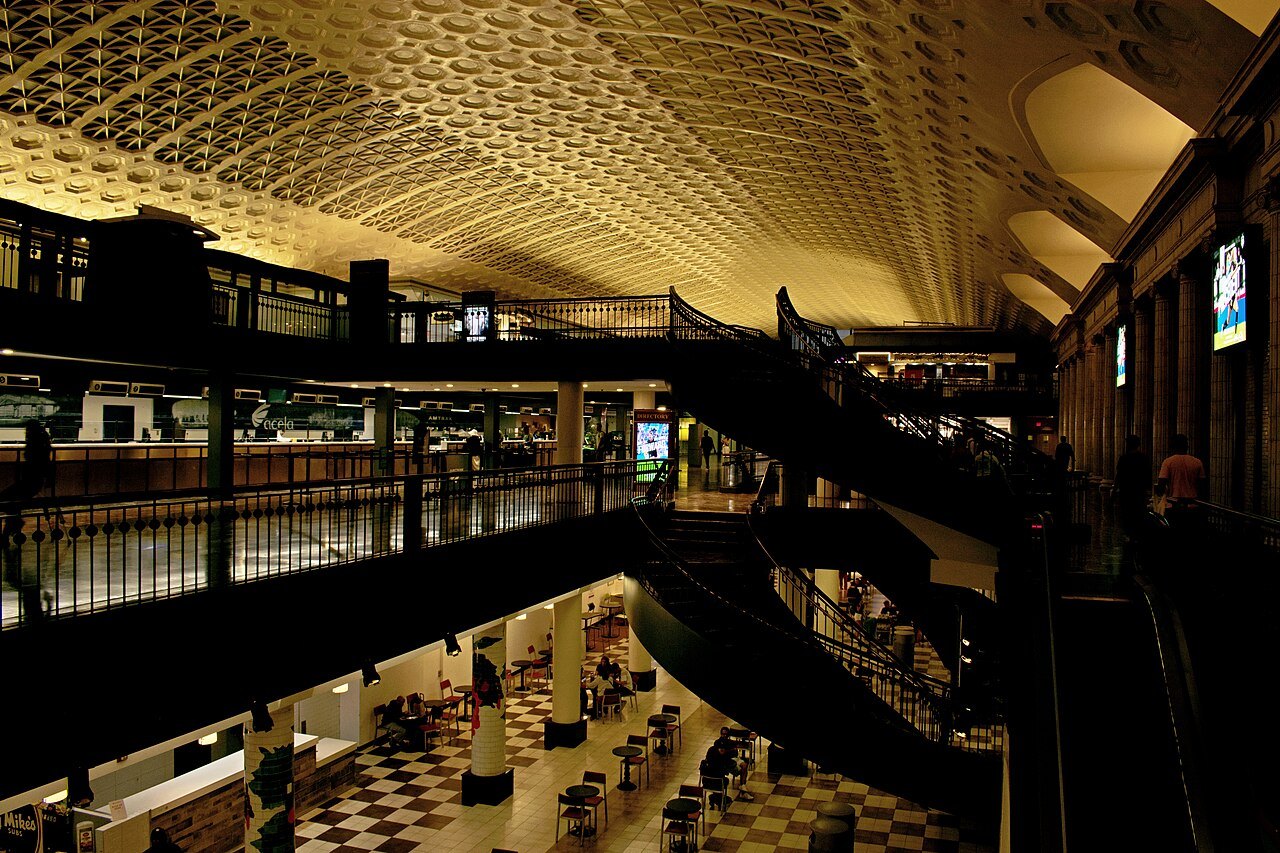
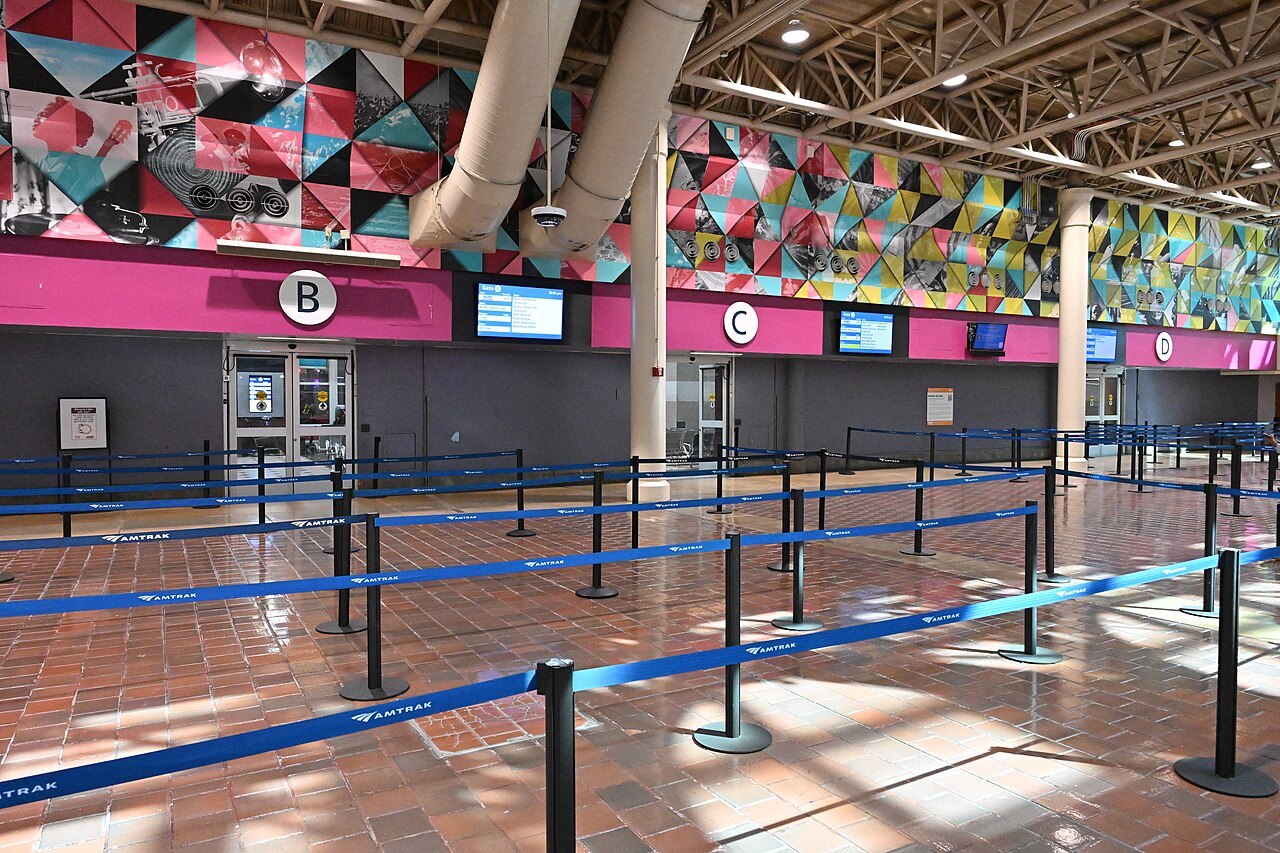
The restored station reopened in 1988 with a new wing and shops in the old halls, and by 2014 it was one of the busiest rail stations and shopping destinations in the country. The pandemic emptied many of its shops. Amtrak took control of the station in 2024 and began a renovation and expansion, and the arrangements for its shops and non-rail spaces have been changing since.
What you actually see
Come in through the central arch into the Main Hall, the old waiting room. Its coffered, gilded barrel vault is 96 feet above the floor, and the centurions stand guard on the balcony line around it, shields in front of them. Beyond the hall, the concourse leads to the train gates and the Metro entrance.
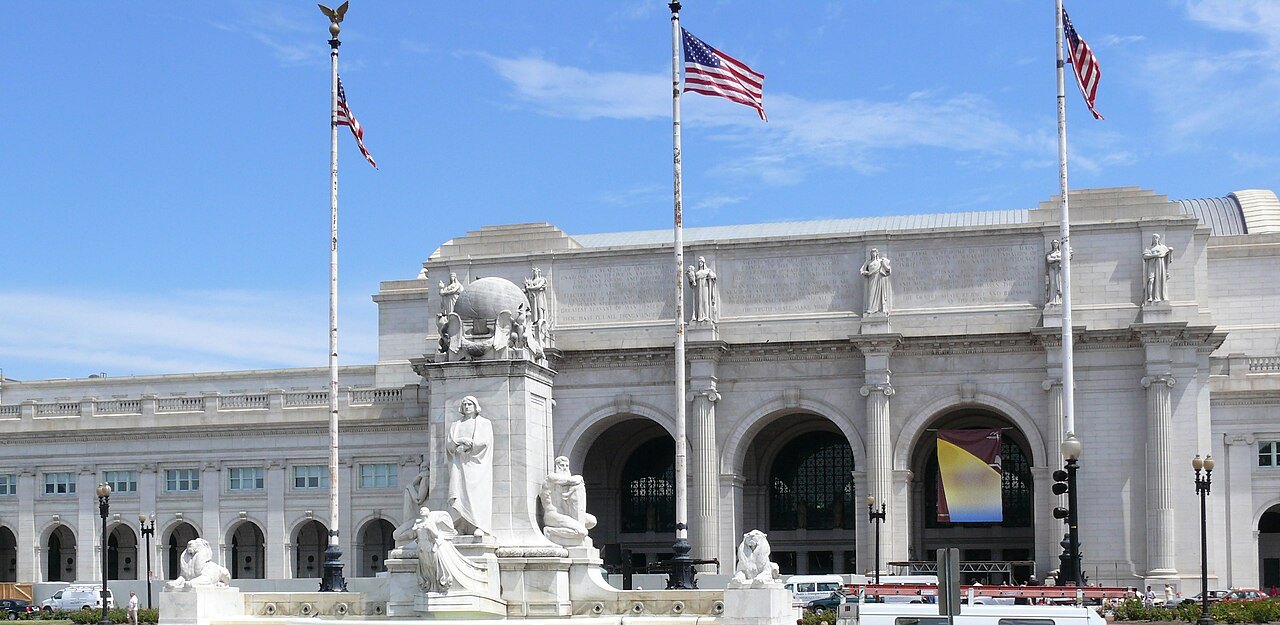
Outside, walk back down the steps to Columbus Circle. The Columbus Fountain by the Chicago sculptor Lorado Taft was unveiled in 1912, and the city celebrated for three days with parades, concerts and fireworks that drew tens of thousands of people. From the fountain, look south toward Capitol Hill: the dome closes the view, which is exactly what Burnham intended when he turned the station to face it.
How to visit
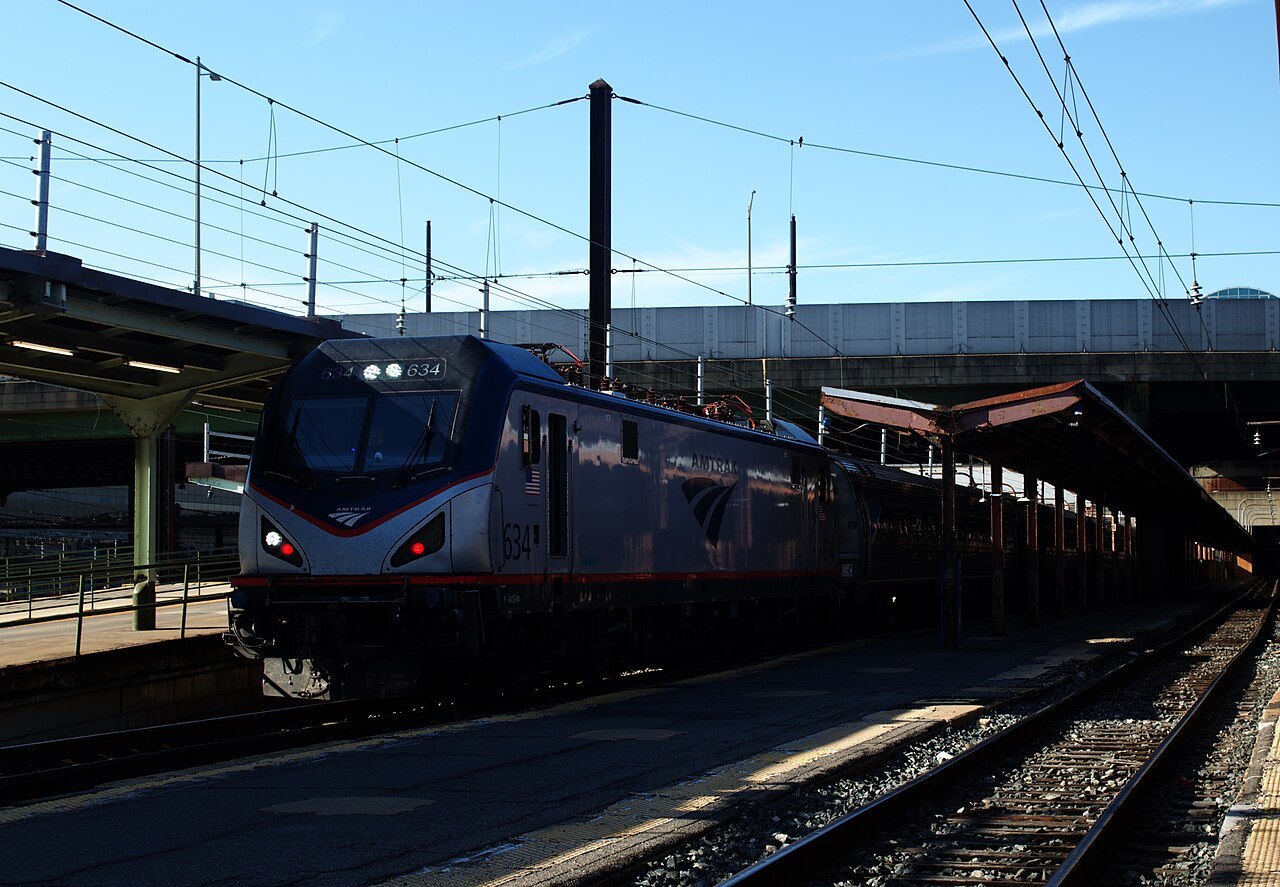
The station is a working terminal and its public halls can be walked through without a ticket; check the station's own pages for the shops and restaurants, which have been changing. Allow time: the Main Hall is best seen from the middle of the floor, looking up, and from the top of the front steps. The Capitol and the Library of Congress are a short walk south (see the Capitol).
For travelers, the station is the stop for Amtrak's Northeast Regional and Acela trains, for MARC trains from Maryland and VRE trains from Virginia, and for the Metro's Red Line. Intercity buses leave from a bus deck in the parking structure behind the station.
Honest notes
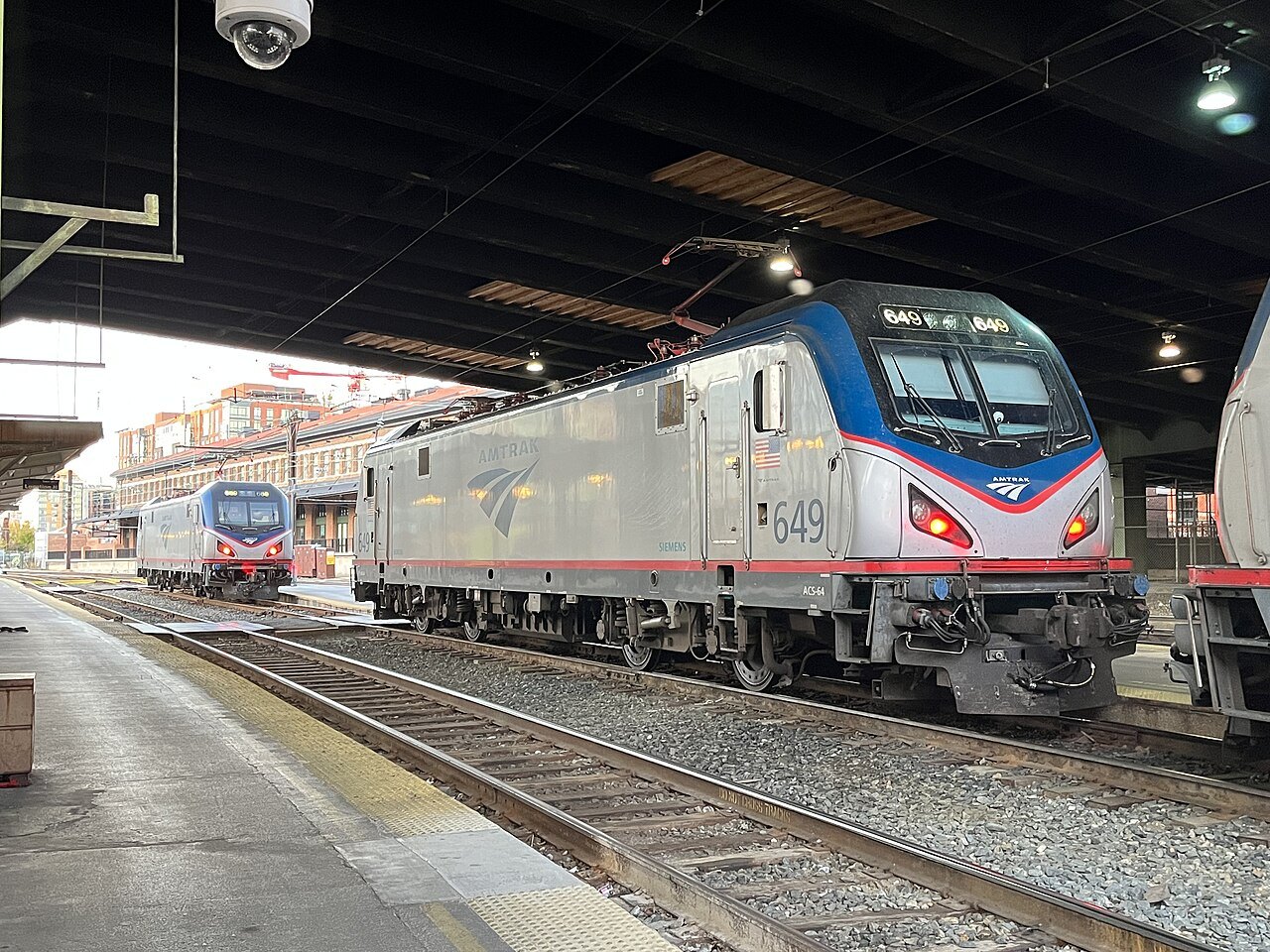
The centurions were not always so modest: the shields came later. The station was not built for travelers alone but as part of a plan to take the railroad off the Mall, which is why the Mall is a lawn today. And the building's commercial life has had several falls and recoveries; the architecture is the reason to come, whatever the shops are doing. In 2014 more than 40 million people a year came through it, while the station served just under five million rail passengers in 2015: most visitors come to see it, not to catch a train.
Where to go next03
Nearby
- Nearby · East end of the Mall · the zero pointThe United States CapitolThe seat of Congress since November 1800, rebuilt after the fire of 1814, crowned by a cast-iron dome finished around 1866, and the point from which every address in the city is counted.Read the page →
- Nearby · First St SE · East Capitol StThe Library of Congress and the Supreme CourtAcross First Street from the Capitol stand the Jefferson Building of 1897, the most richly decorated interior in the city, and the marble temple the Supreme Court moved into in 1935.Read the page →
- Nearby · 700 Pennsylvania Ave NWThe National ArchivesJohn Russell Pope's temple of the nation's records, built in the 1930s over a buried creek, where the Declaration of Independence, the Constitution and the Bill of Rights lie under glass in a rotunda.Read the page →