Home · Sights · The National Air and Space Museum
What you are looking at01
The National Air and Space Museum
Independence Ave · 6th St SW
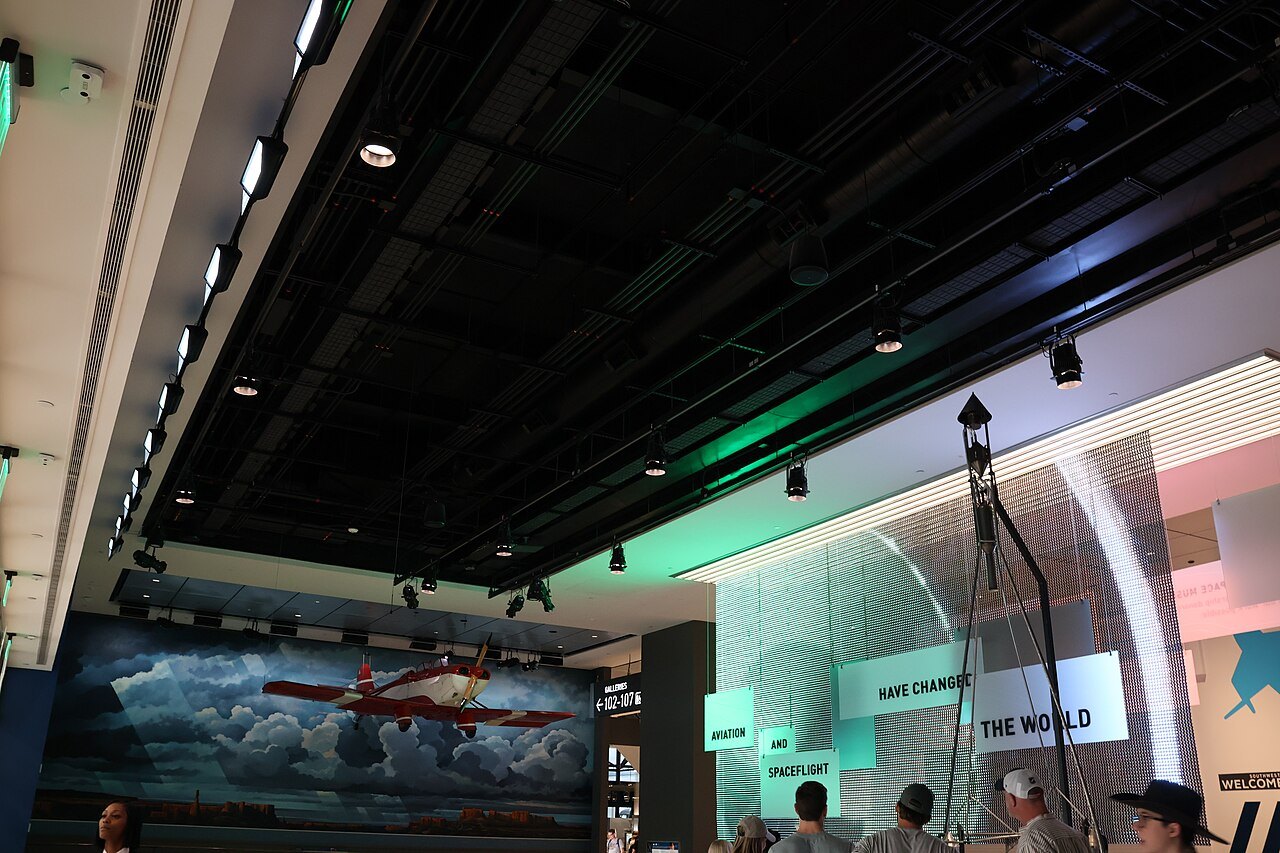
- The Boeing Milestones of Flight HallThe great entrance hall, where the most famous machines of flight hang together.
- The Wright FlyerThe Wright brothers' airplane of 1903, the first powered airplane to fly with a pilot.
- The Spirit of St. LouisCharles Lindbergh's single-engine monoplane, flown alone across the Atlantic to Paris in 1927.
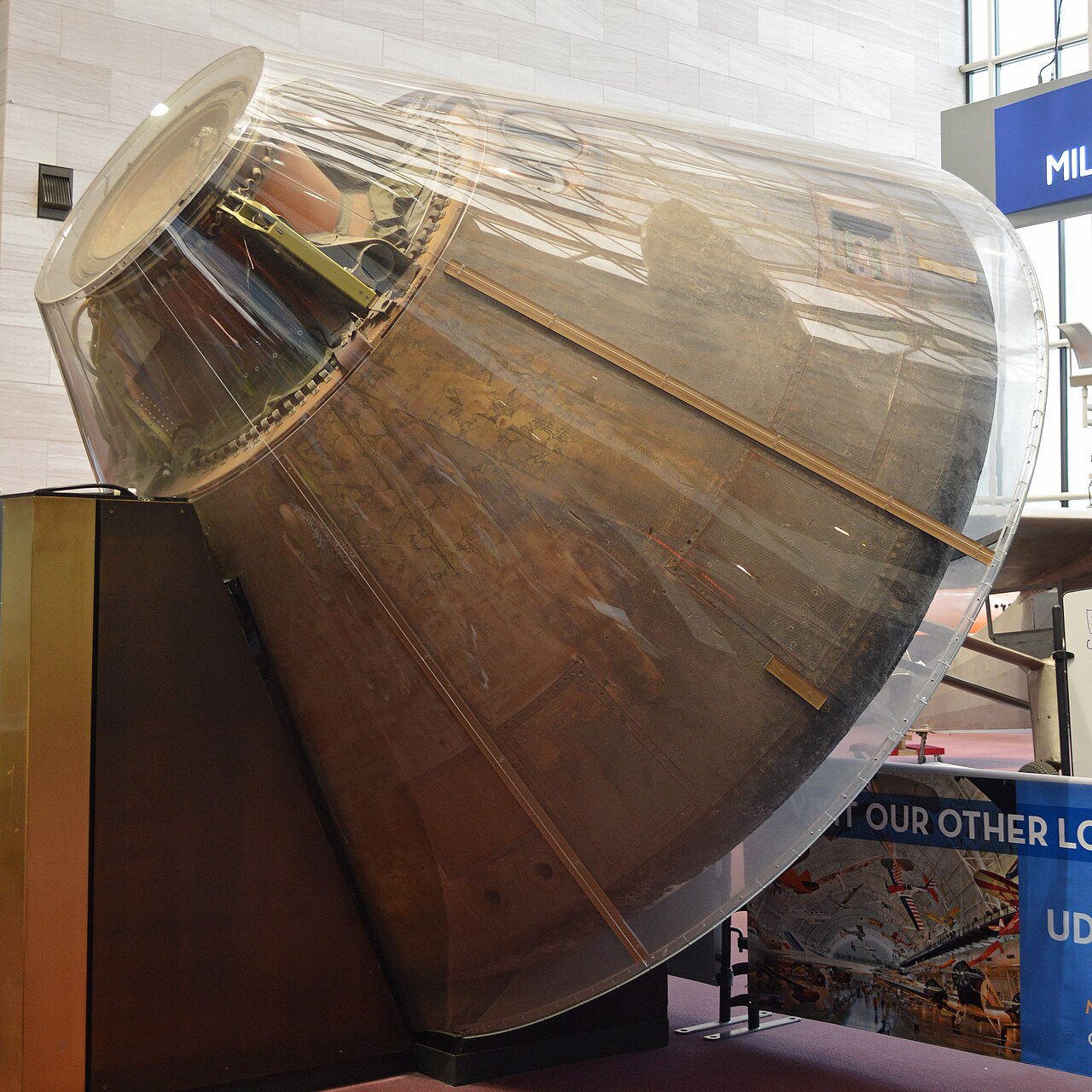
- Apollo 11's ColumbiaThe command module that carried three astronauts to the Moon and back in 1969.
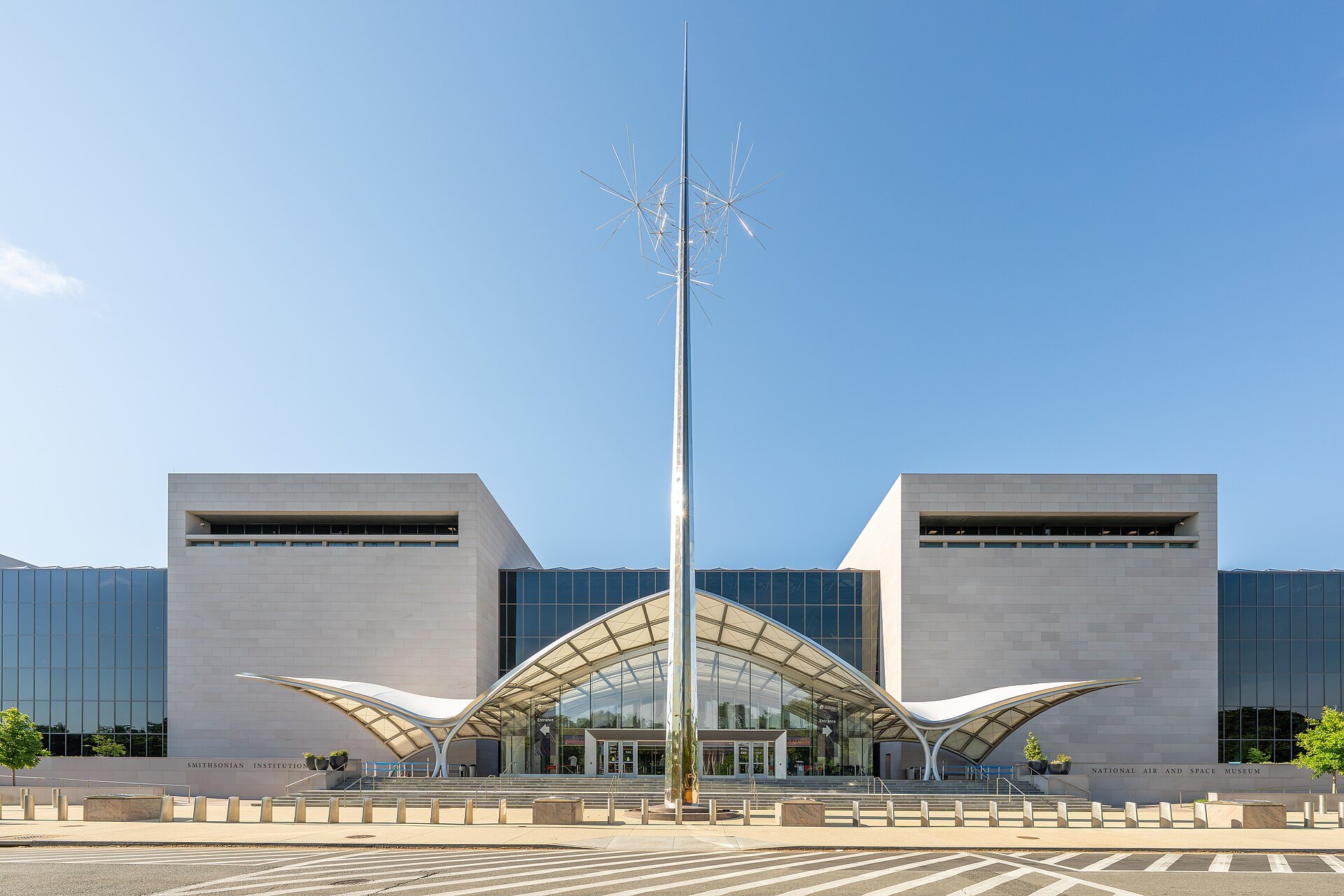
- Four marble cubes and three glass hallsGyo Obata's building, pink Tennessee marble boxes linked by steel-and-glass atria.
The sight in full02
Reading the place
Why it matters
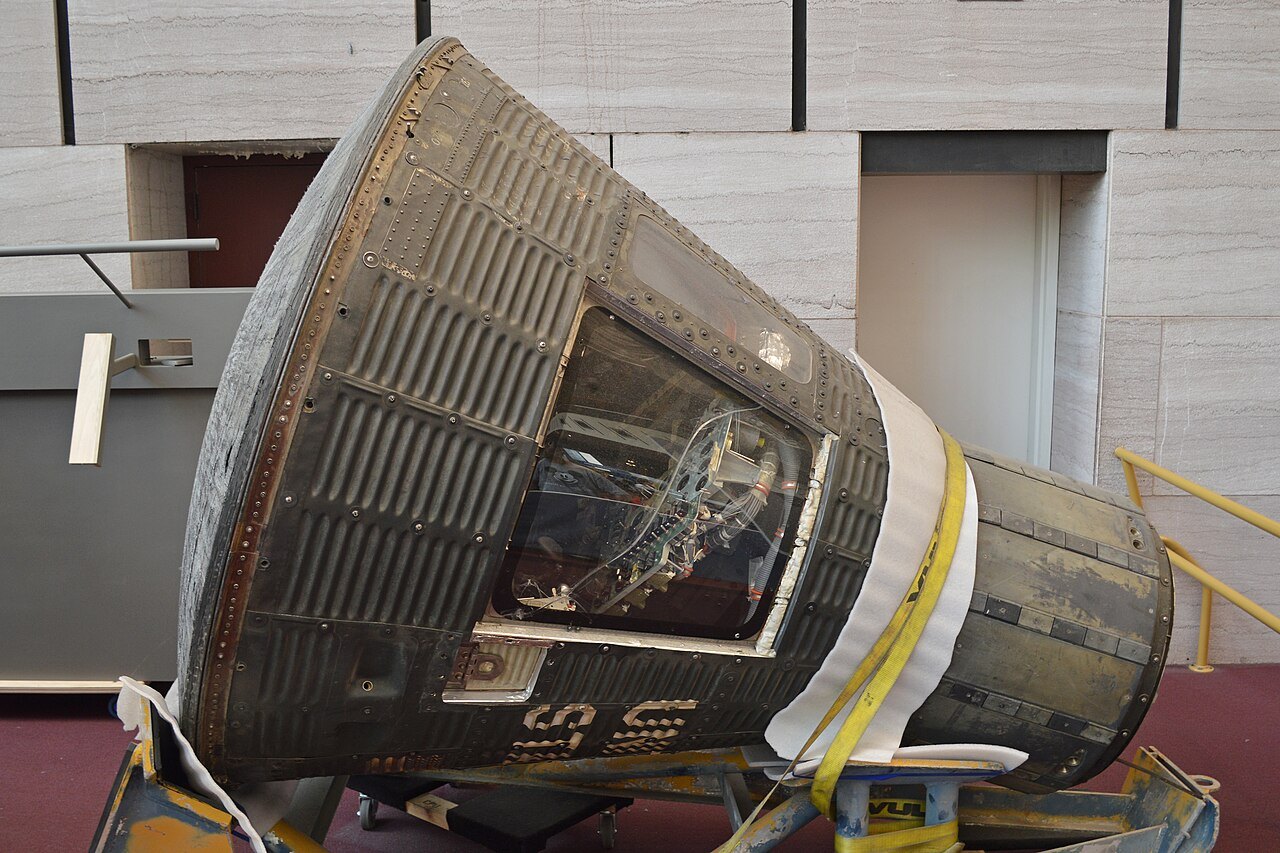
The National Air and Space Museum holds the original machines of the history of flight, not copies. Almost all the aircraft and spacecraft on display are the actual craft, or their flight-ready backups, and the list reads like a timeline: the Wright brothers' Flyer, Charles Lindbergh's Spirit of St. Louis, John Glenn's Friendship 7 capsule, and Columbia, the Apollo 11 command module. It is one of the most visited museums in the country; more than three million people came in 2023.
It is also a working research institution, studying the history and science of aviation and spaceflight, planetary science and the geology of Earth and other worlds. The building on the Mall is one of two: the museum's much larger annex, the Steven F. Udvar-Hazy Center, is out at Dulles Airport in Virginia, and many of the largest aircraft are there (see day trips).
From an armory to a Bicentennial museum
Congress created the National Air Museum on August 12, 1946, and the space race of the 1950s and 1960s gave it its present name and, at last, a building. The site on the south side of the Mall had held the city's armory, which during the Civil War became the Armory Square Hospital for the worst wounded brought back from the battlefields; later it was covered with temporary war buildings that stood from the First World War into the 1960s.
The new museum opened on July 1, 1976, in the middle of the Bicentennial celebrations. Its director was Michael Collins, who had flown to the Moon on Apollo 11 seven years earlier. The Smithsonian wanted a building that would be impressive without competing with the Capitol, and the St. Louis architect Gyo Obata of HOK designed four simple cubes faced in pink Tennessee marble, for the smaller and more theatrical exhibits, linked by three spacious halls of steel and glass for the missiles, airplanes and spacecraft. It uses the same marble as the National Gallery of Art across the Mall and has much the same bulk.
A building rebuilt from the inside
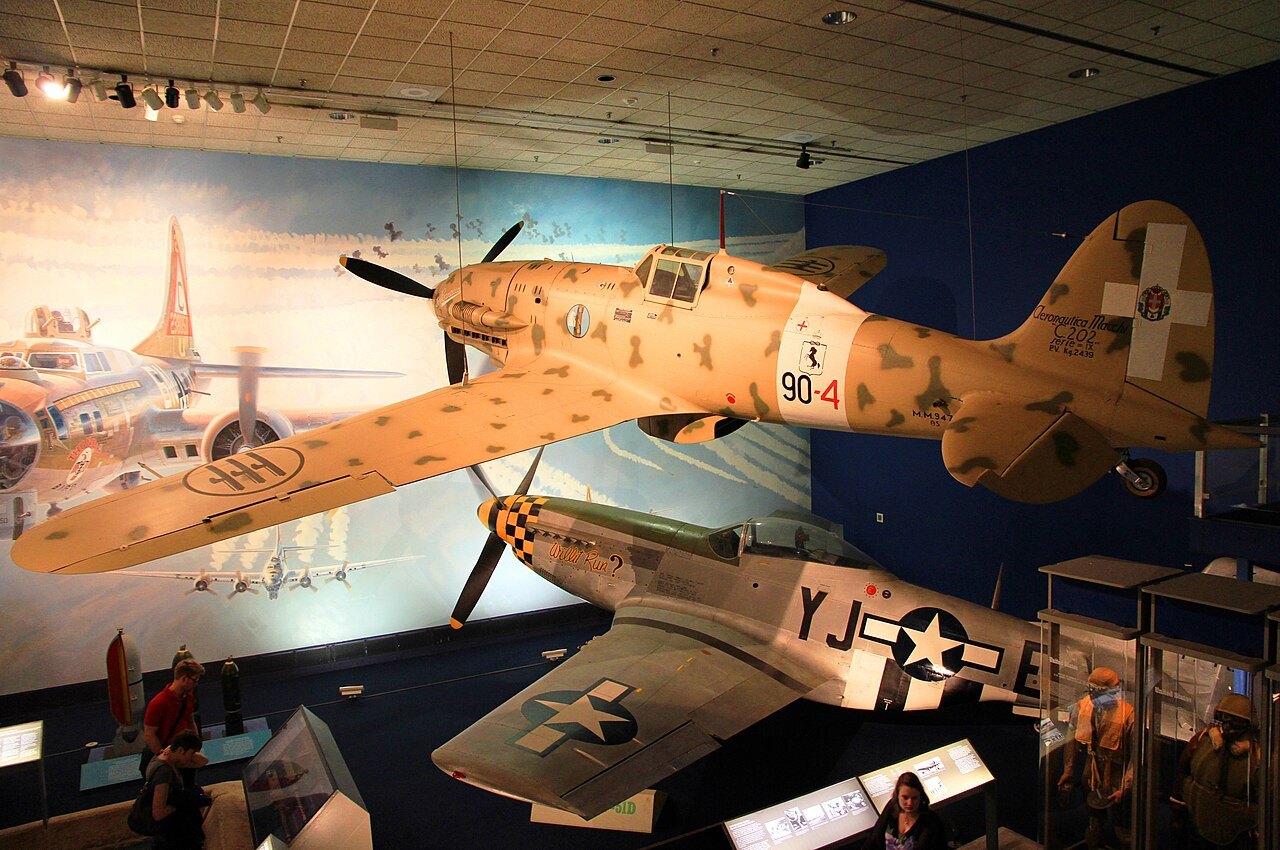
By 2015 the building was failing: a Smithsonian report found the heating and cooling close to breaking down, the roof in need of replacement, and the marble facade cracked and warped. The glass walls let in so much ultraviolet light that it had damaged exhibits, among them the coating of the Spirit of St. Louis. A renovation of the whole building was planned, costing hundreds of millions of dollars, and the facade was to be replaced, again in Tennessee marble.
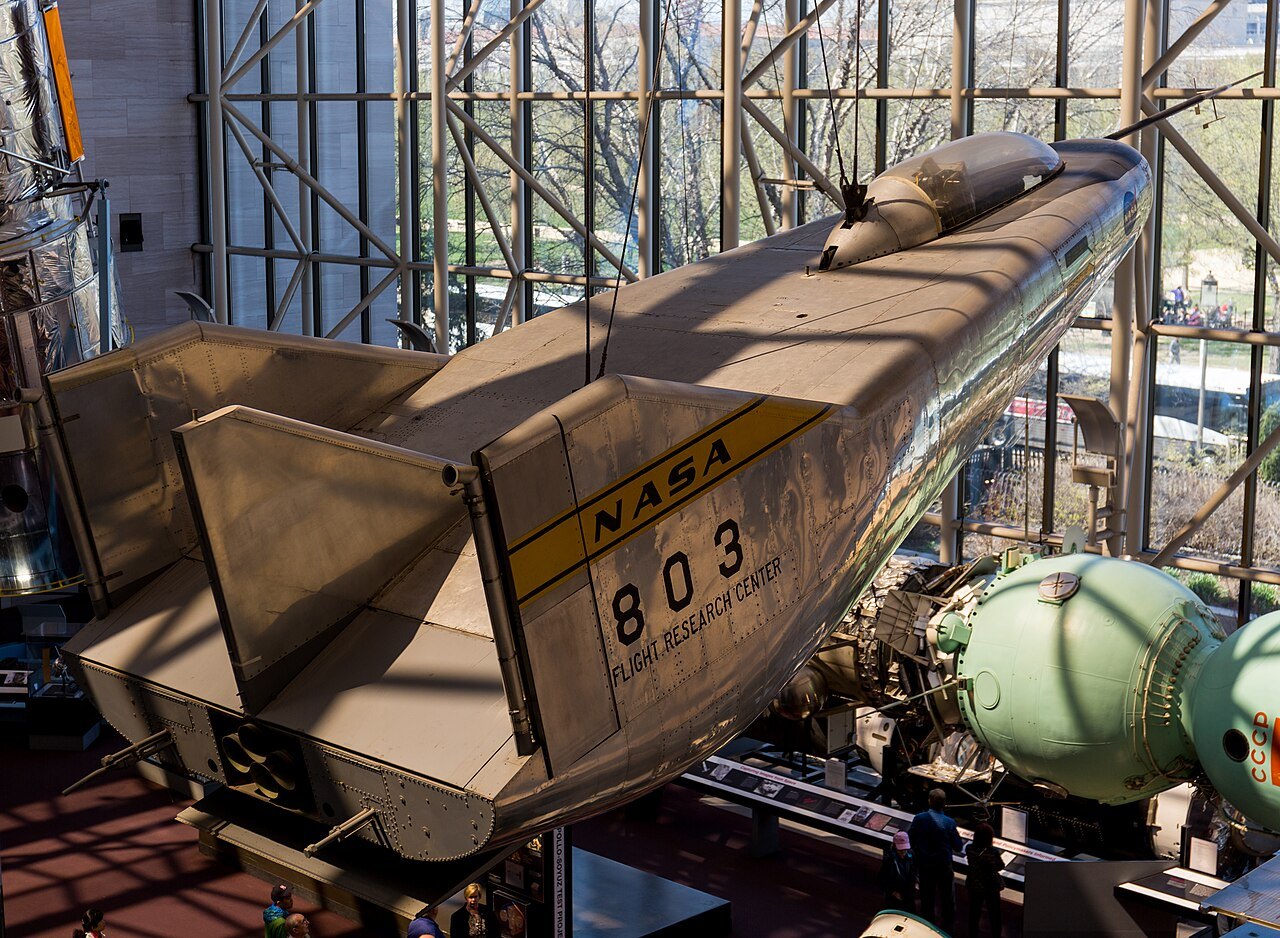
The work began in 2018. The western half reopened on October 14, 2022, with eight new galleries, the planetarium, a store and a cafe, and the rest of the galleries have been reopening in stages; the museum's plan is for all of them to be open again by 2026. Earlier, a gift from Boeing had paid for the renovation of the entrance hall, which now carries the company's name, the Boeing Milestones of Flight Hall.
What you actually see
In the entrance hall the icons hang together: aircraft and spacecraft overhead, and on the floor capsules and machines you can walk around. The Wright Flyer, the machine in which the Wright brothers made the first powered and controlled flights in 1903, is displayed near the entrance. The Spirit of St. Louis is here too, the single-engine, single-seat monoplane in which Lindbergh made the first solo nonstop flight across the Atlantic, from Long Island to Paris, on May 20 and 21, 1927, in thirty-three and a half hours.
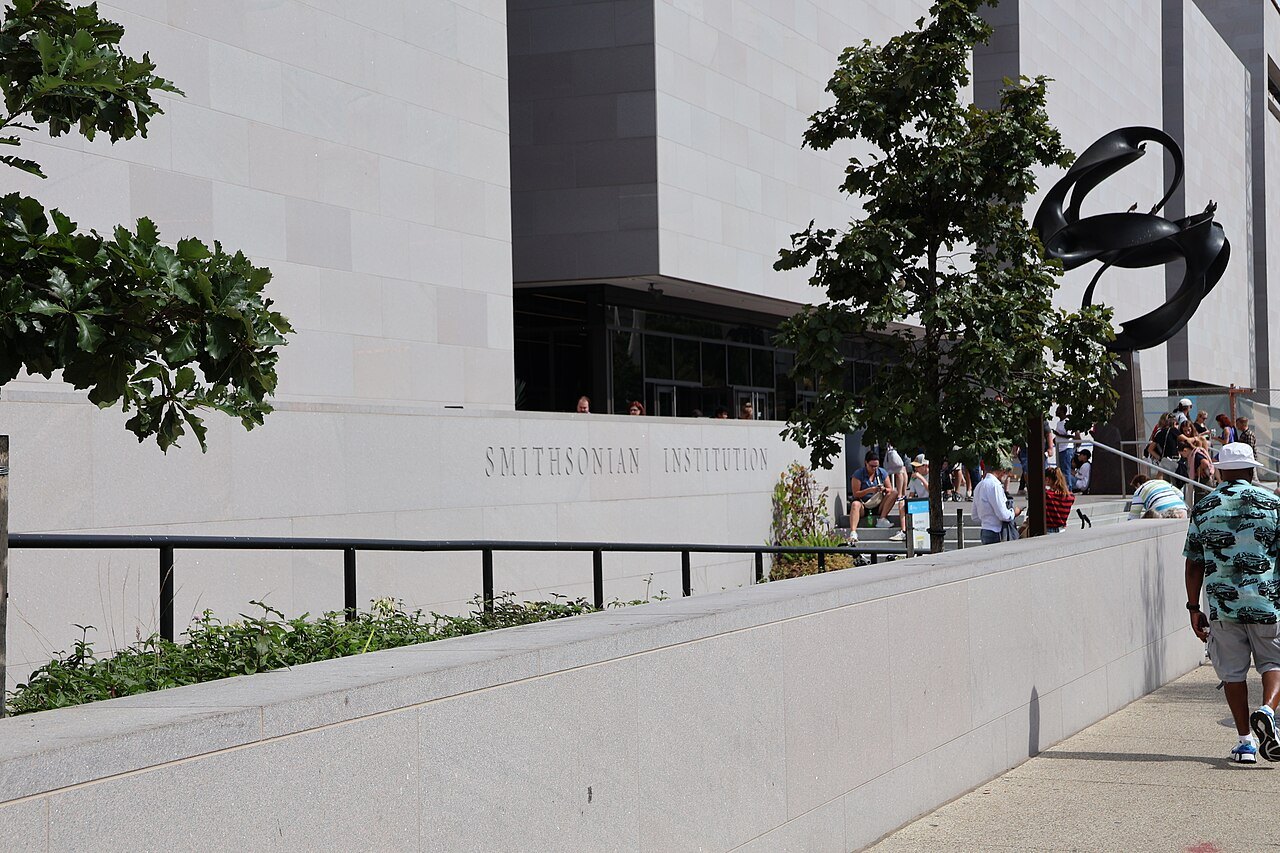
Among the spacecraft are Friendship 7, in which John Glenn became the first American to orbit the Earth, and Columbia, the command module that carried Neil Armstrong, Buzz Aldrin and Michael Collins to the Moon and back in July 1969. The museum also holds the backup mirror made for the Hubble Space Telescope, which, unlike the one that was launched, was ground to the correct shape, and the model of the starship Enterprise used to film the original Star Trek television series.
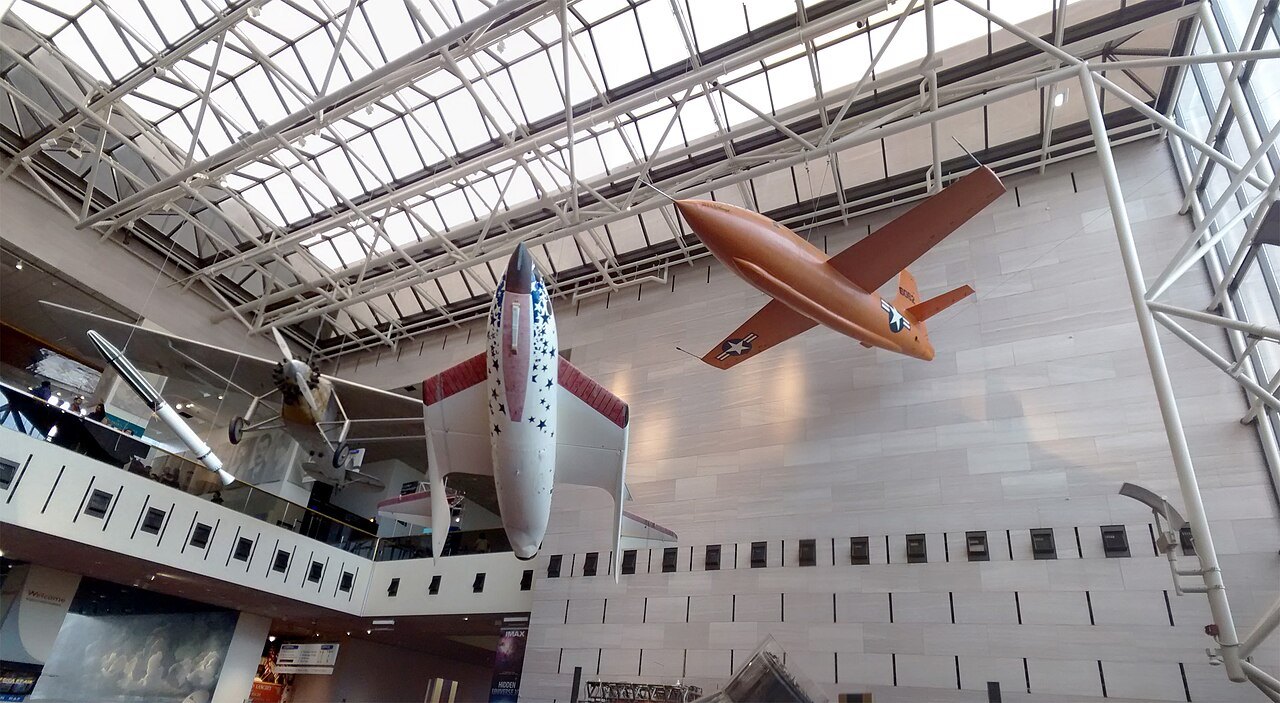
The four marble cubes hold galleries on particular subjects, from early flight to the planets, and the planetarium is on the western side. The glass halls between them are where the large machines hang and where the light comes in; stand under them and look up.
How to visit
Admission is free. Because the building is still reopening in stages, which galleries you can see depends on when you come, and the museum has used free timed-entry passes to manage the crowds; check its own pages before you go for which galleries you can see and whether a pass is needed on your date (see booking ahead).
The main entrance is on the Mall side. The museum is across the Mall from the National Gallery of Art and next door to the Hirshhorn to the west; the National Museum of the American Indian stands to the east. If the aircraft you most want to see is not on the Mall, it may be at the Udvar-Hazy Center, which holds the largest aircraft and spacecraft in a hangar near Dulles Airport (see the Hirshhorn).
Honest notes
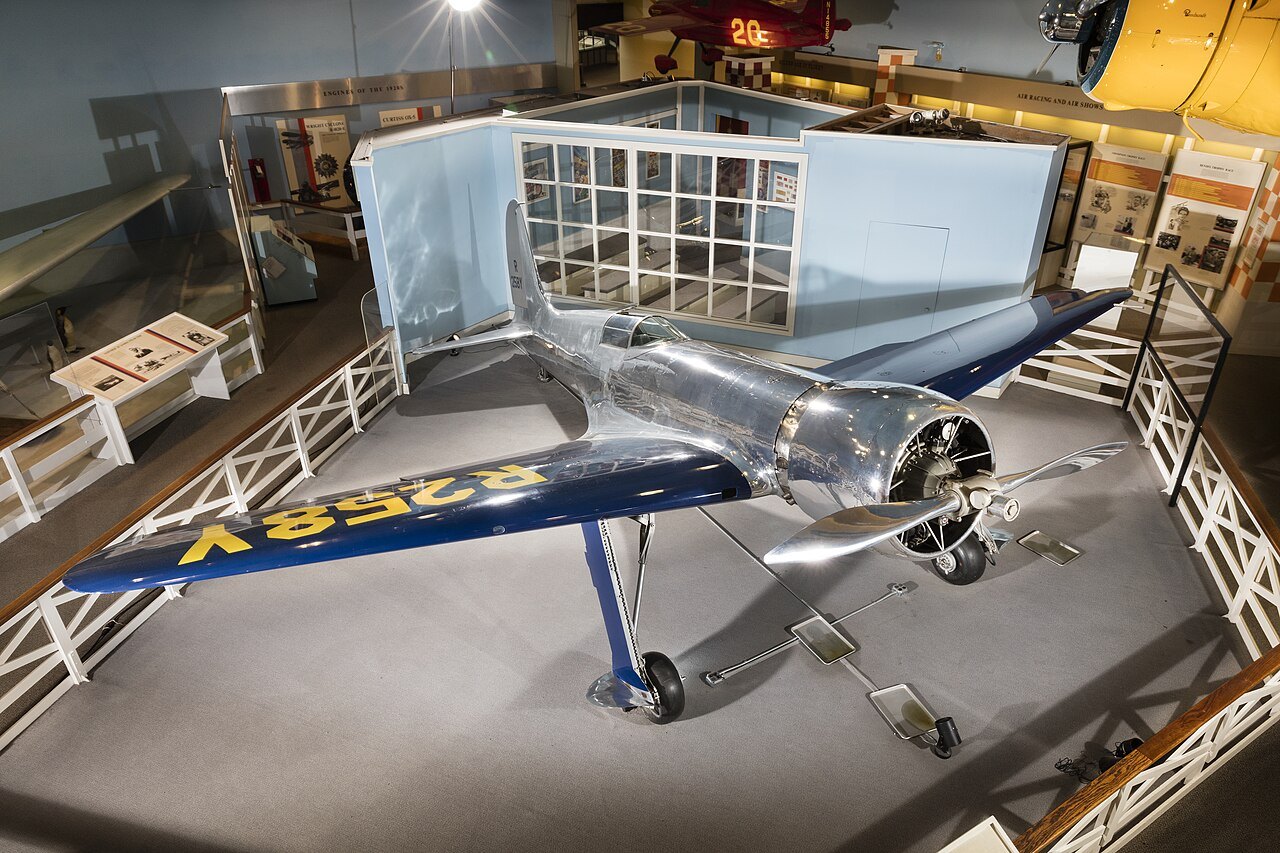
The Enola Gay, the space shuttle Discovery and the Concorde are not in this building: they are at the Udvar-Hazy Center in Virginia. The renovation has moved many objects around, and a gallery described in an older guidebook may not exist any more or may be closed. And the machines are real, which is the point: the Wright Flyer on display is the airplane that flew at Kitty Hawk, not a replica. It only came to the Smithsonian in 1948, after a long and bitter dispute in which Orville Wright objected to the Institution's refusal to recognize it as the first successful airplane.
Where to go next03
Nearby
- Nearby · Independence Ave · 7th St SWThe Hirshhorn Museum and Sculpture GardenA concrete drum on four legs, the Mall's museum of modern and contemporary art since 1974, built on the gift of a uranium millionaire who had arrived in America as an immigrant.Read the page →
- Nearby · Constitution Ave · 4th St NWThe National Gallery of ArtA free national museum of Western art from the Middle Ages to now, in two buildings joined underground: John Russell Pope's marble temple of 1941 and I.Read the page →
- Nearby · East end of the Mall · the zero pointThe United States CapitolThe seat of Congress since November 1800, rebuilt after the fire of 1814, crowned by a cast-iron dome finished around 1866, and the point from which every address in the city is counted.Read the page →