Home · Sights · The Hirshhorn Museum and Sculpture Garden
What you are looking at01
The Hirshhorn Museum and Sculpture Garden
Independence Ave · 7th St SW
- The drumAn open cylinder 231 feet across and 82 feet high, raised fourteen feet on four piers.
- The fountain courtThe round courtyard inside the drum, with a fountain sixty feet across at its center.
- The curved galleriesThree floors of galleries following the ring, with windows onto the court.
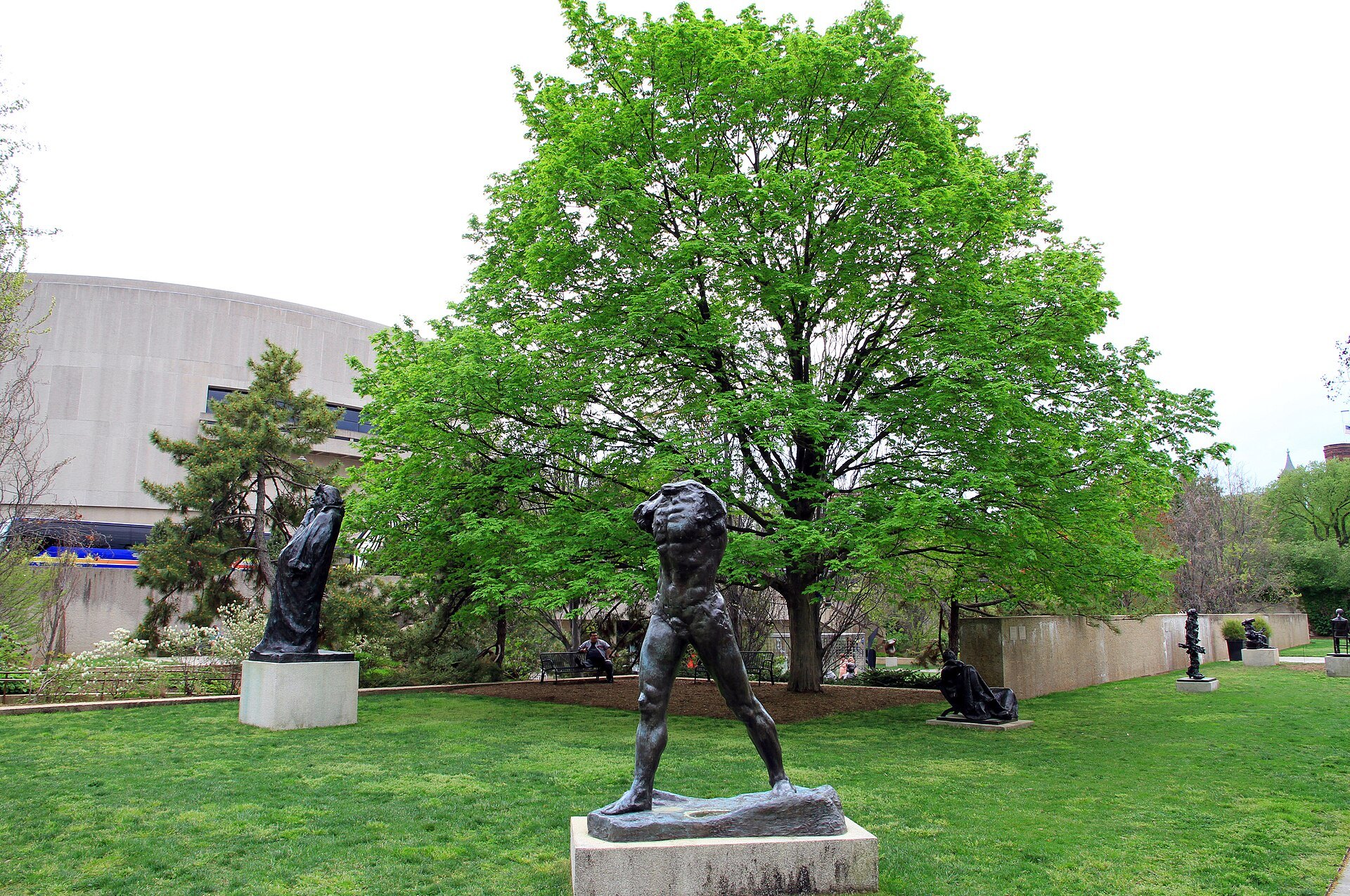
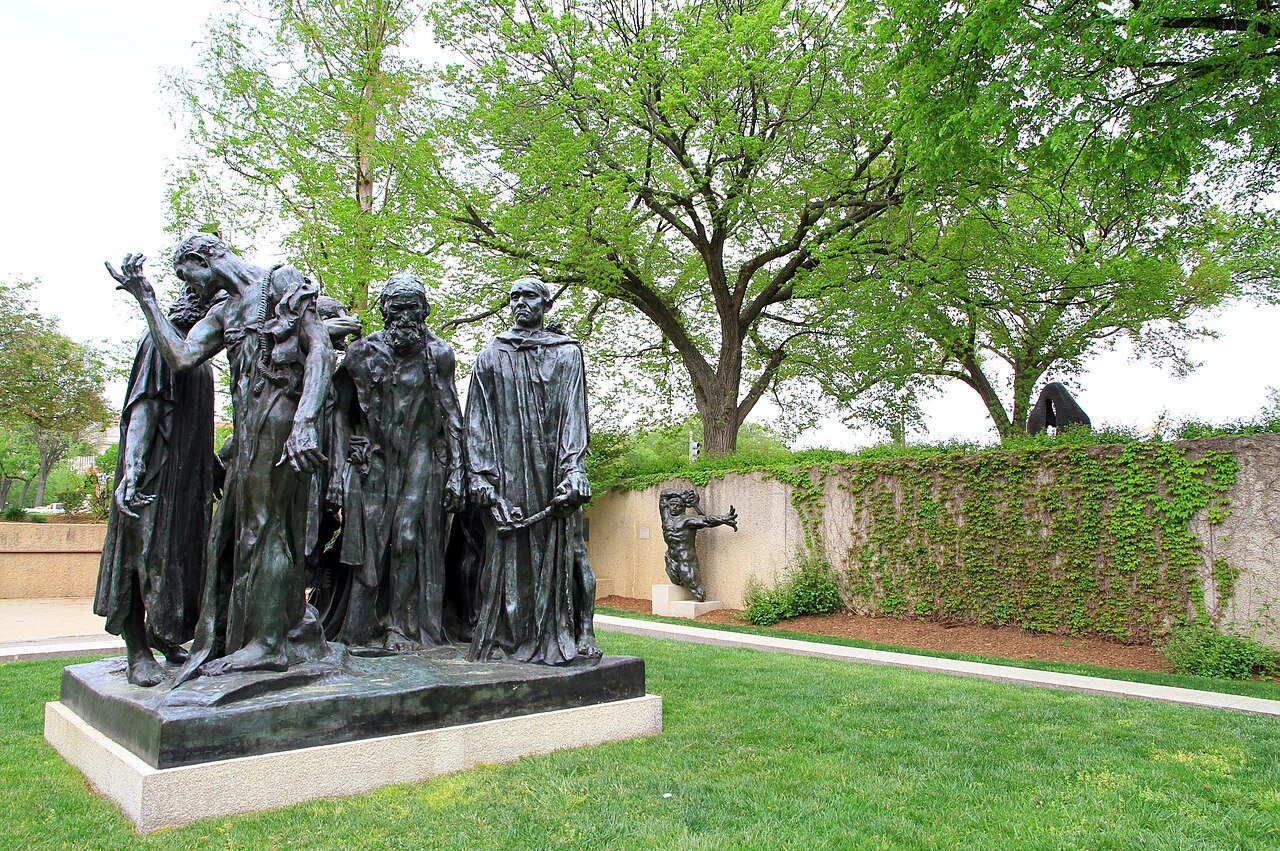
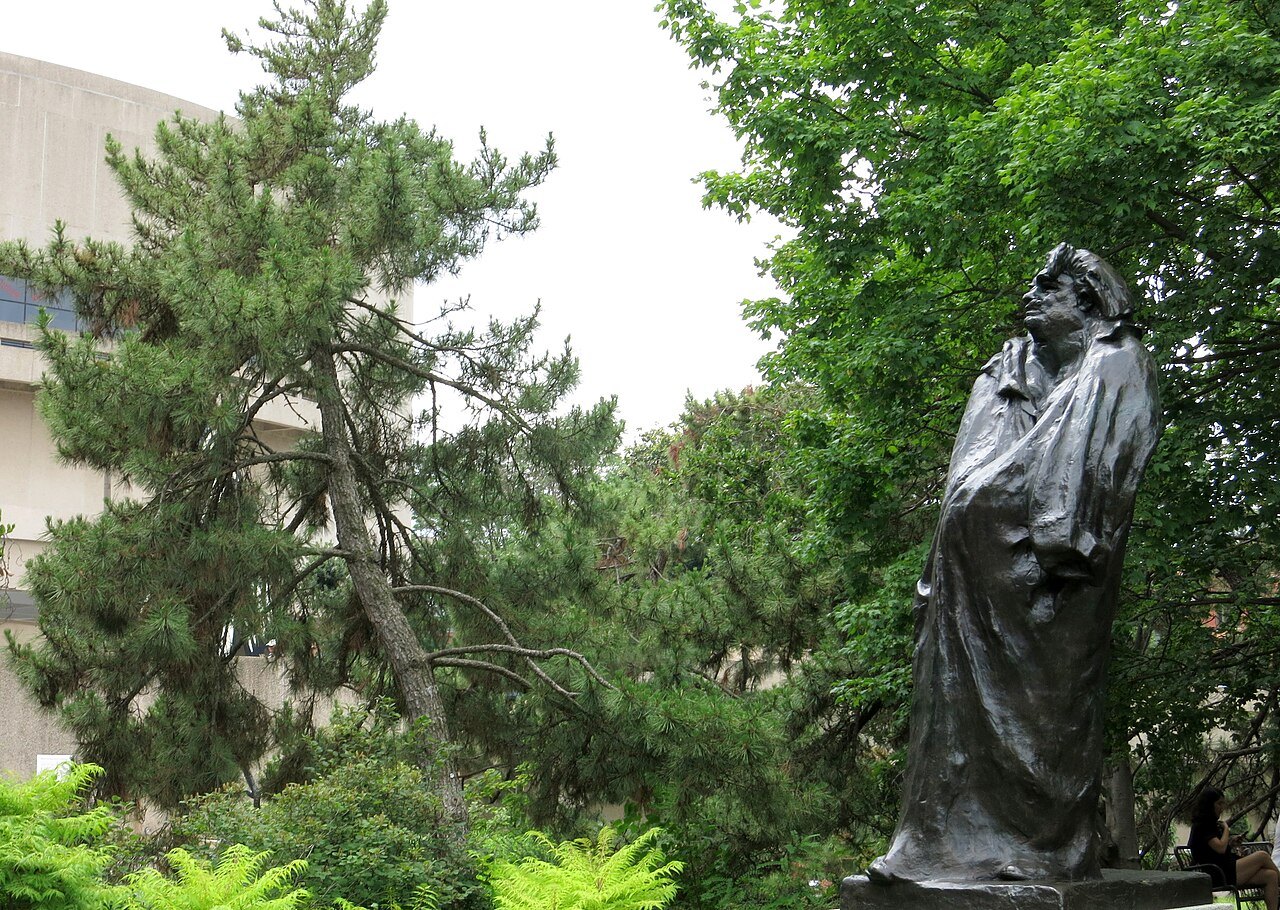
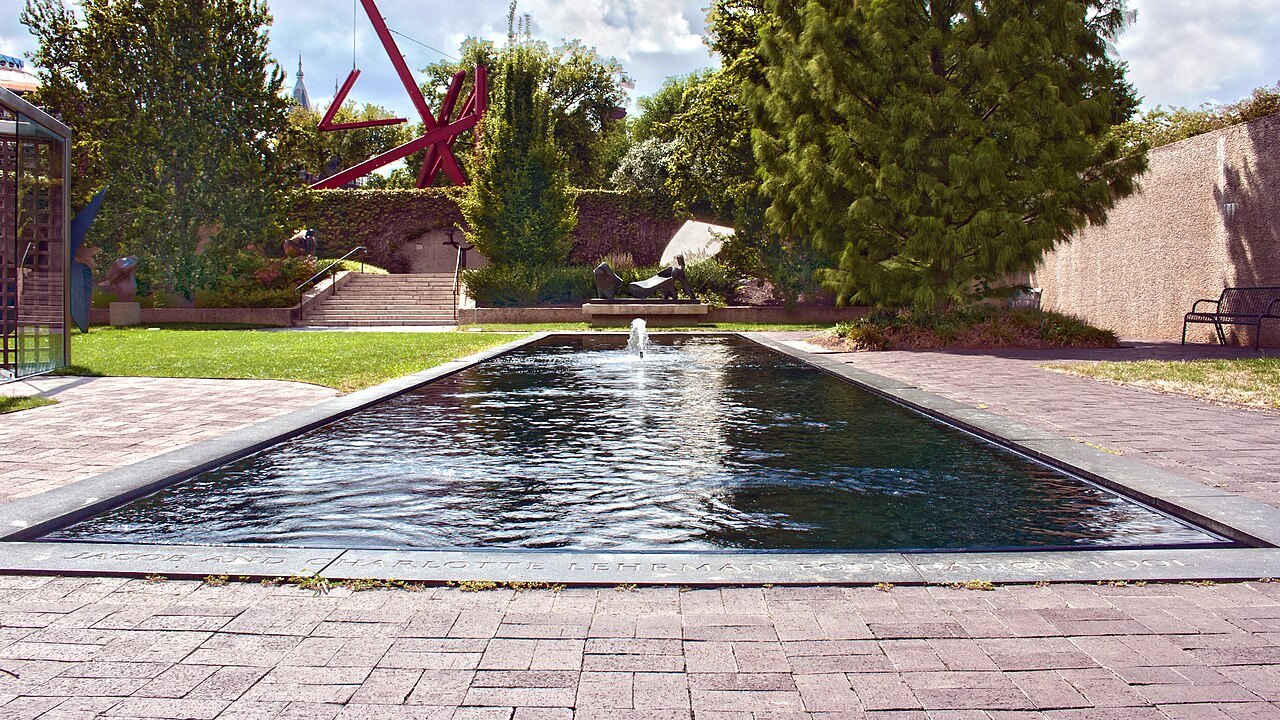
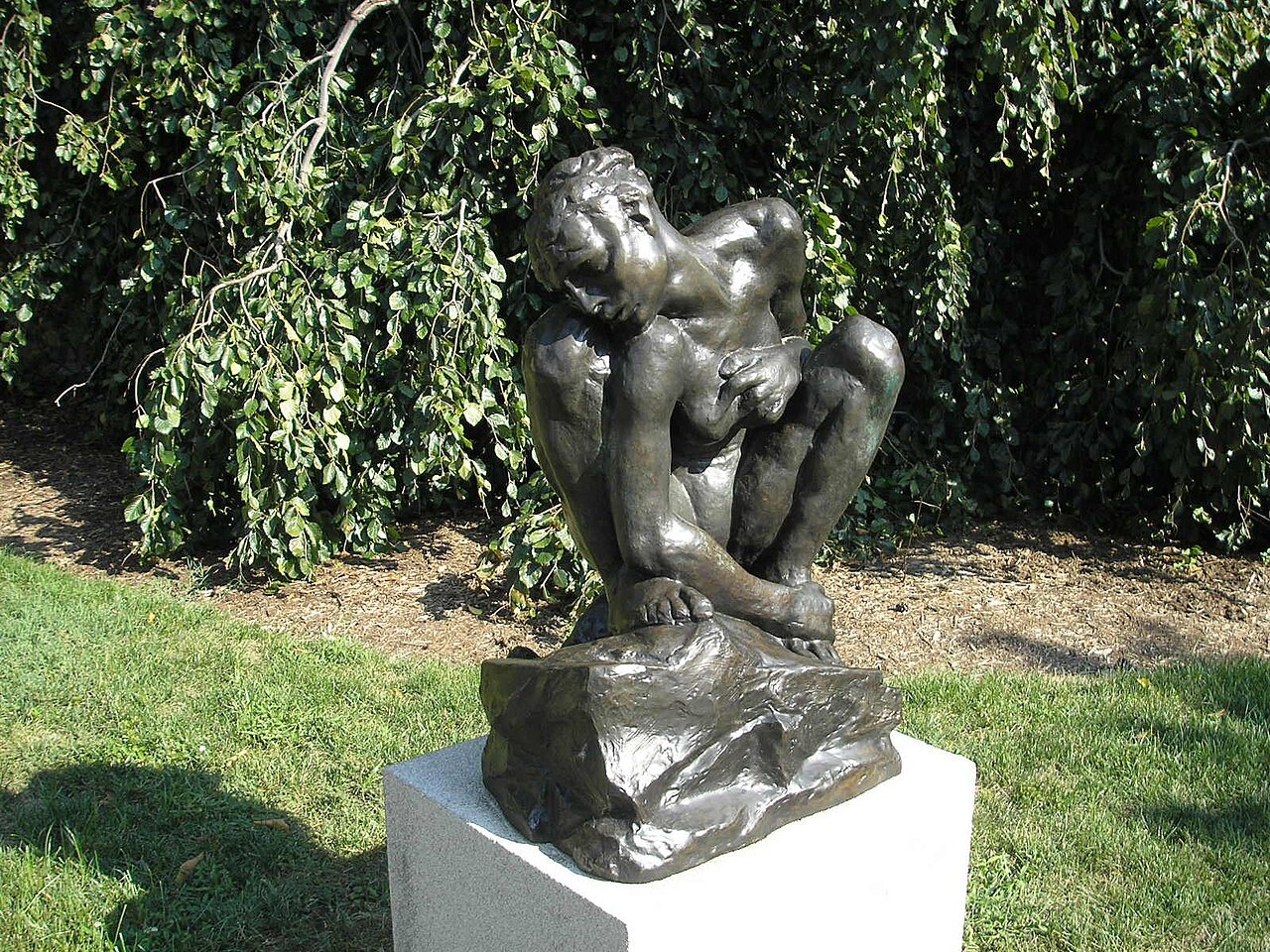
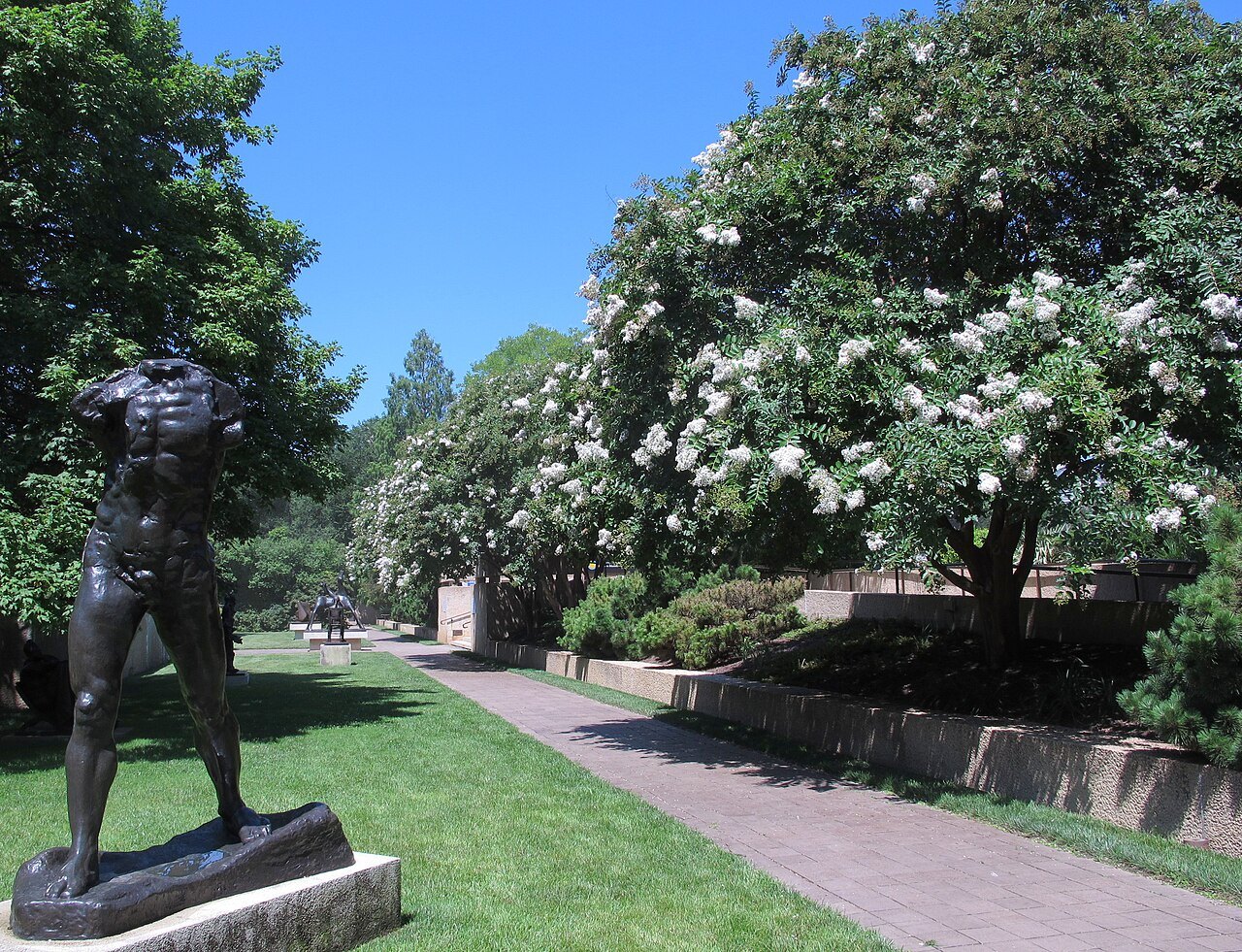
- The sunken Sculpture GardenA garden below the level of the Mall across Jefferson Drive, with Rodin and Moore.
- The Wish TreeYoko Ono's tree in the garden, hung with visitors' written wishes since 2007.
The sight in full02
Reading the place
Why it matters
The Hirshhorn is the Smithsonian's museum of modern and contemporary art, and its building is the most startling on the Mall: a windowless ring of concrete, 231 feet across, lifted off the ground on four massive piers, among the marble temples. It opened in 1974 and it is free.
Its place in the plan is deliberate. The museum stands halfway between the Washington Monument and the Capitol, at the southern end of a cross-axis in L'Enfant's plan of 1791, a line that runs north across the Mall through the National Gallery's Sculpture Garden and the National Archives to the old Patent Office, now the National Portrait Gallery. The Hirshhorn closes that line on the south side of the Mall (see the plan).
A collector's gift
Congress had wanted a modern art museum on the Mall since the late 1930s, but the war pushed the idea aside. Meanwhile Joseph H. Hirshhorn, who had made a fortune in uranium mining, was collecting on an enormous scale: French Impressionism, American modernism of the early twentieth century, work by living painters and, above all, sculpture. In 1955 he sold his uranium interests for more than fifty million dollars and kept buying, filling warehouses, a New York apartment and an estate in Connecticut.
A sculpture show at the Guggenheim in New York in 1962 revealed how large the collection was, and museums in Italy, Israel, Canada and California competed for it. President Lyndon B. Johnson and the Smithsonian's Secretary, S. Dillon Ripley, persuaded Hirshhorn to give it to the nation. Congress established the museum in 1966, ground was broken in 1969, and more than 6,000 works were brought down from Connecticut.
At the opening in 1974 Hirshhorn said that his gift was a small repayment for what the nation had done for him and for others who arrived in it as immigrants, and that what he had accomplished in the United States he could not have accomplished anywhere else. A million people saw the opening exhibition of 850 works in its first six months.
A fortress of a building
The architect was Gordon Bunshaft, a partner for more than forty years in the firm of Skidmore, Owings and Merrill, whose most famous building was Lever House in New York, a modernist office tower, and who later won the Pritzker Prize. Here he made something closed and heavy instead. The building is a hollow cylinder 82 feet high, raised fourteen feet on four sculptural piers, its outer wall faced in precast concrete with an aggregate of pink granite. Inside the ring is an open court 115 feet across with a fountain 60 feet across at its center. The galleries, 60,000 square feet of them on three floors, follow the curve.
The first plan included a reflecting pool reaching out across the Mall and was approved in 1967, but when excavation began there was an outcry, and a smaller design was approved in 1971. The New York Times called the result a fortress of a building that works as a museum, and it has divided opinion ever since.
What you actually see
Walk in under the drum and the city disappears: the court is a round room open to the sky, with the fountain in the middle and the ring of the building all around. Inside, the galleries curve with the wall, so that a room has no end in sight, and the inner windows look back into the court.
The collection covers modern art from the late nineteenth century and concentrates on the decades since the Second World War. Among its artists are Mary Cassatt, Thomas Eakins, Edward Hopper, Picasso, Matisse, Henry Moore, Jackson Pollock, Mark Rothko, Willem de Kooning, Lee Krasner, Helen Frankenthaler, Francis Bacon and Ellsworth Kelly, and the museum commissions and shows the art of living artists as well.
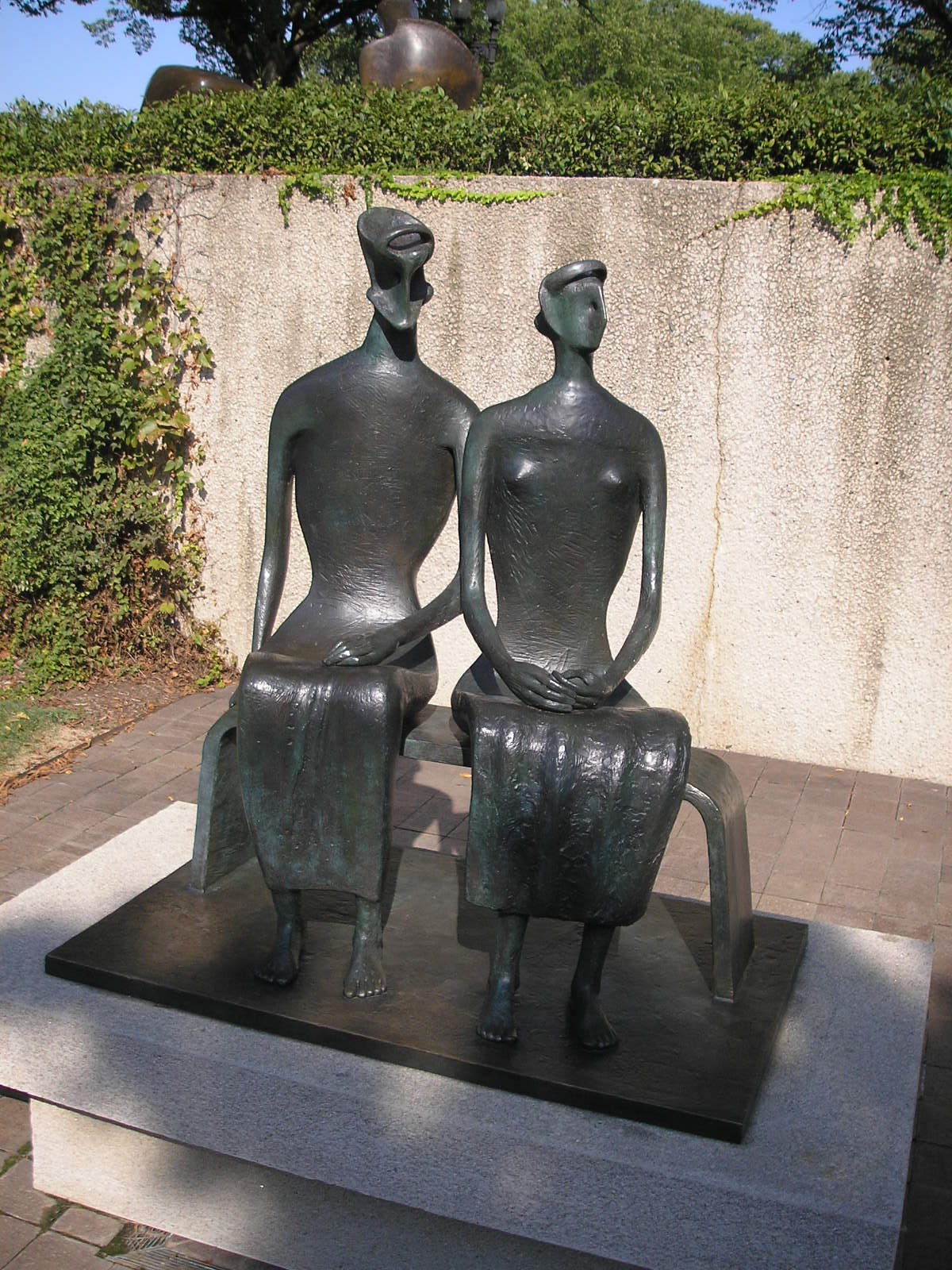
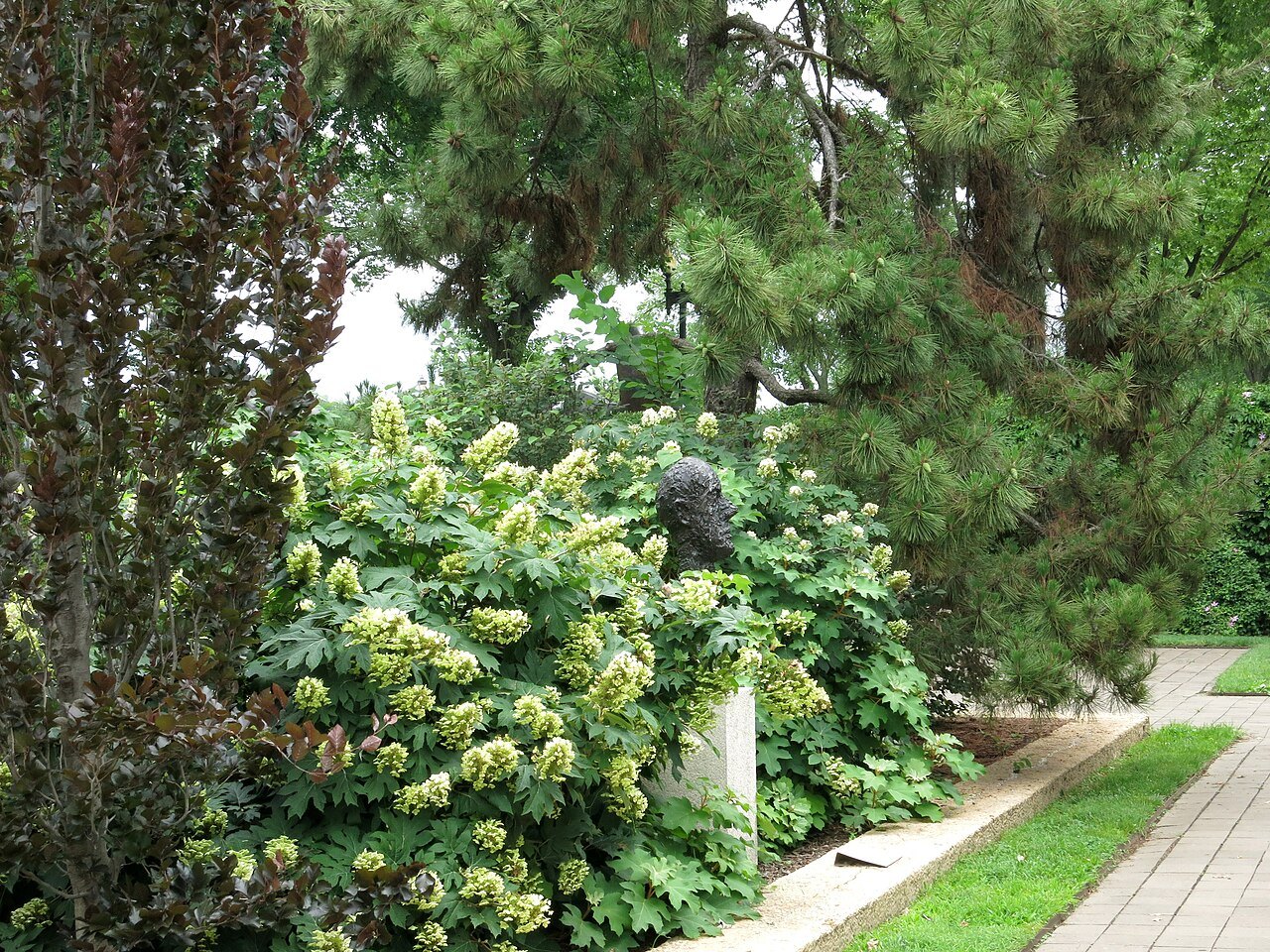
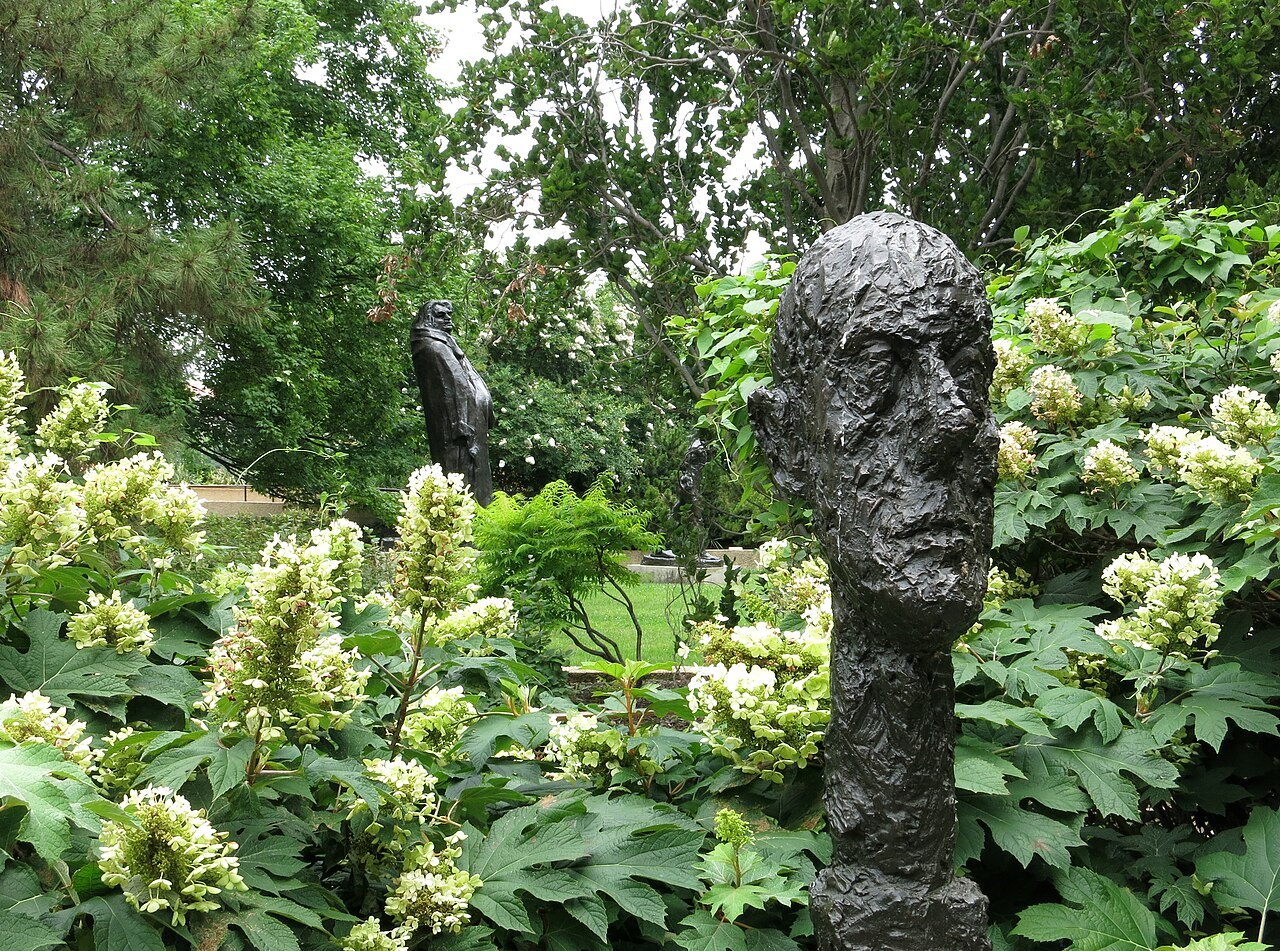
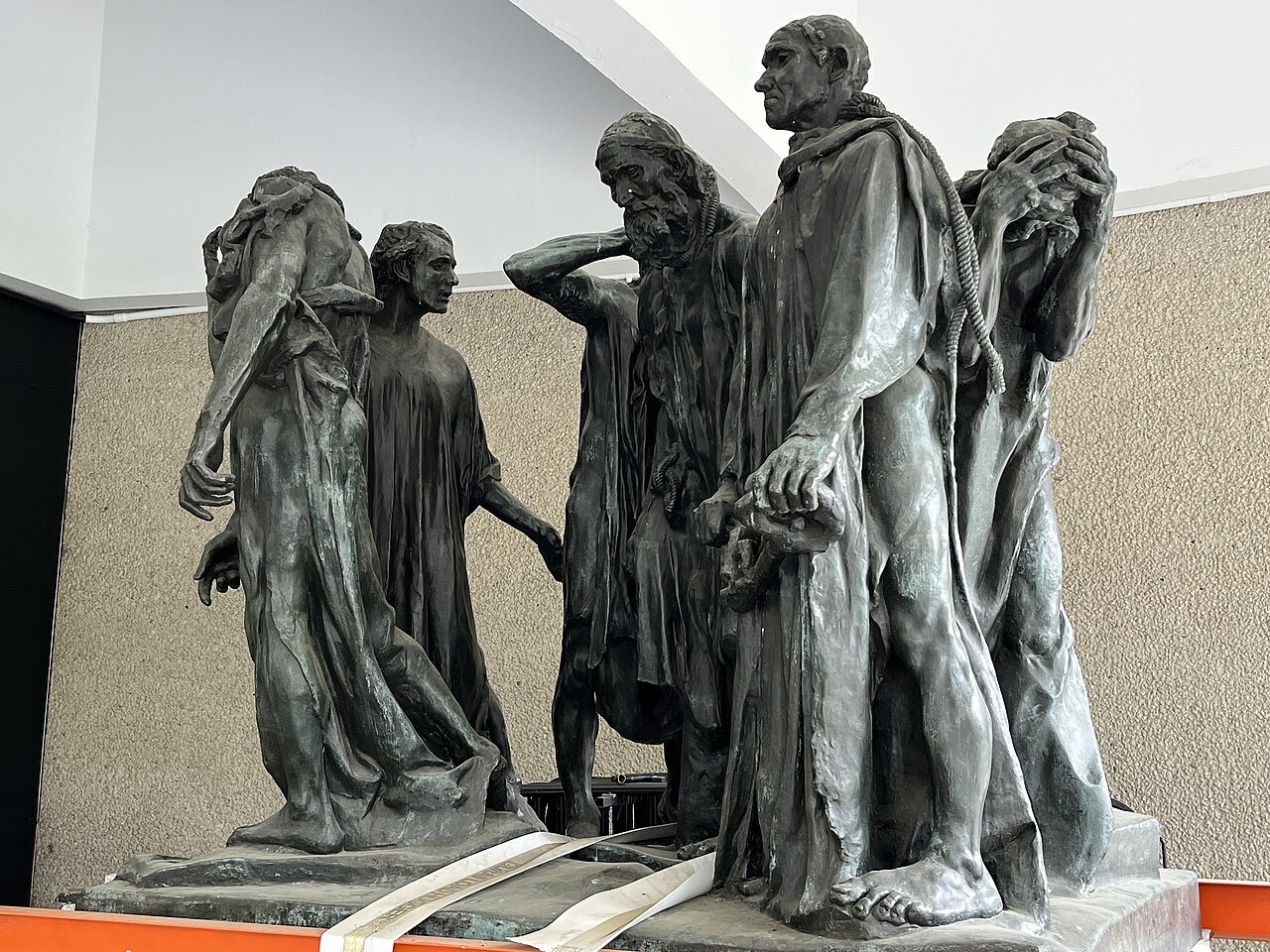
Across Jefferson Drive is the Sculpture Garden, sunk below the level of the Mall, with Rodin's Burghers of Calais, Henry Moore's King and Queen, Kenneth Snelson's Needle Tower and works by David Smith, Alexander Calder and Jeff Koons. Yoko Ono's Wish Tree for Washington, DC has stood in the garden since 2007, and visitors from all over the world have tied written wishes to it.
How to visit
Admission is free, and no ticket is normally needed; special exhibitions and events may have their own arrangements, so check the museum's pages. The plaza and the court under the drum are part of the museum, so you can see the building and the fountain even if you do not go up to the galleries.
The museum is small enough to see in an hour or two, which makes it a good pairing with its neighbor, the Air and Space Museum, to the east. The Sculpture Garden is reached across Jefferson Drive on the Mall side, and it is worth checking the museum's pages for the garden's status before you plan around it (see Air and Space).
Honest notes
The Hirshhorn was not a bequest but a lifetime gift, and it was not only the collector's money that built it: most of the funding was federal, and Hirshhorn gave one million dollars toward the construction. The museum has also had its own arguments: a plan to cover the court each year with an inflatable structure, the so-called Bloomberg Bubble, was announced in 2009 and abandoned after its cost more than tripled. And the building's severity is intentional: Bunshaft wanted a closed object, and the openness is all on the inside.
Where to go next03
Nearby
- Nearby · Independence Ave · 6th St SWThe National Air and Space MuseumThe Smithsonian's museum of flight, opened on the Mall in 1976: the Wright Flyer, the Spirit of St.Read the page →
- Nearby · 700 Pennsylvania Ave NWThe National ArchivesJohn Russell Pope's temple of the nation's records, built in the 1930s over a buried creek, where the Declaration of Independence, the Constitution and the Bill of Rights lie under glass in a rotunda.Read the page →
- Nearby · Constitution Ave · 4th St NWThe National Gallery of ArtA free national museum of Western art from the Middle Ages to now, in two buildings joined underground: John Russell Pope's marble temple of 1941 and I.Read the page →