A LONG DISPUTE BEFORE IT ARRIVED01
What happened to the Wright Flyer before it came to the Smithsonian?
The Wright Flyer's road to the Smithsonian ran through decades of dispute before it ever reached the Mall.
The answer in full02
Read on
The machine that hangs by the entrance
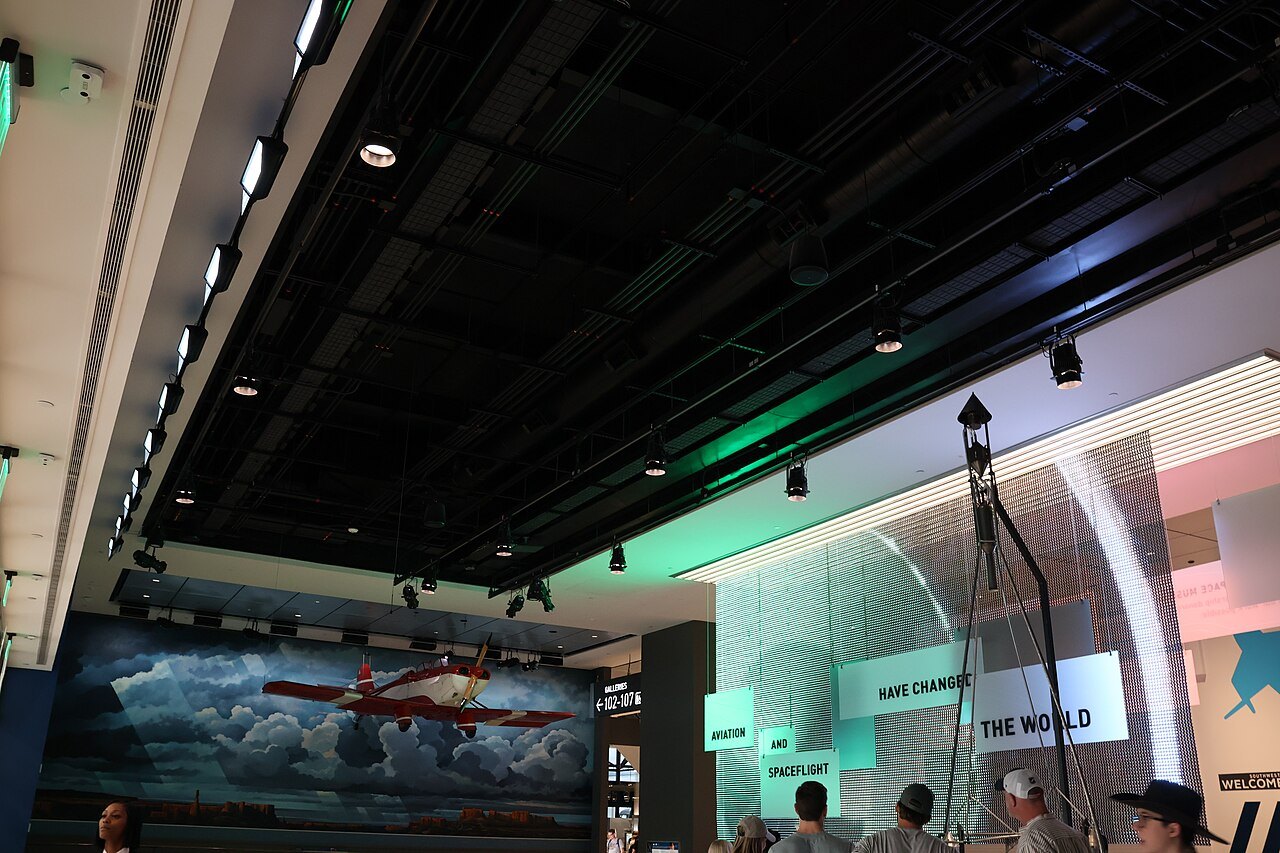
The aircraft suspended near the entrance of the National Air and Space Museum looks almost too simple to be historic: a biplane of spruce, wire and muslin. It is, in fact, the actual airplane the Wright brothers flew at Kitty Hawk in 1903, the machine in which they made the first powered and controlled flights, not a reconstruction built later to resemble it.
Getting that airplane onto the Mall, however, took far longer than it took the Wrights to build it. It did not arrive at the Smithsonian until 1948, forty-five years after its famous flight, and only after what the museum's own account calls a long and bitter dispute with the man who had flown it, Orville Wright.
The quarrel was not about whether the flight had happened. It was about status: whether the Smithsonian would call the Wright Flyer the first successful airplane, or keep crediting that title elsewhere. For Orville Wright, the question was not academic, and he held to it for the rest of his working life.
The wider museum that now displays it, the National Air and Space Museum, holds many other original aircraft and spacecraft from across the history of flight; see Air and Space for what else is on view and how the building itself came to be built on the Mall over the decades that followed.
Why there was nowhere yet to put it
Congress created the National Air Museum in 1946, two years before the Flyer finally arrived at the Smithsonian, but it would be another three decades before the museum had a building of its own on the Mall. For much of the twentieth century, the airplane that began American aviation had no obvious home.
The site that would eventually hold it had its own long history: the Civil War armory on the Mall's south side, later Armory Square Hospital for the worst wounded brought back from the battlefields, then decades of temporary buildings that stood there into the 1960s, before any of it became an air museum.
Only with the Bicentennial did the Smithsonian open the building that exists today, in 1976, under its first director, the Apollo 11 astronaut Michael Collins; by then the Flyer had already been part of the collection for almost thirty years, waiting all that time for a proper gallery of its own to hang in.
A dispute over who flew first
The Smithsonian Institution, in the years after the first flight at Kitty Hawk, declined to recognize the Wright Flyer as the first airplane capable of powered, controlled flight. Orville Wright took that refusal as a direct and personal insult, to his brother's memory as much as to his own part in the achievement, and he said so publicly and repeatedly for years afterward.
Rather than hand the airplane to an institution that would not give it proper credit, Orville Wright kept it away from the Smithsonian for years. Exactly where it spent that time is a story for the museum's own historians to tell in full; a visitor curious about the details can ask at an information desk or look for the fuller account in the museum's own published history.
What is clear is that the standoff lasted for decades, well past the point where the Wrights' place in the history of flight was obvious to almost everyone else. It ended only when the Smithsonian, under later leadership, agreed to the recognition Orville Wright had asked for from the very start.
Arrival in 1948
The Wright Flyer reached the Smithsonian in 1948, under the terms of that late agreement, decades after it had first flown at Kitty Hawk. It stayed with the Institution afterward, later moving into the new National Air and Space Museum building on the Mall when that building opened in 1976.
Today the Flyer hangs where visitors meet it first, in the entrance hall, a position that puts it ahead of the Spirit of St. Louis, the Apollo capsules and everything else that followed it into the air. The order in the hall is itself a kind of timeline, built around the machine that started it.
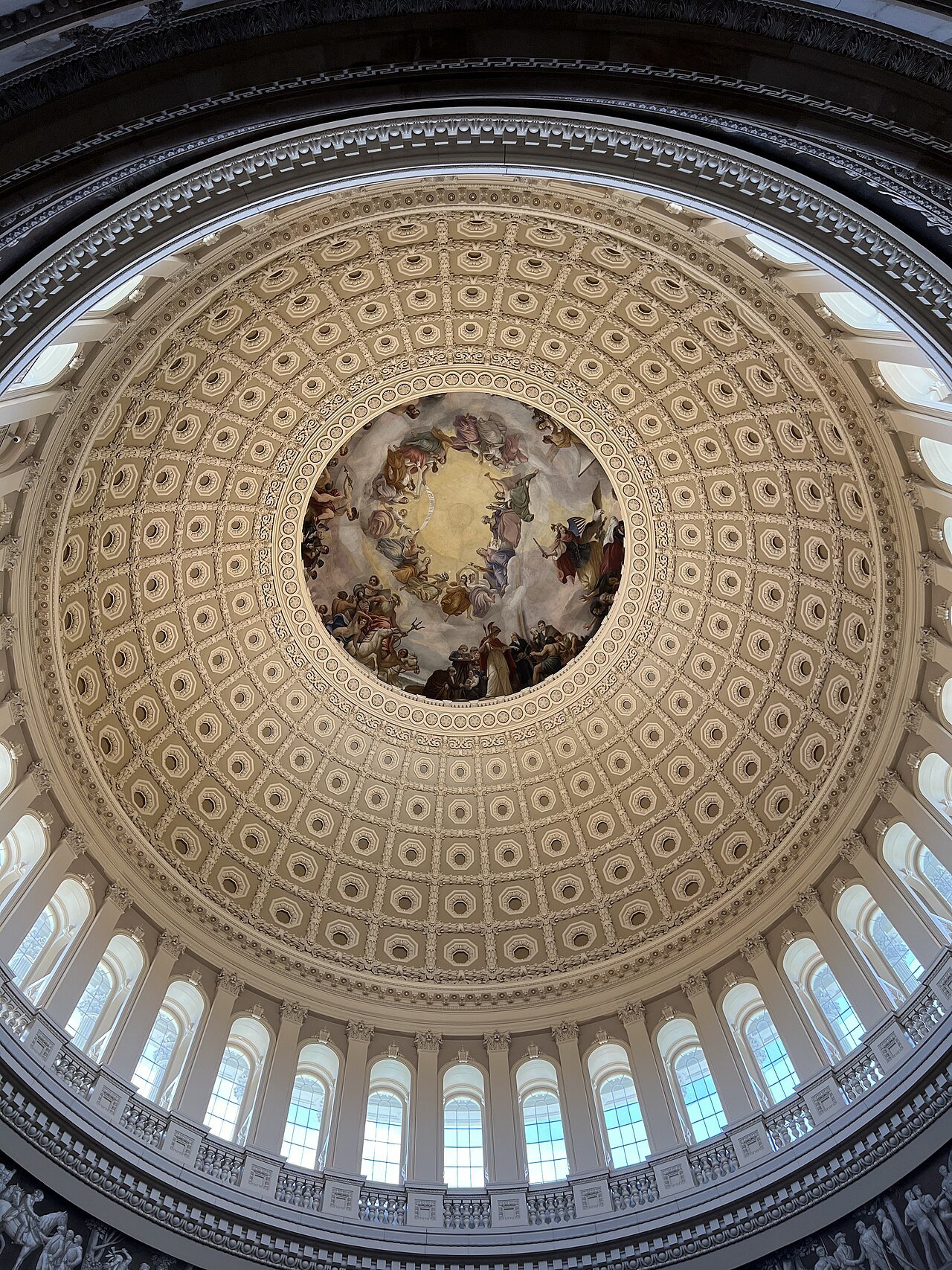
The episode is worth remembering because the objects in the museum did not simply arrive. Many came with their own arguments attached, about credit, memory and who gets to write the history of a new technology while the people who built it are still around to argue about it themselves.
What stands near it today
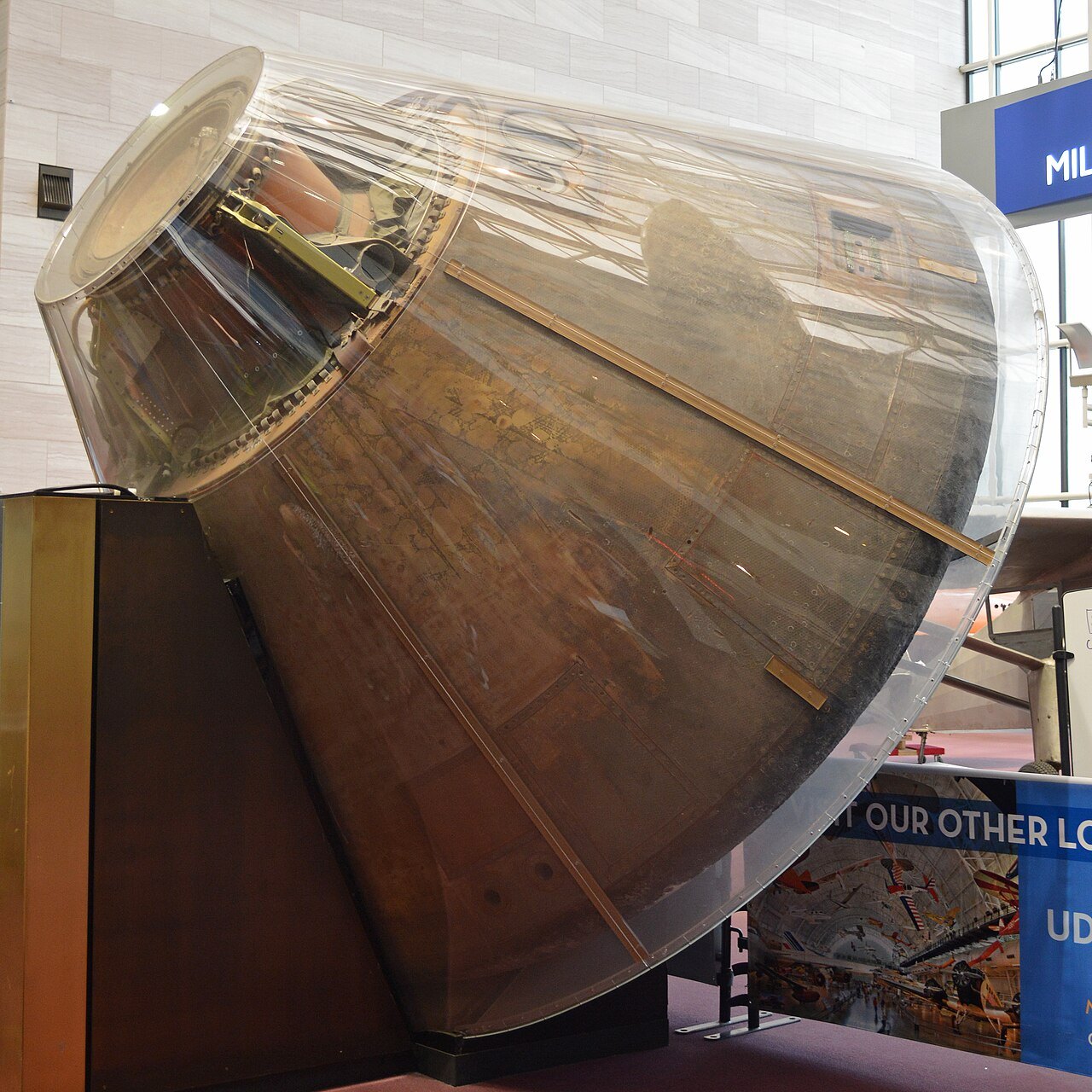
The Wright Flyer hangs in the Boeing Milestones of Flight Hall, the museum's entrance hall, renamed after a gift from Boeing paid for its renovation. Overhead and on the floor around it are other machines from the same stretch of history: Lindbergh's Spirit of St. Louis, flown nonstop across the Atlantic in 1927, and the space capsules Friendship 7 and Columbia.
These are, as a rule, the actual craft rather than copies or models, which is true of the Flyer too. The hall sits between the museum's four marble-faced exhibit cubes and its glass-walled halls, where the largest machines hang in the light; the effect, standing underneath, is of walking through the century the Flyer opened.
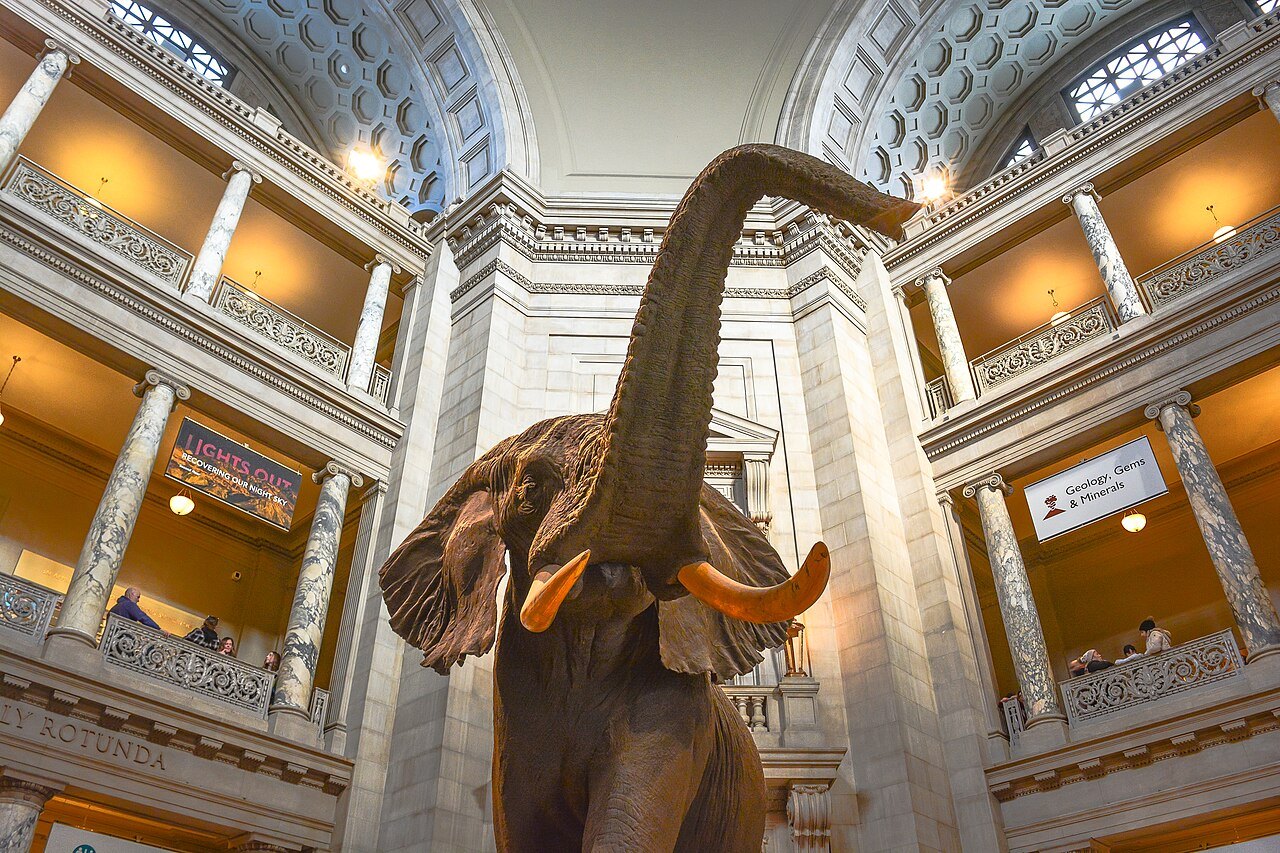
The museum also keeps other objects from beyond aviation in the same spirit of authenticity, among them the backup mirror ground for the Hubble Space Telescope and the model of the starship Enterprise used to film the original Star Trek series. All sit within a building meant to be impressive without competing with the Capitol down the Mall.
The long renovation of the building has moved some galleries and labels, so a description of a particular room from an older guidebook may no longer match what hangs there, or that room may no longer exist in the same form. The Flyer's own position, by contrast, has remained essentially the point where visitors arrive first.
How to visit
Admission to the National Air and Space Museum is free. The building has gone through a large renovation in recent years, and which galleries are on view can vary; check the museum's own pages before setting out, including whether the entrance hall and its best-known machines are on view, and whether a free timed-entry pass is needed on your date (see booking ahead).
The main entrance faces the Mall, across from the National Gallery of Art and beside the Hirshhorn. Visitors most interested in a particular famous aircraft should note that the Enola Gay, the space shuttle Discovery and the Concorde are kept at the museum's annex near Dulles Airport in Virginia, not in this building (see day trips).
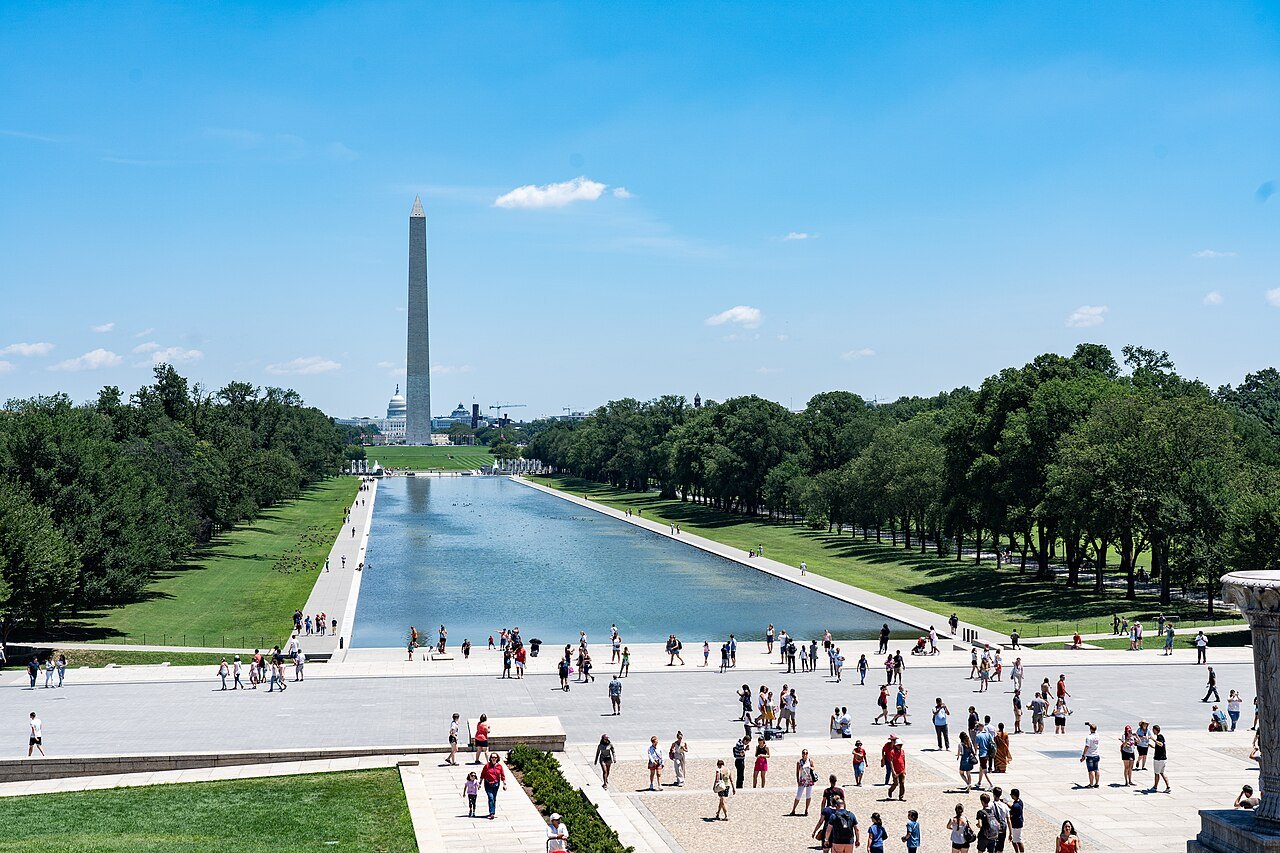
Visitors planning a wider day on the Mall can fold this stop into a longer route that takes in other nearby museums. Those flying into Dulles, where the annex also sits, may want to check the route into the city before planning a visit to either site on the same trip.
Read next03
More from the journal
- The National Museum of Natural HistoryWhat is the story of the Hope Diamond?How a French royal gem became the Smithsonian's most famous stone, curse, glow, and all.Read the piece →
- Getting HereHow do you get from Dulles Airport to downtown Washington?Dulles is 26 miles west of the city, in Virginia, and since November 2022 the Silver Line of the Metro has run straight to it. How the airport is laid out, how to reach the train, what the ride is like, and when a taxi makes more sense.Read the piece →
- The World War II, Korean War and Vietnam MemorialsHow do you find a name on the Vietnam Veterans Memorial?How the Vietnam Veterans Memorial orders its fifty-eight thousand names, and how to find one before you go.Read the piece →