A BLUE DIAMOND'S LONG JOURNEY01
What is the story of the Hope Diamond?
How a French royal gem became the Smithsonian's most famous stone, curse, glow, and all.
The answer in full02
Read on
A Blue Diamond Cut for a King
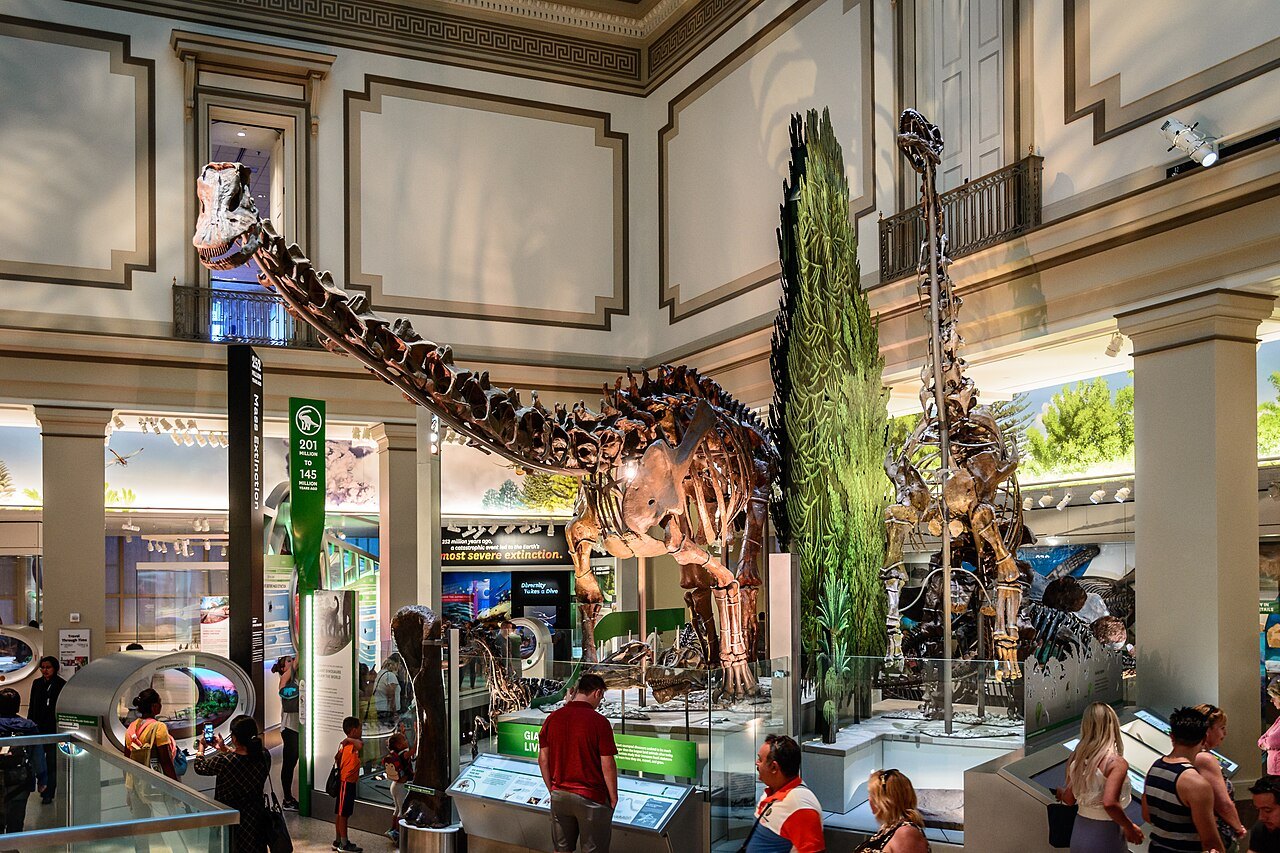
The Hope Diamond is the best known object inside the Smithsonian's National Museum of Natural History, and visitors looking for it should head to the Hall of Geology, Gems and Minerals on the second floor, where the stone has its own case among the museum's wider collection of gems and minerals.
The stone itself is a deep blue diamond of just over 45 carats, a striking size and color even set beside a national collection that otherwise holds countless ordinary rocks, minerals and meteorites. It began as a much larger rough stone before being cut down for European royalty centuries ago.
That cutting happened under the French crown: the stone was fashioned and sold to Louis XIV of France in 1668, when it still carried the name the French Blue rather than the name it carries today. Why and when the stone later gained the name Hope is a separate piece of history that falls outside what is confirmed here; visitors curious about that change of name should ask the museum's own mineral sciences staff or read the label beside the case itself.
From French Crown to Harry Winston
The span between the French court and the museum's acquisition of the stone is long, and it passed through several owners whose exact order is retold in different ways by different sources. The single fact fixed firmly at the end of that chain, and confirmed by the museum itself, is that the diamond's last private owner was the New York jeweler Harry Winston.
In 1958, Winston gave the diamond to the Smithsonian outright, ending its life as private property and beginning its life as a public one. The museum has kept the Hope Diamond on permanent display ever since, and it remains one of the specimens that visitors most often come looking for inside the gem hall.
Visitors wanting the fuller account of who owned the stone between the French crown and Harry Winston, and exactly how and when it changed hands and gained its current name, should check the museum's own published history of the gem, kept with its mineral sciences department. That chain is longer, and more disputed in its details, than fits comfortably inside a short visitor summary of the stone's story.
Inside the Hall of Geology, Gems and Minerals
The Hall of Geology, Gems and Minerals sits on the second floor of the museum and houses the National Gem and Mineral Collection, one of the largest of its kind anywhere. Altogether the collection holds more than fifteen thousand gems, three hundred fifty thousand minerals and some forty-five thousand meteorites, including an example of every known type of meteorite, a scale that goes well beyond the handful of famous stones most visitors come looking for.

The Hope Diamond shares the hall with other well-known pieces drawn from the same collection, among them the Star of Asia sapphire and the Carmen Lúcia ruby. Each stone is displayed with the context of the wider collection around it, so visitors who linger past the diamond's case can see the breadth of the Smithsonian's gem holdings rather than a single celebrity stone.
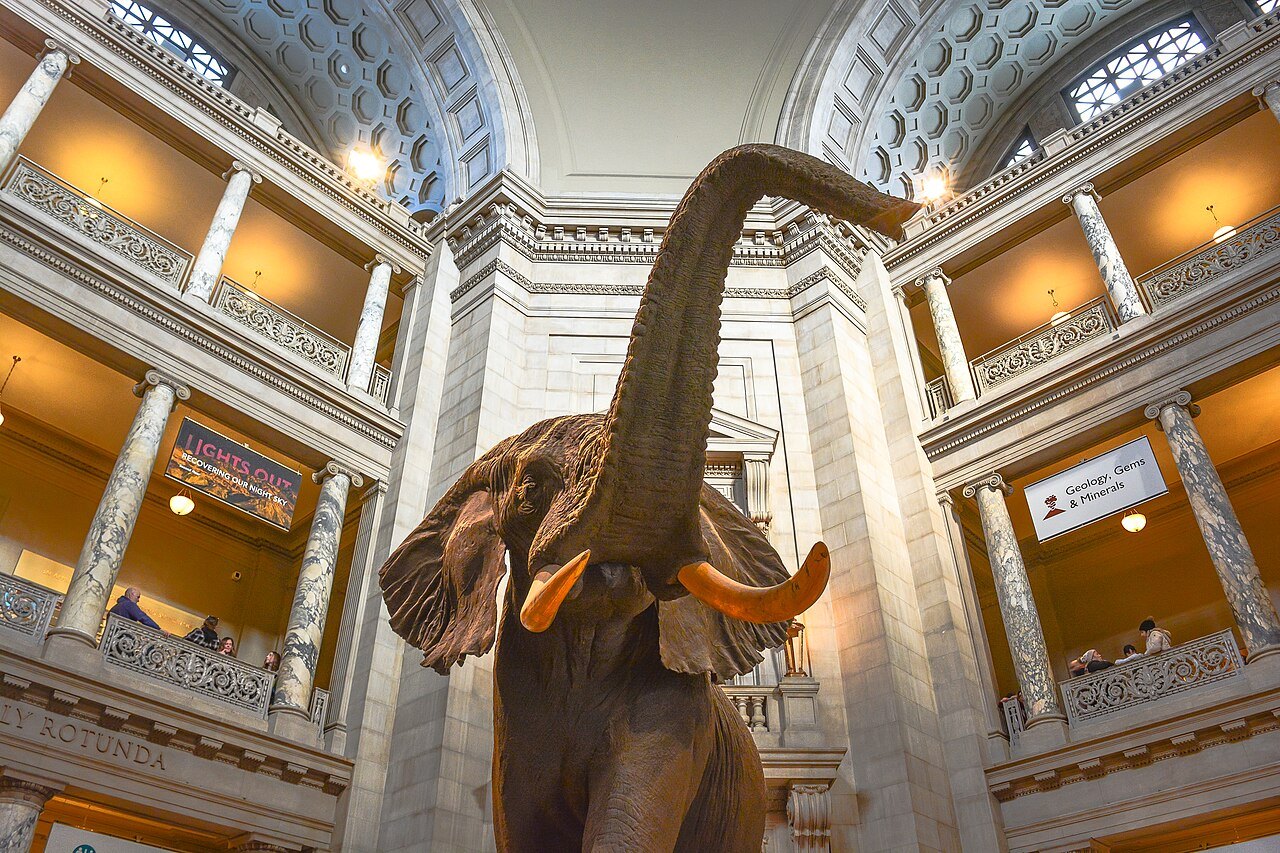
The hall is reached from the museum's rotunda, where a large African elephant stands at the center of the building beneath the balconies of the upper floors. Visitors planning a route through the museum, including the fossil and ocean halls nearby, can find the wider layout and other highlights in the main natural history guide to the museum.
The Curse, and What the Record Shows
No account of the Hope Diamond is complete without mention of its curse, the long-running story that owning the stone brings ruin or death to whoever holds it. Versions of the tale describe beheaded aristocrats and bankrupted dealers trailing behind the diamond across the centuries, and the story has followed the stone into popular culture far beyond the museum's own label.
The historical record does not support these tales. None of the beheadings or ruinous ends attached to past owners hold up against the documented history of the stone, and one account of the diamond's past suggests that an owner may have deliberately encouraged the curse story, as a way of raising the stone's value and mystique rather than reporting any real misfortune.
The museum's own label treats the curse the same way this guide does, as a story worth knowing before standing in front of the case rather than a historical claim to take at face value. Visitors who want the curse told in full, name by name, should look for the museum's own account beside the diamond rather than rely on retellings found elsewhere.
The Real Glow Behind the Legend
One part of the Hope Diamond's reputation is real rather than legend. After ultraviolet light shining on the stone is switched off, the diamond continues to glow, with a red color, for some time afterward, an unusual property even among diamonds generally, and one that is demonstrated as part of the stone's display in the gem hall.
It is easy to see how that glow, strange and faintly unsettling inside a darkened case, could have helped the curse story spread in the first place. A stone that keeps shining red after its light source is gone needs little further encouragement to gather tales around it, whatever the documented facts about its various owners actually show.

The museum's broader collections, numbering more than 148 million specimens across plants, animals, fossils, minerals and more, exist primarily for research rather than display, and the Hope Diamond's case is one of a very small number of objects that cross from the research side of the building into the public rotunda halls.
Visiting the Hall
Admission to the National Museum of Natural History is free, and no ticket is required for the permanent halls, including the Hall of Geology, Gems and Minerals; the butterfly pavilion and any temporary exhibitions have their own separate arrangements, so visitors should check the museum's own pages before planning around those. The main entrance faces the Mall directly.
With well over three million visits in a single recent year, the museum's halls are rarely empty, and the gem hall in particular draws a steady stream of visitors toward the Hope Diamond's case. Choosing two or three halls for one visit, rather than attempting the whole museum at once, makes for an easier afternoon; pairing the rotunda and gem hall with either the fossil hall or the ocean hall is a reasonable plan.

The museum sits on the Mall between the National Gallery of Art to the east and the National Museum of American History to the west, making it easy to combine a Hope Diamond visit with either on the same day. Visitors planning a longer route along the Mall can find the fuller layout of nearby museums and memorials in the Mall.
Read next03
More from the journal
- The National Gallery of ArtWhere can you see the only Leonardo da Vinci painting in the Americas?Leonardo da Vinci's Ginevra de' Benci hangs in the National Gallery of Art's West Building, free to see on the Mall.Read the piece →
- The National ArchivesWhy is the Declaration of Independence so faded?The Declaration in the National Archives Rotunda is barely legible, and the famous clear version is a copy made in 1823. How the signed parchment lost its ink, where it traveled, and how it is kept now.Read the piece →
- The Washington MonumentWhy is the Washington Monument two colors?About a third of the way up, the Washington Monument changes shade. The line marks where building stopped in 1854 and started again in 1879, and the stone above it came from different quarries. How it happened and where to see it best.Read the piece →