LEONARDO IN WASHINGTON01
Where can you see the only Leonardo da Vinci painting in the Americas?
Leonardo da Vinci's Ginevra de' Benci hangs in the National Gallery of Art's West Building, free to see on the Mall.
The answer in full02
Read on
The Only Leonardo in the Western Hemisphere
The painting is Leonardo da Vinci's Ginevra de' Benci, a small portrait of a young Florentine woman, and it hangs in the Italian Renaissance rooms of the West Building at the National Gallery of Art. It is the only painting by Leonardo on public view anywhere in the Americas, which makes it the single most sought-out picture in the building.
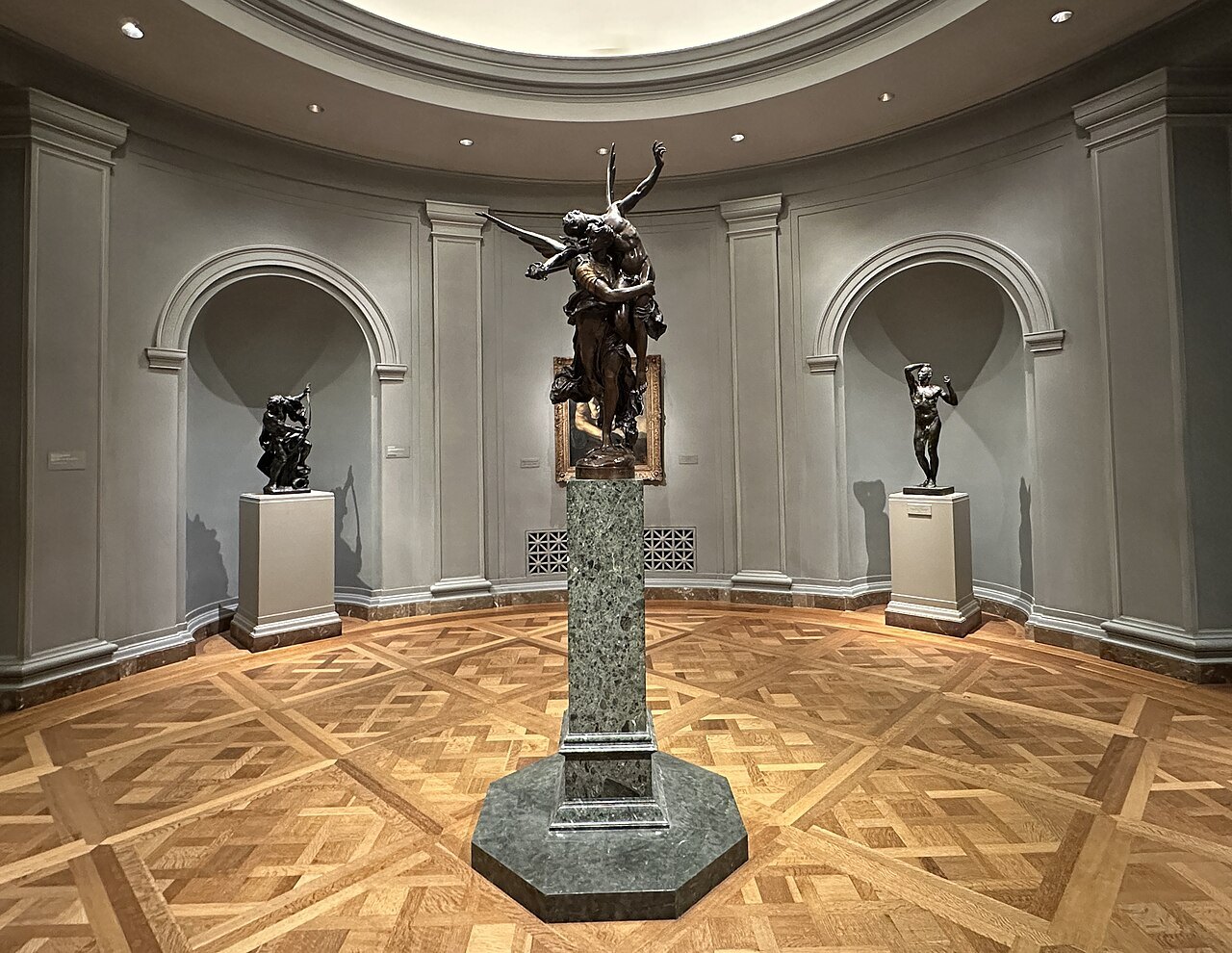
The gallery itself is one of the great collections of Western painting and sculpture anywhere, and it charges no admission. In 2024 nearly four million people came through its doors, making it the second most visited museum in the country, and the only one of the three most visited art museums in the United States that is free to enter.
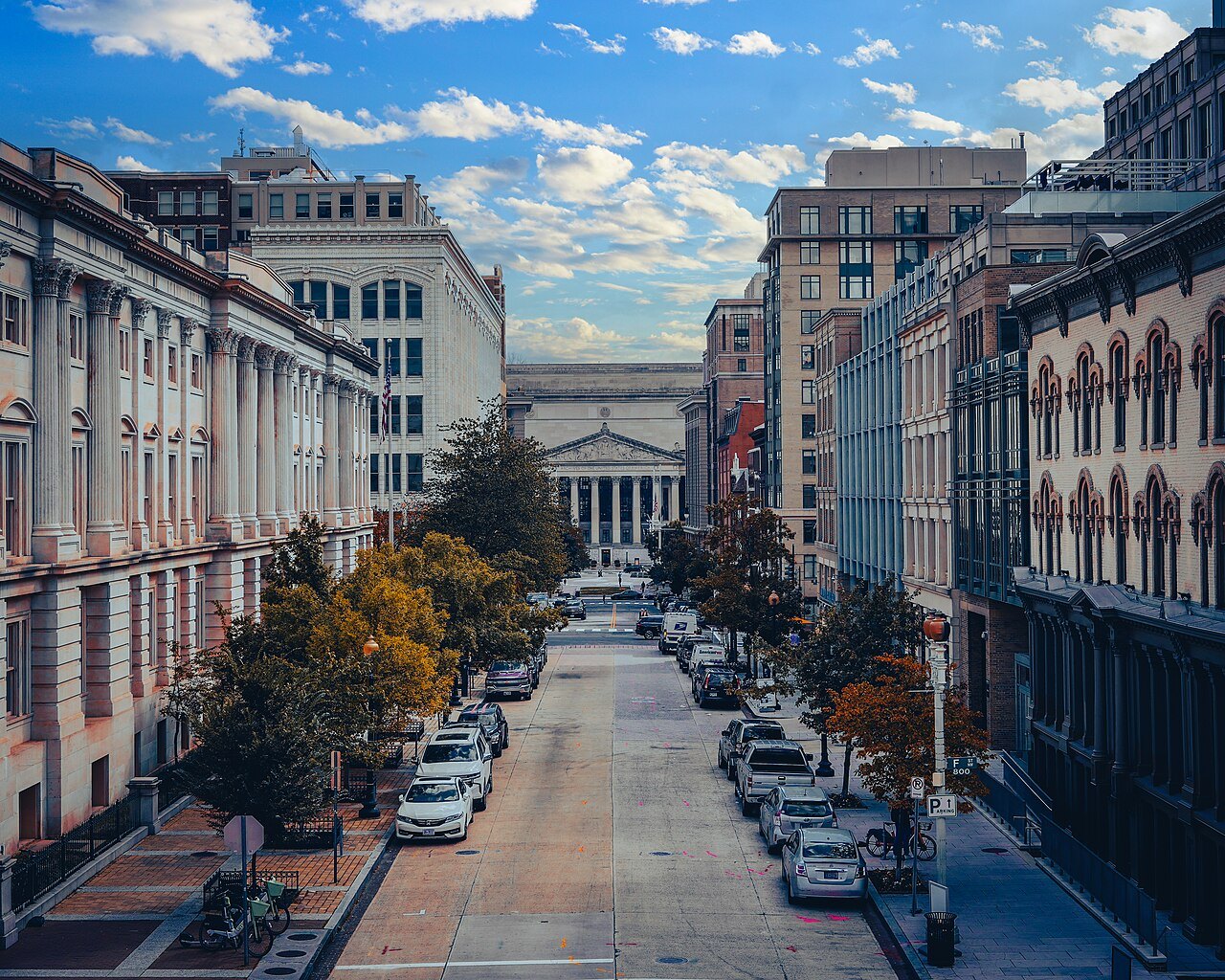
The West Building faces the Mall directly, between 3rd and 9th Streets on Constitution Avenue, in the same row of institutions described on the Mall. The main entrance opens onto the Mall side, so visitors arriving on foot from other museums reach it without difficulty.
Ginevra de' Benci
The sitter was a young woman from a prominent Florentine family, painted by Leonardo with the restrained, almost unsmiling intensity that marks his early portraits. The panel is modest in size, easy to miss if a visitor is not looking for it among larger canvases, yet it draws a steady line of people to the same wall.
The National Gallery bought it from the Prince of Liechtenstein in February 1967, paying what was then a record price for a painting. The purchase brought a work by one of the most famous names in Western art into a public American collection for the first time, and it has remained the gallery's single most requested painting since.
Its fame rests partly on scarcity. Leonardo left very few finished paintings, and none of the others has ever crossed the Atlantic for permanent display, so this portrait is, by default, the whole of his work that an American or Canadian visitor can see without traveling to Europe.
The Italian Renaissance Rooms
Ginevra de' Benci sits among other major Italian pictures rather than alone. The same rooms hold two panels from Duccio's Maestà, Fra Angelico and Filippo Lippi's round Adoration of the Magi, Giovanni Bellini's Feast of the Gods, and Giorgione's Allendale Nativity, giving a concentrated run of early and High Renaissance painting in a short stretch of galleries.
Raphael and Titian follow nearby, extending the sequence from Florence and Venice into the sixteenth century. A visitor who comes for the Leonardo alone will walk past several paintings of comparable historical weight on the way.
Beyond these rooms the collection continues into Northern and later European painting: Rogier van der Weyden, Dürer, Cranach, Frans Hals, Rembrandt and Vermeer, El Greco, Goya, and nineteenth-century French painters, before arriving at American painting before nineteen hundred.
A Marble Temple on a Railroad Site
The ground the West Building stands on has its own history. A Baltimore and Potomac Railroad station once stood there, and in 1881 President James Garfield was shot inside it by a disappointed office seeker. The station did not fit the later McMillan Plan for the Mall and was demolished in 1908.
Temporary buildings from wartime use followed, then the unfinished foundations of a memorial that was never completed. The site stayed unresolved for decades before the gallery finally rose on it.
John Russell Pope designed the West Building in 1937 in the same neoclassical style he used for the Jefferson Memorial, faced in pink Tennessee marble and arranged around a domed rotunda modeled on the Pantheon, with skylit sculpture halls running east and west. It was the largest marble structure in the world when completed.
Neither Andrew Mellon, who gave the collection and the funds to build it, nor Pope lived to see it finished; both died in 1937. President Franklin D. Roosevelt formally accepted the building for the nation on March 17, 1941.
Beyond the West Building
The East Building, opened June 1, 1978, holds the modern and contemporary collections on the last parcel of land Congress had set aside, a trapezoid near the Capitol end of the site. I. M. Pei split it into two triangles, one of public galleries and one of offices and study space, giving the whole structure sharp angles in deliberate contrast to Pope's symmetry.
Its center is a triangular atrium under a glass roof, hung with Alexander Calder's largest mobile. An underground passage links the two buildings, so a visitor can move from Renaissance Florence to twentieth-century art without stepping outside.
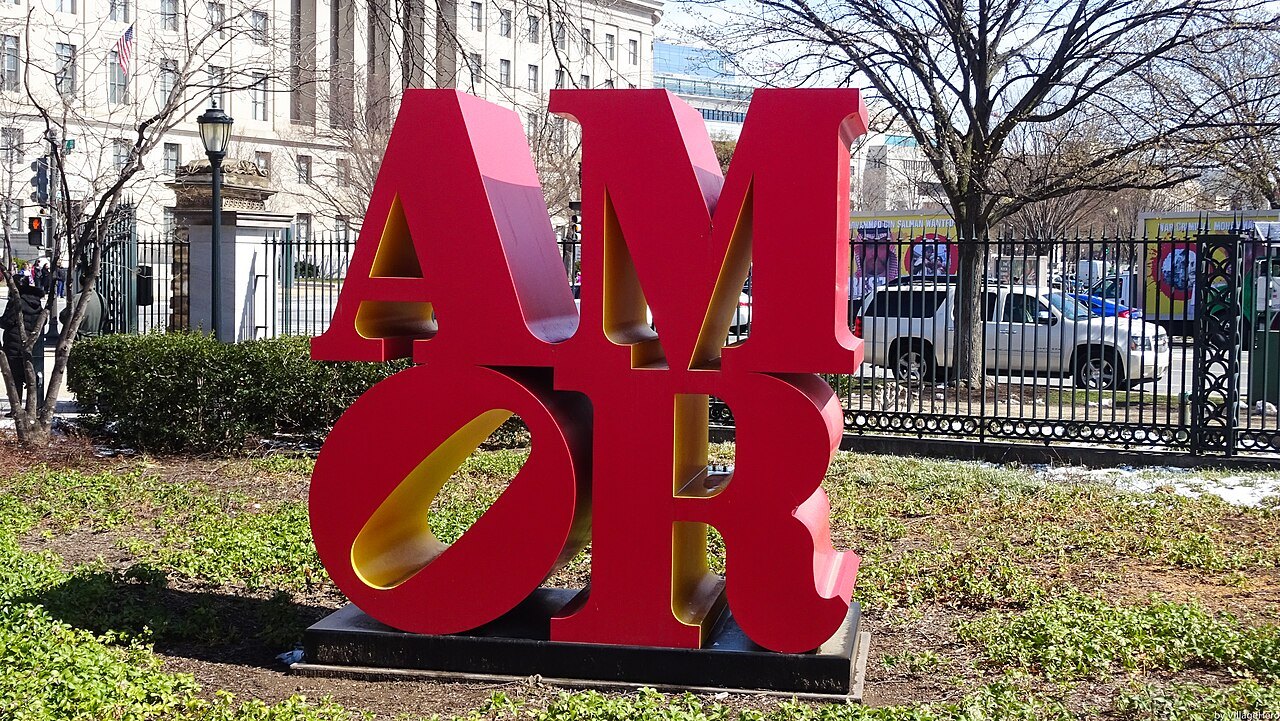
West of the West Building, across 7th Street, the Sculpture Garden opened on May 23, 1999, landscaped around a fountain that becomes an ice-skating rink from December to March. Louise Bourgeois's Spider, Claes Oldenburg and Coosje van Bruggen's Typewriter Eraser, Roy Lichtenstein's House I, Robert Indiana's AMOR and a Paris Métro entrance by Hector Guimard stand among roughly twenty other works there.
How to Visit
Admission to the permanent collection is free and needs no ticket. Some special exhibitions carry their own arrangements, so check the gallery's own pages before planning a visit around one. The booking mechanics for museums across the city are also outlined in booking ahead.
A realistic plan covers one building at a time. Choose the West Building for the Old Masters and Ginevra de' Benci, walking its sculpture halls end to end, or the East Building for the modern galleries and the Calder atrium, using the underground passage to cross between them without going back outside.
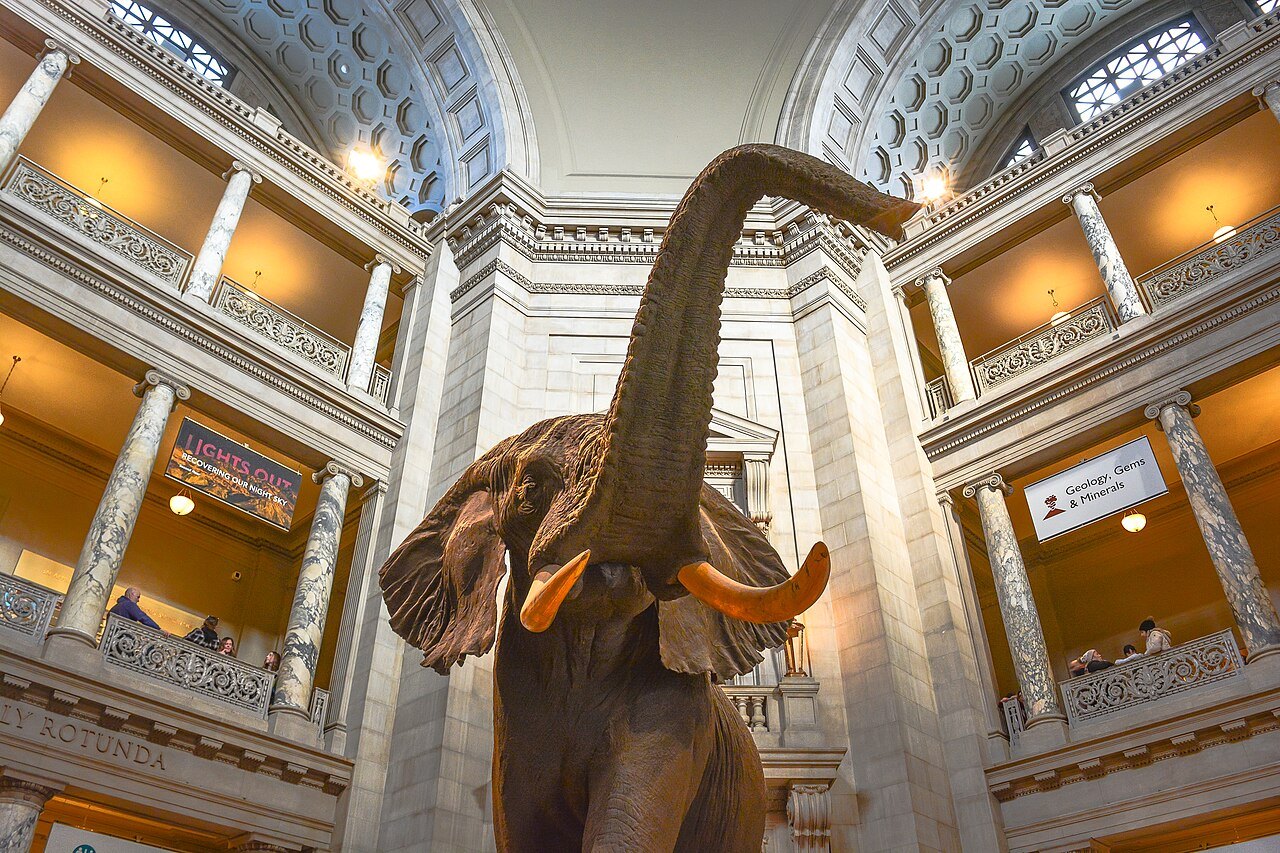
The Sculpture Garden needs no separate ticket and works well as a pause between the two buildings. The National Archives stands across Constitution Avenue, and Natural History is the next museum to the west, both easy additions to the same day on the Mall.
Honest Notes
The National Gallery is often assumed to be a Smithsonian museum; it is not. It was founded with private money, chiefly Andrew Mellon's, after Congress accepted the gift by joint resolution in 1937, and it is run by its own trustees rather than the Smithsonian.
Its name adds to the confusion, since an older Smithsonian collection once carried the same title before being renamed; that institution is now the Smithsonian American Art Museum, a separate building entirely.
The site's earlier history is easy to overlook once standing inside it: the railroad station where President Garfield was shot in 1881 occupied the same ground the West Building now covers.
The collection itself is European and American rather than global. Art from Asia and the Middle East is shown instead in the Smithsonian's own museums along the Mall, not here.
Read next03
More from the journal
- The Washington MonumentWhy is the Washington Monument two colors?About a third of the way up, the Washington Monument changes shade. The line marks where building stopped in 1854 and started again in 1879, and the stone above it came from different quarries. How it happened and where to see it best.Read the piece →
- The United States CapitolWhat is inside the Capitol Rotunda, and who painted its dome?A guide to what fills the Capitol Rotunda, who painted its dome, and how to see both on a free tour.Read the piece →
- The Tidal Basin and the Jefferson MemorialWhen do the cherry blossoms peak in Washington?Peak bloom at the Tidal Basin usually falls between the last week of March and the first week of April, but it has come as early as mid-March and as late as mid-April. What peak bloom means, how the Park Service forecasts it, and how to plan a trip around a date nobody knows in advance.Read the piece →