SEVENTY PERCENT OPEN, A FEW DAYS OF GLORY AND A FORECAST THAT ONLY SEES TEN DAYS AHEAD01
When do the cherry blossoms peak in Washington?
Peak bloom at the Tidal Basin usually falls between the last week of March and the first week of April, but it has come as early as mid-March and as late as mid-April. What peak bloom means, how the Park Service forecasts it, and how to plan a trip around a date nobody knows in advance.
The answer in full02
Read on
The short answer
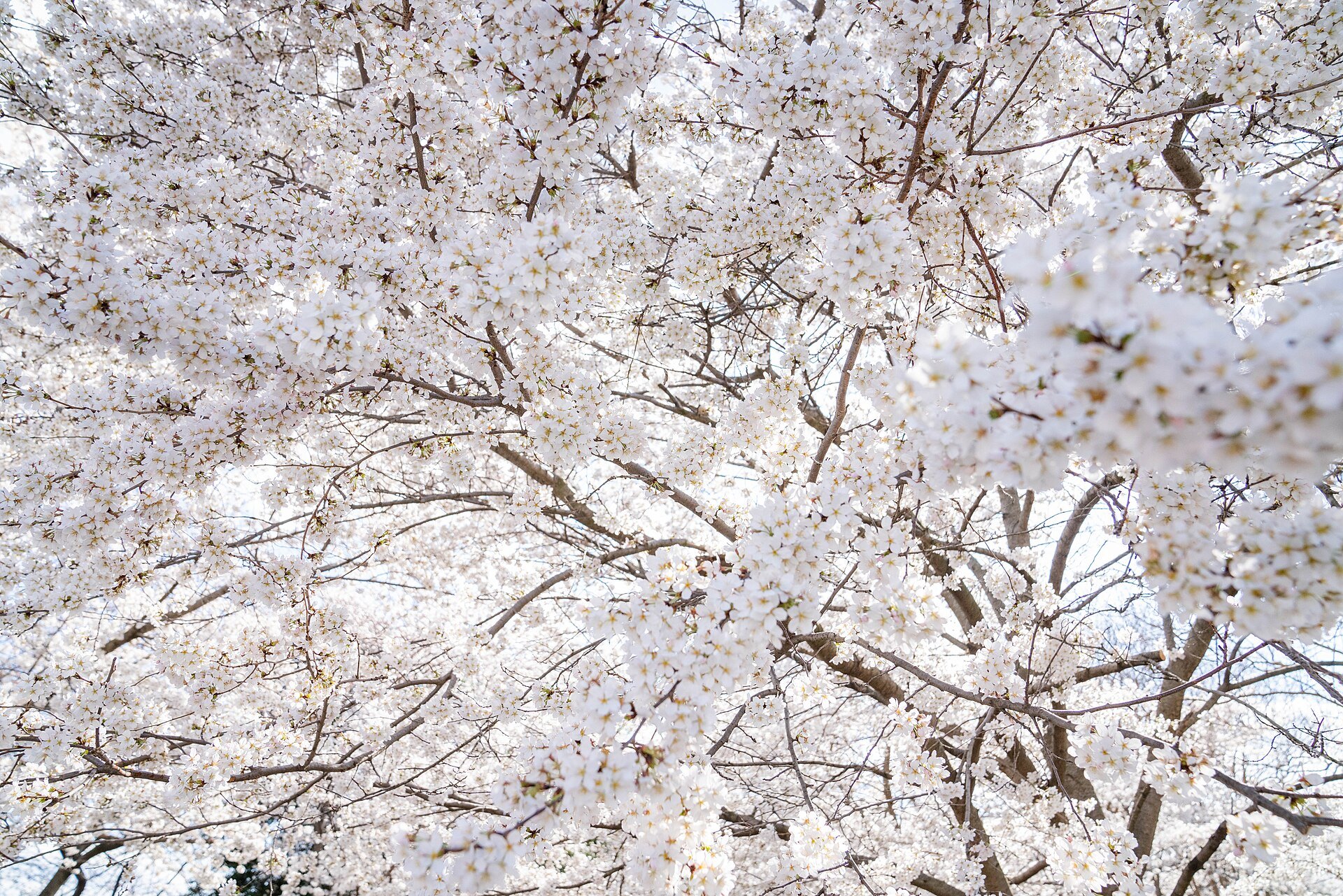
The Yoshino cherry trees around the Tidal Basin most often reach peak bloom between the last week of March and the first week of April. That is only the likeliest window. Unusually warm or cold springs have brought peak bloom as early as March 15, in 1990, and as late as April 18, in 1958, and a late frost can ruin much of the show, as one did in 2017.
The National Park Service defines peak bloom as the day when seventy percent of the Yoshino blossoms around the basin have opened, and the trees usually stay in flower for several days around it. Its horticulturists say that forecasting the date is almost impossible more than about ten days ahead, so no trip can be booked around a certain date months in advance.
What the trees are
The first trees were a gift from Tokyo in 1912, and on March 27 of that year the First Lady, Helen Herron Taft, and Viscountess Chinda, wife of the Japanese ambassador, planted the first two on the north bank of the basin. The gift was 3,020 trees of twelve varieties. The Yoshino cherries, about eighteen hundred of them, were planted around the Tidal Basin from 1913 to 1920, and the other varieties went to East Potomac Park (see the Tidal Basin).
Japan gave another 3,800 Yoshino trees in 1965, accepted by Lady Bird Johnson, and today Yoshino cherries make up about seventy percent of the trees and Kwanzan cherries about thirteen percent. The Yoshinos, with their pale, almost white flowers, are the ones that set the peak bloom date; the Kwanzans, with heavier, deep pink double flowers, usually flower somewhat later, extending the season for anyone who misses the main event.
How a bloom unfolds
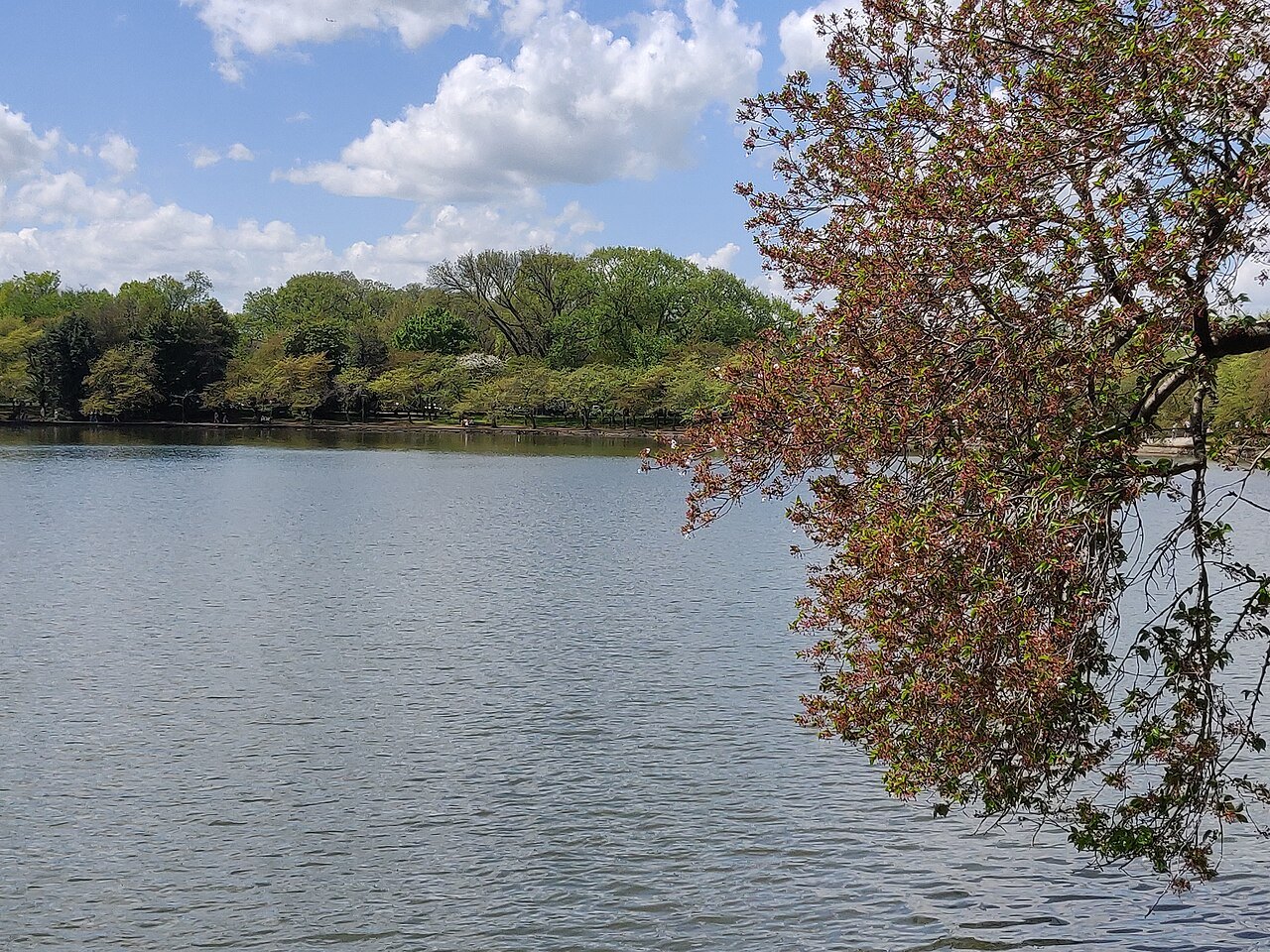
The Park Service tracks the Yoshinos through five stages before peak bloom: green buds, then florets visible, extension of the florets, peduncle elongation, when the stems lengthen and the petals begin to show, and finally puffy white blossoms. After the puffy white stage, peak bloom is usually only days away, and the Park Service reports each stage as the trees reach it, which is the best guide you can have.
Cool, calm weather stretches the bloom out; a rainy or windy day can strip the trees in hours. A late frost is the great danger: in March 2017 about half of the Yoshino blossoms were lost to a frost in mid-month, and that year's peak was measured on the blossoms that survived.
Planning a trip around it
Since the date cannot be known when you book, plan for the window rather than the day. A stay that spans the last days of March and the first days of April gives the best odds, and a longer stay covers more of the possible dates. If your dates are fixed, watch the Park Service's bloom reports as they come in and go to the basin on the best day you have; even a few days before or after peak, the trees are worth seeing, and the Kwanzans may still be ahead.
Book early. The blossom weeks are the busiest of the year in Washington, and hotels fill and rise in price, so reserve a refundable room as soon as you know you are coming, and book passes for the Washington Monument and the Library of Congress at the same time (see booking ahead).
The festival
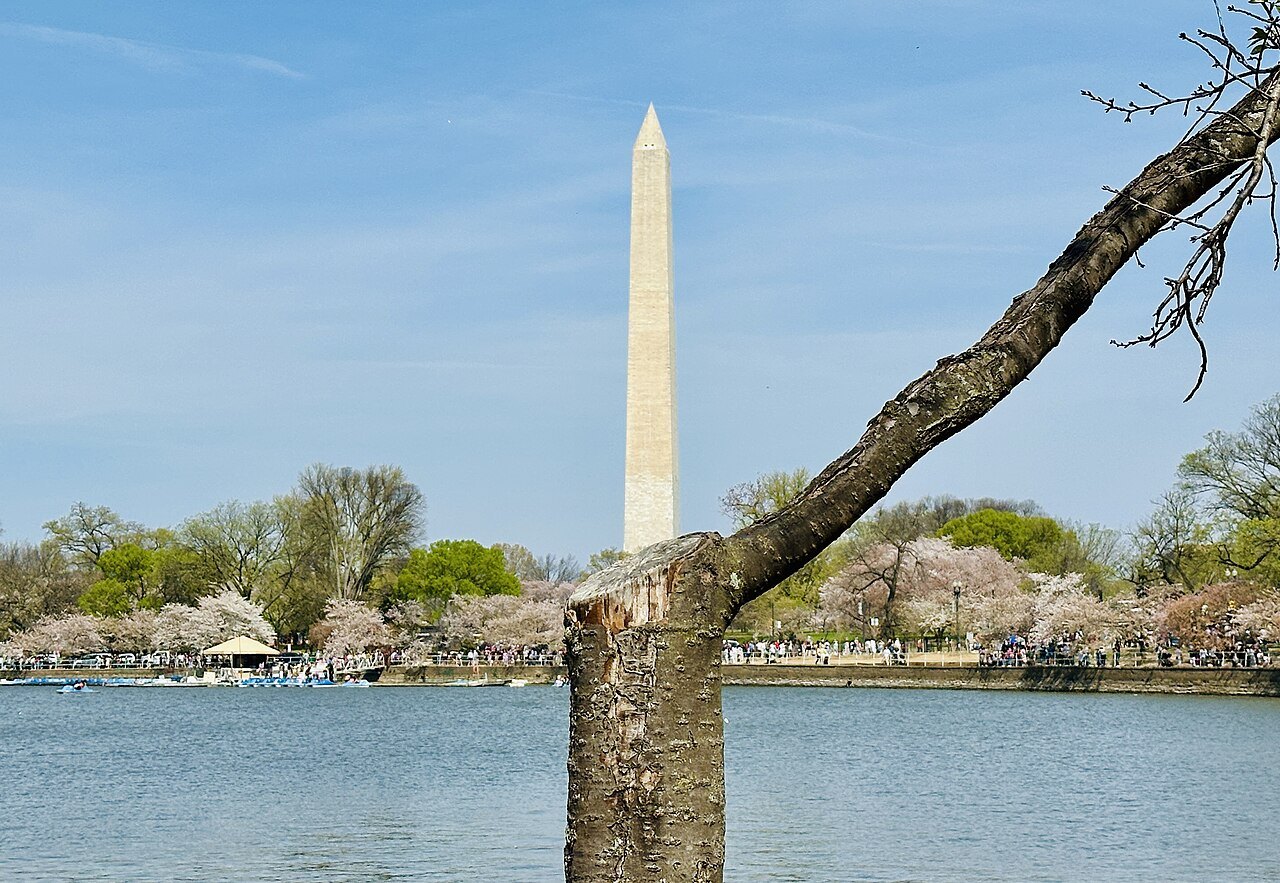
The National Cherry Blossom Festival marks the gift every spring, running for several weeks around the bloom, whether or not the trees have yet flowered. It grew out of a small reenactment of the first planting by schoolchildren in 1927 and became a national annual event in 1935. Today it fills the city with events and ends with a parade with giant balloons, floats and marching bands. The festival dates are set a long time in advance, while the bloom is not, so do not assume the parade weekend will be the peak.
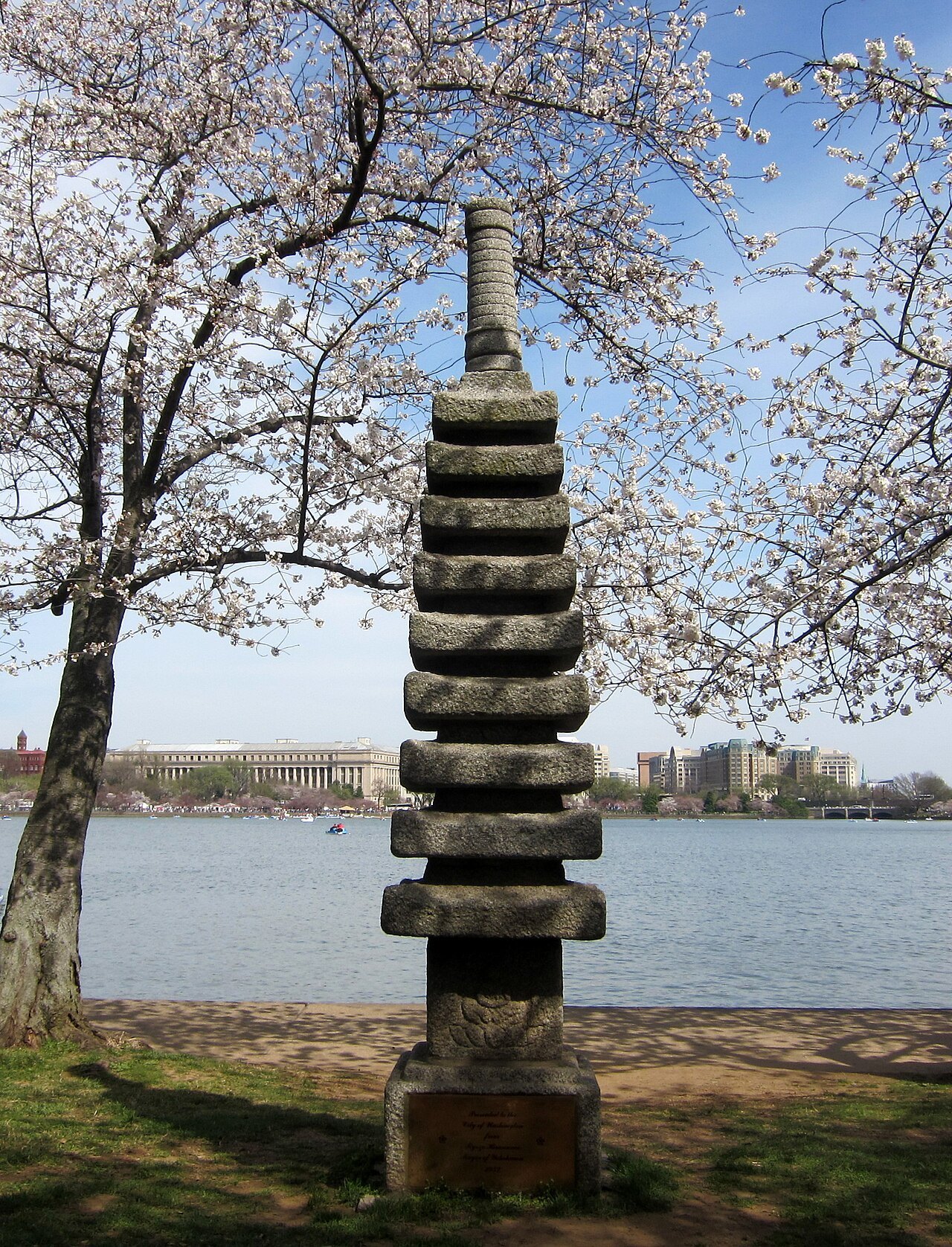
The trees also carry reminders of the friendship they were meant to mark. In 1954 the governor of Tokyo gave the city a granite Japanese lantern some three hundred years old, which stands by the basin, and soon afterwards the mayor of Yokohama gave a stone pagoda. The gift has run both ways, too: in 1982 Japanese horticulturists took cuttings from Washington's Yoshinos to replace trees destroyed by a flood in Japan. Looking for the lantern and the pagoda is a good way to see a quieter side of the basin when the main paths are full.
On the day
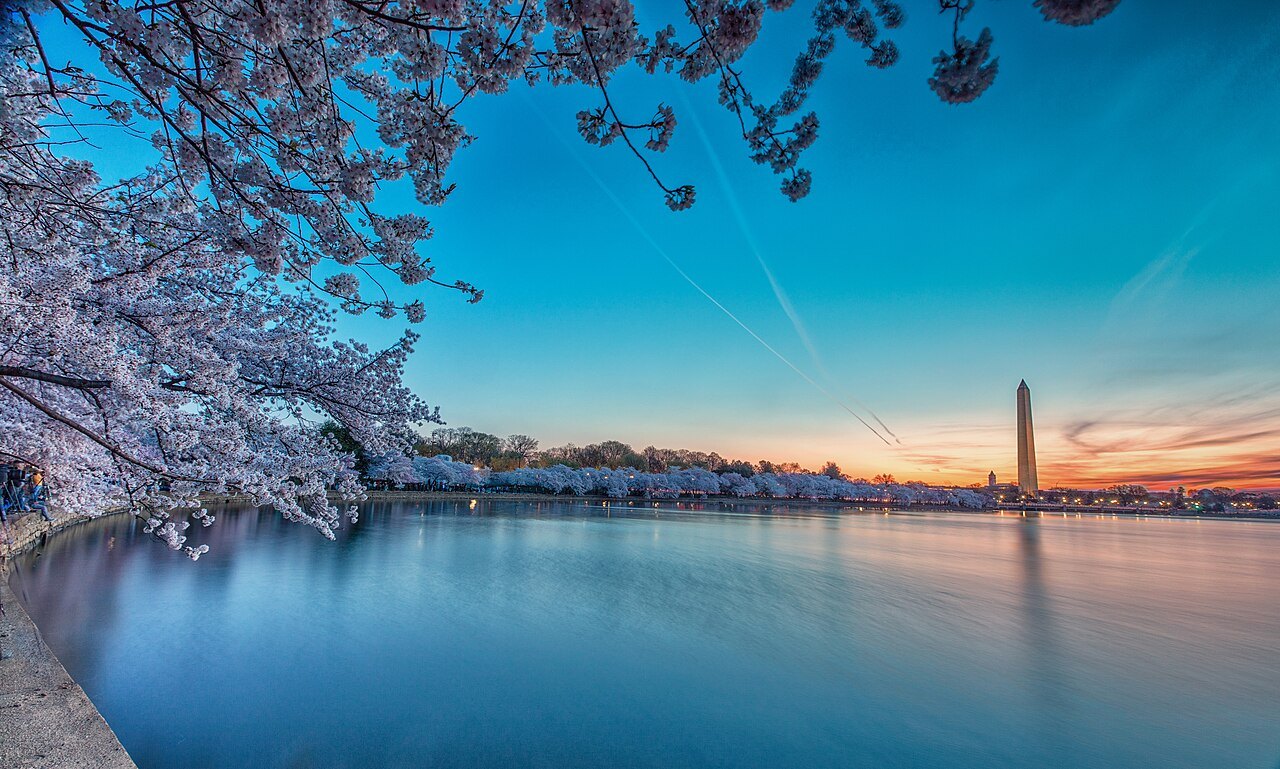
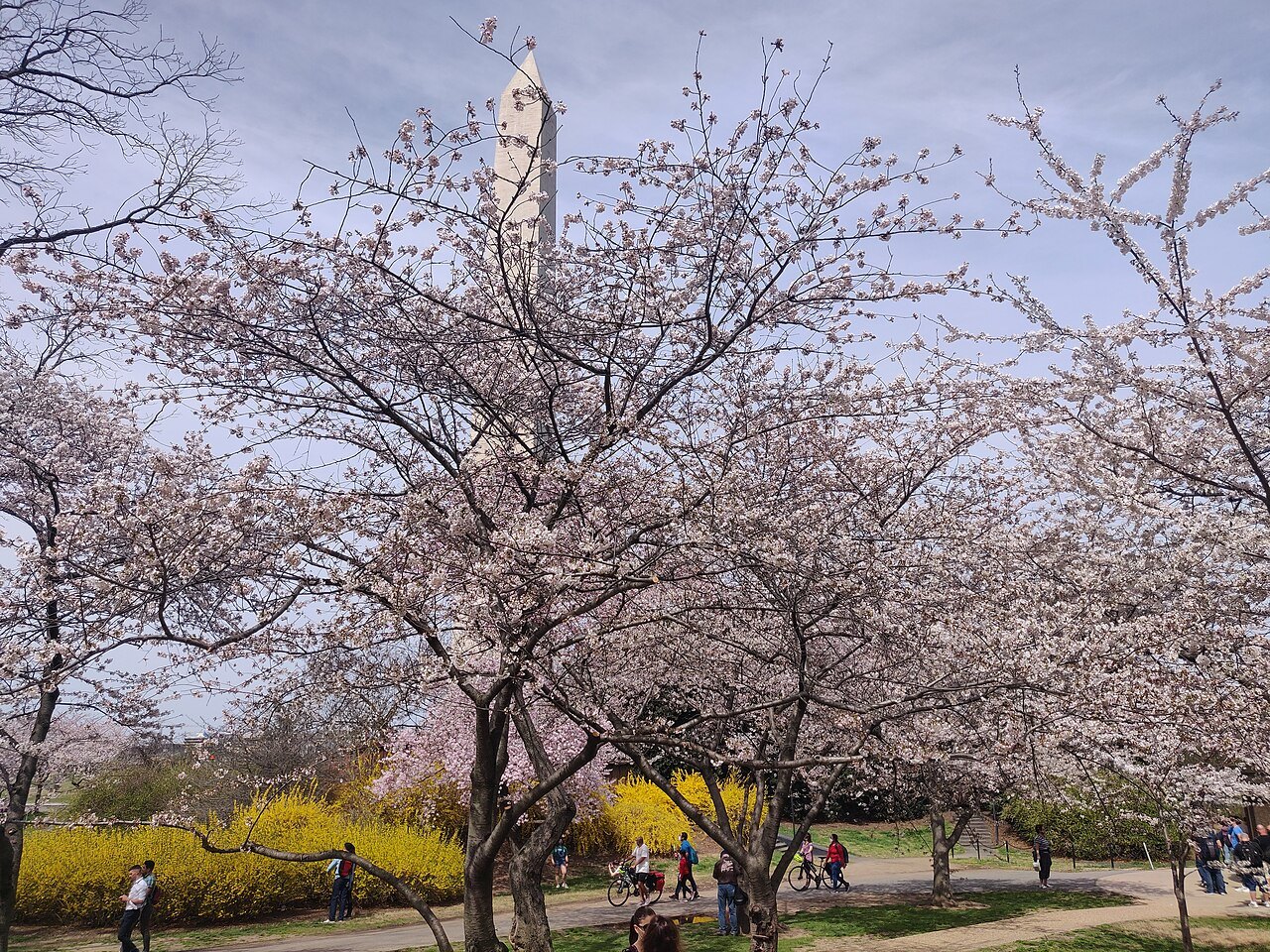
Go at first light. Sunrise over the basin, with the Jefferson Memorial across the water, is the classic view, and it is the only time the paths are calm; by mid-morning in peak week they are shoulder to shoulder, and at weekends the crowds stay into the evening. Walk rather than drive: parking is almost impossible, the Metro stations nearest the basin are crowded, and Smithsonian station is a pleasant walk away across the Monument grounds (see getting around).
Walk the whole loop, past the Jefferson, Roosevelt and King memorials, and look for the two original trees of 1912 near the end of 17th Street SW, marked with a plaque. Do not climb the trees or pick the blossoms: many of them are old, and with millions of visitors a year, every broken branch adds up.
The trees are changing
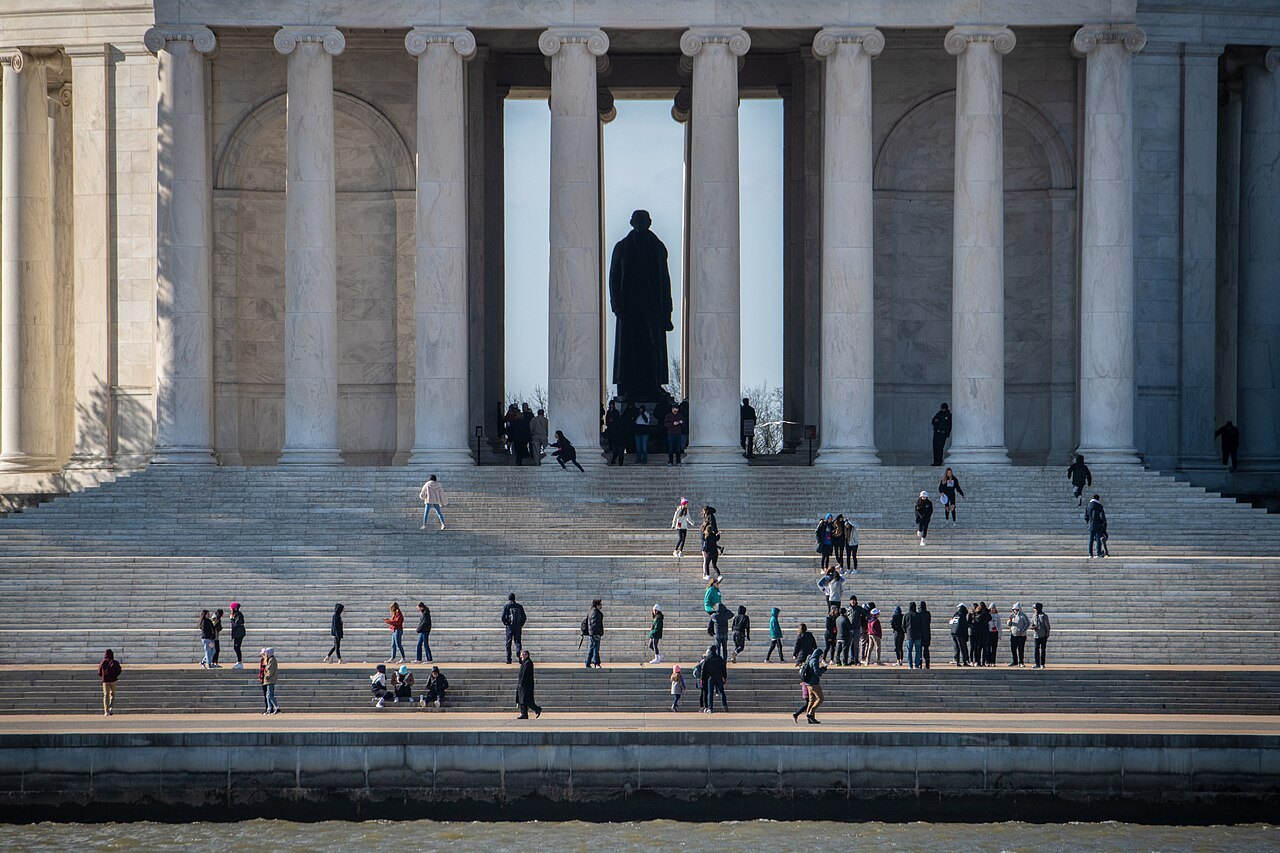
The basin itself is being rebuilt. Its seawall had sunk for years, and at high tide water regularly flooded the paths and the tree roots. In 2023 the Park Service announced a project to rebuild about 6,800 feet of seawall around the basin and parts of West Potomac Park, taller and on new foundations, and in 2024 it cut down 158 of the nearly 3,700 cherry trees to make way for the work; new trees are to be planted when it is done. Some parts of the loop may be fenced during the works, so check the current route before you go, and expect the grove to look different from older photographs for some years.
Read next03
More from the journal
- Getting AroundHow does the Washington Metro work for visitors?The Metro has six colored lines, 98 stations and fares that depend on distance and time of day, so you tap in and tap out. How to pay, find the right platform, change lines and reach the sights, the airports and Union Station.Read the piece →
- The Washington MonumentWhy is the Washington Monument two colors?About a third of the way up, the Washington Monument changes shade. The line marks where building stopped in 1854 and started again in 1879, and the stone above it came from different quarries. How it happened and where to see it best.Read the piece →
- The White House and Lafayette SquareHow do you get a White House tour?Public tours of the White House are free, self-guided and arranged only through a member of Congress, up to six months ahead, with a background check for older visitors. How the request works, what you see, and what to do if you cannot get one.Read the piece →