WATCHING CONGRESS FROM THE GALLERY01
How do you watch the House or the Senate in session?
How visitors get into the House and Senate galleries, separate from the Capitol's historic tour.
The answer in full02
Read on
Where the Two Houses Meet
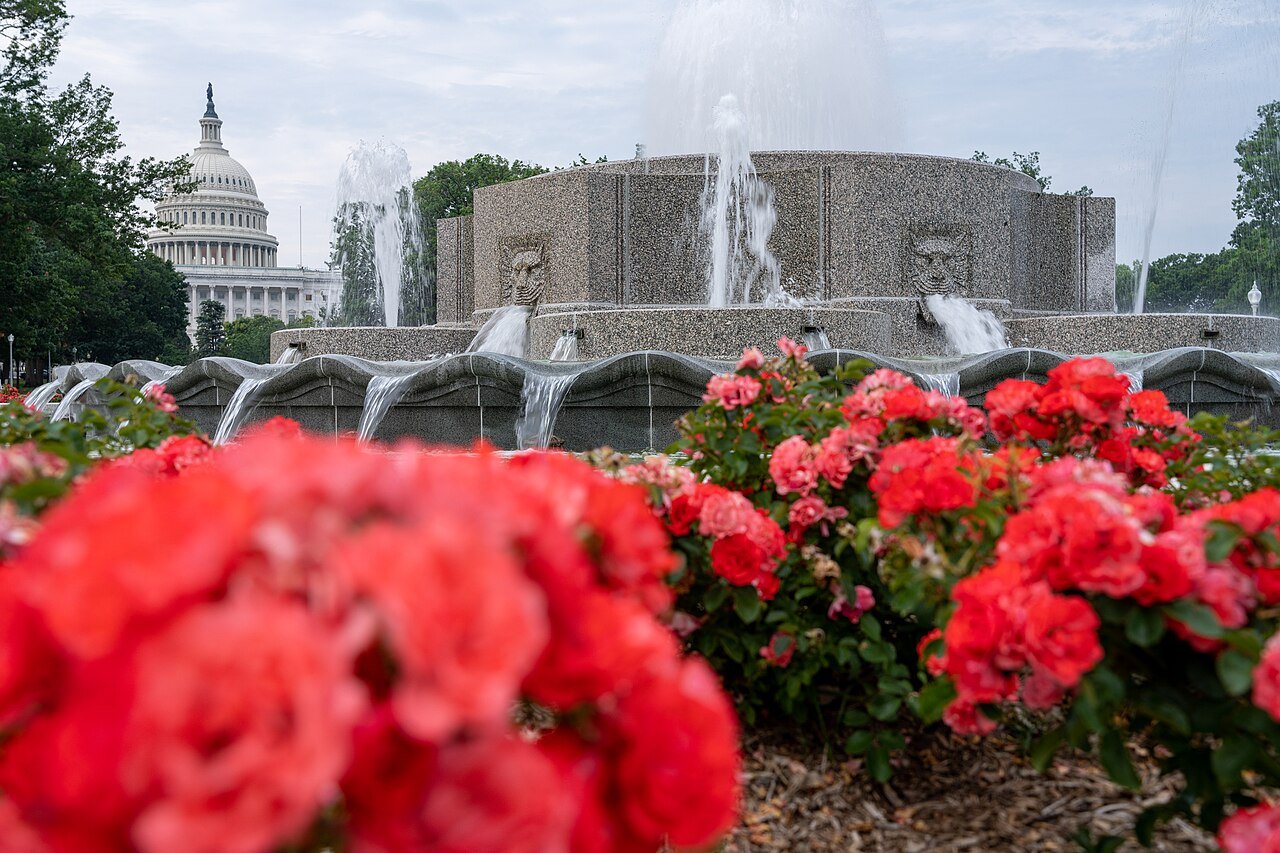
The Capitol sits on the hill Pierre Charles L'Enfant called Jenkins Hill in his plan of 1791, a rise he described as a pedestal awaiting a monument. The Senate meets in the building's north wing, the House in the south, on either side of the dome at the eastern end of the National Mall. The Capitol is also the zero point from which the city's four quadrants are measured, so every address in this guide is read against it (see the plan).
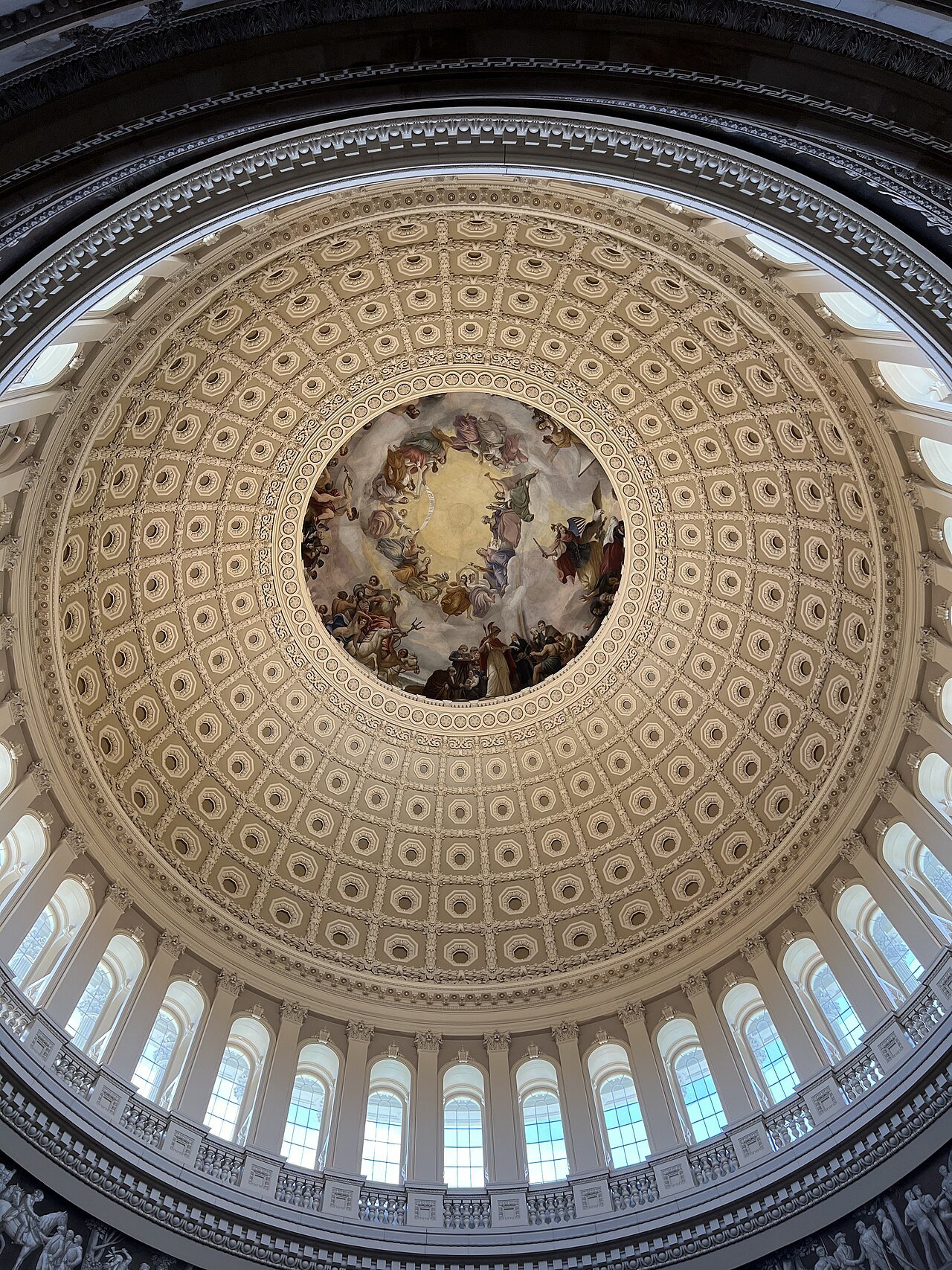
Visitors sometimes assume a Capitol tour includes a stop in one of the chambers. It does not. The guided tour that begins at the Capitol Visitor Center moves through the Crypt, the Rotunda and National Statuary Hall, all public spaces below and beside the chambers, but the House and Senate floors themselves are reached only through their own galleries, arranged on a separate track.
Watching a session, then, is its own visit, with its own planning, separate from the historical tour described elsewhere in this guide. It is worth deciding before arriving which one matters more to the day, since the two do not automatically combine into a single ticket, a single line, or a single appointment at the Visitor Center.
That separation between the tour and the gallery is not unusual for a building that is simultaneously a historic monument and an active legislature; the same hill holds both purposes at once, often with different staff, different lines, and different rules applying within a few hundred feet of each other.
Checking What's Required
Because gallery access is handled apart from the general tour, the first step is the Capitol's own visitor information, which lays out current requirements for watching the House or Senate from the gallery. Rules and request procedures can change, so this is the authoritative source rather than any secondhand account, including this one.
For many visitors, gallery passes are obtained through a request to a member of Congress's office representing their home state or district, rather than at the Capitol itself. Visitors from outside the country typically follow a different path through the Visitor Center. Confirm which applies before the trip rather than on arrival.
Because the process runs outside the main ticketing system used for the historic tour, build in time to request a pass well ahead of a visit, the same way you would plan other timed parts of a Capitol trip, including the entry line itself (see booking ahead).
Getting to the Gallery
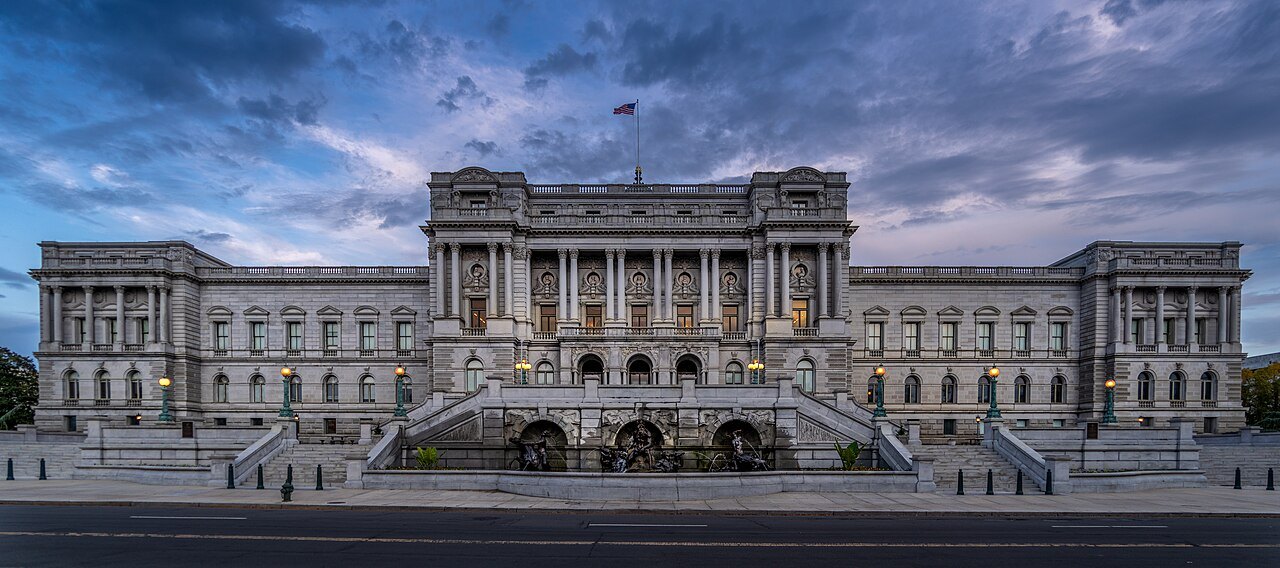
Entry to the building, whether for the tour or for the gallery, is through the Capitol Visitor Center on the east side, facing the Library of Congress and the Supreme Court across First Street. Every visitor passes through security screening there, a metal detector for people and an x-ray for bags.
The Visitor Center publishes a list of items that cannot be brought past that screening; it is worth reading before setting out, since gallery visits and tours share the same checkpoint. Allow extra time for the line, which can take a while depending on how many other visitors arrive together.
Once past that screening, gallery visitors are directed toward the chamber they are cleared to enter, rather than toward the Crypt and Rotunda route used by the historical tour below. Signage and staff at the Visitor Center can point the way, since the two routes diverge early inside the building itself.
The same screening line serves everyone entering the building, so a visitor heading straight to a gallery still passes through it even without stopping at the exhibition hall or the introductory film that precede the historic tour. Leaving a wide margin before any scheduled gallery time is sensible, particularly if the line is long when you arrive.
What You'll See from the Gallery
Congress is a working legislature, not a museum exhibit, so what happens on the floor on any given day depends on the House and Senate's own schedules, which the chambers set and change themselves. Nothing guarantees in advance that a dramatic vote or a full debate will coincide with a particular visit.
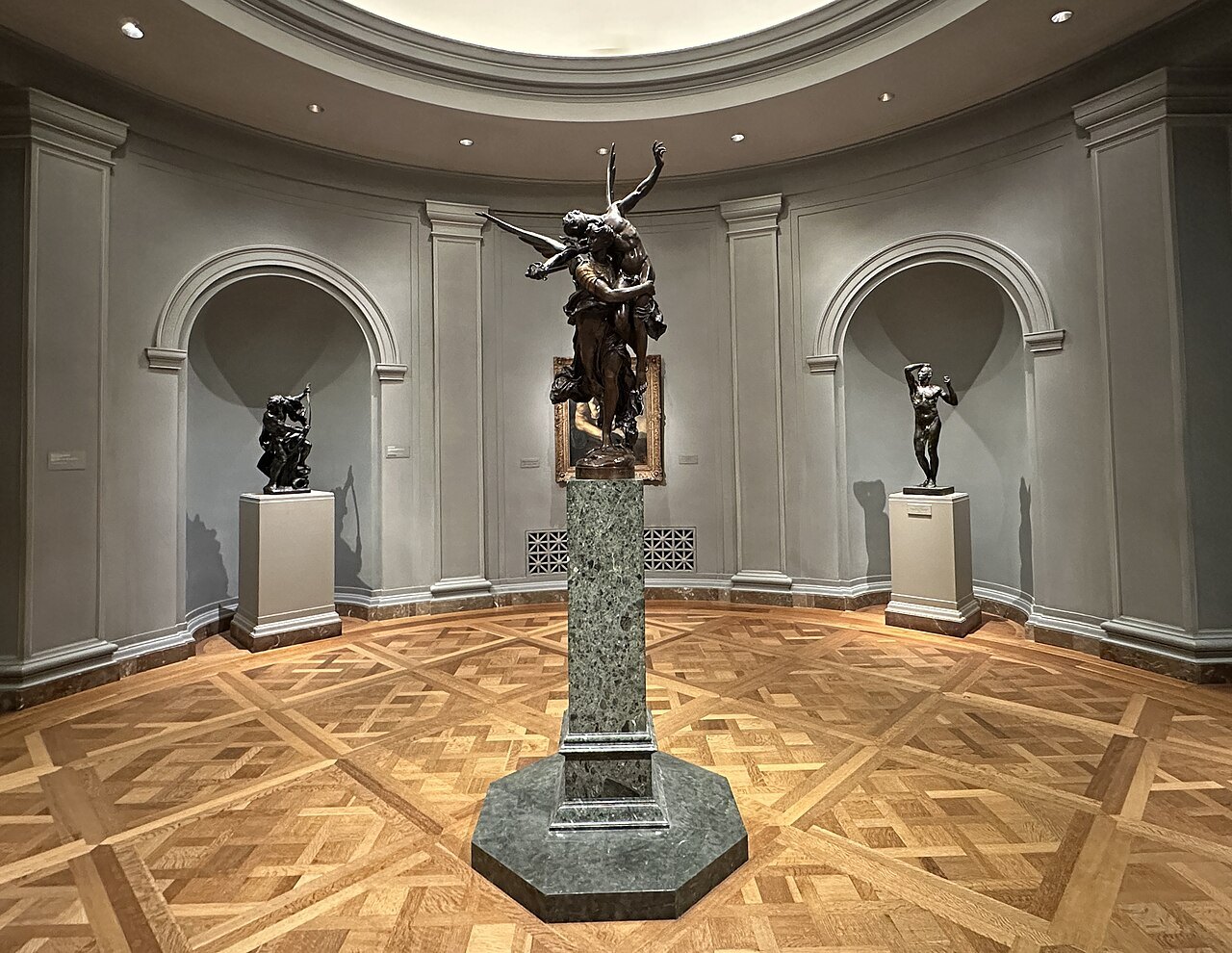
Sessions can be brief procedural sittings as easily as full debates, and galleries can close on short notice for security or ceremonial reasons. Treat watching a session as a bonus beyond the guaranteed stops of a Capitol visit, the Rotunda and Statuary Hall among them, rather than as the centerpiece of the day.
Parts of the building and grounds close around sessions, ceremonies and security needs more broadly, so a gallery visit that looks straightforward in the morning can change by afternoon. Checking the Visitor Center's pages again close to the visit, not only when first planning it, is the simplest safeguard available.
The Senate and House chambers sit above the route used by the historic tour, and the galleries are the only vantage point the public has into either room; nothing on the Crypt, Rotunda or National Statuary Hall route substitutes for it. That separation is the reason the two experiences are planned apart in the first place.
Fitting It Around the Rest of the Visit
If the historic tour is also on the agenda, plan for both the screening line and the Visitor Center's exhibition hall and short film on Congress before the tour itself, then the separate steps for gallery access on top of that. The two visits do not have to happen on the same day.
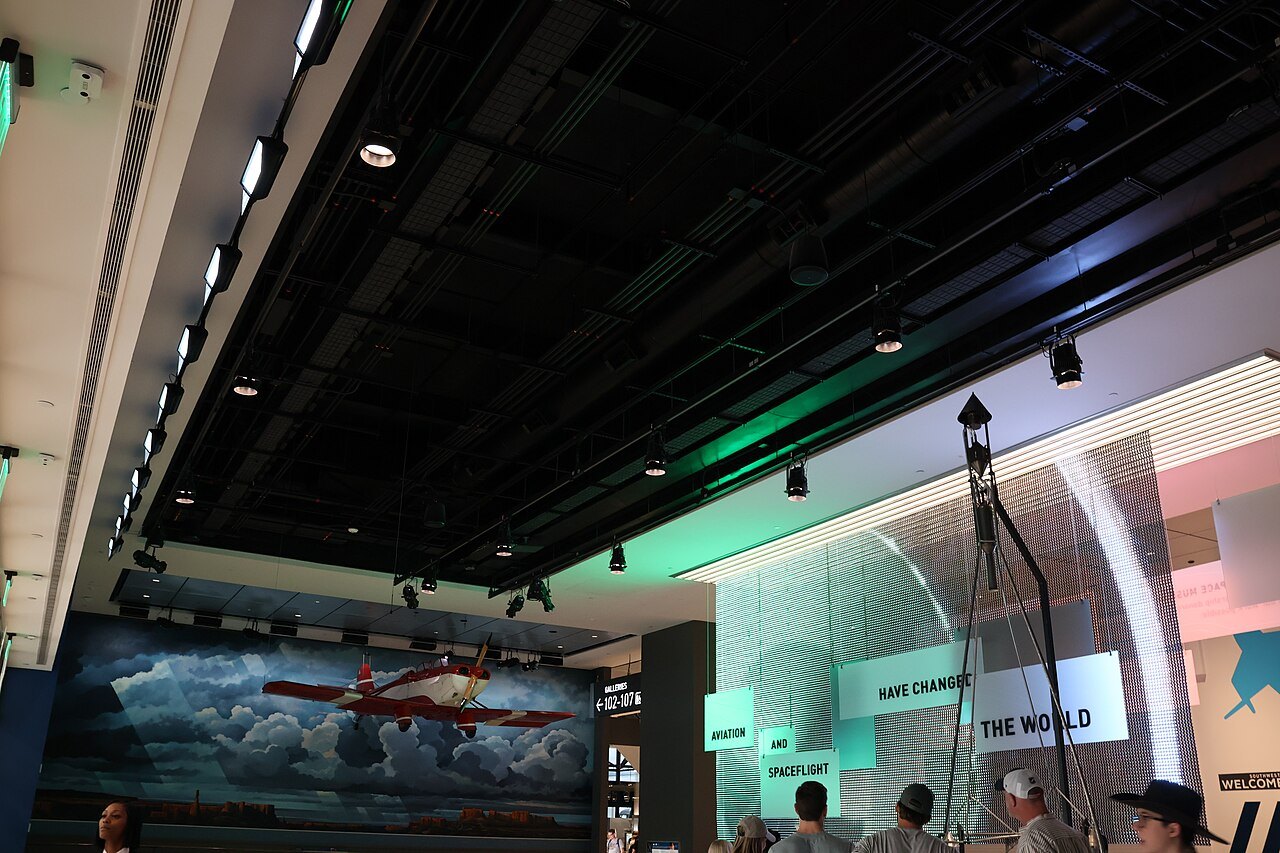
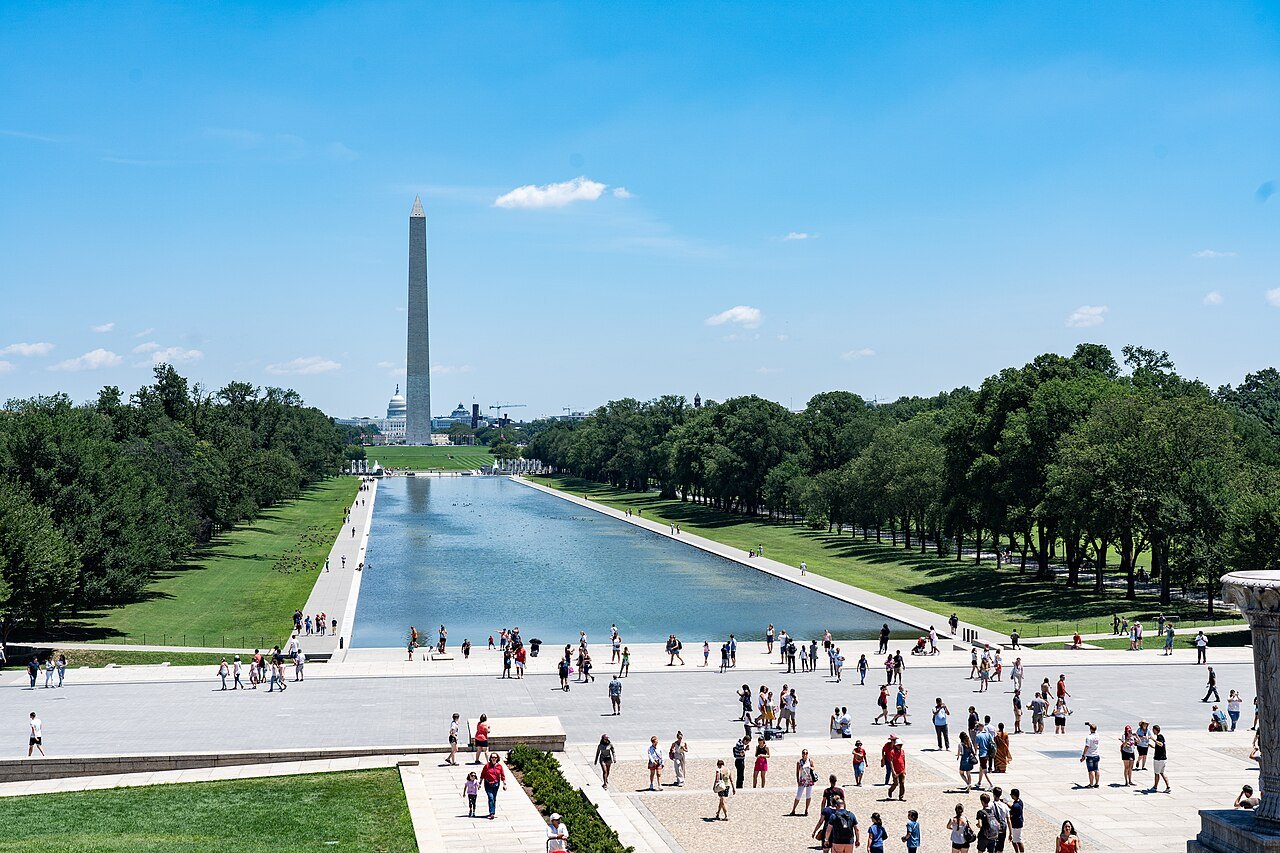
Outside, visitors can still walk the grounds when chamber access is restricted: the West Front terraces look straight down the Mall toward the Washington Monument and the Lincoln Memorial, and the East Front faces the Library of Congress across First Street. A walk across the grounds is a reasonable way to spend time while waiting on gallery logistics.
For a wider sense of what else sits within walking distance, including the Library of Congress just across First Street and the Supreme Court beside it, see the rest of this guide's coverage of the Capitol and the surrounding hill before building an entire day around a single gallery visit.
Honest Notes
The guided tour of the Capitol's historic rooms and a visit to a House or Senate gallery are separate undertakings, run on separate request systems, even though both begin at the same Visitor Center, pass through the same security line, and end somewhere inside the same enormous building on the hill.
Because sessions, debates and votes are set by the chambers themselves, no outside schedule, including this one, can promise what will be happening on the floor on a given day; the Visitor Center's own pages are the place to check close to the date of travel, since printed guides cannot keep pace with a legislative calendar.
Treat a gallery visit as something to plan deliberately, well before the trip, with a request made through the appropriate office and a check of current rules immediately before travel, rather than something to arrange on the spot at the Capitol's own door on the day itself, without any warning.
Read next03
More from the journal
- The United States CapitolWhat is inside the Capitol Rotunda, and who painted its dome?A guide to what fills the Capitol Rotunda, who painted its dome, and how to see both on a free tour.Read the piece →
- The White House and Lafayette SquareHow do you get a White House tour?Public tours of the White House are free, self-guided and arranged only through a member of Congress, up to six months ahead, with a background check for older visitors. How the request works, what you see, and what to do if you cannot get one.Read the piece →
- Getting AroundHow does the Washington Metro work for visitors?The Metro has six colored lines, 98 stations and fares that depend on distance and time of day, so you tap in and tap out. How to pay, find the right platform, change lines and reach the sights, the airports and Union Station.Read the piece →