THE MEMORIAL'S CARVED WORDS01
What is written on the walls of the Lincoln Memorial?
A guide to the names, speeches, murals, and epitaph carved into the Lincoln Memorial's walls.
The answer in full02
Read on
Words all over the building
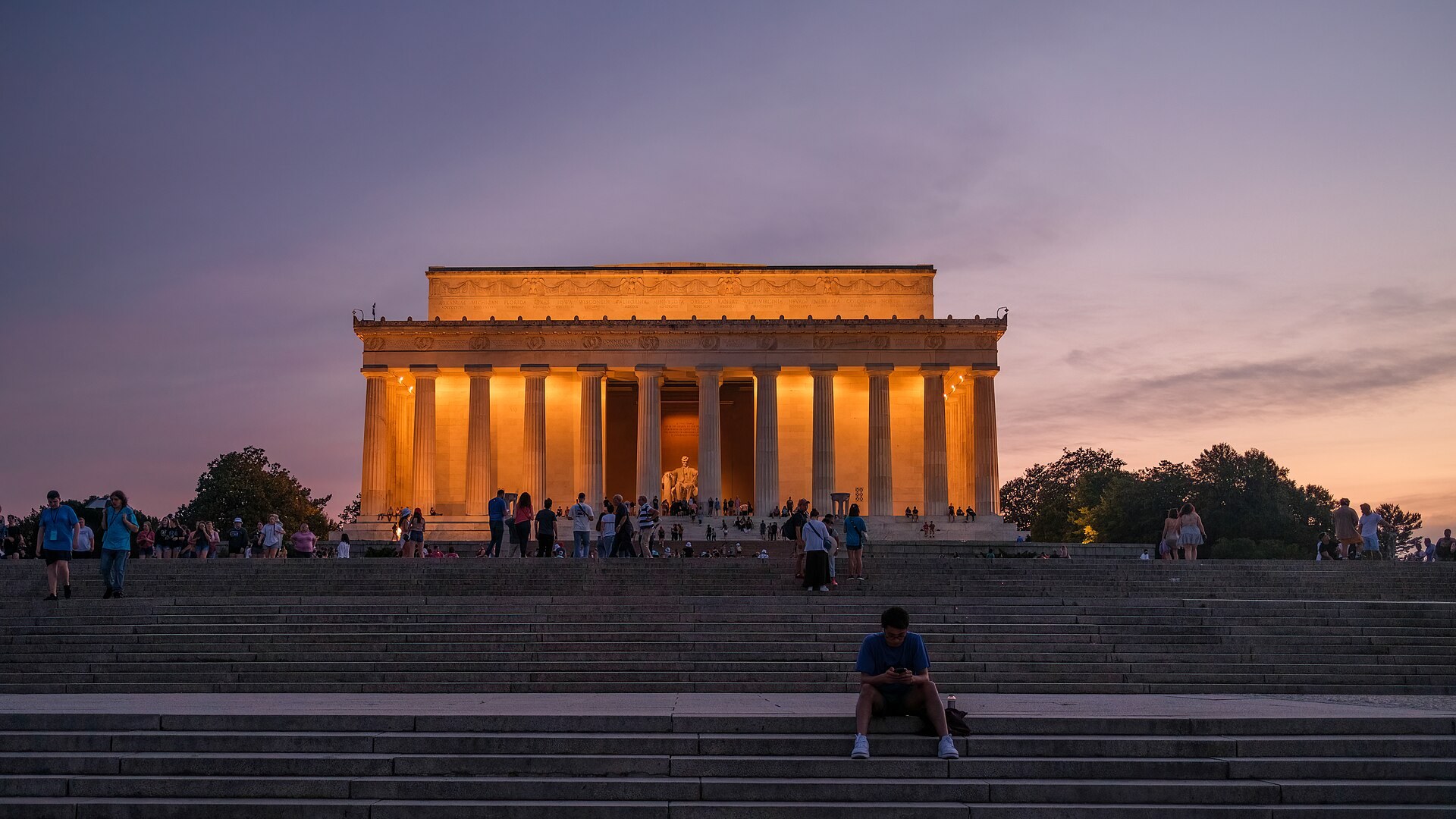
Visitors often come to see Abraham Lincoln seated in his great marble chair, but the memorial is covered in writing from the columns outside to the ceiling within. The building carries the names of states, two full speeches cut into its side chambers, murals with symbolic figures, and a single epitaph above the statue itself. Together these texts turn a Greek temple into a reading room devoted to Lincoln and to the Union he held together.
Henry Bacon, the architect, and the sculptors and letterers who worked under him treated the memorial as a single composition: statue, speeches, and symbolic art were planned together, not added piecemeal. The result is that a visitor who only photographs the statue misses most of what the building has to say, literally, about Lincoln and the war.
The inside is divided by two rows of Ionic columns fifty feet high into three chambers, with Lincoln seated at the center and a speech carved into each side wall. Walking from one chamber to the other, past the central statue, is the natural way to take in the memorial's full text in order, and it sits at the end of the Mall's long axis from the Capitol.
The names carved outside
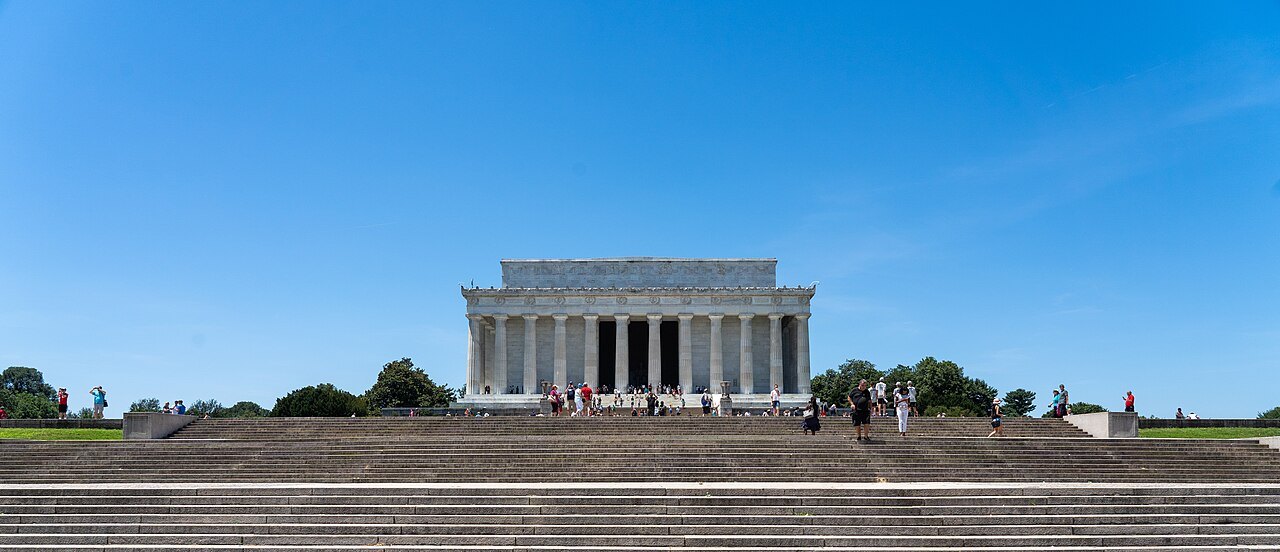
The memorial is encircled by thirty-six fluted Doric columns, faced like the rest of the exterior in Yule marble from Colorado. Each column stands for one of the thirty-six states that made up the Union at the time of Lincoln's death in 1865, and above them, carved into the frieze, are those states' names together with the dates each was admitted.
Above the frieze, higher up on the attic story, a second set of names appears: the forty-eight states that made up the country when the memorial was dedicated in 1922. The two inscriptions are easy to confuse from the ground, since both are rows of state names, but they record two different Americas, thirty-six states apart.
It is a common mistake to assume the thirty-six columns stand for the states of 1922 rather than for 1865, the year Lincoln died; the forty-eight states of 1922 are recorded separately, higher up, on the attic. Reading the frieze and then the attic in turn makes the distinction clear on the ground.
The epitaph above Lincoln's head
Inside, above Lincoln's head, a single inscription sums up the whole building's purpose. It was composed by the critic Royal Cortissoz and reads: 'IN THIS TEMPLE AS IN THE HEARTS OF THE PEOPLE FOR WHOM HE SAVED THE UNION THE MEMORY OF ABRAHAM LINCOLN IS ENSHRINED FOREVER.' It is the shortest of the memorial's texts and the only one addressed to Lincoln rather than written by him.
The statue beneath it, carved by the Piccirilli brothers under Daniel Chester French's supervision from Georgia white marble shipped in twenty-eight pieces, was enlarged from an original plan of ten feet to nineteen feet so it would not look small in so large a room; standing, Lincoln would be about twenty-eight feet tall. His arms rest on bundled rods, the Roman symbol of authority.
Since 1929 hidden lighting has added to the daylight that falls on the statue and the epitaph above it, so the inscription remains legible well after dark, when many visitors choose to come, since the memorial stays open to the public at any hour of the day or night, free of charge.
One wall: the Gettysburg Address
One side chamber carries, cut into the marble in full, Lincoln's Gettysburg Address, delivered at the dedication of the Soldiers' National Cemetery in Pennsylvania in November 1863. Lincoln spoke for only a few minutes, but the short speech reframed the Civil War as a test of whether a nation 'conceived in liberty' could endure, and the memorial treats it as the first of his two defining statements.
The lettering and the decorative border around the text were designed by Evelyn Beatrice Longman, whose ornamental framing treats the speech almost as an illuminated page rather than a plain inscription. Visitors can walk right up to the wall to read every line, since no glass or case stands between the text and the chamber floor.
Above the Gettysburg Address hangs one of two murals by Jules Guérin, each sixty feet long, personifying Freedom, Liberty, Morality, Justice and the Law. The painted figures sit above the carved words, so a single wall carries both Lincoln's language and an artist's commentary on what that language truly meant.
The other wall: the Second Inaugural Address

The opposite chamber carries Lincoln's Second Inaugural Address, delivered in March 1865 as the war was ending and only weeks before his assassination. It closes with his call to bind up the nation's wounds 'with malice toward none, with charity for all,' words the memorial's planners placed across from the Gettysburg Address to carry a visitor from the middle of the war to its end.
As with the Gettysburg Address, Evelyn Beatrice Longman designed the lettering and surrounding ornament, giving the two side chambers a matching visual rhythm even though the speeches were delivered more than a year apart, one from the middle of the war and the other from its close, weeks before the fighting ended.
Above this wall is Guérin's second mural, personifying Unity, Fraternity and Charity. Paired with the virtues painted over the Gettysburg Address on the other side of the chamber, the two murals frame Lincoln's own words with a visual argument for reconciliation, made in paint rather than marble or printed type.
What the walls don't say
The memorial's carved texts speak of union and charity, but the building's own history is more complicated than its words suggest. The dedication on May 30, 1922, led by Chief Justice William Howard Taft, took place in a city that was still segregated, and prominent African Americans invited to attend found themselves seated apart from the rest of the audience, a fact recorded nowhere on the walls.
Later history added to the memorial's meaning in front of the building rather than on it. Marian Anderson sang from the steps in 1939, to a crowd of seventy-five thousand, after the Daughters of the American Revolution refused her a stage in their hall; Martin Luther King Jr. spoke from the same steps in 1963, at a spot engraved in 2003. See African American history in Washington for more.
The frieze and the attic are easy to mix up, and many visitors never look up far enough to notice either one; reading all four texts, the frieze, the attic, and the two speeches inside, takes longer than a quick stop at the steps allows.
How to see the walls for yourself
The memorial can be visited at any hour, free of charge, with no ticket required, and many visitors come after dark, when hidden lighting installed since 1929 makes the statue and the carved walls behind it especially striking against the night sky. Reading all of the texts, inside and out, takes longer than most visitors expect on a first pass.
There are many steps between the Reflecting Pool and the entrance; an elevator was added in the 1970s for visitors who cannot manage them, and anyone planning to visit with limited mobility should confirm current arrangements with the National Park Service, which maintains the memorial, before setting out on a visit.
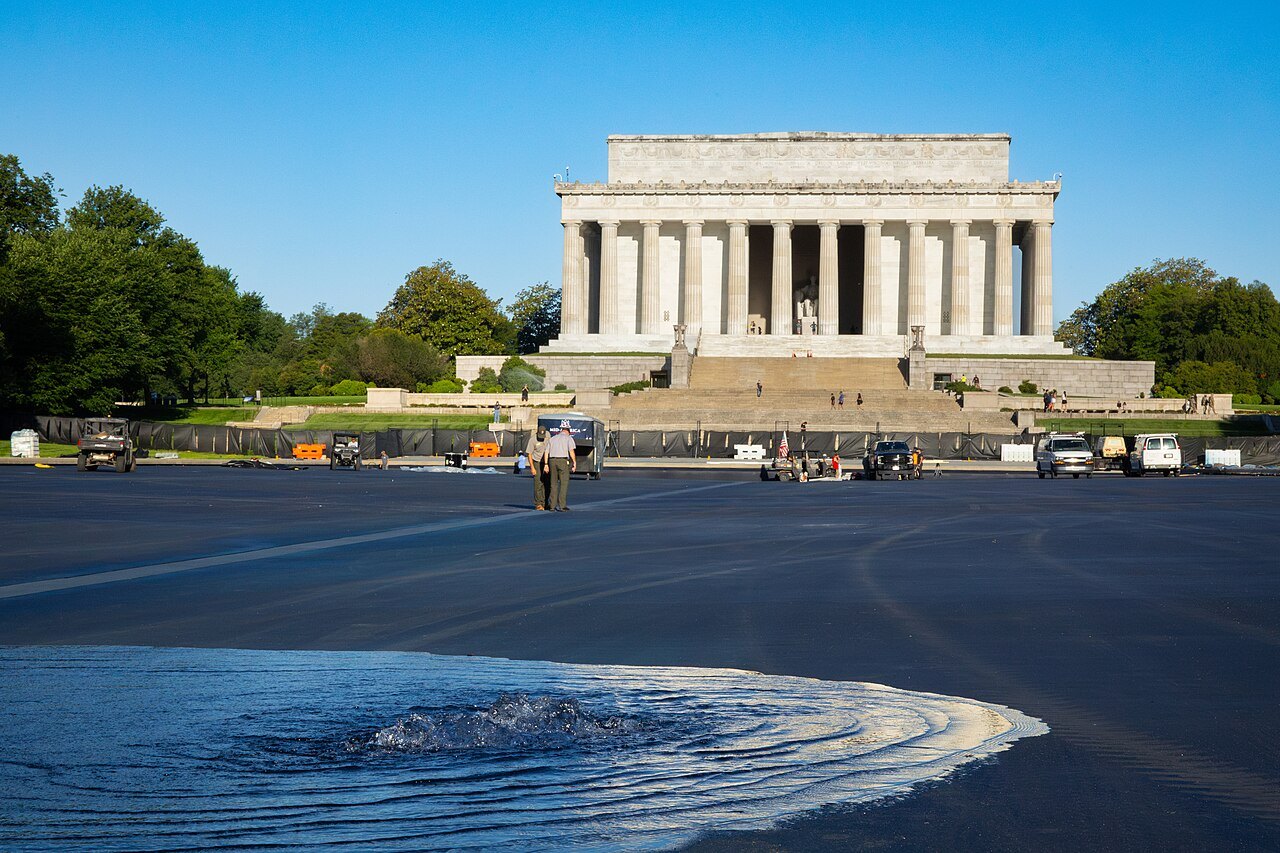
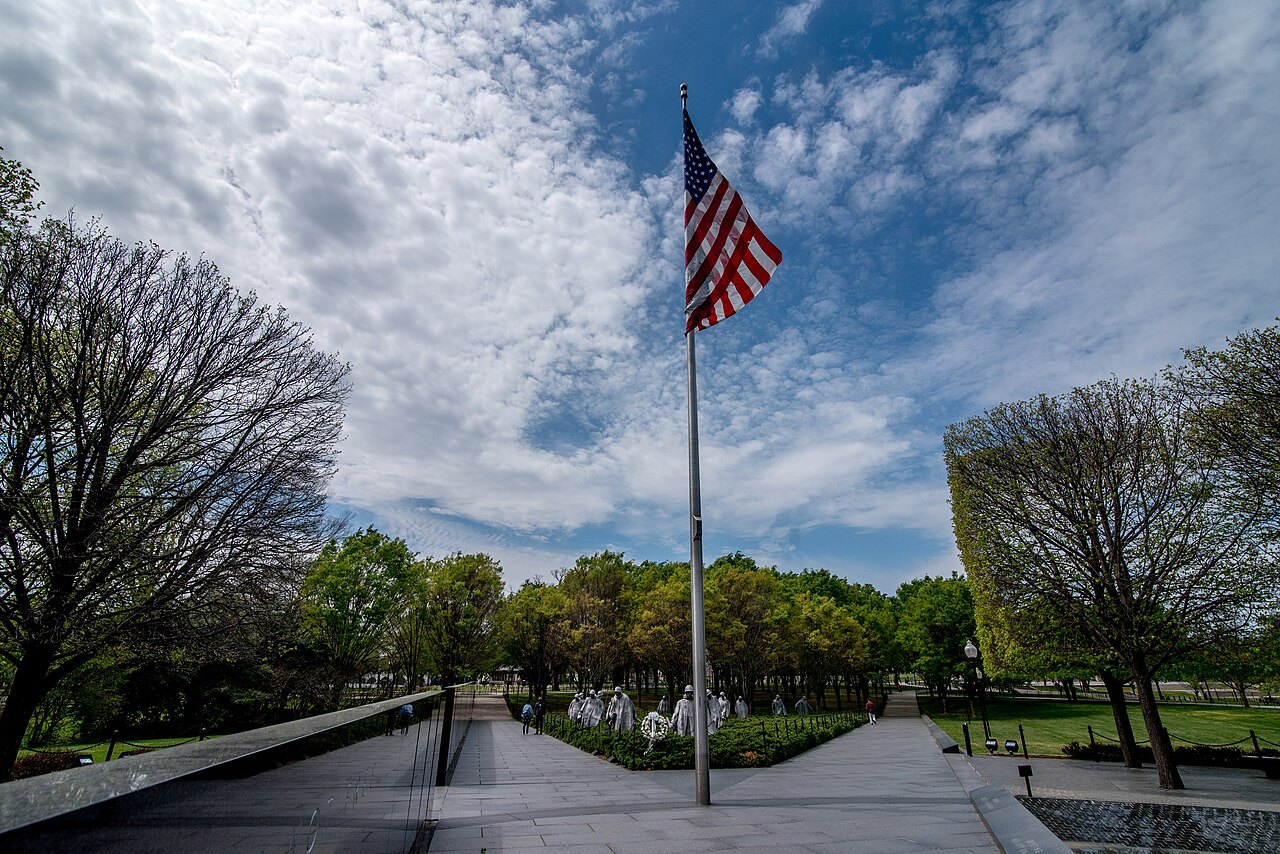
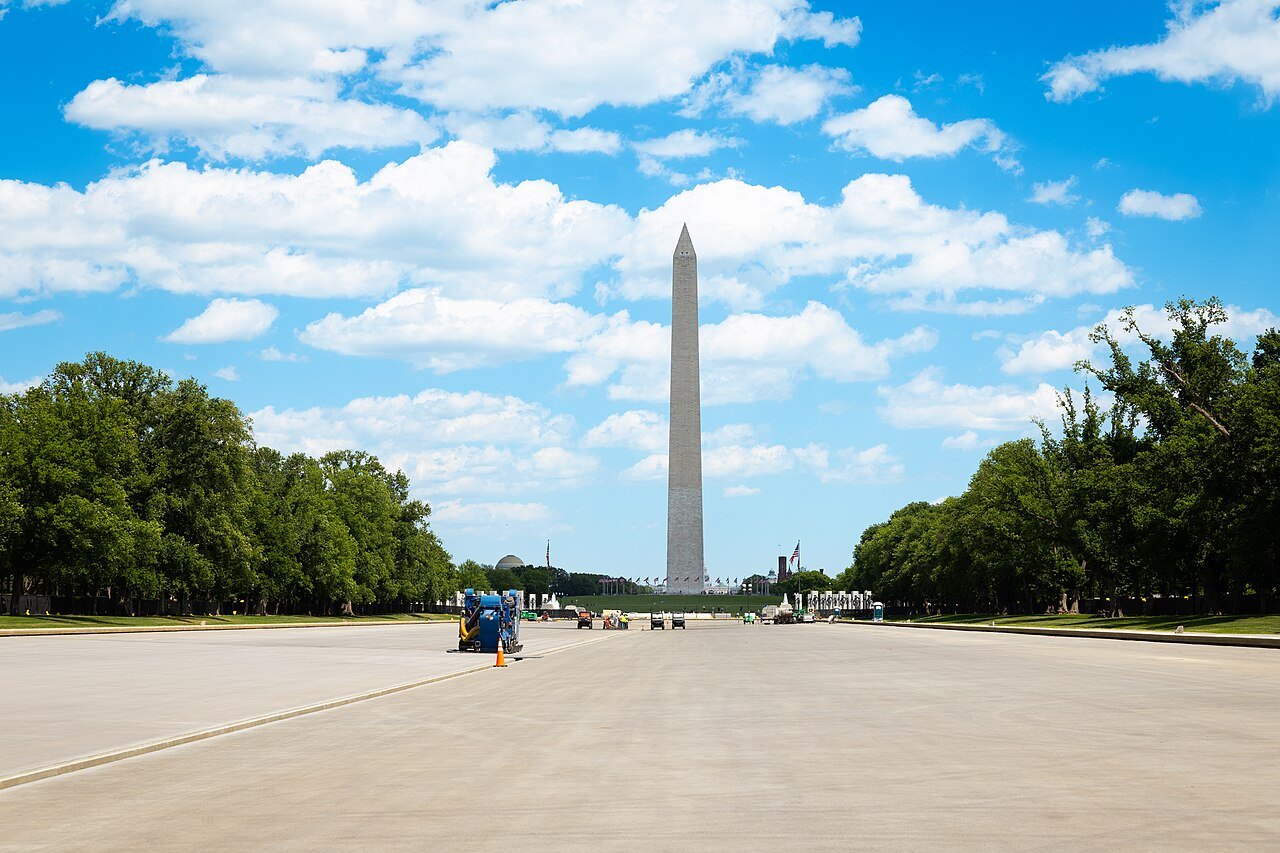
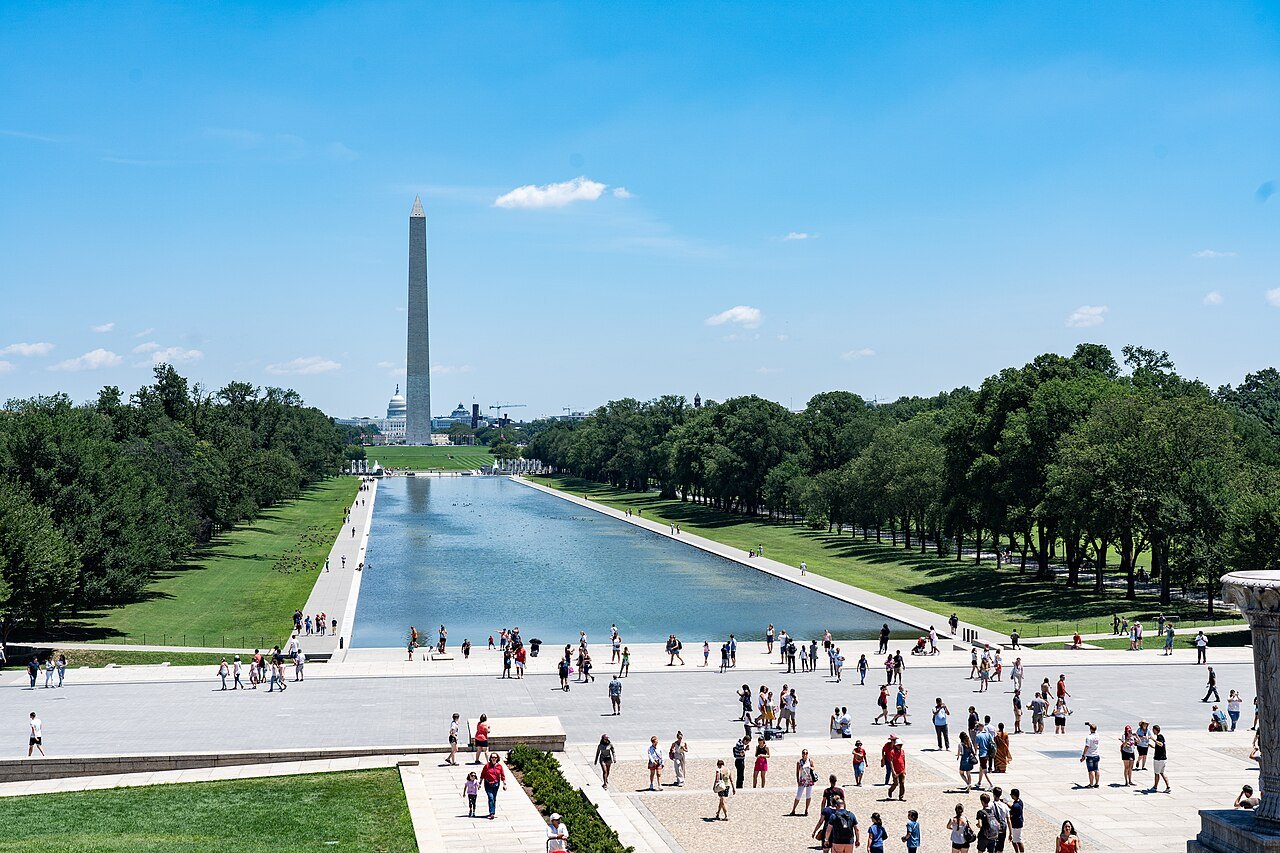
After reading the walls inside, walk back down the steps to the Reflecting Pool and turn around for the classic view of the temple, then follow the pool east on either side toward the World War II Memorial, passing the Vietnam Wall and the Korean War memorial; see the war memorials for what is written on those walls.
Read next03
More from the journal
- The Lincoln Memorial and the Reflecting PoolWhere did Martin Luther King Jr. stand to give the I Have a Dream speech?Where Martin Luther King Jr. stood on the Lincoln Memorial steps in 1963, how the spot is marked, and how to find it.Read the piece →
- The World War II, Korean War and Vietnam MemorialsWhat do the pillars of the World War II Memorial stand for?How the ring of fifty-six granite pillars at the World War II Memorial names every state, territory, and the Philippines of 1945.Read the piece →
- The World War II, Korean War and Vietnam MemorialsHow do you find a name on the Vietnam Veterans Memorial?How the Vietnam Veterans Memorial orders its fifty-eight thousand names, and how to find one before you go.Read the piece →