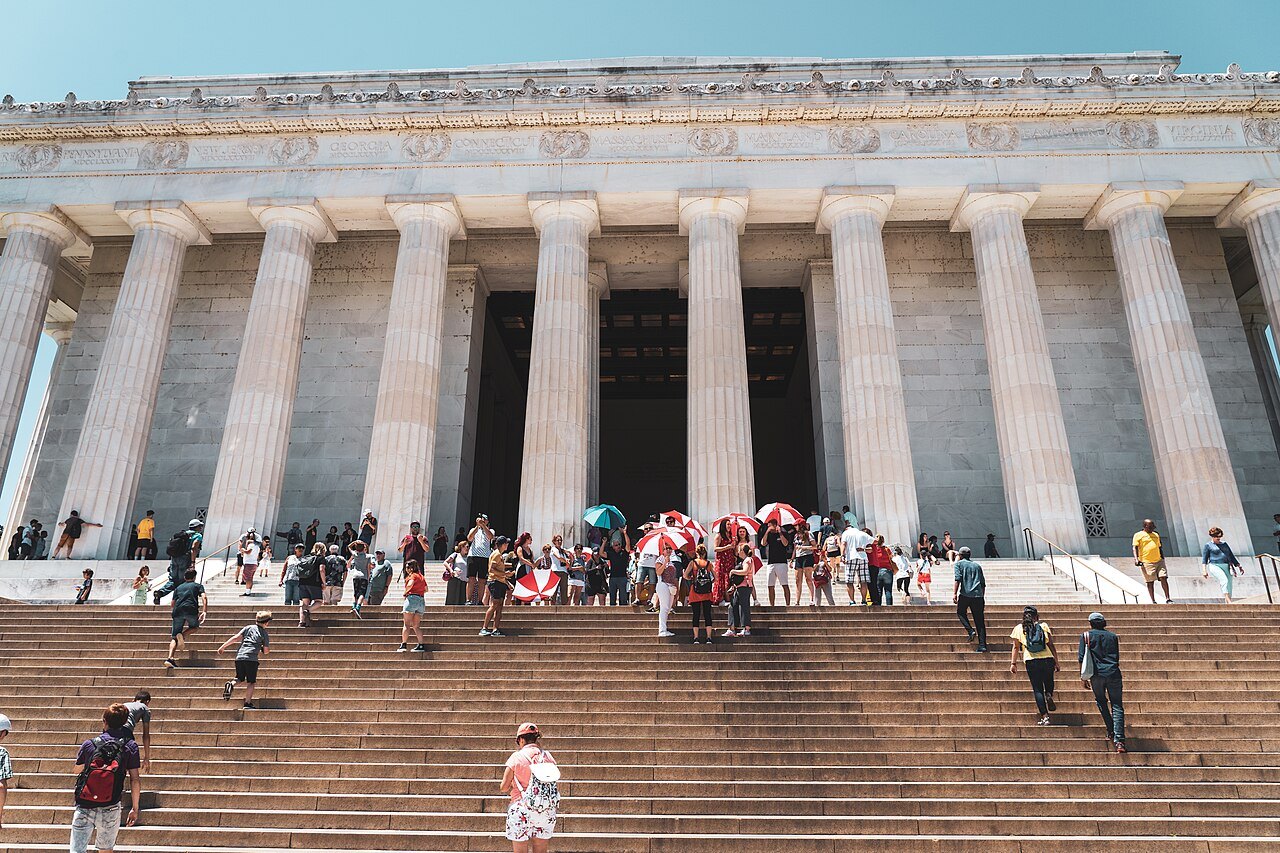
WHERE KING STOOD IN 196301
Where did Martin Luther King Jr. stand to give the I Have a Dream speech?
Where Martin Luther King Jr. stood on the Lincoln Memorial steps in 1963, how the spot is marked, and how to find it.
The answer in full02
Read on
Why it matters
The Lincoln Memorial closes the west end of the Mall, on the axis running from the Capitol through the Washington Monument, and it is the most visited memorial in the city, drawing more than seven million visitors a year. It honors Abraham Lincoln, the sixteenth president, who led the Union through the Civil War and was assassinated in 1865.
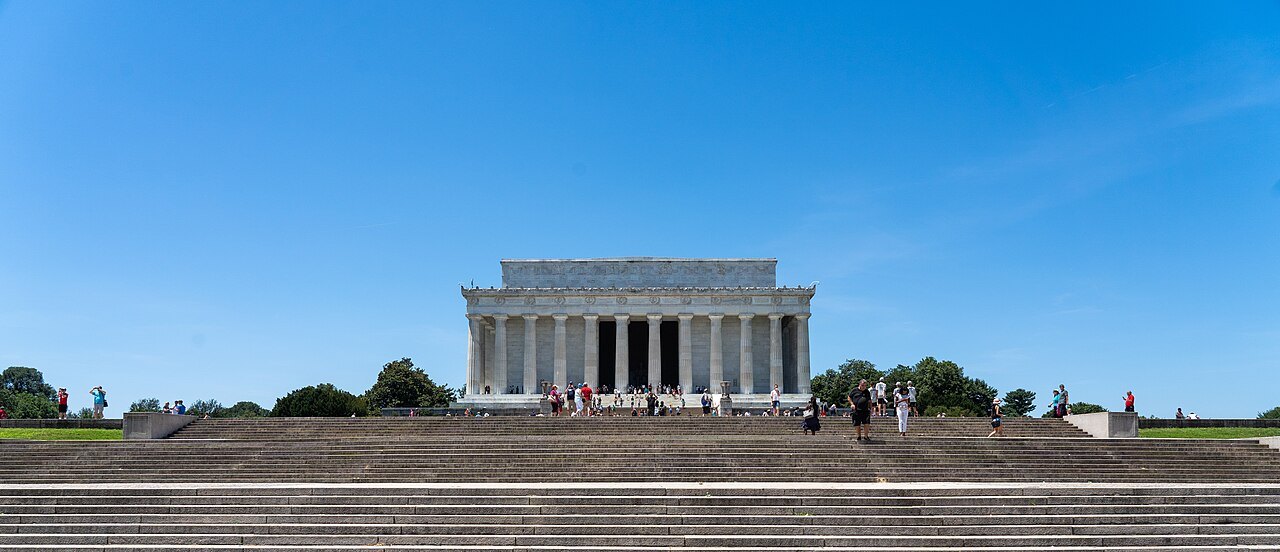
It has also served as a public stage. Marian Anderson sang from its steps in 1939 after being refused a hall, and Martin Luther King Jr. delivered his address here in 1963 at the close of the March on Washington for Jobs and Freedom. The pool in front of it has since been the setting for many marches and gatherings.
The memorial never closes: visitors may walk up to it at any hour of the day or night, and many come after dark, when the statue is lit against the dark sky. It sits at the far western edge of the Mall, with the rest of its sights covered at the Mall.
A temple in a swamp
The land at the west end of the Mall was new, reclaimed from the Potomac, and many thought it too swampy and remote for a memorial to Lincoln. The McMillan Plan of 1901 marked out the site, and it eventually won approval; the memorial's axis to the Capitol runs about one degree south of due west, since the Monument itself was built off its planned spot.
The architect Henry Bacon designed the building as a Greek temple, with construction overseen through the following years. Ground was broken on February 12, 1914, Lincoln's birthday, and the finished memorial was dedicated by Chief Justice William Howard Taft, himself a former president, on May 30, 1922, eight years after work began.
The dedication reflected the segregation of the era: prominent African Americans invited to the ceremony found themselves seated in a separate section, apart from the rest of the official guests, a history explored further at African American history. The contrast with the memorial's later role as a stage for civil rights gatherings is one visitors often notice.
What you actually see
The exterior is faced in Yule marble from Colorado and ringed by thirty-six fluted Doric columns, one for each state in the Union at the time of Lincoln's death; their names and admission dates are carved on the frieze above. Higher up, the attic carries the names of the forty-eight states of 1922.
Inside, two rows of Ionic columns fifty feet high divide the memorial into three chambers. At the center sits Lincoln, carved from Georgia white marble shipped in twenty-eight pieces by the six Piccirilli brothers under Daniel Chester French's supervision. The statue was enlarged from an original ten-foot plan to nineteen feet so it would not look small in the room.
The side chambers hold Lincoln's two most famous speeches, the Gettysburg Address and the Second Inaugural Address, with lettering by Evelyn Beatrice Longman. Above each is a mural by Jules Guérin, sixty feet long, and the ceiling panels are Alabama marble soaked in paraffin to let light through, lit since 1929 by hidden lighting.
The steps and the pool
On Easter Sunday 1939, after the Daughters of the American Revolution refused to let the contralto Marian Anderson sing before an integrated audience in Constitution Hall, Secretary of the Interior Harold Ickes arranged for her to sing from the memorial's steps instead, to seventy-five thousand people and a national radio audience.
On August 28, 1963, at the close of the March on Washington for Jobs and Freedom, Martin Luther King Jr. addressed a crowd estimated at two hundred fifty thousand people gathered along the Reflecting Pool, speaking from these same marble steps that Marian Anderson had used a generation before them.
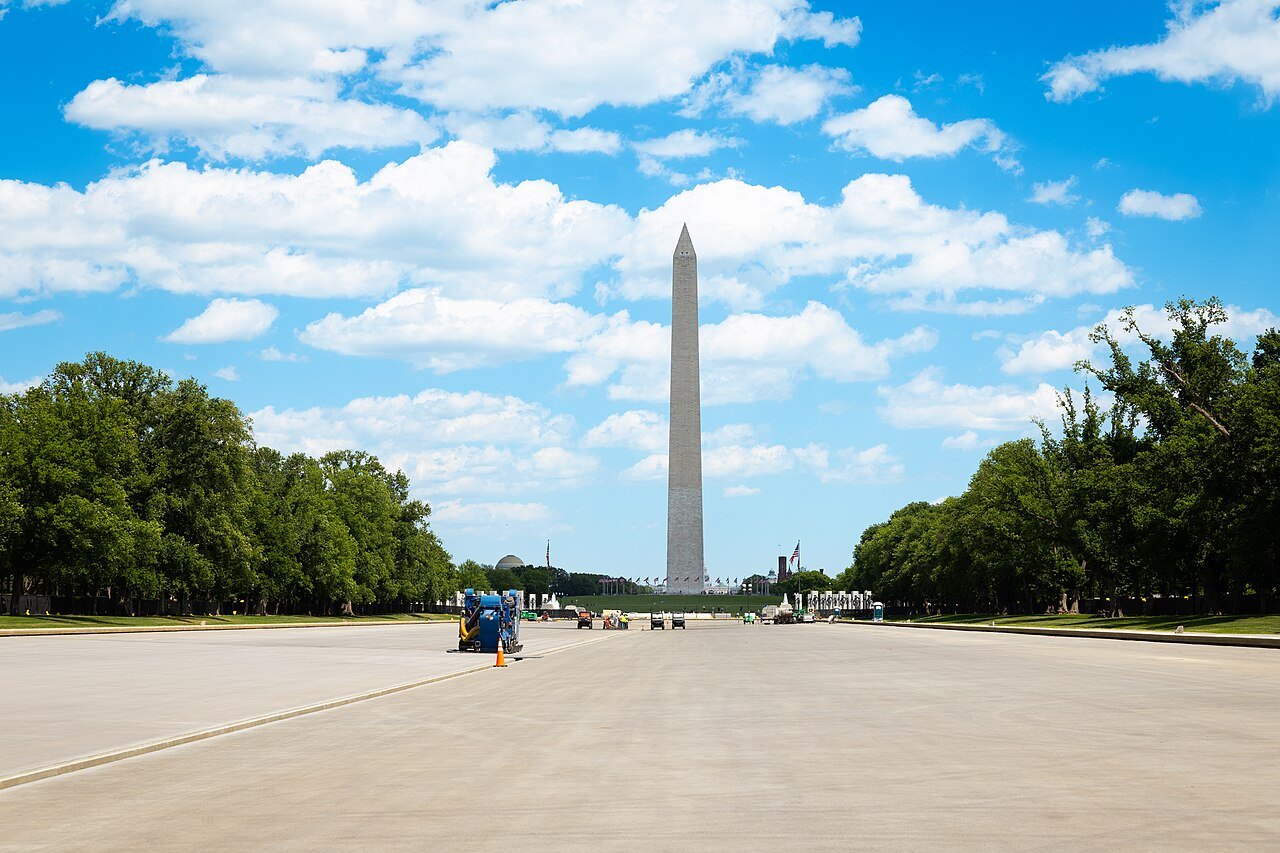
Below the steps, the Reflecting Pool stretches east toward the Washington Monument. Dedicated in 1922, it is two thousand twenty-eight feet long and one hundred sixty-seven feet wide, holding about four million gallons. Depending on where a visitor stands, it reflects the Monument, the memorial, the trees of the Mall, or the sky.
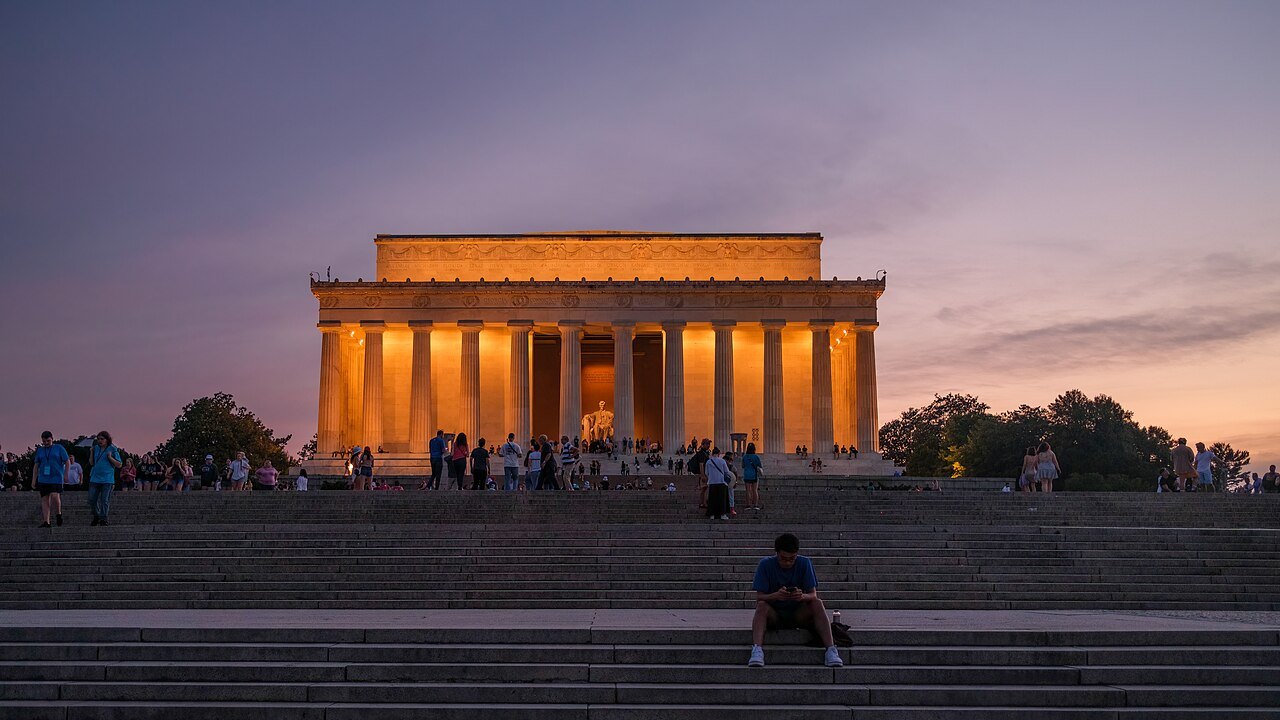
The steps climb in stages from the pool, past the roadway that circles the memorial, up to the entrance, and the full climb from the base to the chamber with the statue involves a considerable number of steps, worth knowing before setting out, especially for visitors traveling with children or with limited mobility.
Where King stood
The exact spot where King stood is marked and was engraved into the stone in 2003: the landing eighteen steps below the statue, well short of the top of the staircase and the chamber behind it. Visitors can find it easily by counting steps down from the entrance toward the pool.
King's address is remembered above all for its closing refrain, built around the repeated phrase 'a dream,' as he moved from prepared remarks into an improvised close. Standing on that landing places a visitor roughly where his voice carried over the crowd along the pool, not inside the chamber with the statue.
The marker itself is modest, set into the marble rather than announced with a sign, so visitors climbing straight to the statue sometimes pass over it. Looking down from it toward the pool and the Monument gives a sense of the crowd's view on August 28, 1963, when the gathering filled it.
The spot is worth pausing at for its own sake: a short landing on a long staircase that briefly became one of the most photographed places in the country, and it remains part of the walk most visitors make between the statue above and the Reflecting Pool below, a route many visitors retrace.
How to visit
The memorial can be visited at any hour, free, with no ticket required and no advance booking to arrange. After dark the statue is lit and the view back along the Reflecting Pool to the lit Monument is at its best, a popular time for photographs and for a quieter visit.
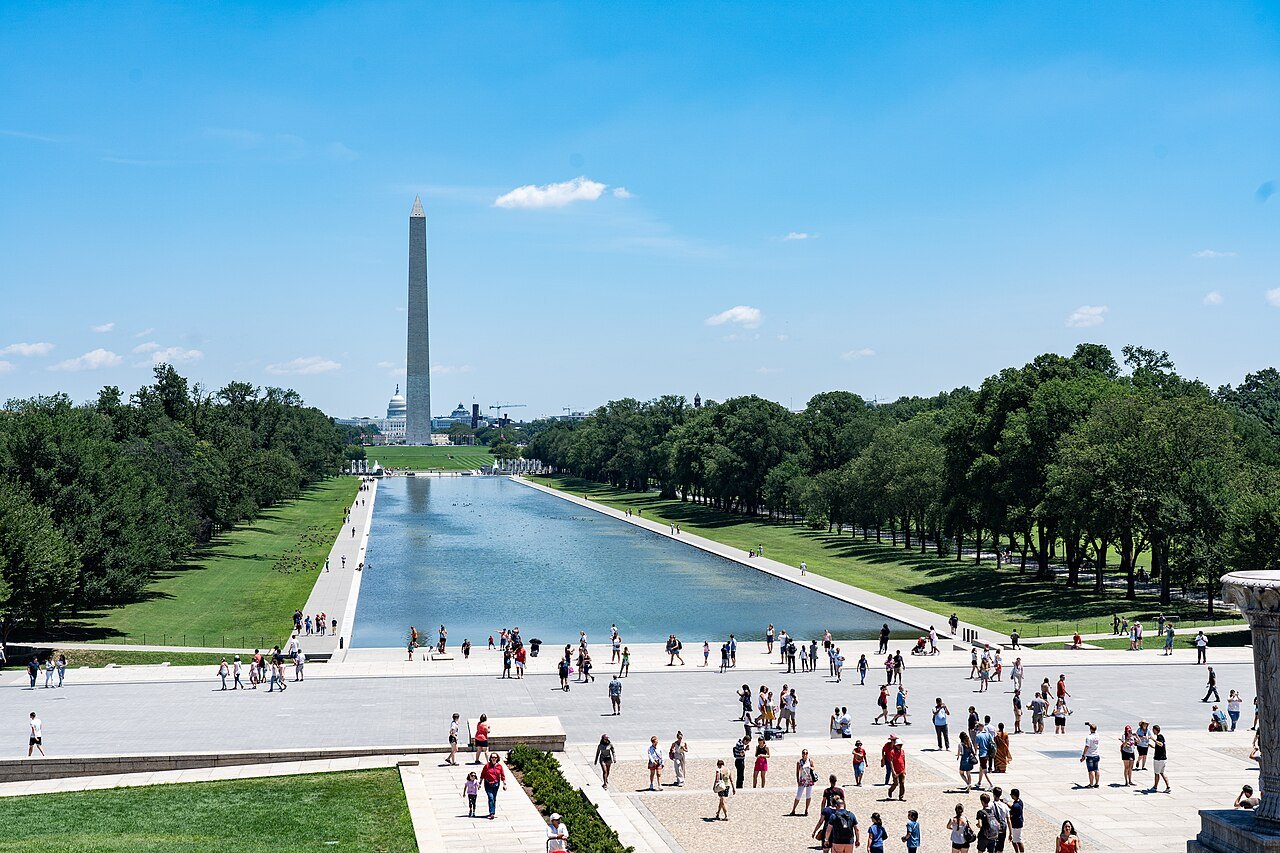
There are many steps between the roadway and the entrance to the chamber with the statue; an elevator was added in the 1970s for visitors who cannot climb them, and it is worth asking a National Park Service ranger on site about the best route. For a route across the wider Mall, see getting around.
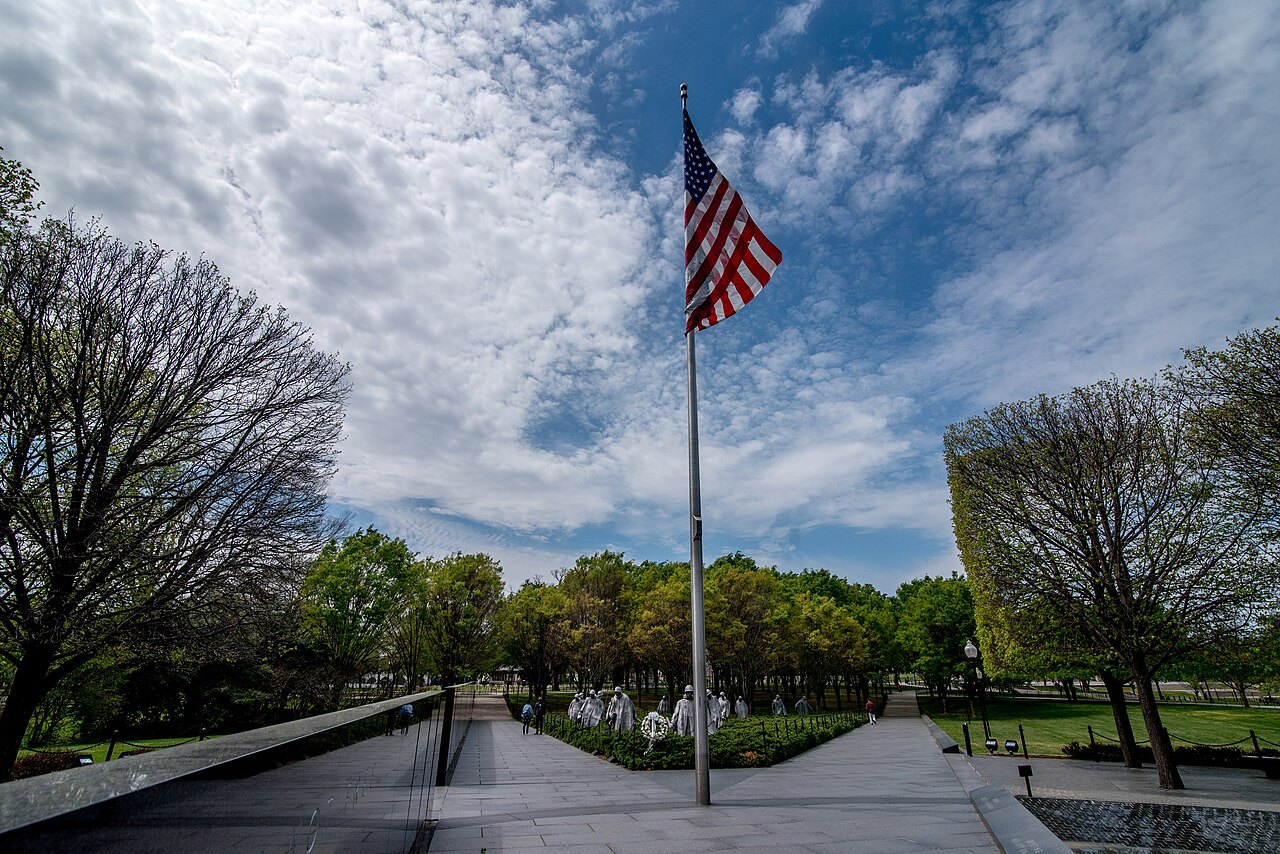
From the foot of the steps, a walk east along the Reflecting Pool leads to the World War II Memorial, passing the Vietnam Veterans Memorial to the north and the Korean War Veterans Memorial to the south; see the war memorials for all three. The back of the memorial looks across the Potomac to Virginia.
Honest notes
The thirty-six columns are often said to stand for the states at the time of the memorial's dedication; in fact they represent the thirty-six states of 1865, the year Lincoln died, while the forty-eight states of 1922 appear only in the names carved higher up on the attic above the columns.
The statue itself was carved by the six Piccirilli brothers, working from Daniel Chester French's design and under his close supervision, rather than by French's own hand, a common point of confusion for visitors reading the credit lines near the statue or in printed guides to the memorial and its chambers.
The memorial has come to stand for national unity and for the civil rights movement, but its own dedication in 1922 was held before a segregated audience, with prominent African American guests seated apart from the rest. The contrast is worth noting as part of the site's full history rather than skipped over.
Read next03
More from the journal
- The National Museum of African American History and CultureHow is the National Museum of African American History and Culture arranged?A floor-by-floor guide to the Smithsonian's newest museum, from the underground history galleries to the culture floors above.Read the piece →
- The World War II, Korean War and Vietnam MemorialsWhat do the pillars of the World War II Memorial stand for?How the ring of fifty-six granite pillars at the World War II Memorial names every state, territory, and the Philippines of 1945.Read the piece →
- Getting AroundHow does the Washington Metro work for visitors?The Metro has six colored lines, 98 stations and fares that depend on distance and time of day, so you tap in and tap out. How to pay, find the right platform, change lines and reach the sights, the airports and Union Station.Read the piece →