A CONCRETE RING ON THE MALL01
Why is the Hirshhorn Museum shaped like a drum?
Why the Hirshhorn's windowless drum sits among marble temples, who gave it to the nation, and how to visit.
The answer in full02
Read on
A drum on the Mall
Among the marble temples of the National Mall stands a building unlike anything else there: a windowless ring of poured concrete, 231 feet across, lifted off the ground on four massive piers. This is the Hirshhorn Museum and Sculpture Garden, the Smithsonian's museum of modern and contemporary art. It opened in 1974, and like the Smithsonian's other museums, it is free to enter.
The drum shape was no accident of fashion. The architect, Gordon Bunshaft, wanted a closed, heavy object rather than a glass box, and he got one: a hollow cylinder eighty-two feet high, its outer wall faced in precast concrete with an aggregate of pink granite, raised fourteen feet above the plaza on four sculptural piers.
Seen from the Mall, the building reads as a fortress set among temples, and it has divided opinion ever since it opened. The New York Times called it, more kindly, a fortress of a building that works as a museum, and that verdict still holds for most visitors who walk in.
The site in L'Enfant's plan
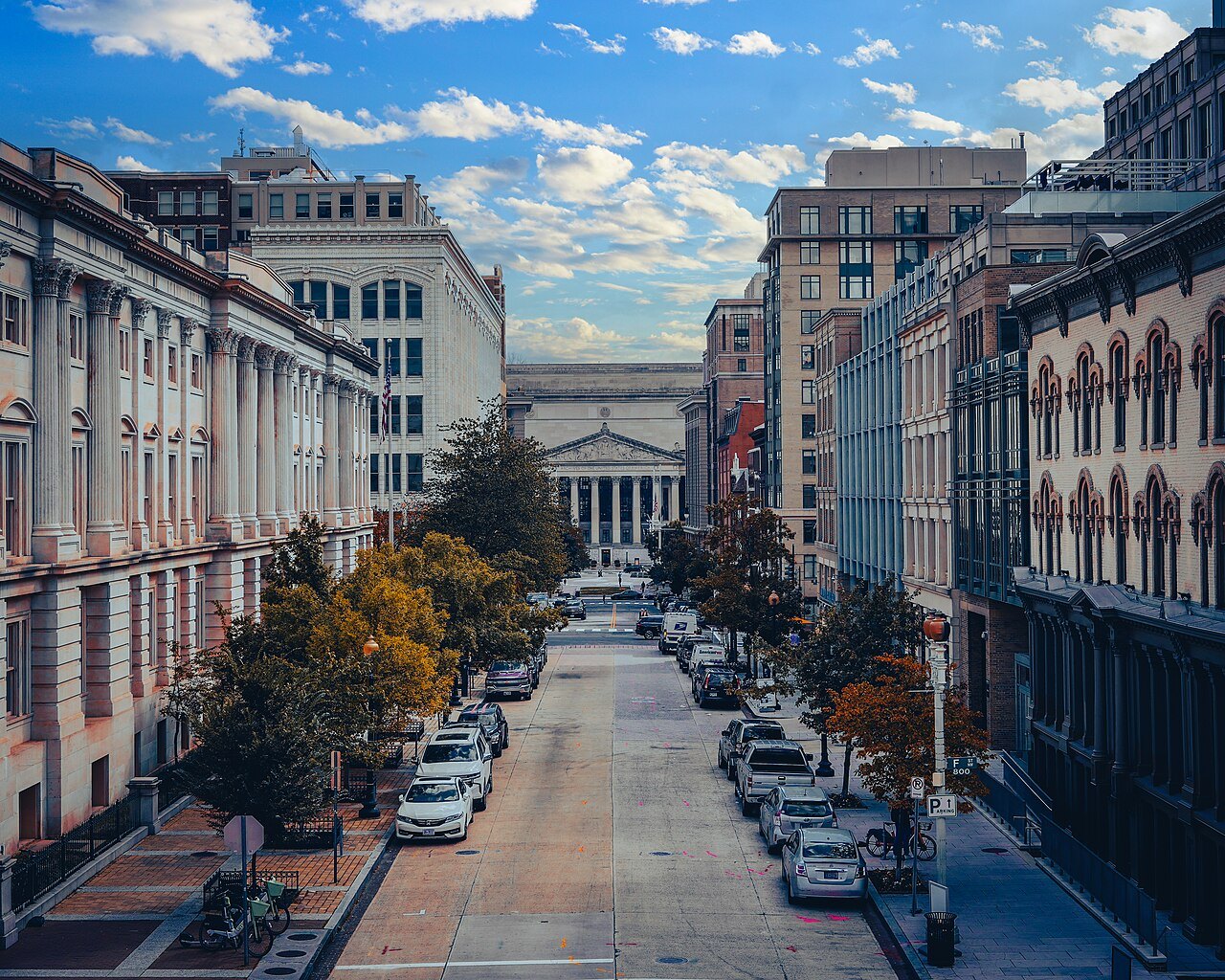
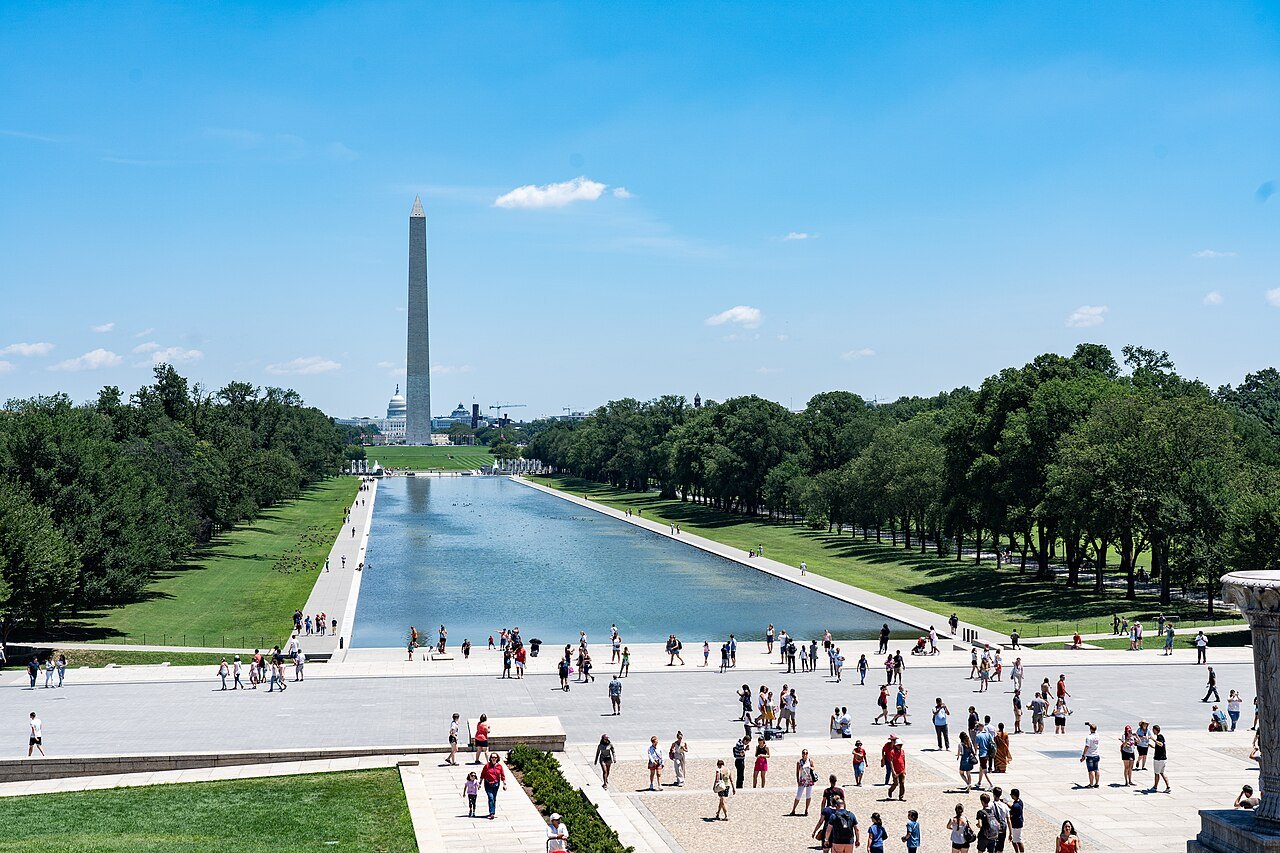
The museum's position on the Mall is as deliberate as its shape. It stands halfway between the Washington Monument and the Capitol, at the southern end of a cross-axis that goes back to L'Enfant's plan of 1791, long before anyone imagined a round concrete museum there.
That cross-axis runs north across the Mall, through the Sculpture Garden of the National Gallery and the National Archives, to the old Patent Office building that now houses the National Portrait Gallery. The Hirshhorn closes the line on the south side of the Mall, balancing those buildings on the north.
Visitors curious about how the axis fits into the wider grid of the capital can read more about the plan elsewhere on this site. On the ground, the simpler point holds: the Hirshhorn's round form sits squarely on an old, straight line that long predates it.
A collector's gift
Congress had wanted a modern art museum on the Mall since the late 1930s, but the Second World War pushed the idea aside for decades. Meanwhile a collector named Joseph H. Hirshhorn, who had made a fortune in uranium mining, was buying art on an enormous scale, filling warehouses, a New York apartment, and a Connecticut estate.
In 1955 Hirshhorn sold his uranium interests for more than fifty million dollars and kept collecting: French Impressionism, early twentieth-century American modernism, and above all sculpture. A 1962 show at the Guggenheim in New York revealed how large his holdings were, and museums in Italy, Israel, Canada, and California all tried to win the collection.
President Lyndon B. Johnson and the Smithsonian's Secretary, S. Dillon Ripley, persuaded Hirshhorn to give it to the nation instead. Congress established the museum in 1966, ground was broken in 1969, and more than six thousand works came down from Connecticut to fill it.
At the opening in 1974, Hirshhorn said his gift was a small repayment for what the nation had done for him and for other immigrants, and that what he had achieved in the United States he could not have achieved anywhere else. A million people saw the opening exhibition within six months.
A fortress of a building
The architect was Gordon Bunshaft, a longtime partner at Skidmore, Owings and Merrill, whose best-known work was Lever House in New York, a glass-walled modernist office tower, and who later won the Pritzker Prize. At the Hirshhorn he turned away from glass entirely and made something closed and heavy instead.
Inside the ring is an open court 115 feet across, with a fountain sixty feet across at its center, open to the sky. The galleries wrap around it on three floors, totaling sixty thousand square feet, their curve following the curve of the outer wall.
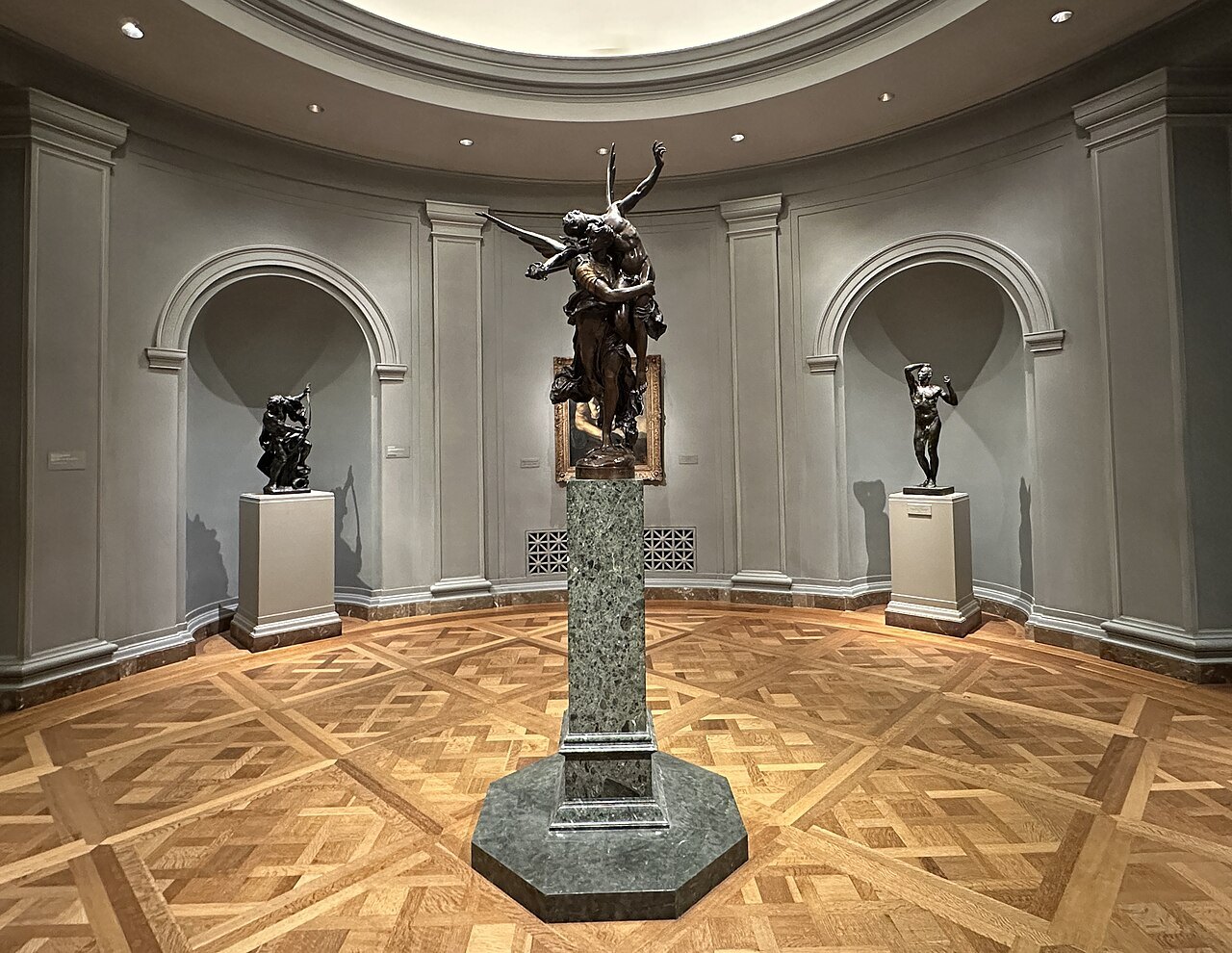
The first design, approved in 1967, included a reflecting pool reaching out across the Mall; when excavation began, an outcry followed, and a smaller design was approved in 1971. The building that resulted keeps Bunshaft's severity on the outside while saving all the openness for within.
What you actually see
Walk in under the drum and the city disappears. The court is a round room open to the sky, the fountain at its center, the ring of the building rising all around; it is worth seeing even for visitors who go no farther, since the plaza and court are part of the museum and need no ticket.
Inside, the galleries curve with the outer wall, so a room never quite shows its far end, and the inner windows look back across the court rather than out to the Mall. The collection runs from the late nineteenth century, concentrated on the decades after the Second World War.
Among the artists represented are Mary Cassatt, Thomas Eakins, Edward Hopper, Picasso, Matisse, Henry Moore, Jackson Pollock, Mark Rothko, Willem de Kooning, Lee Krasner, Helen Frankenthaler, Francis Bacon, and Ellsworth Kelly, alongside work the museum commissions from living artists.
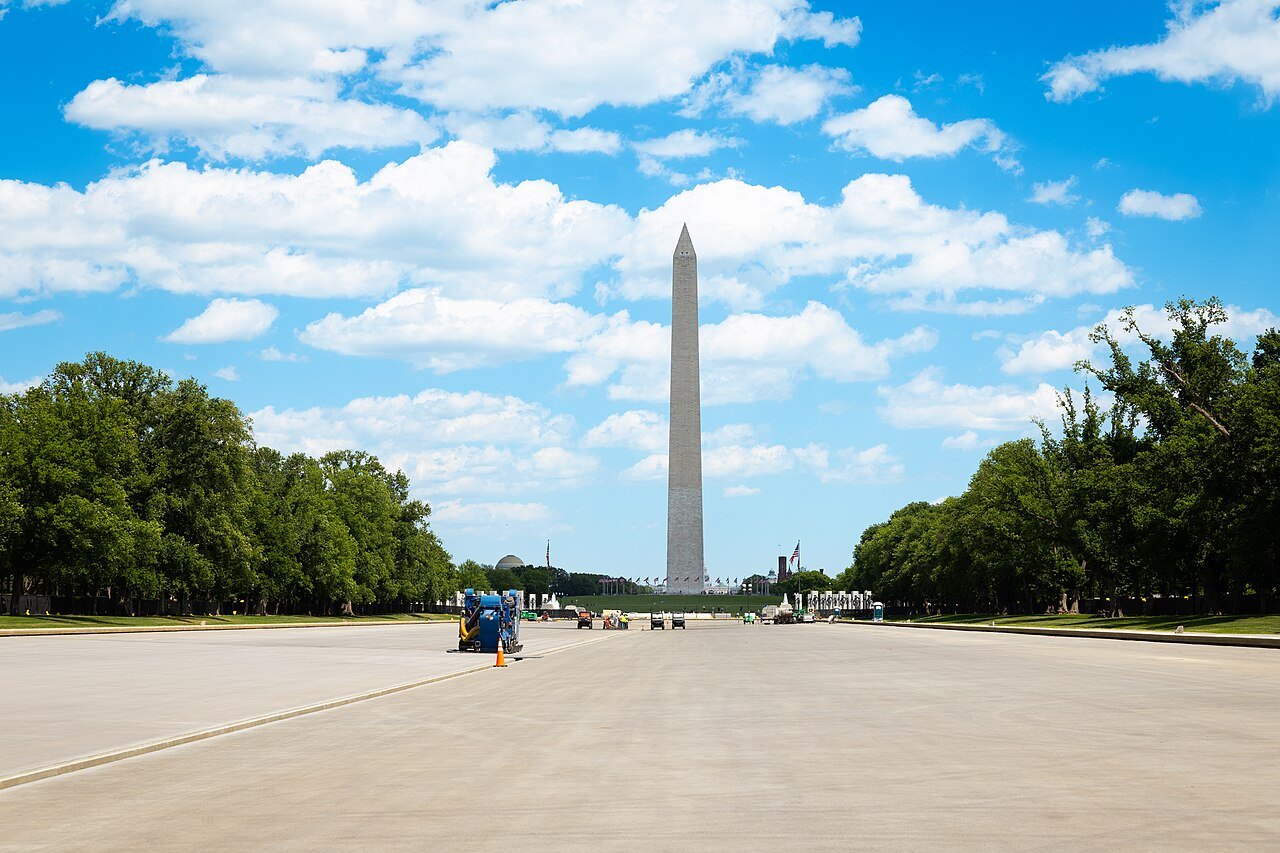
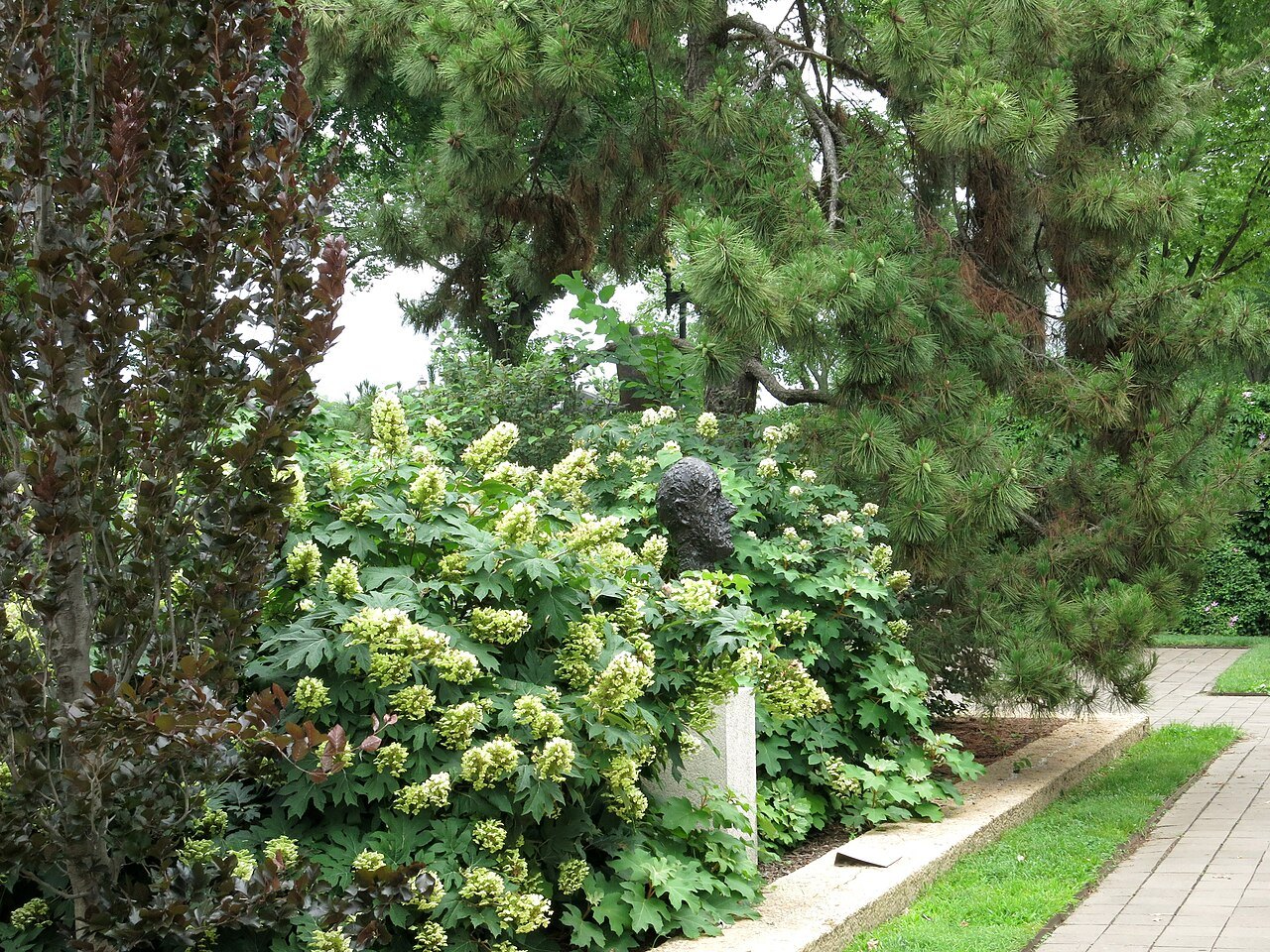
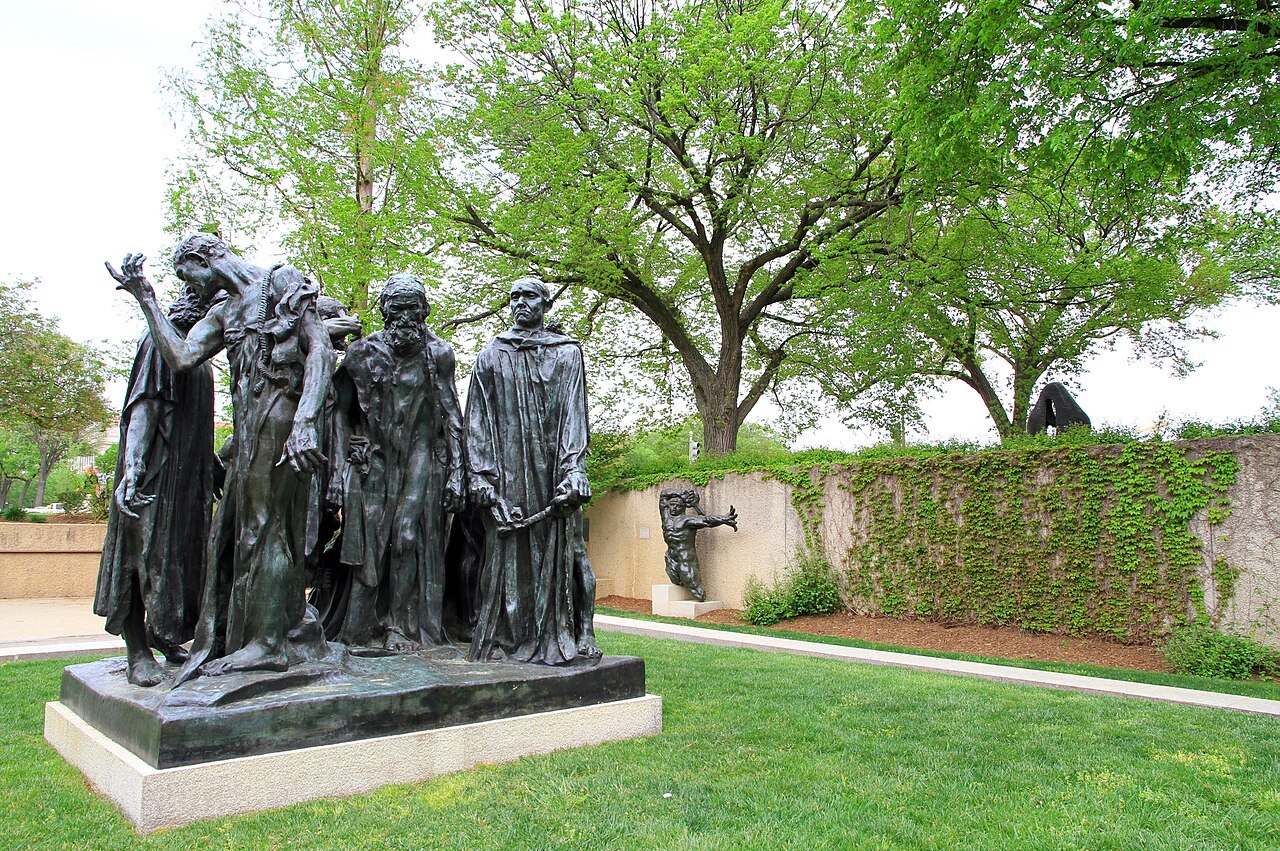
Across Jefferson Drive is the Sculpture Garden, sunk below the level of the Mall, with Rodin's Burghers of Calais, Henry Moore's King and Queen, Kenneth Snelson's Needle Tower, and works by David Smith, Alexander Calder, and Jeff Koons. Yoko Ono's Wish Tree for Washington, DC has stood there since 2007, hung with visitors' written wishes.
How to visit
Admission to the Hirshhorn is free, and no ticket is normally needed for the galleries; special exhibitions and events may carry their own arrangements, so check the museum's own pages before planning around one.
The museum is small enough to see in an hour or two, which makes it an easy pairing with its neighbor, the National Air and Space Museum, just to the east along the Mall.
The Sculpture Garden is reached across Jefferson Drive on the Mall side; its status and any seasonal arrangements are best confirmed on the museum's own pages before a visit, since outdoor spaces can keep a schedule apart from the building.
The Hirshhorn was a lifetime gift rather than a bequest, and most of the building's funding was federal; Hirshhorn himself gave one million dollars toward construction. A later plan to cover the court each year with an inflatable structure, the so-called Bloomberg Bubble, was announced in 2009 and dropped after its projected cost more than tripled.
Read next03
More from the journal
- The National Gallery of ArtWhere can you see the only Leonardo da Vinci painting in the Americas?Leonardo da Vinci's Ginevra de' Benci hangs in the National Gallery of Art's West Building, free to see on the Mall.Read the piece →
- The National Air and Space MuseumWhat happened to the Wright Flyer before it came to the Smithsonian?The Wright Flyer's road to the Smithsonian ran through decades of dispute before it ever reached the Mall.Read the piece →
- The World War II, Korean War and Vietnam MemorialsHow do you find a name on the Vietnam Veterans Memorial?How the Vietnam Veterans Memorial orders its fifty-eight thousand names, and how to find one before you go.Read the piece →